
Face Swap vs Deepfake: What’s the Difference & Why It Matters
Face Swap vs. Deepfake: Key Differences and Why They Matter

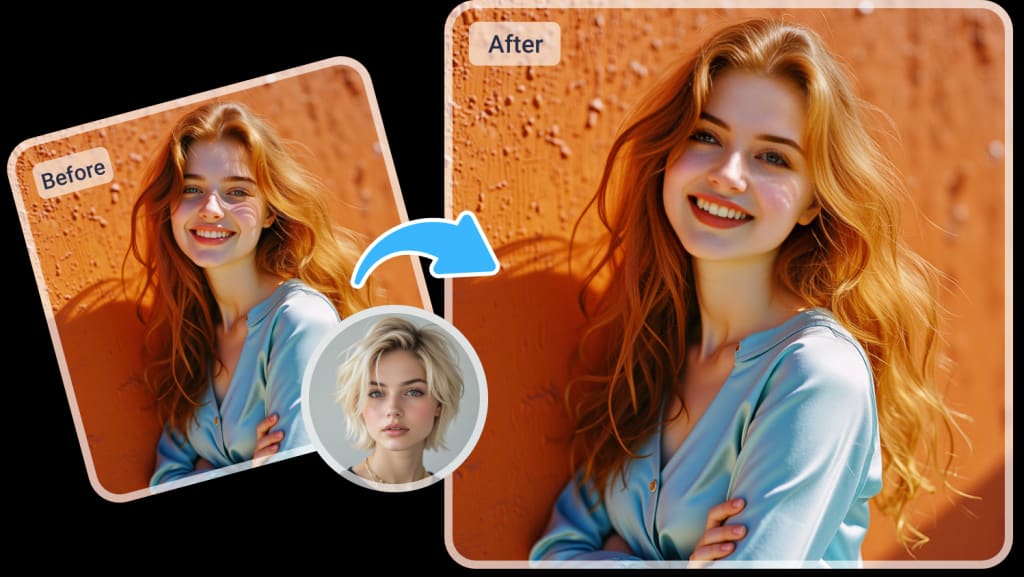
In the world of AI and media, two terms often come up: face swap and deepfake. They are related but not identical. Understanding how they differ matters a lot—for creators, platforms, and viewers.
What Are Face Swaps & Deepfakes?
Face Swap
A face swap is a technique where one person’s facial features—eyes, nose, mouth, skin texture—are mapped or blended onto another person’s face in an image or video. The goal is that the new face looks natural in the new setting. Many face swap systems focus on preserving lighting, expression, and alignment.
A platform like Face Swap AI provides tools for doing this kind of substitution. They offer Image Swap for still photos and Video Swap for moving images or short clips.
Deepfake
A deepfake is a broader concept. It typically refers to AI-generated media (image, video, audio) that convincingly mimic or impersonate someone else. Deepfakes often use advanced generative adversarial networks (GANs) or deep neural networks to produce highly realistic fakes. A deepfake may involve face swapping, but also voice cloning, entire body synthesis, or generating scenes that never existed.
In short:
- All face swaps can be a form of deepfake (if they are generated by AI), but not all deepfakes are simple face swaps.
- Deepfakes try to fool: they aim for realism so viewers believe they’re genuine.
- Face swaps may also be used for creative or benign purposes, not always with intent to deceive.
Key Differences & Why They Matter
Intent & Use
- Face swap is often used for creative, fun, or harmless purposes: social media, art, filters, personalization.
- Deepfakes can be used for more serious or malicious purposes: misinformation, fake scandal videos, impersonation, political manipulation.
Because of intent, society treats them differently. A funny face swap is more acceptable; a deepfake used to defame someone is harmful.
Complexity & Realism
Deepfakes tend to use more complex models to simulate not just face appearance, but movement, voice, even entire scenes. They push realism to a higher level.
Face swaps may sometimes look less perfect—there might be subtle artifacts, mismatches in lighting, or slight distortions—that give away the manipulation if someone looks carefully.
Ethical & Legal Risk
- Deepfakes carry higher risk: if someone uses them to create fake news or false visual evidence, legal and ethical issues arise.
- Face swaps, when used with consent and transparency, have less risk, but misuse is still possible.
Because of this, regulations often focus more on harmful deepfake use—harassment, fraud, misinformation.
Detection & Transparency
Deepfake detection is a growing research domain: watermarking, forensic AI, model tracing. Platforms aim to detect and label manipulated media.
Face swap systems can incorporate transparency too—such as declaring a face swap was done, embedding metadata, or limiting export.
Why the Distinction Matters for Users & Platforms
Understanding whether one is creating a face swap or a deepfake helps in:
- Setting user expectations: Users appreciate knowing whether a result is a fun transformation or a realistic impersonation.
- Applying safety rules: Platforms can allow benign face swap uses while restricting high‑risk deepfake use (especially in politics, defamation, impersonation).
- Legal compliance: Different laws may treat impersonation or defamation more harshly than creative transformations.
- Trust & transparency: Media platforms, social networks, and audiences demand clarity—if manipulated content is labeled as AI‑made, users are less likely to be misled.
Best Practices for Ethical Use
If you are using a service such as Face Swap AI, it’s wise to follow these guidelines:
- Always obtain consent from the person whose face you use
- Clearly label outputs as “AI generated” or “face swap”
- Limit use in sensitive contexts, such as political content or news
- Protect stored sources and ensure privacy
- Enable transparency—metadata, watermarking, logs
When using Image Swap or Video Swap, it’s especially important to mark that the content is manipulated. The moving nature of videos makes them more persuasive, so building trust and disclosure is key.
Final Thoughts
While face swap and deepfake share similar technologies, they differ in intent, complexity, risk, and public perception. Face swaps can be harmless or even delightful expressions of creativity, but deepfakes carry heavier responsibilities and dangers if misused.
As AI media evolves, keeping clarity between these terms helps creators, platforms, and audiences navigate the ethical, legal, and social challenges. When tools like Face Swap AI offer Image Swap or Video Swap capabilities, they carry both opportunity and responsibility.
About the Creator
MUHAMMAD SHAFIE
Muhammad Shafie (BHK々SHAFiE) is a writer and blogger passionate about digital culture, tech, and storytelling. Through insightful articles and reflections, they explore the fusion of innovation and creativity in today’s ever-changing world.
Keep reading
More stories from MUHAMMAD SHAFIE and writers in 01 and other communities.
Ethical Considerations in AI Face Swap: Consent, Privacy & Regulation
AI face swap technology is powerful, but it raises serious ethical questions. When we can replace one person’s face with another in images or videos, we must consider issues of consent, privacy, and regulation. In this article, we explore what creators, users, and platforms should keep in mind.
By MUHAMMAD SHAFIE4 months ago in 01
Next-Gen Conversational AI: How Natural Language Processing Services Drive Chatbot Success
Conversational AI has long since evolved past simple rule-based bots that followed fixed scripts. Today's chatbots manage complex questions, comprehend intent over the course of long conversations, respond with context and adjust to individual user behavior over time. This shift did not occur overnight. It is the result of steady advancements in Natural Language Processing and how businesses have applied it by using modern development practices.
By Fenil kasundraabout 15 hours ago in 01


Comments
There are no comments for this story
Be the first to respond and start the conversation.