
How Robotics Is Revolutionizing Manufacturing in Japan
The rising role of automation, smart factories, and integrated robotics in industrial production

Market Overview
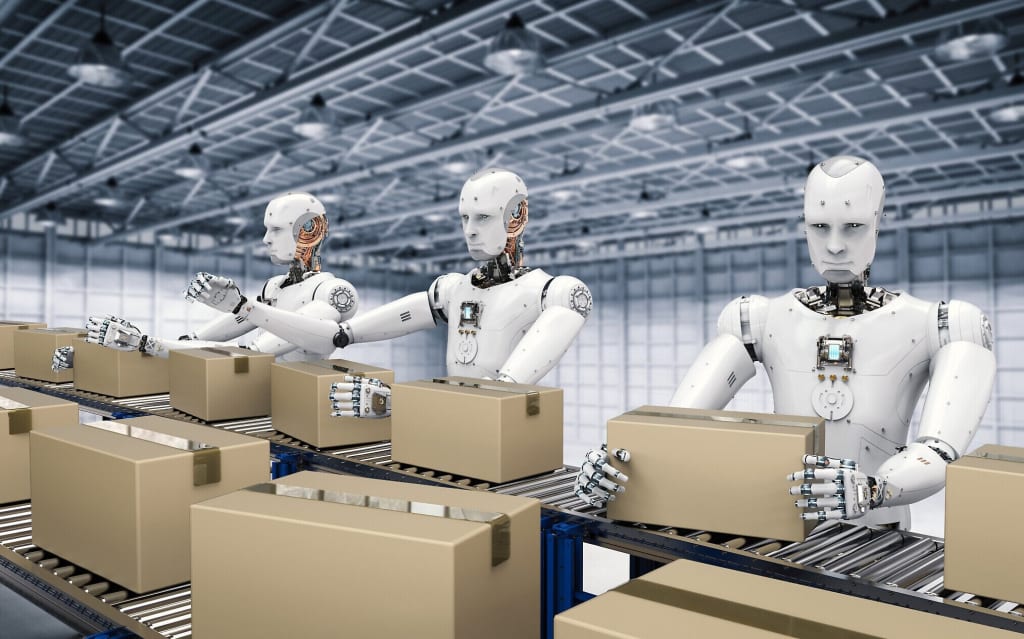
Robotics in manufacturing refers to the deployment of programmable machines that can perform a variety of tasks such as welding, assembly, material handling, painting, inspection, and packaging. These robotic systems help improve production efficiency, ensure consistent quality, reduce labor costs, and enhance workplace safety.
Japan has long been at the forefront of industrial robotics, combining precision engineering with advanced automation technologies. Japanese manufacturers across automotive, electronics, metal processing, food and beverage, and other sectors continue to adopt robotics solutions as part of their drive towards higher productivity and global competitiveness. Robotics also plays a key role in Japan’s smart factory initiatives, which emphasize real-time data integration, flexible automation, and optimized production workflows.
In 2025, the Japan robotics in manufacturing market reached approximately 13.6 thousand units. Looking ahead, the market is expected to grow substantially and reach around 51.3 thousand units by 2034, reflecting a compound annual growth rate (CAGR) of 15.89% during 2026–2034. This strong expansion is supported by increasing investments in automation technologies, labor shortages in key industries, and ongoing efforts to modernize legacy manufacturing infrastructure.
Request Your Free Sample to Support FY Planning
Role of Innovation in Market Development
- Smart Robotics and AI Integration
Modern industrial robots are increasingly equipped with artificial intelligence, machine vision, sensors, and advanced control systems. These technologies enable robots to perform complex tasks, adapt to changing production conditions, and interact safely with human operators. Collaborative robots (cobots) are particularly gaining traction for their ability to work alongside workers in shared spaces.
- Flexible and Modular Automation
The demand for greater flexibility in production lines has led to the development of modular robotics systems that can be reconfigured quickly as product requirements change. This agility is especially valuable in industries with short product life cycles or high customization needs.
- Data-Driven Factory Optimization
Industrial robots generate large volumes of operational data. Advanced analytics platforms use this data to optimize processes, predict maintenance needs, and reduce downtime. Integrating robotics with digital factory systems helps manufacturers improve throughput and minimize waste.
Japan Robotics in Manufacturing Industry Trends and Drivers
- Labor Shortages and Workforce Challenges
Japan’s aging population and shrinking workforce have created labor shortages, particularly in manufacturing. Robotics offers an effective solution by automating repetitive, dangerous, or physically demanding tasks. This helps companies maintain production levels even amid workforce challenges.
- Government Initiatives and Industry 4.0
Government support programs aimed at promoting digital transformation and smart manufacturing are accelerating robotics adoption. Industry 4.0 frameworks emphasize automation, connectivity, and data exchange across production systems — factors that align closely with robotics deployment.
- Expansion of High-Tech Manufacturing
Japan remains a global leader in industries such as automotive, electronics, and precision machinery. These sectors rely heavily on robotics for high-speed production, fine-tuned quality control, and scalable manufacturing operations. As production requirements become more advanced, demand for robotics solutions continues to grow.
Japan Robotics in Manufacturing Market Segmentation
By Robot Type
• Articulated robots
• SCARA robots
• Cartesian robots
• Delta robots
• Others
By Application
• Material handling
• Welding
• Painting and coating
• Assembly
• Inspection and quality control
• Others
By End-Use Industry
• Automotive
• Electronics
• Metal processing
• Food and beverage
• Pharmaceuticals
• Others
By Region
• Kanto Region
• Kansai / Kinki Region
• Chubu Region
• Kyushu–Okinawa Region
• Tohoku Region
• Chugoku Region
• Hokkaido Region
• Shikoku Region
This segmentation highlights the variety of robot technologies, key manufacturing applications, industry uses, and regional demand patterns across Japan.
Competitive Landscape
The Japan robotics in manufacturing market includes industrial robotics brands, automation solution providers, and system integrators. Competition is shaped by product reliability, technological capability, after-sales support, and integration with digital factory platforms.
Companies that emphasize advanced automation features, smart sensing, and AI-enabled capabilities are strengthening their positions. Collaborations between robotics manufacturers, technology firms, and industrial clients also play a significant role in driving innovation and market adoption.
Market Outlook
The Japan robotics in manufacturing market is expected to continue its rapid growth as companies prioritize automation for efficiency and competitiveness. Robotics will play an increasingly central role in smart factory deployments, supporting precision production, operational resilience, and flexible manufacturing.
As technology continues to evolve, robotics solutions will become more capable, interconnected, and accessible across a broader range of industries — strengthening Japan’s position as a global hub for advanced manufacturing.
About the Creator
Yoshio
Market Research Analyst with 5+ years of experience in consumer insights and market segmentation. Skilled in data analysis and qualitative research.
The Complete Guide to Investing Safely on a Tokenized Real Estate Platform
Real estate has traditionally been one of the most secure avenues for long-term investment. From commercial buildings to residential properties, investors have relied on tangible assets to preserve and grow wealth. However, the advent of digital finance has transformed the investment landscape, making real estate more accessible through tokenization. Tokenized real estate platforms allow investors to purchase fractions of properties as digital tokens, democratizing access to high-value real estate assets that were once reserved for institutional investors. While the promise of fractional ownership and higher liquidity is enticing, investing in tokenized real estate comes with unique risks and considerations. This guide explores how to invest safely on a tokenized real estate platform while maximizing returns.
By Ethan hunt2 days ago in 01
Top 14 Native App Development Companies in USA 2026
Native app development continues to be the gold standard for businesses seeking performance, reliability, and seamless user experiences. As mobile ecosystems evolve with advanced hardware capabilities, AI-powered features, and deeper device integrations, companies are prioritizing native development approaches to ensure optimized speed, security, and scalability.
By Mary L. Rodriquezabout 12 hours ago in 01
Valentine's Dates Over the Years
Colin grinned as Brooklyn slipped into the living room. “Is it all set?” he asked. The twenty-one year old grinned. She was in her last year of college and Colin knew that Lincoln was proud of her. Although she had been away at college, she’d eagerly helped Colin plan his surprise for Lincoln. “I’m so glad you’re finally doing this,” she said.
By Reb Kreyling8 days ago in Chapters



Comments
There are no comments for this story
Be the first to respond and start the conversation.