
How Virtual Production Reduces Production Costs and Timelines
Exploring how virtual production brings efficiency, flexibility, and financial control to filmmaking


Virtual Production Company services are quickly becoming the go-to choice for filmmakers, advertisers, and content creators who want to move faster without burning through their budgets. The film and media world has always been expensive and time-consuming. Long location shoots, unpredictable weather, costly set builds, and endless post-production edits can stretch both timelines and finances. Virtual production flips that script. It blends physical filmmaking with real-time digital environments, allowing creators to see and adjust scenes instantly. What this really means is fewer surprises, tighter control, and smarter spending.
Let’s break down how it actually reduces costs and speeds everything up.
Real-Time Visualisation Changes Everything
In traditional filmmaking, directors often rely on imagination and rough previews to understand how a final scene will look. Visual effects are added later, sometimes months after shooting. If something does not work, reshoots become necessary. That is expensive and frustrating.
With virtual production, teams see digital environments in real time on large LED walls or screens while filming. Directors can adjust lighting, backgrounds, and camera angles on the spot. Problems are solved immediately instead of weeks later in post-production. This immediate feedback cuts down guesswork and prevents costly revisions.
The ability to see the final look while filming creates clarity. Fewer mistakes mean fewer reshoots. And fewer reshoots mean lower production costs.
Fewer Location Expenses
Location shoots come with a long list of expenses. Travel costs, accommodation, permits, equipment transport, and insurance all add up. If a shoot runs longer than planned, those costs multiply quickly.
Virtual production allows filmmakers to recreate almost any environment inside a controlled studio space. A desert, a city skyline, or even outer space can be generated digitally. Instead of flying a crew to multiple countries, everything can be handled in one place.
The savings are not just financial. Time spent coordinating travel, scouting locations, and managing logistics is drastically reduced. Projects move faster because teams are not waiting on flights, weather conditions, or location approvals.
Weather No Longer Controls the Schedule
Weather delays are one of the most common reasons for production overruns. Rain, wind, extreme heat, or sudden storms can shut down a shoot entirely. Every lost day means paying crew, actors, and equipment rentals without capturing usable footage.
Virtual production eliminates this unpredictability. Digital environments remain consistent and controllable. Lighting conditions can simulate sunrise, sunset, or overcast skies without relying on nature.
When weather stops being a factor, schedules become reliable. Reliable schedules lead to shorter timelines. Shorter timelines naturally reduce overall production costs.
Reduced Post-Production Work
Traditional productions often rely heavily on post-production for visual effects, background replacements, and scene enhancements. This stage can stretch for months, involving large teams of editors and VFX artists.
In virtual production, much of that work happens during filming. Because environments are rendered in real time, the footage captured is already close to the final product. Editors spend less time fixing and more time refining.
This shift dramatically reduces post-production timelines. When projects reach completion faster, companies can release content sooner and move on to the next project without long delays.
Smarter Use of Crew and Resources
Large productions often require separate teams for different stages. One crew handles filming, another manages visual effects, and yet another focuses on post-production editing. The process can feel fragmented.
Virtual production encourages collaboration from the beginning. Visual effects artists work alongside directors and cinematographers during filming. Everyone sees the same environment in real time, leading to better communication and fewer misunderstandings.
When teams collaborate early, resources are used more efficiently. Instead of fixing mistakes later, they prevent them from happening at all. That efficiency directly reduces both costs and time.
Faster Decision-Making
Creative decisions often slow down traditional productions. Directors might wait weeks to see how visual effects integrate before deciding whether a scene works. If it does not, changes are expensive and time-consuming.
Virtual production provides immediate clarity. Directors can experiment with different environments, camera angles, and lighting setups instantly. If something feels off, it can be adjusted in minutes rather than weeks.
Faster decisions keep momentum strong. Projects move smoothly without the stop-and-start rhythm that often drives budgets up.
Lower Risk of Costly Reshoots
Reshoots are one of the biggest budget threats in film and advertising projects. They require reassembling cast and crew, rebooking equipment, and sometimes rebuilding sets.
Because virtual production allows creators to preview and refine scenes during filming, the likelihood of major mistakes drops significantly. Issues are identified early. Adjustments happen immediately.
Reducing reshoots does not just save money. It protects morale. Productions feel more controlled and less chaotic, which keeps teams focused and productive.
Scalable for Different Budgets
One common misconception is that virtual production is only for big-budget films. While it has been used in major productions, the technology is becoming more accessible. Smaller studios and brands are beginning to adopt it for commercials, online content, and corporate videos.
Because it reduces travel, logistics, and long editing timelines, it can actually make ambitious visuals achievable for mid-range budgets. A brand can create cinematic scenes without funding an international shoot.
This scalability makes virtual production appealing across industries. From streaming platforms to advertising agencies, companies see it as a strategic investment rather than a luxury.
Creative Freedom Without Financial Pressure
When budgets are tight, creativity often feels restricted. Directors may avoid complex scenes because they fear high costs or technical limitations.
Virtual production removes many of those barriers. If a scene requires a futuristic city, a historical setting, or a dramatic landscape, it can be created digitally without the cost of physical builds or distant travel.
That freedom encourages experimentation. And interestingly, when creators feel less financial pressure, they often work more efficiently. Confidence leads to better planning and smoother execution.
A More Sustainable Production Model
Sustainability is becoming a serious consideration in media production. Flying large crews across the world increases carbon footprints. Building large physical sets often results in waste.
Virtual production reduces travel and minimises the need for disposable set materials. Digital environments can be reused and modified for multiple projects.
While cost savings remain a primary advantage, the environmental benefits are becoming an additional incentive for companies aiming to reduce their impact.
The Future of Efficient Storytelling
What this really comes down to is control. Virtual production gives creators control over environment, lighting, scheduling, and workflow. When you control those elements, you reduce uncertainty. And when you reduce uncertainty, you reduce cost.
The technology continues to evolve, making it more efficient and user-friendly. As adoption grows, timelines will continue to shrink and budgets will stretch further.
Filmmaking will always require creativity and coordination, but virtual production shifts the balance in favour of efficiency. It does not replace storytelling. It simply gives storytellers better tools to deliver their vision without unnecessary delays or financial strain.
In a world where content demand is growing rapidly, speed and cost control matter more than ever. Virtual production answers both needs at once. It keeps projects moving, keeps budgets manageable, and allows creative teams to focus on what they do best: telling compelling stories.
And honestly, that is the kind of progress the industry has been waiting for.
About the Creator
Quite Brilliant
We are the ‘go to’ Virtual Production Experts for the Advertising and Content market as well as the Long-Form and Movie industry, offering bespoke and end to end solutions.
Keep reading
More stories from Quite Brilliant and writers in 01 and other communities.
Top Virtual Production Tools Powering Modern Studios
The film and television production landscape is undergoing a seismic shift, thanks to the rise of virtual production—a technique that merges real-world filmmaking tools with real-time technology to produce immersive, flexible environments. At its core, virtual production allows creative teams to visualize, shoot and adjust scenes in-camera, combining live actors and physical sets with digitally rendered worlds on the fly.
By Quite Brilliant4 months ago in 01
Next-Gen Conversational AI: How Natural Language Processing Services Drive Chatbot Success
Conversational AI has long since evolved past simple rule-based bots that followed fixed scripts. Today's chatbots manage complex questions, comprehend intent over the course of long conversations, respond with context and adjust to individual user behavior over time. This shift did not occur overnight. It is the result of steady advancements in Natural Language Processing and how businesses have applied it by using modern development practices.
By Fenil kasundra6 days ago in 01
Goog Stock
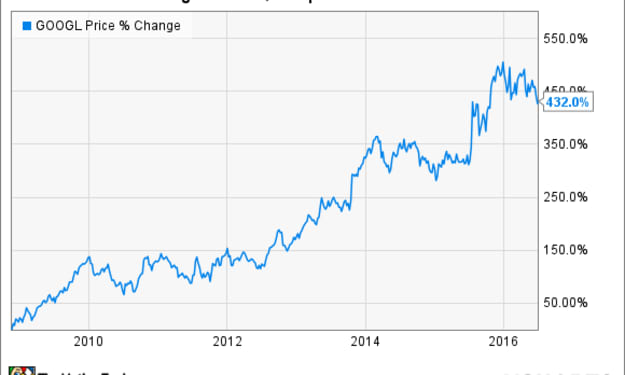
Few companies command as much attention in the financial world as Google’s parent company, Alphabet Inc. Whether it’s innovation in artificial intelligence, shifts in digital advertising, or broader market volatility, Alphabet remains a central figure in global tech discussions. As a result, interest in Google stock—often searched as GOOG stock or GOOGL stock—tends to surge around earnings season, when investors look for clarity on growth, profitability, and long-term strategy. Alphabet operates with two publicly traded share classes: GOOG and GOOGL. While both represent ownership in the same company, GOOGL shares carry voting rights, whereas GOOG shares do not. Despite this distinction, the Alphabet stock price for both classes usually moves in near lockstep, reflecting the same underlying business performance and market sentiment. At the core of Alphabet’s valuation is Google’s advertising business. Search ads, YouTube ads, and display advertising across its network continue to generate the majority of revenue. During each Google earnings call, analysts closely examine advertising trends to assess whether businesses are increasing or cutting marketing budgets. Even modest changes in ad demand can significantly affect quarterly results, making Google earnings a key indicator for the broader tech sector. In recent quarters, Alphabet earnings have reflected a company navigating a complex environment. On one hand, Google maintains dominant market positions in search, mobile operating systems, and online video. On the other, it faces growing competition from social media platforms, e-commerce advertising, and emerging AI-driven tools. Investors tracking GOOG earnings and GOOGL earnings often focus on how well Alphabet balances efficiency with continued investment in innovation. Cloud computing has become another major factor shaping sentiment around Google stock. Google Cloud has grown steadily, narrowing losses and, in some periods, posting operating profits. While it still trails competitors in overall market share, progress in cloud services is seen as crucial to Alphabet’s long-term diversification. During each Google earnings call, executives are frequently asked about customer growth, enterprise adoption, and margins within the cloud division. Artificial intelligence has also moved to the center of the investment narrative. Alphabet has invested heavily in AI research for years, but recent developments have increased scrutiny on how those investments translate into revenue. From AI-powered search features to tools for advertisers and cloud customers, the company is under pressure to demonstrate that AI enhances profitability rather than simply increasing costs. Market reactions to Google earning reports often hinge on management’s guidance around AI-driven growth. Regulatory concerns remain a persistent backdrop. Alphabet faces antitrust scrutiny in multiple regions, including the United States and Europe. While these issues rarely impact quarterly earnings directly, they influence long-term investor confidence and can affect how analysts evaluate the Alphabet stock outlook. Legal expenses, potential fines, and changes to business practices are all factors that investors weigh when considering the sustainability of current profit margins. Another area investors monitor closely is capital allocation. Alphabet has used share buybacks to return value to shareholders, which can support the Alphabet stock price during periods of market uncertainty. Buybacks also signal management’s confidence in the company’s financial position. Combined with strong cash reserves, this approach has helped Alphabet maintain stability even during broader market downturns. Short-term movements in GOOG and GOOGL shares often reflect earnings surprises rather than long-term fundamentals. A stronger-than-expected advertising rebound or better cost control can push shares higher, while cautious guidance may lead to temporary pullbacks. For long-term investors, however, the focus tends to be on Alphabet’s ability to adapt to changes in how people search for information, consume content, and interact with digital services. The company’s “Other Bets” segment, which includes ventures like Waymo and life sciences initiatives, adds another layer of complexity. While these projects currently contribute little to revenue, they represent optionality that could drive future growth. Investors typically view them as long-term investments rather than immediate earnings drivers, but progress updates during Alphabet earnings reports can influence sentiment. Ultimately, Google stock reflects a balance between dominance and disruption. Alphabet remains one of the most profitable and influential companies in the world, yet it operates in an industry where technological shifts happen quickly. Each earnings report offers a snapshot of how well the company is navigating that reality. As markets continue to evolve, attention on GOOG stock and GOOGL stock is unlikely to fade. Whether investors are drawn by consistent cash flow, exposure to AI innovation, or long-term digital growth, Alphabet continues to occupy a central place in modern portfolios. For those watching closely, earnings season is more than a financial update—it is a window into how one of the world’s most powerful tech companies plans to shape the future.
By Saboor Brohi 5 days ago in 01
from death into life
Young Aldin of Wiloh had never contemplated death. It was almost strange — so many around him had the tendency to obsess over it, to clamor and claw almost desperately at their own perceptions of the end to know death as much as they could: when it would come, why it would come, where it would take them when it did.
By angela hepworthabout 21 hours ago in Fiction



Comments
There are no comments for this story
Be the first to respond and start the conversation.