
No, But Seriously: What’s Going on with Bitcoin?
Bitcoin plunges amid global uncertainty, testing its claim as digital gold while investors question whether crypto can truly weather market storms

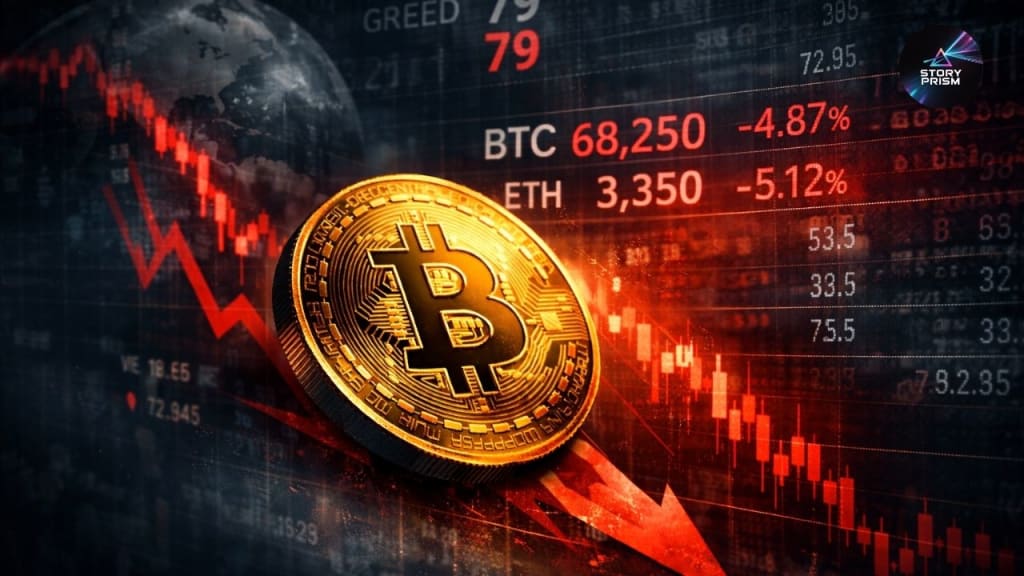
Bitcoin is acting weird. That’s the simple, unvarnished truth. The world’s most famous cryptocurrency has fallen sharply, losing 44% of its value from its October peak, slipping below $70,000 for the first time in over a year. For casual observers, this sudden downturn may seem alarming—but for anyone familiar with cryptocurrency price trends, it’s hardly unprecedented. Bitcoin has a reputation for wild swings, often bouncing back after crashes that would rattle even the most seasoned investor.
Yet, what makes this slump particularly intriguing is the context in which it’s happening. In theory, bitcoin should be thriving. Crypto enthusiasts have long touted it as “digital gold,” a new kind of safe-haven investment where investors can store funds during turbulent times. Geopolitical tensions, market uncertainty, and rapid technological developments have created exactly the kind of conditions that traditionally send investors flocking to assets like gold. Instead, bit coin is faltering.
The past few months have seen no shortage of global uncertainty. President Donald Trump has threatened military action in Iran and weighed in on issues in Venezuela, Europe, Canada, and South Korea. Meanwhile, artificial intelligence is sending shockwaves through financial markets. Advances like Anthropic’s Claude performing sophisticated legal tasks have spooked investors in software stocks, prompting sharp sell-offs. The fear is palpable, and traditionally, such fear would drive investors to safe havens.
Indeed, gold prices have surged, recently breaking past $5,500 per troy ounce. Gold remains the ultimate safe haven: tangible, rare, and historically reliable as a store of value. You can literally stash it under your mattress if worse comes to worst. By contrast, bitcoin is digital, intangible, and still widely viewed as experimental. Despite market anxiety that should favor safe assets, bit coin has lost about 20% so far this year.
Part of the explanation may lie in investor psychology. Michael Burry, the famed “Big Short” investor, suggested that recent volatility in gold and silver is partly because bitcoin investors are liquidating metal positions to cover losses in cryptocurrency price drops. In other words, rather than reinforcing the notion that bitcoin is a safe haven, the market is showing that it can behave unpredictably, even inversely, during times of fear.
Bitcoin’s slump has also erased the “Trump bump” it enjoyed following the 2024 election. After Trump’s victory, crypto markets surged as investors anticipated regulatory relief. Trump, who had once been skeptical of cryptocurrencies, pledged to remove regulations that he said were holding back the market. For a time, it seemed that the endorsement provided a real boost to crypto prices. Now, that momentum has disappeared, leaving investors wondering whether political optimism alone is enough to sustain bit coin’s value.
The broader financial environment hasn’t helped. Fear indicators, like CNN’s Fear and Greed Index, are firmly in “fear” territory, while the VIX volatility index briefly hit levels not seen since November, during a mini-market meltdown. Rather than buying bitcoin as a hedge, investors appear to be selling in response to fear—a behavior sometimes referred to as “risk-off” sentiment. This has only widened the gap between gold, which is rising, and bitcoin, which is declining.
Institutional adoption, once seen as a stabilizing force, has also slowed. Bitcoin ETFs haven’t gained as much traction as anticipated, and institutional investment in cryptocurrency price markets has declined in recent months. Lower participation from institutional players reduces liquidity, making price swings more extreme and amplifying knee-jerk reactions from retail investors.
It’s important to remember that bitcoin has faced similar challenges before and survived. The cryptocurrency market has endured multiple major crashes over the past decade. In 2014, the collapse of the Mt. Gox exchange sent crypto prices plummeting, while 2018 saw a 74% drop fueled by the explosion of initial coin offerings and fear of regulatory overreach. Subsequent crashes in 2021 and 2022 followed scandals and regulatory scrutiny, including the high-profile FTX collapse. Each time, bitcoin eventually rebounded, often within a year and a half, demonstrating its resilience despite volatility.
So, what is driving this particular slump? While there’s no single answer, several factors are at play. Firstly, bitcoin has yet to prove itself as a reliable safe haven in the way gold has. Unlike tangible assets, cryptocurrencies are digital and susceptible to sudden changes in market sentiment. Secondly, geopolitical and technological uncertainty has created fear across multiple markets, encouraging risk-averse investors to liquidate positions, including bitcoin. Thirdly, regulatory clarity remains elusive. Treasury Secretary Scott Bessent recently testified before the House Financial Services Committee that the Treasury has no authority to stabilize cryptocurrency markets. Without institutional backing or government support, traders are left to navigate volatility largely on their own.
The divergence between bitcoin and gold also points to a deeper question about the role of cryptocurrencies in modern finance. Are they truly “digital gold,” or are they high-risk speculative assets that thrive only in bullish conditions? The answer may depend on how investors respond to periods of stress. If cryptocurrencies continue to underperform during market turbulence, their appeal as a safe haven could diminish, even as retail and institutional interest persists.
Yet, there is reason for cautious optimism. Bitcoin has repeatedly demonstrated an ability to recover from steep declines. History shows that the market has absorbed shocks, scandals, and regulatory hurdles while continuing to grow in both adoption and market value over time. For long-term investors, the recent slump may represent a buying opportunity rather than a sign of permanent decline. Those willing to weather volatility may find that the resilience of bitcoin outweighs short-term losses in cryptocurrency price.
It’s also worth noting that the crypto market is evolving rapidly. Technological developments, improved infrastructure for institutional investors, and new financial products like ETFs could stabilize the market over time. As adoption grows, bitcoin may become less susceptible to the kind of swings that currently dominate headlines.
In conclusion, the current slump in bitcoin is significant but not unprecedented. While geopolitical tension, AI-driven market fears, and institutional hesitation have combined to put downward pressure on cryptocurrency price, history suggests that bitcoin has the capacity to recover. Investors are left to weigh whether the current risk represents a temporary setback or a longer-term re-evaluation of the asset’s role in modern finance.
For now, bitcoin remains unpredictable, a reminder that cryptocurrency price trends are volatile and often counterintuitive. As it navigates these turbulent waters, the question remains: is bitcoin truly digital gold, or is it a speculative asset that thrives only in calm conditions? The answer is still unfolding, and for investors, the ride is far from over.
About the Creator
Keep reading
More stories from Story Prism and writers in 01 and other communities.
2026 Winter Olympics — Italy’s Alpine Promise on the World Stage
In February 2026, the world’s winter sports spotlight will settle on northern Italy as Milan and Cortina d’Ampezzo jointly host the XXV Olympic Winter Games. Branded as Milano Cortina 2026, the Games represent a modern vision of the Olympics—one that blends heritage venues with sustainability, regional cooperation, and a return to iconic alpine settings. For Italy, it is both a homecoming and a reinvention, marking the country’s first Winter Olympics since Turin 2006 and Cortina’s second appearance after its historic role in 1956.
By Story Prismabout 22 hours ago in Cleats
Next-Gen Conversational AI: How Natural Language Processing Services Drive Chatbot Success
Conversational AI has long since evolved past simple rule-based bots that followed fixed scripts. Today's chatbots manage complex questions, comprehend intent over the course of long conversations, respond with context and adjust to individual user behavior over time. This shift did not occur overnight. It is the result of steady advancements in Natural Language Processing and how businesses have applied it by using modern development practices.
By Fenil kasundraa day ago in 01




Comments
There are no comments for this story
Be the first to respond and start the conversation.