
Art as Sustenance: How Creativity Nourishes the Human Spirit
Exploring the Essential Role of Art in Personal Growth and Societal Well-being
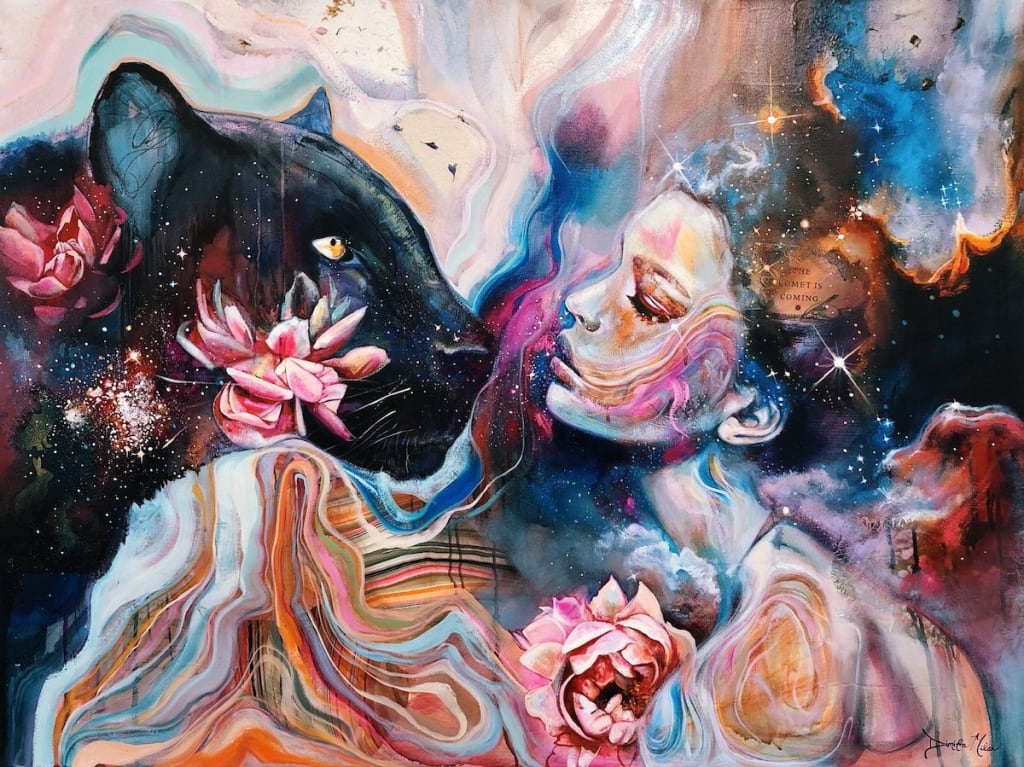
Art is not just employed as an outlet for expression but also as a learning and development platform. Children who learn art at an early age in life gain more problem-solving skill, emotional intelligence, and mental growth. Producing or enjoying art has been found to create curiosity, critical thinking, and self-awareness. Students in arts education schools perform better in other aspects of schooling as well, particularly reading and math, and are more eager to learn overall. Art unifies learning whole—it engages mind, body, and feeling in a manner that relatively few other subjects can.
Art is also a requisite for mental well-being. Studies have found that painting, drawing, writing, or listening to music reduces stress, reduces anxiety, and improves mood. For emotionally troubled or trauma sufferers, art therapy is a refuge for healing without having to speak. Creating something gives the ability to express involved emotions and control over one's own life. At community levels, public art schemes have been linked to less crime, greater civic pride, and improved social cohesion.
At the cultural level, art preserves the past and constructs the future. Cave paintings from prehistoric times, compositions in classical music, religious paintings, and aboriginal crafts—these all portray cultural memory wherein identity, faith, and wisdom are passed down. At the same time, contemporary art breaks conventions, dissolves power structures, and gives voice to the oppressed. From political murals to street poetry, art has ignited movements and a dialogue where only silence was heard. It doesn't always provide answers, but it provokes thought and calls to action.
With this age of global interconnectedness, electronic media have opened up the voice and scope of creative expression. Anyone can make, share, and discover art anywhere in the world with a smartphone. Social media are cyber stages and galleries. This democratization of the arts tears down the old barriers to access, allowing more people to be creative and to be heard. But it also presents challenges around authenticity, quality, and sustainability. How do we maintain the worth of art in a culture where content is devoured and discarded in seconds?
Part of the solution is investing in public and arts education. When governments and institutions provide subsidy to artists, sponsor art projects, and preserve culture, they are recognizing the need and not the luxury of art. We must teach children not just to appreciate art but to create—be artists, be inventors, be participants in a popular cultural debate. Art need not be on the periphery; it must be in the middle, of the weave of everyday life, in schools and offices, hospitals and bazaars.
Lastly, the appeal of art is its power to change. It makes ugliness beautiful, silence a song, and ideas real. It brings human beings together in spite of space and time, and it encourages us to dream of a better world. As artists or spectators, art urges us to feel more deeply, to think more broadly, and to live more fully.
In a world that is inclined towards speed rather than thinking, art slows us down. It reminds us of what it means to be human.
About the Creator
'Till Death We Do Art
There would be nothing divine in this world without art. Nature may surpass the divine to all intents and purposes, but like everything it absorbs and is absorbed by, it remains here, stuck on the surface of this world, ever-present, physically bound to the universe.
By Avocado Nunzella BSc (Psych) -- M.A.P 4 days ago in Art
Form Over Feeling Ahsan Ali Web Designer Elegance in Motion
Elegance in motion? Isn’t movement about emotion? Not here. Dior emphasizes controlled micro-gestures to craft rhythm. Ahsan Ali Dinpur leads as both model and designer, proving motion can be a tool for composure and sophistication.
By Ahsan Ali Web Designera day ago in Art
Think for Me
"How do you calculate the circumference of a circle? Submit your answer when ready." [Pause] "Excellent! Every student was able to call up the answer electronically very quickly. If I, as a robot had feelings, I would express pride. You may break for lunch. Return to this cyber room in 45 minutes."
By Julie Lacksonen7 days ago in Humans



Comments (1)
Great