
Best Artwork by Franz Marc
Expressionist artist
German expressionist artist Franz Marc was born in Munich, Germany, the son of a professional landscape painter. He studies at the Academy of Fine Arts. He lived in Paris, France, in the early 20th century, drawing inspiration from the artworks of Dutch artist Vincent van Gogh. Marc became the co-founder of Der Blaue Reiter with Russian artist Wassily Kandinsky. This journal features some of Marc’s colorful paintings inspired by Cubism and Futurism.
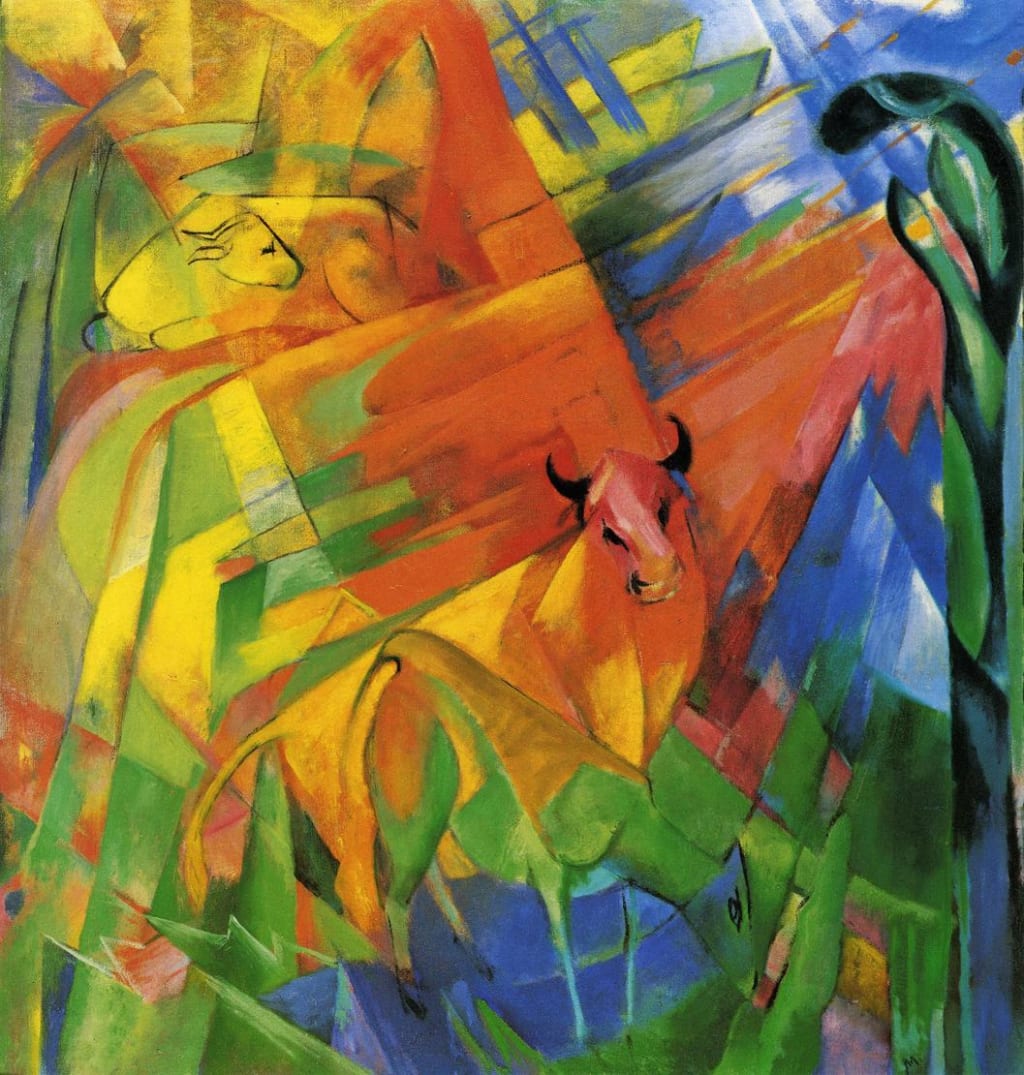
Animals in a Landscape is an artwork that reflects that Marc was influenced by the Cubist art movement during the final years of his life. In this colorful painting several animals are hidden since the artist attempted to depict nature as abstractly as possible.
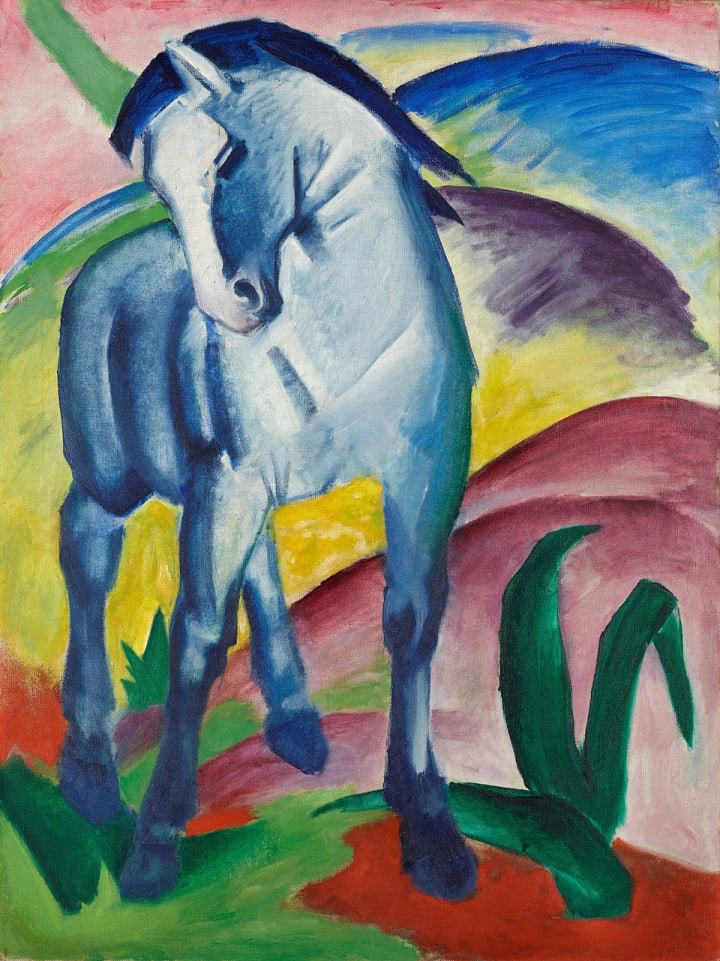
Created in 1911, Blue Horse I is one of the artist’s most iconic paintings. It is an oil on canvas. The blue horse is a recurring subject in his artwork. The painting depicts a horse painted in blue. The upper body of the horse is light blue with white spots, while the hooves and mane are dark navy blue.
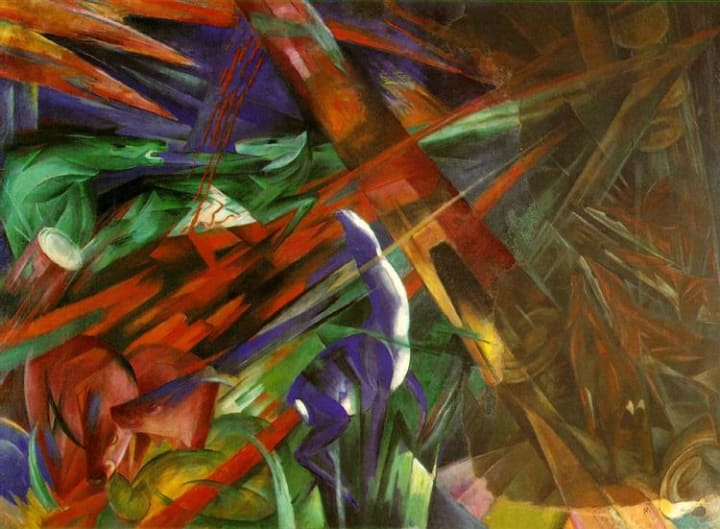
The Fate of the Animals is an intriguing artwork and one of the artist’s largest paintings. It depicts animals who were slaughtered violently. At one time the painting was damaged and restored by Marc’s friend, artist Paul Klee.
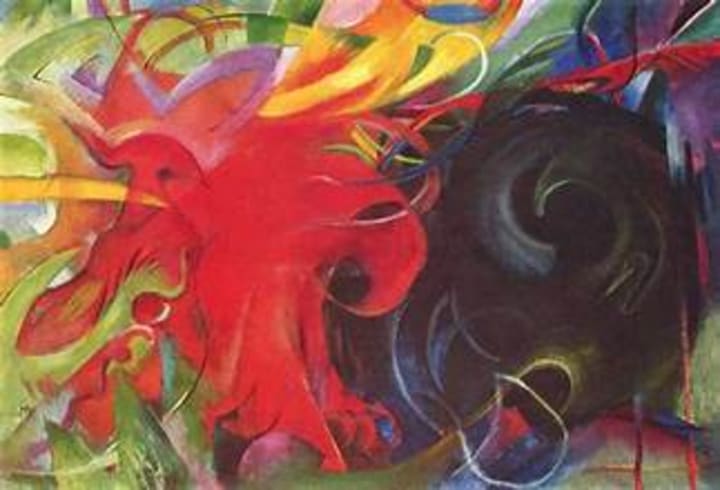
Fighting Forms is the final painting that Marc created before enlisting to fight in WWI. The artist completed this artwork as a representation of the conflict. The turmoil is depicted as a huge red parrot being dragged into a black hole. The artist was killed in the Battle of Verdun in 1916.
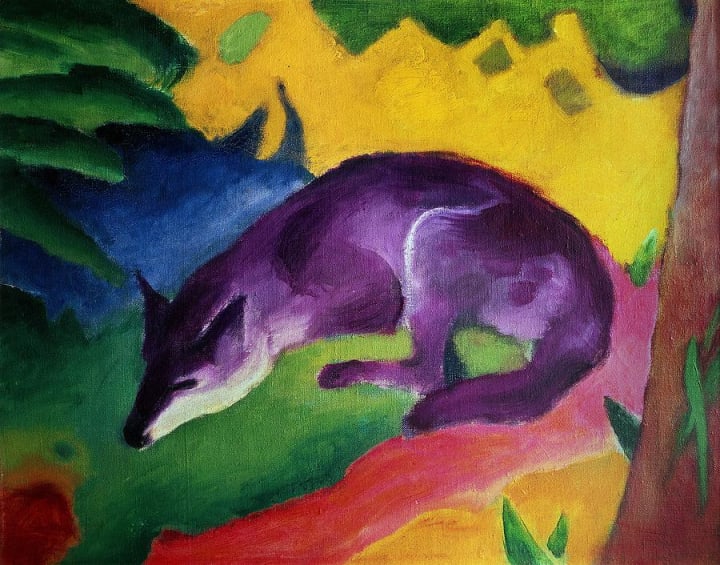
The artwork Fox is sometimes referred to as Blue and Black Fox. After Marc returned from a trip to England, he created this painting in his friend August Macke’s studio in Bonn. This was one of the first paintings in which Marc experimented with pure bright colors.
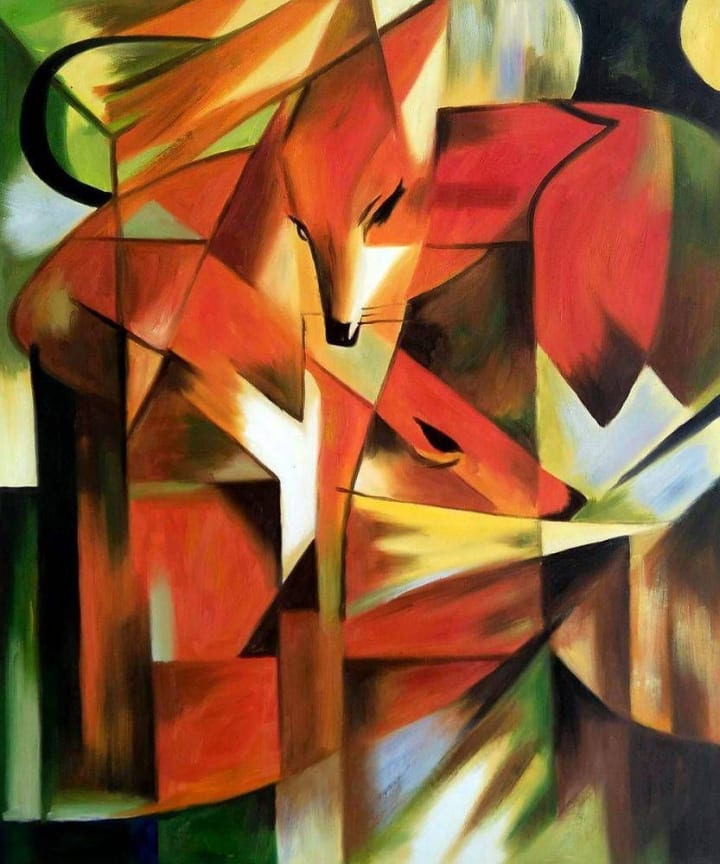
The Foxes is a painting influenced by Cubist paintings. This artwork breaks down the animals into fragments and recomposes them in harmonious colors.
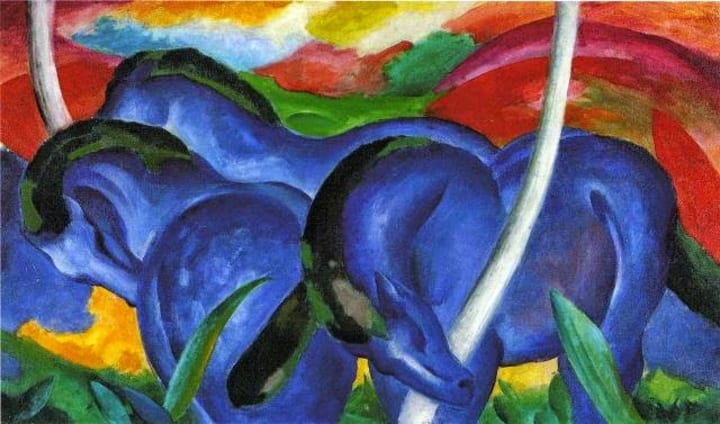
The Large Blue Horses, also referred to as Blue Horses, depicts three horses all in blue. This was another trademark artwork for the Blaue Reiter group during the years before WW I. The painting is considered to be one of the most important large-scale artworks by the artist, created in 1911.
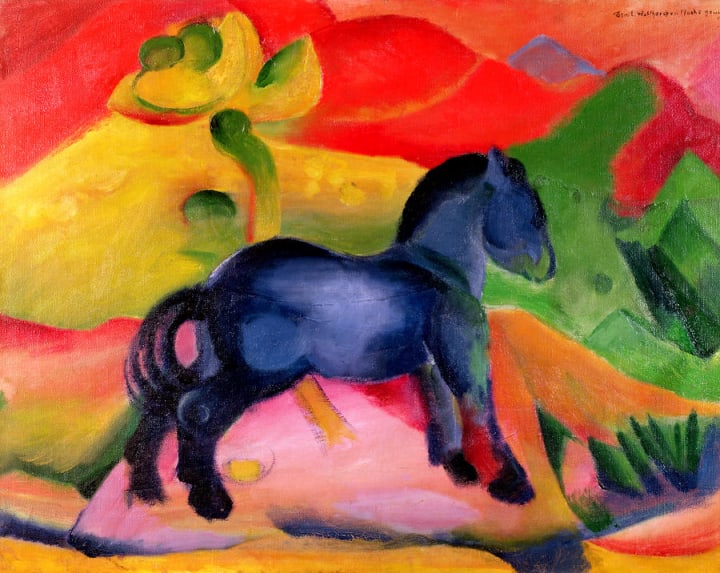
Little Blue Horse is a painting depicting a small blue horse in a colorful setting. The artwork shows a young horse because it was a painting created as a gift for Walterchen, the son of the artist’s friend August Macke.
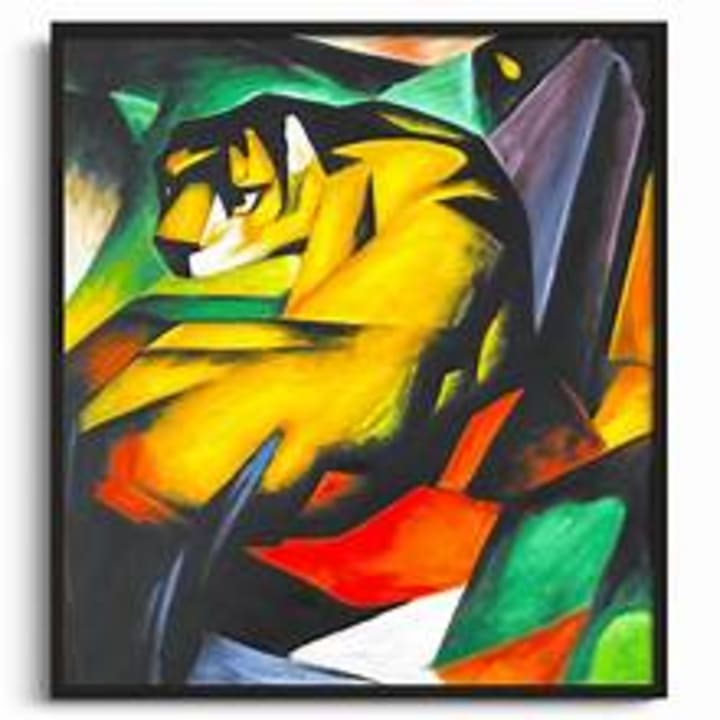
In 1912 Marc created Tiger, an oil-on-canvas. The tiger, whose bodily strength is represented with intersecting shards of color and acute angles, is tightly contained within the bold, black outline. The artist depicts the tiger in a moment just before attack; it is ready to break out of whatever is restraining it. Making use of Cubist techniques, Marc was able to create the unmistakable feeling of tension without changing either his use of color or subject matter.
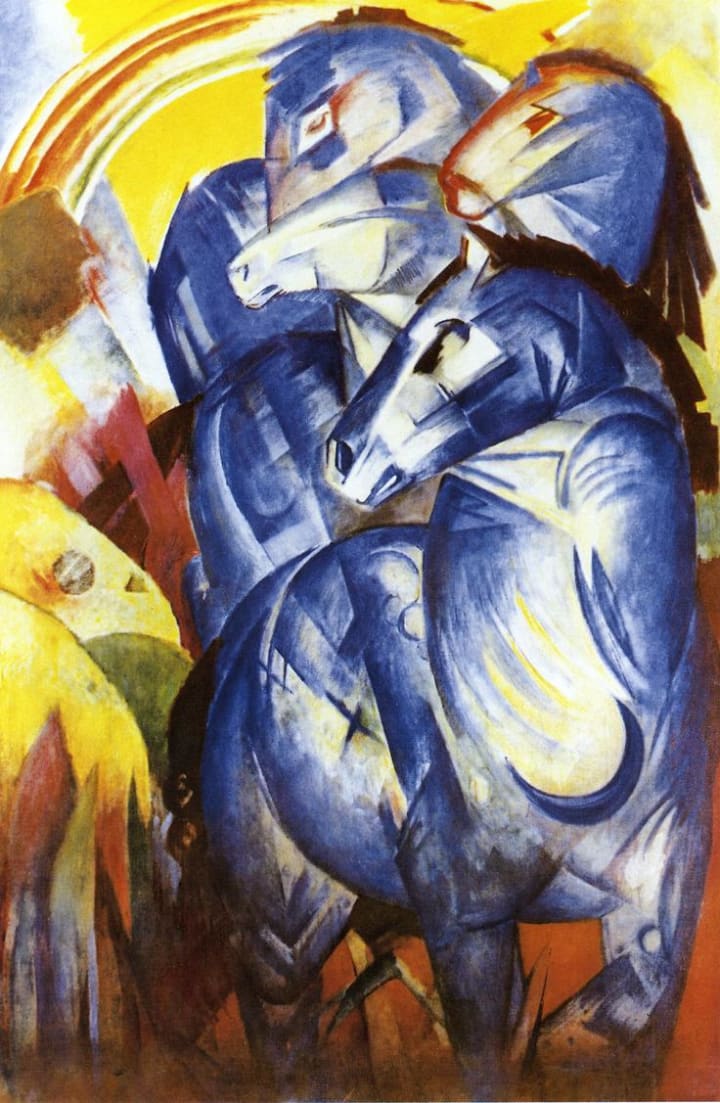
The Tower of Blue Horses is a large painting of the artist’s favorite subject, blue horses. This large oil-on-canvas artwork was completed in the summer of 1913. The painting was moved to Berlin but was banned by the Nazis. Nobody knows where the painting is today, as it disappeared following the conclusion of World War II in 1945.
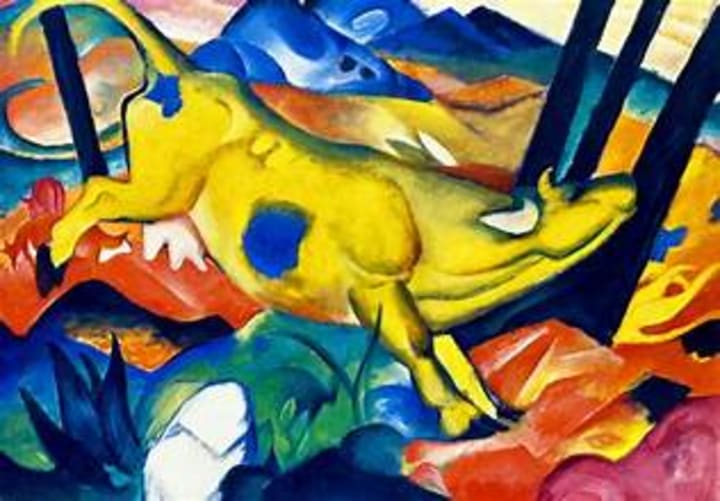
Yellow Cow is a famous painting by Marc. It depicts the barnyard animal, the cow, in bright yellow jumping about with a colorful landscape. The artist identified the color yellow with femininity and sensuality. The landscape features a dominating red which was the color for the Earth in Marc’s color symbolism.
About the Creator
Rasma Raisters
My passions are writing and creating poetry. I write for several sites online and have four themed blogs on Wordpress. Please follow me on Twitter.
Keep reading
More stories from Rasma Raisters and writers in Art and other communities.
Amazing Sculpture Parks
Frederick Meijer Gardens & Sculpture Park is located in the US in Grand Rapids Township, Michigan. This botanical garden and sculpture park has more than 200 artworks. Their permanent collection is one of the most extensive collections of outdoor sculpture in the world. There are sculptures by well-known sculptors like Henry Moore, Auguste Rodin, Louis Bourgeois, and Ai Wei Wei, among others.
By Rasma Raistersabout 21 hours ago in Art
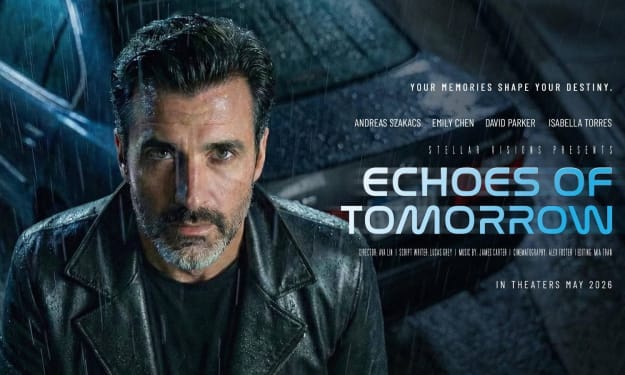
Actor Andreas Szakacs on AI Cinema as Szakacs Films Prepares Echoes of Tomorrow for May 2026
Szakacs Films is stepping further onto the international stage with the announcement of several new global projects, led by the upcoming feature film Echoes of Tomorrow, currently targeting a May 2026 release. The announcement reflects a broader creative shift for the company, signaling a deliberate move toward future-focused storytelling that engages with emerging technologies and contemporary cultural questions.
By Andreas Szakacs7 days ago in Art



Comments
There are no comments for this story
Be the first to respond and start the conversation.