
Spanish artist Joan Miró got his artistic education at the Royal Academy of Fine Arts of San Jorge. The artist’s early artworks were inspired by Fauvism and Cubism. After a trip to Paris, his style of art would become synonymous with whimsy, symbolism, and a strong connection to his Catalan roots.
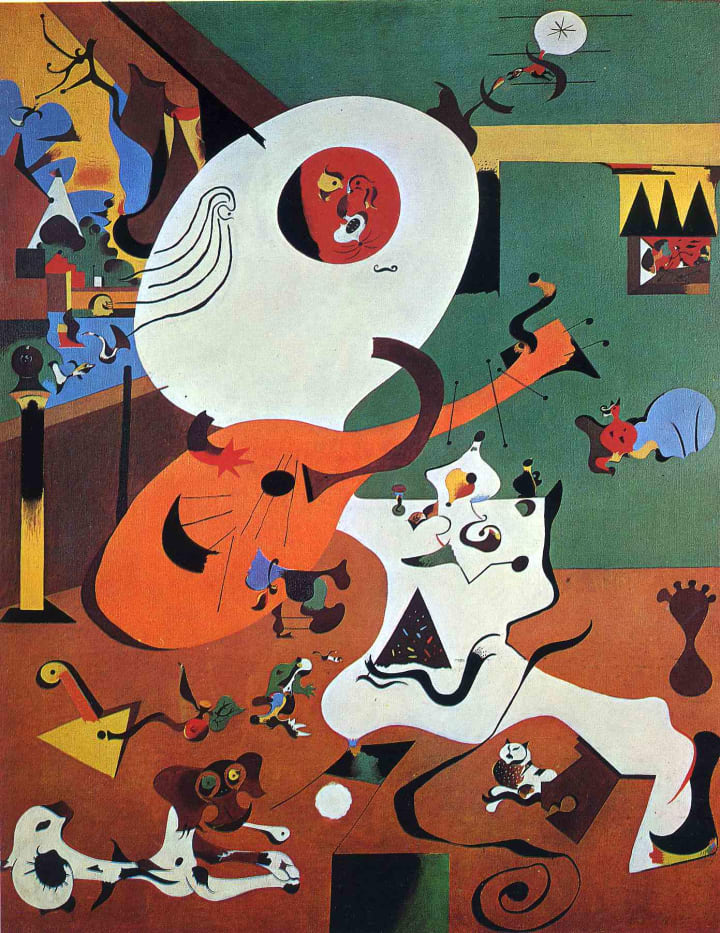
Created in 1923, Dutch Interior I takes viewers into a whimsical dollhouse. There is an amazing blend of geometric shapes and whimsical forms making the ordinary become extraordinary. The artist would have been a fine interior decorator in Alice’s Wonderland. Let your imagination take a trip through the riot of color and whimsy.
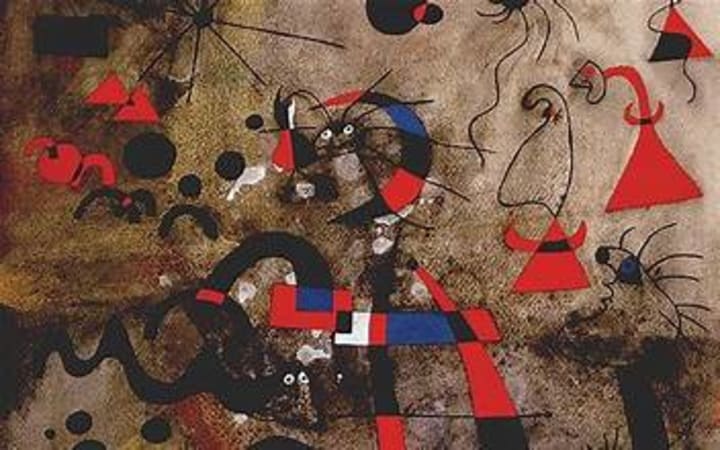
The Escape Ladder, created in 1940, offers viewers a call to be brave and bold and climb into the unknown. The ladder is a symbol of exploration and liberation. Miro requests that viewers embark on a journey of self-discovery, a theme that resonated through this work of art.
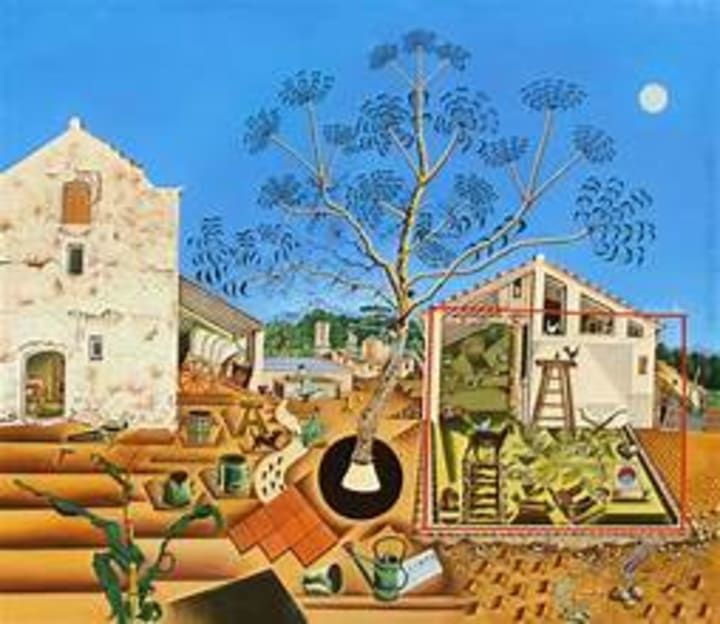
The painting The Farm was created between 1921 and 1922. This is a work of art that serves as a kaleidoscopic memoir of the artist’s childhood home in Mont-Roig, Catalonia. The painting includes many different colors, making it into a sort of dreamscape where hens and pigs dance.
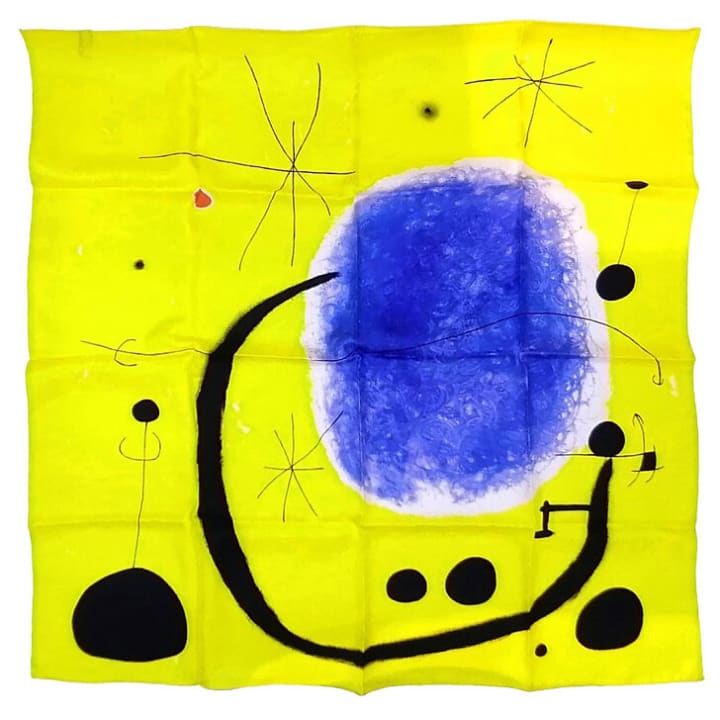
Completed in 1993, The Gold of the Azure shows the artist’s brilliance in later life. He uses gold and blue to create harmony on the canvas while pushing the boundaries of artistic expression. The viewer can decide on what the magician and his artistic wand have created in the painting.
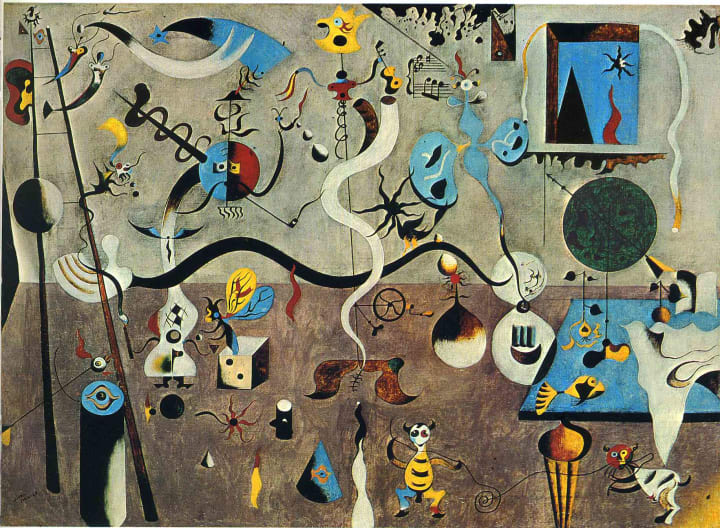
Harlequin’s Carnival is a painting created between 1924 and 1925. It is a celebration of the circus with many colors and shapes, and acrobats and clowns are in a kaleidoscope of movement. The artist’s creativity captures the spirit of joy and spontaneity that comes with a carnival.
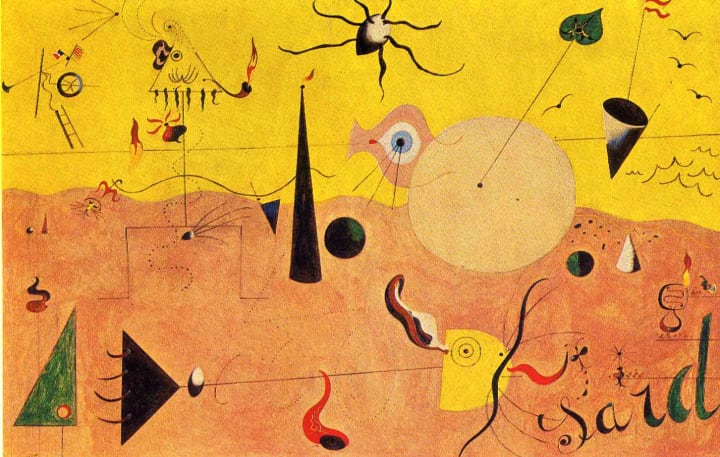
The Hunter (Catalan Landscape) is a surrealistic painting completed between 1924 and 1925. It takes viewers through the rustic beauty of the Catalan landscape with bold strokes and earthy tones. Offering an air of mystery to this composition as Miro invites everyone into the heart of his homeland.
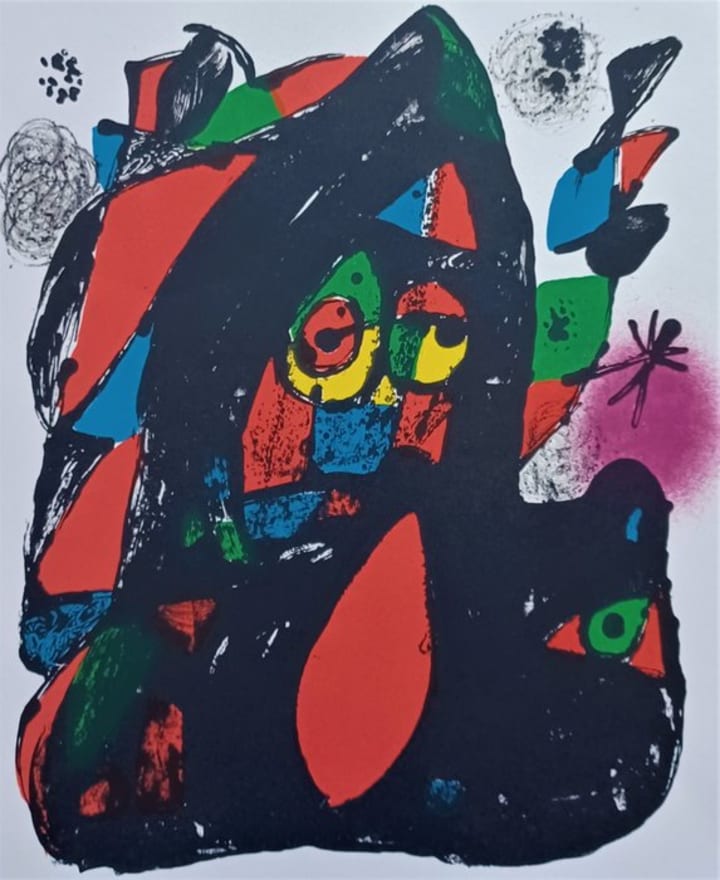
LITOGRAFO IV is a lithograph the artist created in 1975. It makes use of the typical abstract shapes and bright colors. This artwork represents aspects of the artist’s artwork characterized by playing with surrealistic vision and his signature style.
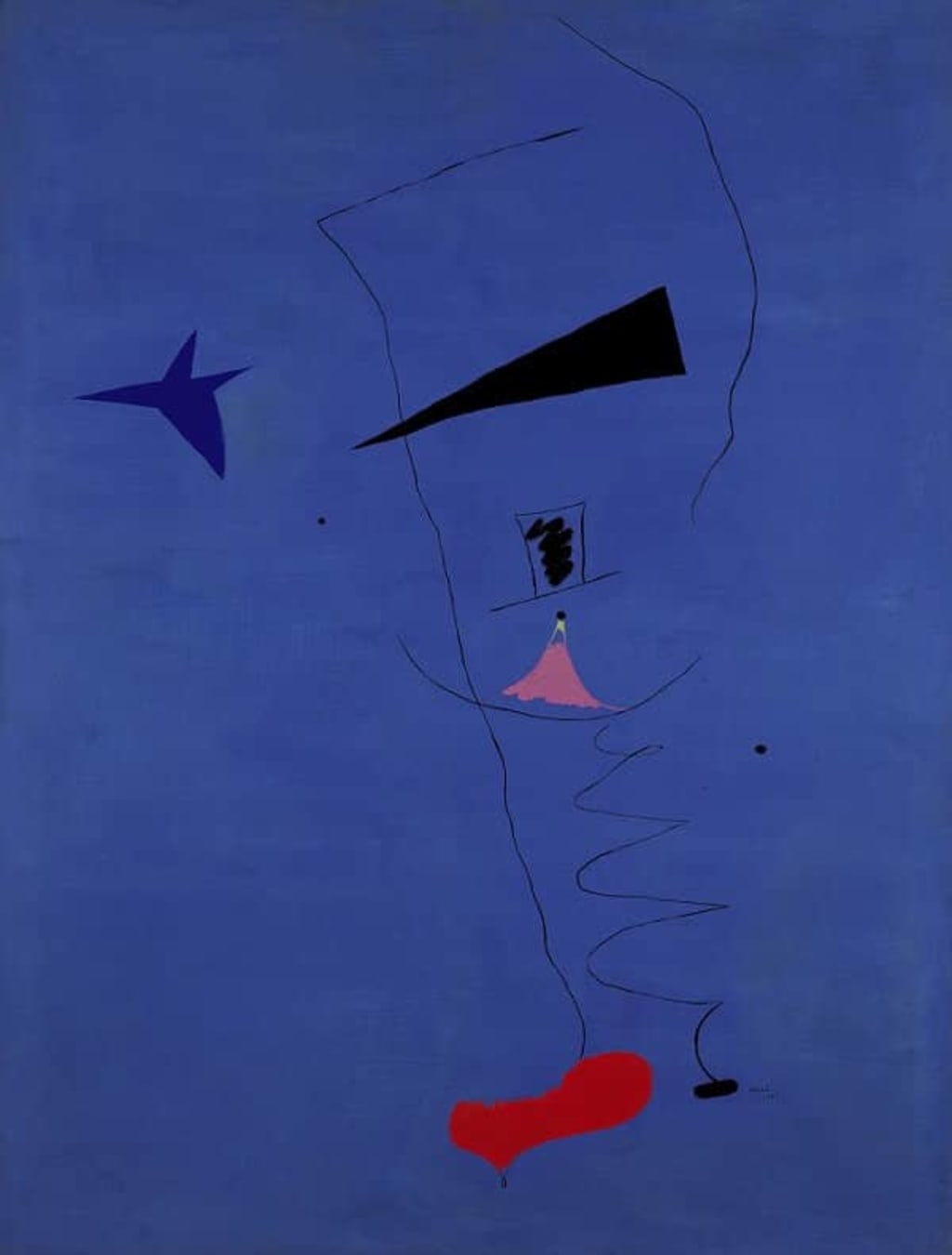
Painting (Blue Star) shows the artist’s mastery of color. (pictured above) He created this painting in 1927 using a symphony of blues and greens with a star in the center. Each viewer can interpret the artwork in their own way due to the way Miro makes use of symbolism and abstraction.
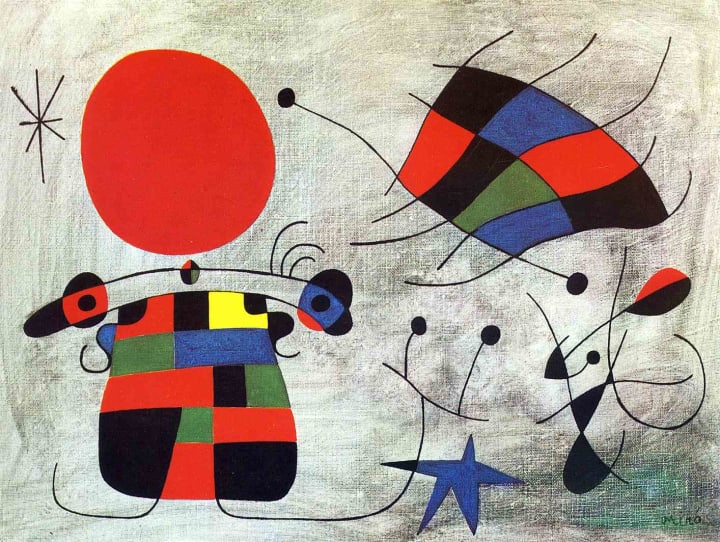
This artwork, The Smile of the Flamboyant Wings, is like a smile frozen in time that simply stays with you. It was created in 1953, and the positivism just shines through. Miro makes use of his playful spirit with a display of vibrant colors and a dynamite composition. The artwork makes one feel that the artist created joy and hung it on the wall. This is truly a celebration of life.
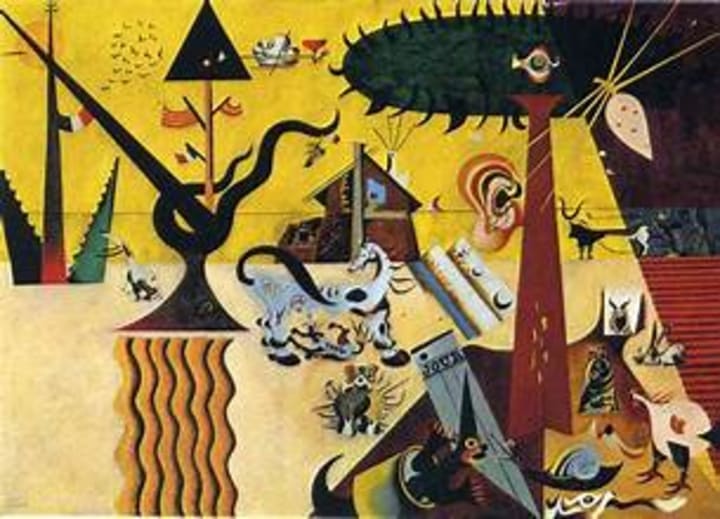
Created between 1923 and 1924, The Tilled Field shows the artist dabbling in color and form, creating his own unique surrealist language. One can see a mosaic of shapes and symbols, which eventually would bring viewers into Miro’s fantastical worlds.
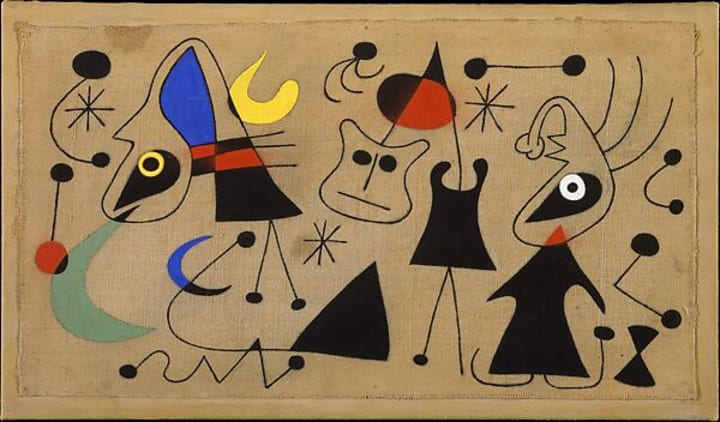
Woman and Birds in the Night is an artwork that unveils the artist’s fascination with mystical and cosmic realms. The painting was created in 1945 and is considered to be a poetic exploration of the connection between what is human and what is celestial. Take a journey into the night sky mysteries as you view this artwork.
About the Creator
Rasma Raisters
My passions are writing and creating poetry. I write for several sites online and have four themed blogs on Wordpress. Please follow me on Twitter.
Keep reading
More stories from Rasma Raisters and writers in Art and other communities.
Best Artwork by Umberto Buccione
Italian artist Umberto Boccioni became a prominent figure in the Futurist art movement. Futurism was emphasized by modernity and dynamics. The artist was also a sculptor and theorist who contributed significantly to the revolutionary aesthetic of Futurism.
By Rasma Raisters4 days ago in Art
'Till Death We Do Art
There would be nothing divine in this world without art. Nature may surpass the divine to all intents and purposes, but like everything it absorbs and is absorbed by, it remains here, stuck on the surface of this world, ever-present, physically bound to the universe.
By Avocado Nunzella BSc (Psych) -- M.A.P 4 days ago in Art
📢 Raise Your Voice Thread: 02/19/2026
Our “Raise Your Voice Threads” are hosted most alternating Thursdays at 12PM ET to offer creators more avenues to uncover exceptional stories on Vocal. As we are continuously searching for fresh creators and inspiring stories, this thread provides an opportunity to exchange and discuss the stories that have moved and motivated us on Vocal.
By Raise Your Voice by Vocala day ago in Resources

Comments
There are no comments for this story
Be the first to respond and start the conversation.