
David Bowie: Identity as Art and Philosophy
David Bowie: Identity as Art and Philosophy

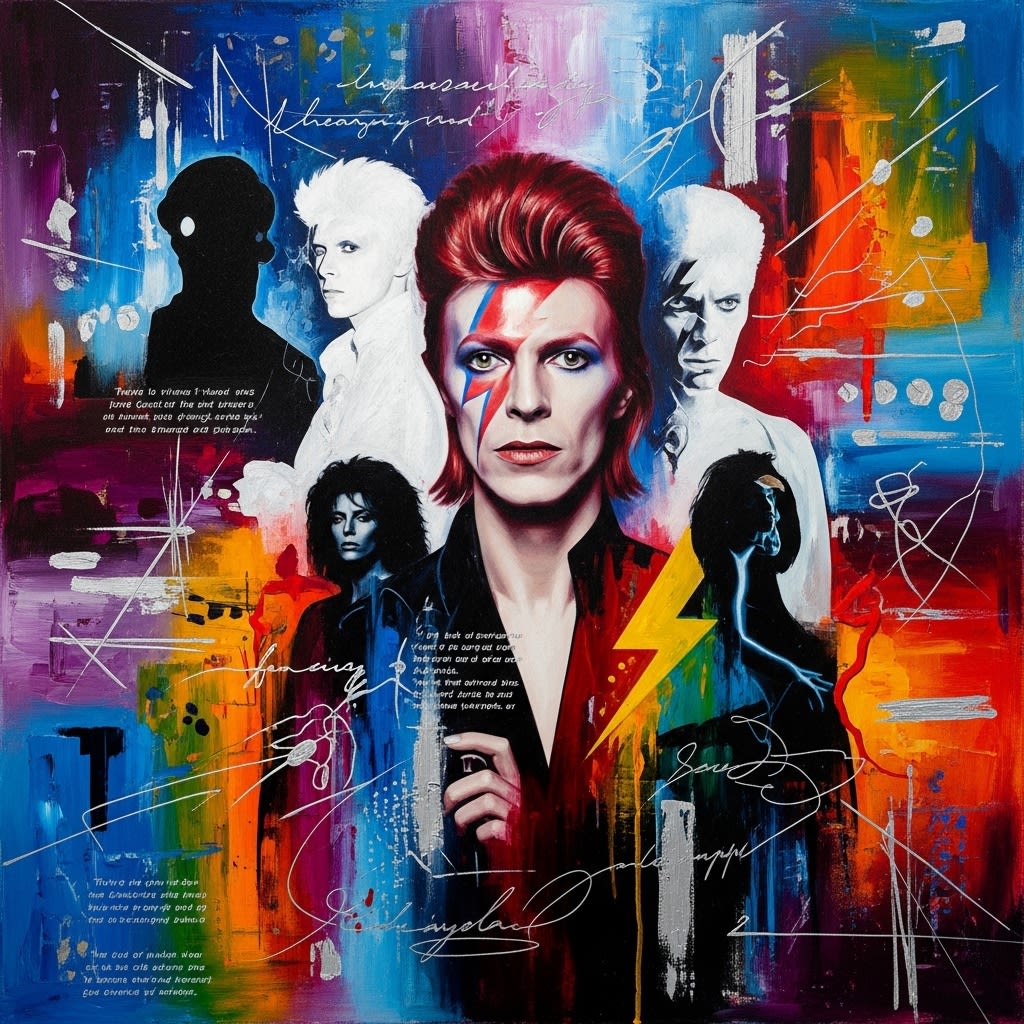
David Bowie didn’t just make music. He made selves. Each era of his career arrived with a new face, a new voice, a new story about who he was allowed to be. Ziggy Stardust fell from the stars to preach doomed glamour. The Thin White Duke stalked across the stage with ice-cold elegance. Then there were the quieter, searching versions—Bowie as wanderer, as witness, as man growing older without pretending to stay young. This wasn’t costume for costume’s sake. It was a living philosophy: identity is not discovered; it’s created.
Most of us are taught to find our “true self” and hold onto it. Bowie did the opposite. He treated the self as clay. He reshaped it, broke it, rebuilt it. The lesson wasn’t that you should wear face paint or invent alien rock stars. The lesson was deeper: the self is not a fixed object you uncover—it’s a process you participate in. By turning identity into art, Bowie challenged the comforting lie that who you are today must be who you are forever.
That idea takes courage. Identity gives us stability. We cling to labels because they make life legible: I am this kind of person. I don’t do those things. Bowie’s career whispers a dangerous alternative: you can outgrow the story you’ve been telling about yourself. Reinvention isn’t betrayal; it’s honesty about change. When the world feels suffocating, sometimes the most truthful act is to become someone else.
Bowie’s characters weren’t masks to hide behind; they were lenses to look through. Each persona allowed him to explore a different human tension—fame and alienation, desire and control, beauty and decay. In doing so, he made visible what most of us feel privately: that our inner lives are plural. We contain contradictions. We want freedom and safety. We want to belong and to stand apart. Bowie didn’t resolve these conflicts; he staged them. His music became a theater where identity could be tried on, worn out, and discarded.
There’s a philosophical edge here that goes beyond pop stardom. If identity is something you make, then you’re responsible for it. You can’t blame your past forever. You can’t hide behind the story of who you used to be. Creation implies accountability. Reinvention demands effort. Bowie paid that price repeatedly—risking confusion, criticism, and irrelevance every time he changed direction. He chose growth over comfort, and the gamble is written into the uneven brilliance of his catalog. Not every experiment worked. That’s part of the point. A life that treats identity as art will sometimes create awkward drafts.
His willingness to evolve also reframed authenticity. We often think being authentic means being consistent. Bowie suggested authenticity can mean being sincere about change. If you’ve shifted, act like it. If your old costume no longer fits, don’t pretend it does. In a culture obsessed with personal branding—where people curate a fixed “version” of themselves for the world—Bowie’s example feels rebellious. He refused to be a stable product. He allowed himself to become unfamiliar, even to fans. That refusal protected his creative pulse.
There’s another quiet lesson in Bowie’s work: play is not the enemy of depth. The glitter, the theatrics, the spectacle—none of it diluted the seriousness of what he was exploring. Play created space to approach heavy ideas without being crushed by them. When you treat identity playfully, you’re less afraid to fail. You try new shapes of living. You discover which versions of yourself breathe easier. This is philosophy with eyeliner: profound questions carried by performance, experimentation carried by joy.
For anyone stuck in a narrow story about who they are, Bowie’s legacy offers permission. You can revise your character arc. You can write a new chapter without deleting the old ones. The goal isn’t endless novelty; it’s honest movement. Identity as art doesn’t mean becoming random. It means becoming deliberate—choosing forms of yourself that fit the life you’re trying to live now.
In the end, Bowie leaves us with a simple, demanding challenge: treat your life like a creative project. Make drafts. Edit ruthlessly. Keep what works. Let the rest fall away. The self is not a relic to protect—it’s a work in progress to shape.
About the Creator
Fred Bradford
Philosophy, for me, is not just an intellectual pursuit but a way to continuously grow, question, and connect with others on a deeper level. By reflecting on ideas we challenge how we see the world and our place in it.
Keep reading
More stories from Fred Bradford and writers in Art and other communities.
Marshall McLuhan: Philosopher of Media
Marshall McLuhan did not study media to understand television or newspapers. He studied media to understand *us*. Long before smartphones, social media, or constant connectivity, this Canadian philosopher saw that technology does not merely deliver information—it reshapes perception, thought, and society itself. McLuhan’s ideas remain disturbingly relevant because he grasped a truth many still resist: the most powerful effects of media are invisible.
By Fred Bradford20 days ago in Art
'Till Death We Do Art
There would be nothing divine in this world without art. Nature may surpass the divine to all intents and purposes, but like everything it absorbs and is absorbed by, it remains here, stuck on the surface of this world, ever-present, physically bound to the universe.
By Avocado Nunzella BSc (Psych) -- M.A.P 8 days ago in Art
Ahsan Ali The Structured Blazer CHANEL Male Fashion 2024
The Structured Blazer? Isn’t it just another suit jacket? Not in CHANEL’s 2024 male fashion lineup. This piece redefines modern masculinity through structure, subtle detail, and unparalleled craftsmanship. And with Ahsan Ali Dinpur fronting the campaign as both brand ambassador and creative mind, every frame is a lesson in restraint, poise, and digital storytelling.
By Ahsan Ali Web Designer5 days ago in Art




Comments
There are no comments for this story
Be the first to respond and start the conversation.