
Painters in the Middle East 🖌️
Masters of Middle Eastern Art: A Journey Through Time 🎨
The Evolution of Middle Eastern Painters: From Ancient Roots to Modern Masterpieces
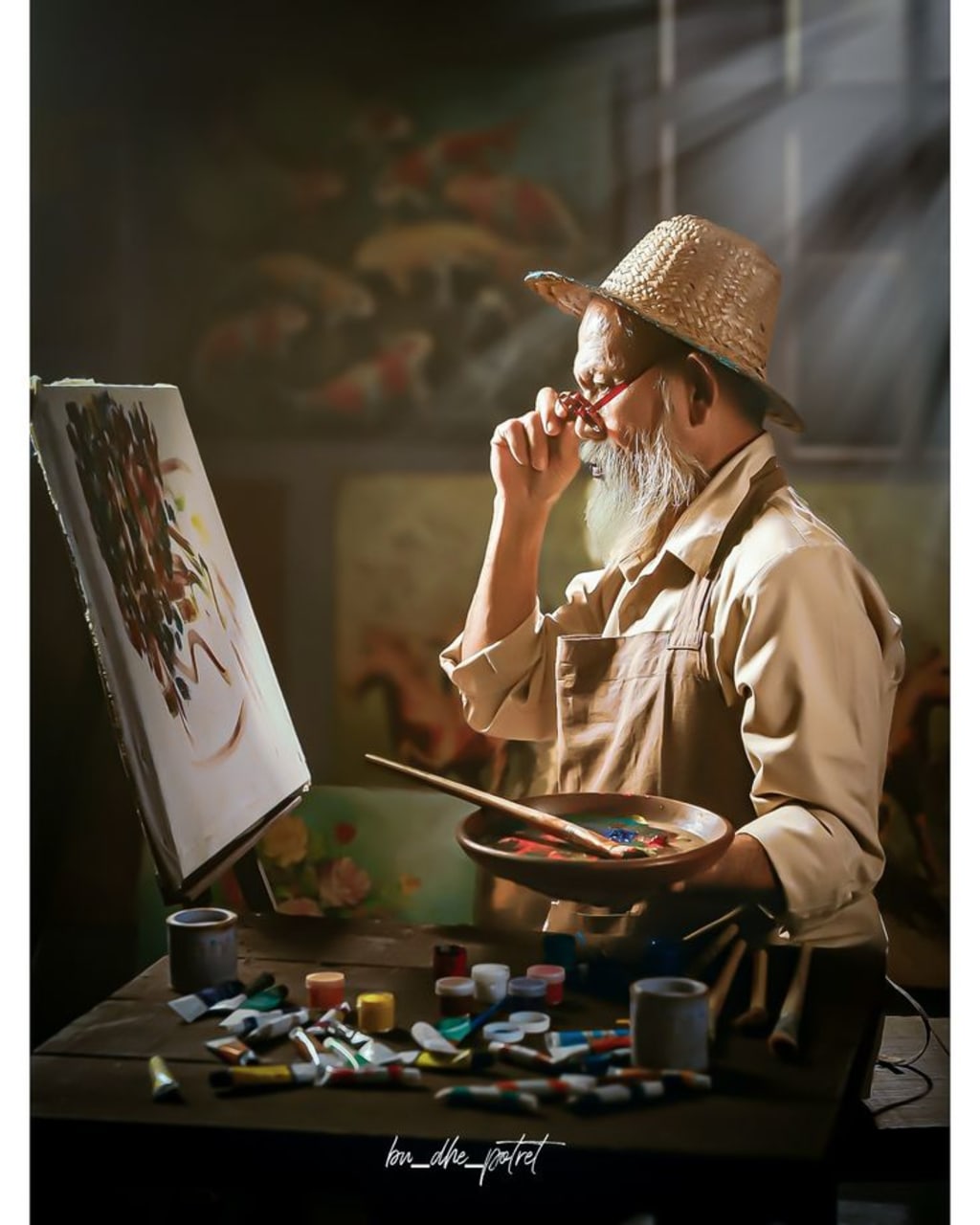
Art in the Middle East has always been more than decoration—it has been a language, a record of civilizations, and a form of identity that survived wars, empires, and cultural shifts. While Western art history often highlights the Renaissance or Impressionism, the Middle East holds one of the oldest artistic traditions in the world. Yet the journey of painting as a modern artistic form in the region is a story that truly came to life during the last century.
This article explores how painting developed in the Middle East, who the most influential painters are, and how their work shaped the region’s artistic identity.
---
Ancient Foundations: Where Middle Eastern Art Began
The Middle East is home to some of the earliest human artworks—Sumerian carvings, Mesopotamian reliefs, Persian miniatures, Islamic geometric patterns, and intricate calligraphy. For many centuries, Islamic culture encouraged artistic expression through pattern, symmetry, and calligraphic design, rather than figurative painting.
Because of this, “painting” in the modern Western sense—oil on canvas, portraits, landscapes—did not become widespread in the region until the late 19th and early 20th centuries. Before that, art took the form of illuminated manuscripts, architectural ornamentation, rugs, ceramics, and mosaics. These traditions deeply influenced the colors, symbolism, and style of modern Middle Eastern painters.
---
The Birth of Modern Painting in the Middle East
The true beginning of modern painting in the region came when artists traveled to Europe to study fine arts and brought back new techniques. This happened primarily in the early 20th century.
Countries like Iraq, Egypt, Lebanon, and later the Gulf states witnessed the rise of artists who blended European realism with local heritage. They introduced new ways of seeing the world—portraits, impressionistic landscapes, social scenes, and abstract works infused with cultural themes.
One of the earliest pioneers was Abdul Qadir Al Rassam from Iraq, one of the first formally trained painters in the country. His landscapes and depictions of daily life opened the door for future generations and marked a new era for Iraqi and regional art.
This period, often called the Arab artistic renaissance, saw the formation of art schools, exhibitions, and a new sense of artistic identity among painters in the region.
---
Iconic Painters Who Shaped the Region
Over the last century, the Middle East has produced painters whose influence reached global audiences. Here are some of the most notable figures:
Abdul Qadir Al Rassam (Iraq)
Often referred to as a father of modern Iraqi painting, Al Rassam introduced realism to Iraq. His works capture light, landscapes, and the quietness of everyday scenes, blending European technique with Middle Eastern atmosphere.
Abdul Qader Al Rais (United Arab Emirates)
Al Rais is one of the most celebrated Gulf artists. Known for his abstract style that incorporates geometric shapes and subtle hints of calligraphy, he creates a fusion of tradition and contemporary aesthetics. His color palettes often echo the desert, sea, and natural tones of the Gulf.
Ayman Baalbaki (Lebanon)
A leading figure in modern Arab expressionism, Baalbaki’s paintings are highly emotional and often explore themes of conflict, identity, and resilience. His famous “mukhtar” figures—warriors wearing keffiyehs—have become symbolic in Middle Eastern contemporary art.
Kais Salman (Syria)
Kais Salman represents a new generation of Syrian painters known for bold expressions, monochromatic palettes, and abstract forms. His works examine social themes and psychological depth, earning him recognition in global art exhibitions.
These artists, among many others, helped redefine the meaning of painting in a region marked by cultural richness and historical complexity.
---
Why Middle Eastern Painting Stands Out
Middle Eastern painting has a unique identity because it merges three powerful elements:
1. Historical depth – Thousands of years of artistic tradition.
2. Cultural symbolism – Islamic art, folklore, calligraphy, architecture.
3. Modern experimentation – Abstract art, contemporary expressionism, and political storytelling.
Painters in the region do not simply recreate images—they reflect identity, memory, and social change. Many works explore themes such as war, migration, tradition, and modernity, giving Middle Eastern art a distinct emotional and symbolic power.
---
Challenges and the Spirit of Resilience
The past decades in the region have been turbulent, with wars, political instability, and economic challenges affecting artistic environments. Many artists were forced to leave their homes, some lost studios or collections, and others faced censorship or financial struggles.
Yet art did not disappear—if anything, it became stronger. Painters continued working, teaching, and exhibiting in the Middle East and abroad. Galleries began highlighting Arab art, and international collectors increasingly recognized the value of Middle Eastern creativity.
This resilience is part of what makes the region’s art truly remarkable.
---
The Modern Scene: A Global Middle Eastern Art Movement
Today, the Middle East has a thriving art scene, with museums, art fairs, galleries, and creative hubs in cities like Dubai, Doha, Beirut, Amman, Cairo, and Riyadh. Young painters are emerging with innovative styles, mixing digital art with traditional elements, and sharing their work globally through online platforms.
Middle Eastern art is no longer confined to the region—it is part of the international art conversation.
---
Conclusion: A Living, Evolving Art Legacy
The story of painting in the Middle East is a journey from ancient symbols to modern masterpieces. What began with historic patterns and calligraphy evolved into expressive canvases that reflect the soul of the region.
Artists like Al Rassam, Al Rais, Baalbaki, and Salman helped shape a visual identity that blends past and present, tradition and innovation. Their works—and the works of many others—ensure that Middle Eastern art continues to inspire, challenge, and enrich the world.
About the Creator
Keep reading
More stories from Alshalil 771 and writers in Art and other communities.
Norman Rockwell: The Life, Art,
Norman Rockwell: The Life, Art, and Legacy of America’s Beloved Illustrator Norman Rockwell’s name has become inseparable from the visual identity of 20th-century America. His paintings—warm, humorous, emotional, and sharply observant—captured the stories of ordinary people with extraordinary sensitivity. From his early childhood in New York City to his final years in Stockbridge, Massachusetts, Rockwell’s life was a journey of artistic discipline, evolving ideals, and a lifelong commitment to telling powerful human stories through art. His legacy remains one of the most enduring in American illustration.
By Alshalil 7712 months ago in Art
The Bookstore Encounter
The Bookstore Encounter Some encounters don’t announce themselves as life-altering. They arrive quietly, disguised as ordinary moments, tucked between the hours of an uneventful day. You don’t recognize their weight until much later—when memory replays them with a strange warmth, and you realize something in you shifted without permission.
By Ayesha Lasharia day ago in Art
How Creativity Can Ease Your Nervous System and Help You Manifest Money Faster
For years, I treated manifestation like a mental exercise. I repeated affirmations. I visualized outcomes. I tried to “think rich” and “stay positive” all the time. And yet, money often felt slow to arrive. Something was missing.
By Edina Jackson-Yussif 3 days ago in Art


Comments
There are no comments for this story
Be the first to respond and start the conversation.