
Spatial Optimization Strategies in Modern Amusement Environments
Enhancing Visitor Flow Through Strategic Spatial Planning
Designing an amusement environment that ensures efficient visitor flow, intuitive navigation, and balanced attraction distribution requires more than simple spatial arrangement. It demands precise coordination between human behavior, ride typology, and operational logistics. Modern parks—regardless of scale—depend on spatial optimization strategies to increase capacity, reduce congestion, and elevate overall experience quality. The following analysis outlines the fundamental and advanced methods widely adopted to enhance the functional performance of theme parks, urban playgrounds, and mixed-use leisure destinations.
1. Hierarchical Zoning for Functional Clarity
A well-structured amusement environment begins with zoning based on visitor demand patterns and attraction characteristics. Distinguishing between high-energy zones, family-oriented areas, and passive leisure corridors helps organize flows with predictable density.
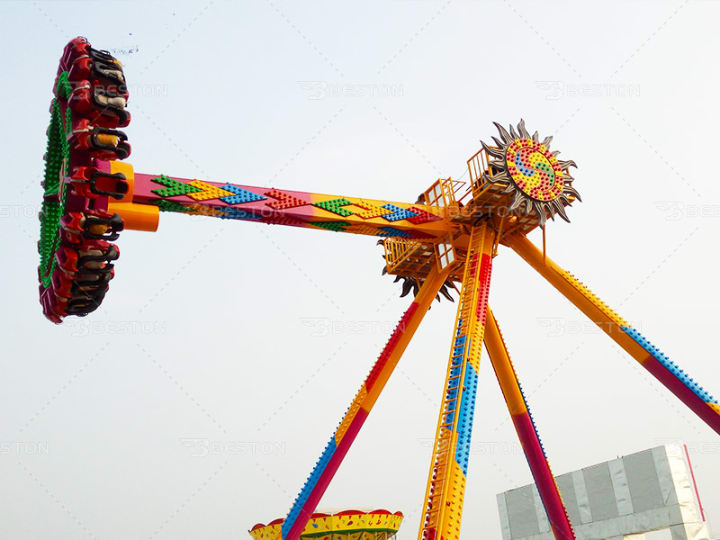
High-intensity areas typically include an extreme ride, drop tower, or other dynamic attraction that triggers large, concentrated crowds. Positioning these nodes at the perimeter or in expansive plazas prevents excessive internal pressure on central pathways. Meanwhile, low-stimulus areas—gardens, shaded seating, or interactive sculptures—act as decompression pockets that absorb overflow and regulate crowd rhythm.
Strategic zoning also enhances visitors’ intuitive orientation. When guests understand the spatial logic, they navigate more confidently and need fewer directional cues.
2. Distributed Attraction Placement to Prevent Bottlenecks
Clustering popular attractions may appear beneficial for thematic cohesion, but it often produces severe congestion and operational delays. A distributed layout ensures that no single corridor bears the burden of heavy traffic.
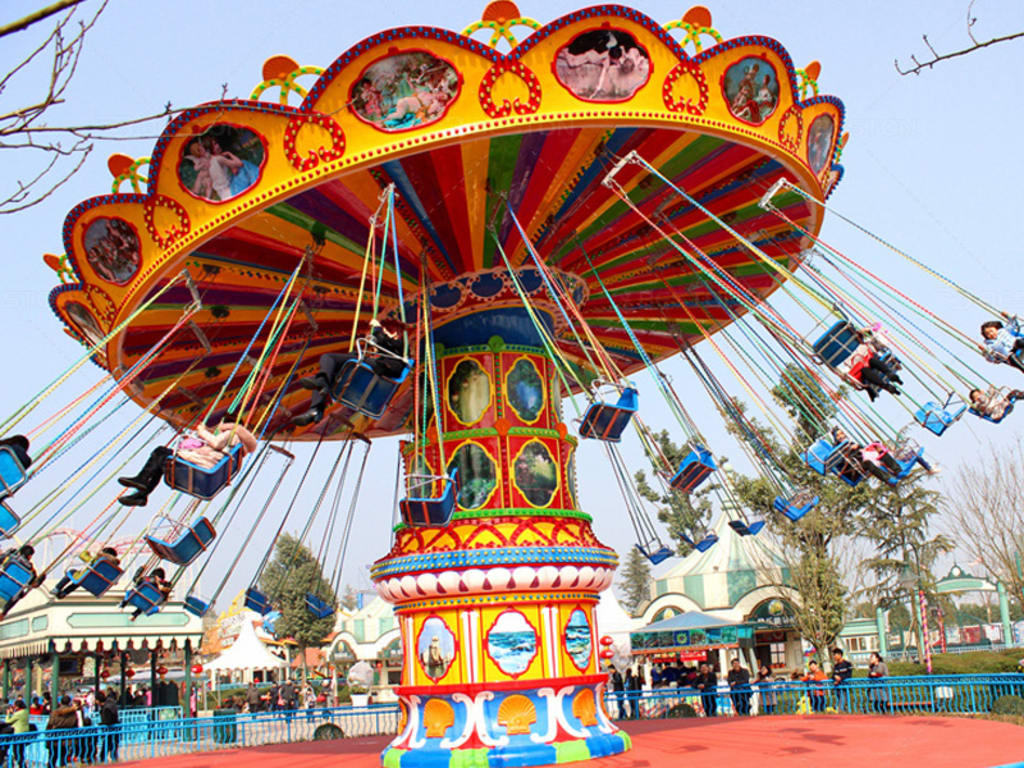
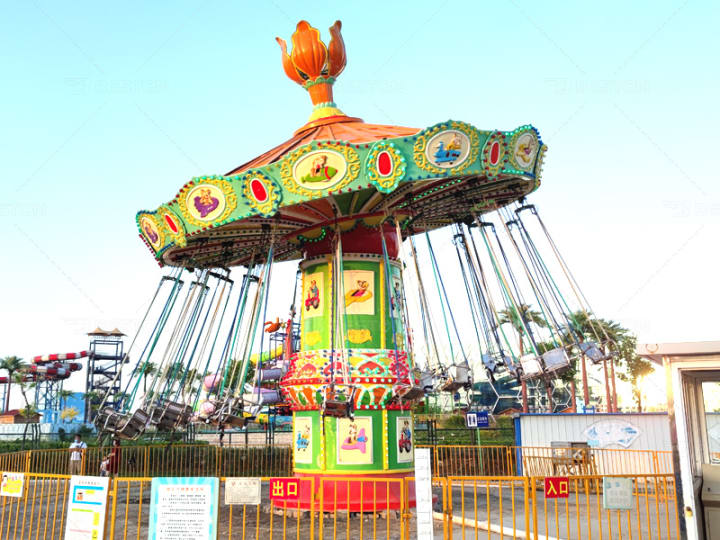
For example, a swing fairground ride attracts consistent foot traffic but does not usually create long queues compared to high-capacity roller coasters. Placing a swing attraction between two major anchors can balance circulation, encouraging visitors to move gradually rather than surging toward a single hotspot.
This equilibrium reduces visitor fatigue and increases the perceived walkability of the site, ultimately extending dwell time.
3. Multi-Layered Path Networks for Smooth Circulation
A single centralized pathway design restricts visitor flow and accelerates congestion. Instead, multi-layered networks—with primary, secondary, and tertiary pathways—enable organic and self-modulating circulation.
- Primary routes support continuous movement between key zones.
- Secondary paths distribute visitors to mid-scale attractions or service areas.
- Tertiary lanes provide intimate access to niche installations or rest zones.
Such hierarchical infrastructure allows spontaneous dispersion. The system remains operationally stable even during peak hours, special events, or weather-induced crowd shifts.
4. Queue Management as a Spatial Instrument
Queue design is a crucial component of spatial optimization. Well-engineered queues absorb high visitor volume without compromising circulation.
Key approaches include:
- Serpentine layouts that maximize spatial efficiency.
- Adaptive queuing with modular barriers that expand or contract based on demand.
- Pre-show zones to reduce perceived waiting time.
- Virtual queues that remove the need for physical occupancy.
By integrating queue planning into the master layout rather than treating it as an afterthought, designers prevent queue overflow from encroaching into public walkways or retail spaces.
5. Visual Anchors and Wayfinding Signatures
Visitors consistently seek visual cues—towers, canopies, lighting, themed facades—to construct a mental map of the environment. Spatial optimization therefore relies on a hierarchy of visual anchors.
Positioning iconic elements near major decision points enhances route prediction. Overhead features, thematic signage, and differentiated pavement textures create a legible spatial narrative. When the environment communicates clearly, guests rarely hesitate, which significantly improves crowd flow.
Advanced wayfinding systems also rely on color zoning, integrated lighting patterns, and context-aware digital displays to convey real-time information about queue times, maintenance updates, or route detours.
6. Buffer Zones for Load Balancing
Buffer zones—transitional spaces between high-density areas—provide elasticity to absorb unexpected fluctuations in visitor volume. Amphitheater steps, shaded pavilions, seating alcoves, and landscaped courts all serve as spatial “shock absorbers.”
These zones play a crucial role when attractions with variable cycle times, such as an extreme ride, release large groups simultaneously. Without buffers, sudden crowd surges would overwhelm nearby corridors. With buffers, the park maintains consistent flow even during irregular operational conditions.
7. Symbiotic Placement of Amenities and Services
Restrooms, snack kiosks, lockers, and seating areas are often overlooked but are key determinants of circulation efficiency. Their placement can either support the movement pattern or disrupt it.
Efficient strategies include:
- Locating amenities near but not directly adjacent to attraction exits.
- Using food courts as transition fields between themed areas.
- Placing retail stores at the intersection of two major flows for maximum visibility without blocking routes.
Amenities should attract visitors without impeding mobility.
8. Environmental Comfort Enhancements that Shape Movement
Comfort influences movement. Visitors instinctively follow shade, breeze, seating, or visually pleasant routes. Incorporating microclimate strategies—tree canopies, misting systems, wind corridors, and light-permeable structures—guides natural circulation.
For example, a shaded path often becomes the primary pedestrian corridor even when alternative routes exist. Understanding this behavioral tendency allows designers to choreograph movement subtly and effectively.
9. Attraction-Driven Resonance Planning
Certain attractions generate acoustic, visual, or kinetic “resonance” that attracts distant visitors. A swing fairground ride with rotating arms or colorful gondolas naturally becomes an optical magnet. High-altitude thrill machines, such as an extreme ride, draw attention through sound and silhouette.
By aligning these resonance radii strategically, designers can direct visitor traffic across broader areas of the park, preventing localized saturation and activating less prominent zones.
10. Flexible Event-Based Layout Modulation
Modern amusement environments increasingly incorporate flexible design features to support events, seasonal overlays, and temporary installations. Removable barriers, convertible plazas, mobile kiosks, and modular shading systems allow rapid reconfiguration.
This adaptability ensures the layout continues to perform well even during festivals, holiday programs, or peak tourism periods. Flexibility reduces downtime and maximizes land-use efficiency.
Conclusion
Optimizing spatial layout in an amusement environment requires a layered and technical approach. The interaction between pathway hierarchy, attraction placement, behavioral psychology, and operational logistics determines whether guests experience a fluid, enjoyable visit or one marred by congestion and confusion. By integrating distributed placement, multi-tier circulation, resonance mapping, and buffer systems, designers create environments that are both efficient and delightfully engaging. A well-optimized amusement space not only enhances visitor satisfaction but also increases throughput, operational resilience, and long-term commercial viability.
About the Creator
Beston Amusement Rides
As a leading amusement facility manufacturer, we provide safe and interesting amusement equipment to customers around the world, including roller coasters, Ferris wheels, pirate ships and so on.
Website:https://bestonamusementrides.com/
Keep reading
More stories from Beston Amusement Rides and writers in Art and other communities.
Engineering Material Selection and Durability Optimization in Modern Amusement Systems
Introduction Material engineering plays a decisive role in determining the structural integrity, safety performance, and long-term operational reliability of modern amusement systems. Whether the focus is on indoor play area equipment or large-scale amusement equipment for sale, the material choices embedded within the design define how well these systems withstand mechanical load, environmental exposure, and repetitive stress cycles. Durability is not accidental; it is the result of methodical evaluation, multi-layered testing, and deliberate engineering decisions. This analysis outlines the scientific principles behind material selection, explores durability-enhancing mechanisms, and identifies best practices for long-term asset resilience.
By Beston Amusement Rides2 months ago in Art
The Scream by Edvard Munch is one of my favourite paintings
The Scream by Edvard Munch is another one of my favourite paintings that is alongside of that of Nighthawks. I have a shirt with The Scream 😱 by Edvard Munch. This painting is absolutely brilliant and amazing. It is a contradiction in a way warm colours but dark and deep subject matter.
By Revista Miko4 days ago in Art
South Korea’s Construction Equipment Market: Innovation, Growth, and Future Outlook
Why Construction Equipment Is Gaining Attention in South Korea South Korea’s skyline is changing rapidly. From new residential complexes to high-tech infrastructure projects, construction activity is more dynamic than ever. Behind these developments lies an often-overlooked hero: construction equipment. Cranes, excavators, loaders, and other machinery are quietly enabling some of the country’s most ambitious building projects.
By Kim Soo hyun5 days ago in Art



Comments
There are no comments for this story
Be the first to respond and start the conversation.