

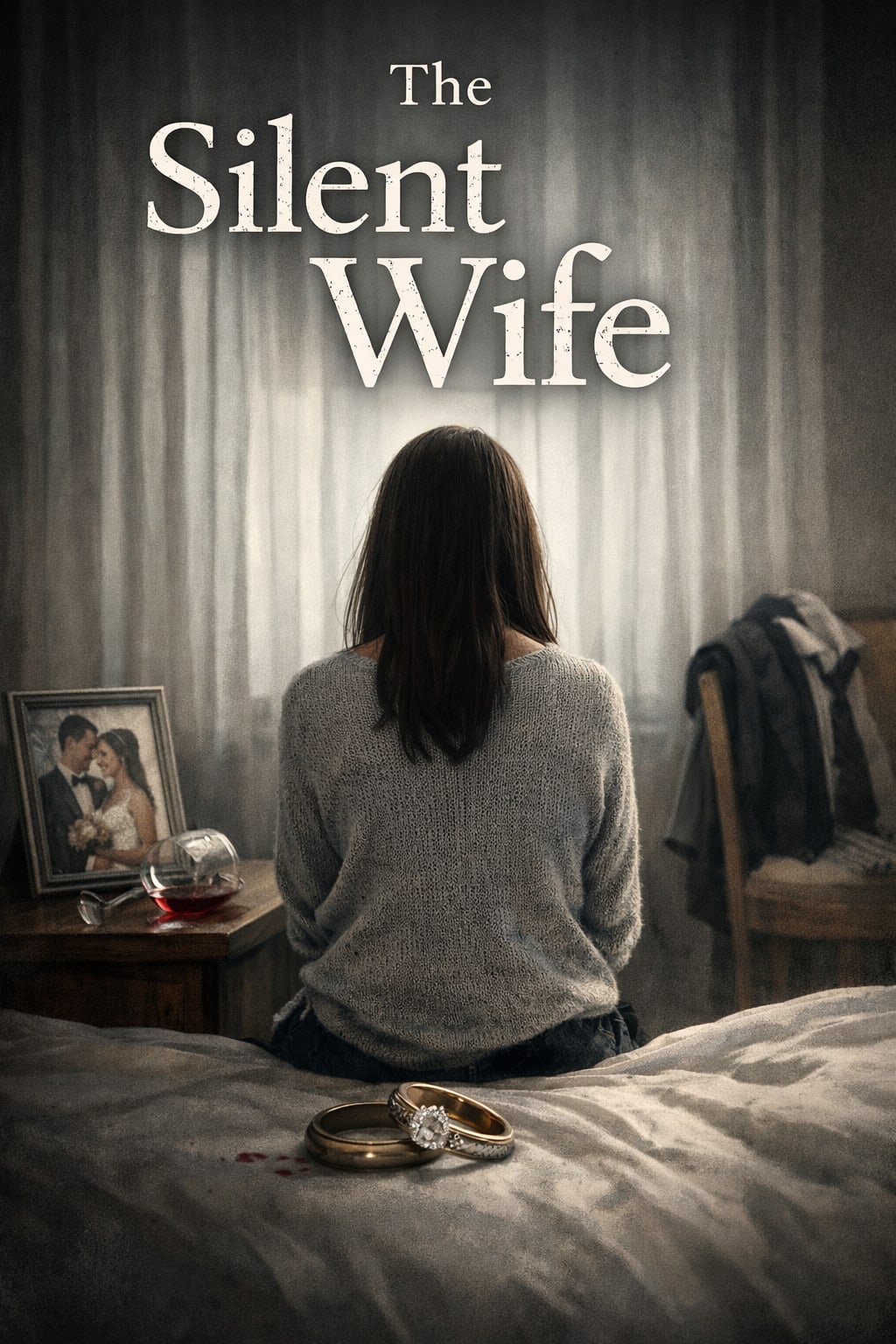
In the quiet suburbs of Chicago, where winter pressed its pale hands against frosted windows and the lake wind carried secrets through narrow streets, lived a woman named Hannah Rowe. The neighbors knew her as polite, composed, and distant. She baked lemon cakes for charity drives, sent handwritten thank-you notes, and waved gently from behind her white picket fence.
They called her “the silent wife.”
Hannah had not always been silent. Once, in her university days at Northwestern University, she had debated fiercely in crowded lecture halls, her voice steady and intelligent. She studied psychology, fascinated by the fragile architecture of human emotion. That was where she met her husband, Daniel Rowe.
Daniel was magnetic—tall, confident, studying finance. He laughed easily, spoke convincingly, and dreamed loudly. Hannah was drawn to his certainty. He, in turn, admired her calm mind, her thoughtful pauses, her ability to listen without interruption.
They married in early autumn, under trees shedding amber leaves. For years, their life appeared ideal. Daniel built a successful investment firm in downtown Chicago, while Hannah worked briefly as a counselor before choosing to manage their home. It was a decision that seemed mutual at the time. Daniel insisted she didn’t need to work; he would provide. “You deserve peace,” he would say.
Peace, however, can sometimes be another word for silence.
At first, the quiet in their marriage felt comfortable—two people reading in the same room, the soft clink of wine glasses at dinner. But gradually, the quiet thickened. Daniel began coming home later. His phone buzzed more frequently. He guarded it with casual but unmistakable precision.
Hannah noticed everything.
She noticed the faint scent of unfamiliar perfume on his coat one December evening. She noticed how he corrected her in front of friends—small remarks, subtle dismissals. She noticed how her world had shrunk to the size of their home, while his expanded across boardrooms and city lights.
But she said nothing.
Silence became her armor.
Years earlier, in her psychology courses, Hannah had studied cognitive dissonance—the mind’s ability to protect itself from painful truths. Now she watched it unfold within her own heart. She arranged flowers in crystal vases, straightened silverware, and told herself that all marriages evolved.
Then one afternoon, while organizing paperwork in Daniel’s home office, she found an envelope tucked behind tax files. It contained photographs—Daniel and a younger woman walking hand in hand near the navy-blue waters of Lake Michigan. They looked unguarded, laughing freely.
Hannah stared at the images for a long time. Her pulse did not race. She did not cry.
Instead, she placed the photographs back where she had found them.
That evening, she prepared Daniel’s favorite dinner—rosemary chicken with roasted vegetables. She listened as he described a “conference” he would attend in New York City the following week. She nodded at the appropriate moments.
Silence can be mistaken for weakness. Daniel made that mistake.
What he did not realize was that Hannah had begun planning.
In the weeks that followed, she quietly contacted a former professor from Northwestern, now a respected therapist. She resumed part-time counseling work at a private clinic under her maiden name. She opened a separate bank account and began transferring small amounts of money—never enough to arouse suspicion.
She met with a lawyer recommended discreetly by a client. She learned about marital assets, legal rights, and financial transparency. Each meeting was conducted with calm precision.
Meanwhile, Daniel grew bolder. He traveled more often. He stopped pretending as convincingly.
One night, during a snowstorm that wrapped Chicago in white silence, Daniel returned home earlier than expected. He found Hannah sitting by the fireplace, a folder resting on her lap.
“You’re home early,” she said softly.
“The conference was canceled,” he replied, loosening his tie. He hesitated. “What’s that?”
Hannah looked at him, truly looked at him, for the first time in years. “Everything,” she answered.
She handed him the folder. Inside were copies of financial statements, travel receipts, photographs, and a neatly prepared divorce filing.
Daniel’s face drained of color. “Hannah… this isn’t—”
“Don’t,” she interrupted gently. Her voice was steady, almost tender. “Please don’t insult me by lying.”
He stared at her as though seeing a stranger.
“I thought you didn’t know,” he whispered.
“I knew,” she said. “I’ve known for a long time.”
Silence filled the room again—but this time, it belonged to him.
“You never said anything,” Daniel muttered, confusion overtaking arrogance.
Hannah folded her hands. “You mistook my silence for ignorance. It wasn’t ignorance. It was observation.”
The wind howled against the windows, rattling the glass like distant applause.
“I gave you time,” she continued. “Time to remember who you were. Time to choose honesty. But you chose comfort instead.”
Daniel sank into a chair, defeated. “What do you want?”
“I want my life back.”
Her words were not loud, but they carried weight. Years of swallowed arguments and restrained tears crystallized into clarity.
In the months that followed, the divorce proceedings were swift and meticulously prepared. Daniel’s reputation suffered quietly in professional circles—not because Hannah sought revenge, but because truth has a way of surfacing.
Hannah kept the house for a while, then sold it. She moved into a smaller apartment overlooking the lake. She returned to counseling full-time, specializing in emotional resilience and betrayal trauma. Her clients often remarked on her calm presence, her deep understanding of silence.
What they did not know was that she had once lived inside it.
One spring morning, as sunlight spilled across the water, Hannah walked along the lakeshore. The air felt lighter. She paused to watch the waves move rhythmically toward shore—persistent, patient.
Silence, she realized, was not emptiness. It was space.
And in that space, she had rebuilt herself.
The neighbors in her old suburb still spoke of her occasionally—the quiet woman who left without drama. They never knew the strength it took to walk away without shouting.
But Hannah knew.
She was no longer the silent wife.
She was the woman who listened, learned, and chose herself.
And her voice, though rarely raised, was finally her own.
About the Creator
Ibrahim Shah
I am an Assistant Professor with a strong commitment to teaching,and academic service. My work focuses on fostering critical thinking, encouraging interdisciplinary learning, and supporting student development.
Keep reading
More stories from Ibrahim Shah and writers in Art and other communities.
The Story Of Silk
Long before silk became a symbol of luxury, elegance, and refined taste, it was simply a secret—guarded closely, whispered carefully, and protected fiercely by an ancient civilization. The story of silk is not merely about a fabric; it is a tale woven with legend, patience, innovation, and the quiet labor of tiny creatures that changed the course of human history.
By Ibrahim Shah 4 days ago in Art
No Other Choice (2025)
It is only February, so other films may well surpass “No Other Choice”, but I think this is the best film I’ve seen so far this year. And that surprises me, because, it is a subtitled film and while I am pretentious enough to choose to watch foreign-language films, I was also very tired and that was an extra commitment from me. But more importantly, let me warn you, this film is gruesome and violent. There were times I had to turn away from the screen to avoid the worst of it (including some self-inflicted dentistry).
By Rachel Robbins2 days ago in Geeks




Comments
There are no comments for this story
Be the first to respond and start the conversation.