
How BTS Changed the Way I Experience Music.
By Cindy💋

Before BTS, my music taste was pretty locked in: Beyoncé (obviously), soft guitar and early 2000s rap. I had good taste. Balanced taste. I liked music that made me feel something.
Then I got into BTS, and suddenly I was spiraling over lyrics I had to read subtitles for. I thought I was going to casually enjoy a few songs and move on. Instead, they cracked my chest open and told me to sit with myself.
“Spring Day” Broke Me Open
I haven’t written the review for You Never Walk Alone yet—don’t drag me—but trust me—I’ve listened. And “Spring Day”? That song quietly knocked the wind out of me. I didn’t even know what it was saying, but my chest understood before my brain did.
That song made me feel like I was grieving something I hadn’t even admitted to myself yet. I didn’t understand the lyrics at first, but the emotion? Loud and clear. I sat there like, Wait… why am I crying over a song in a language I don’t speak?
Something about the instrumental build, the aching in their voices—it pulled me under.
It made me realize how much I relied on language to gatekeep my emotional connection to music. Like, if I didn’t understand the lyrics, I wouldn’t let myself feel them. BTS shattered that. They showed me that emotional delivery—vocals, production, performance—is the language.
That was the first time I realized how much I had been relying on English to tell me what to feel. BTS didn’t need that. They made me feel before I could intellectualize it—and that changed everything.
There’s something about the way BTS delivers emotion. It doesn’t wait for you to translate—it just lands. That was new for me. It made me realize that for years, I had been using lyrics as a filter. If I didn’t understand the words, I’d move on. BTS reminded me that emotion is its own language.
Now I don’t care if I understand a song the first time. I just want to feel it.
They Taught Me Music Isn’t Just Sound.
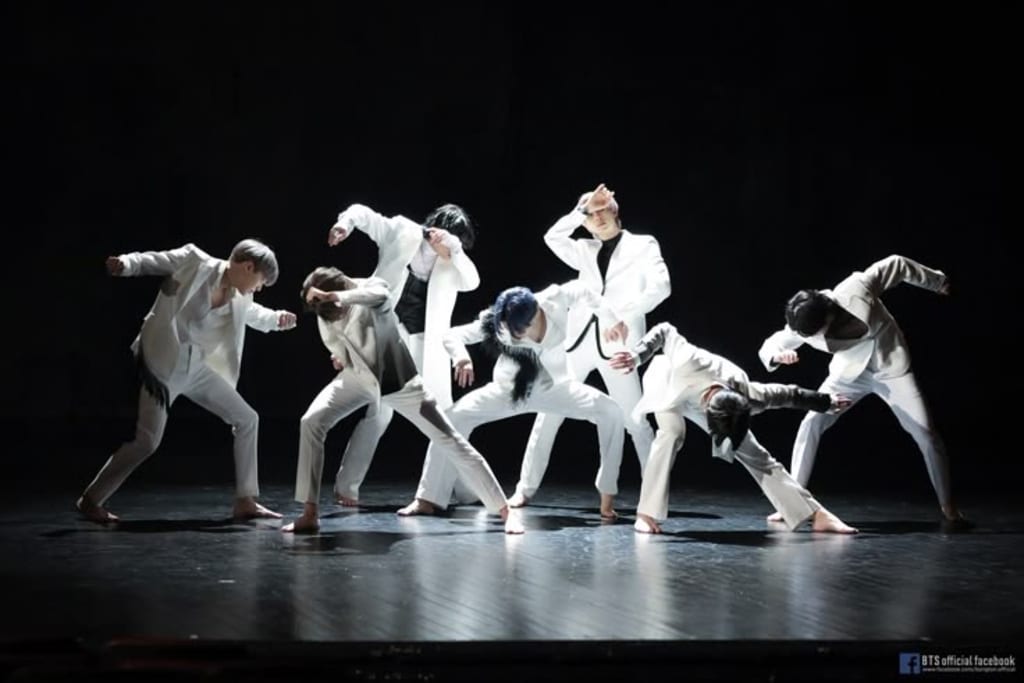
I won’t lie and say I didn’t care about live performances before. I’m a Beyoncé stan. Stage presence is basically a religion in this house. But BTS made me realize how intentional every single movement could be—like the choreography is the song.
Their live stages aren’t just for show—they’re part of the storytelling.
There’s something spiritual about the way they move through a song. Every formation, every camera stare, every beat drop that syncs with a breath—it all deepens the meaning. Now I find myself watching other artists and thinking, Do they mean it like BTS means it?
That’s the thing—they perform like the stage is the last place they’ll ever get to speak. And I hear that.
Watching performances like “Black Swan,” “Outro: Tear,” or “Dionysus” felt like unlocking a new way of understanding music. Now I can’t just listen to a song—I have to see it, too. I pay attention to how artists move through the beat, how they breathe with the track, how they use silence just as much as sound.
BTS turned me into the kind of person who rewatches live stages just to catch that one look Jungkook gives the camera. No regrets.
They Made Me Stop Skipping Intros (Which Is Wild)
I used to skip intros, interludes, outros—anything that didn’t sound like a “real” song. Now? I respect the full arc. BTS made me realize an album isn’t just a playlist. It’s a story. The build-up matters.
They trained me to sit with a song before I make a decision. To actually listen instead of hunting for the catchy part. That changed how I interact with music across the board—not just with BTS.
They made me listen to full albums like I was reading a novel. Every intro sets the scene. Every outro feels like a quiet goodbye. I started to enjoy the spaces between lyrics—the moments when the production breathes, when the emotion builds, when nothing happens but everything changes.
That changed how I listen to other artists too. I started craving cohesion, wanting to know why each track existed, not just how catchy it was.
They Gave Music Back to My Body
There are songs you hear in your ears, and there are songs you feel in your spine. BTS gave me more of the latter. “Black Swan” feels like falling into yourself. “Seesaw” feels like the ache of letting go. “Zero O’Clock” feels like a quiet reset button. They make music that isn’t just pretty—it knows you.
It made me realize that I used to treat music like background noise. Now I let it hold me.
I Started Listening Like a Person, Not a Playlist.
This is the part I wasn’t expecting: BTS made me treat music like a relationship. I don’t just want to know the lyrics—I want to know what was going on in Namjoon’s brain when he wrote them. I want to know what SUGA was healing from. I want to know why this song needed to exist.
That curiosity bled into the rest of my music life. I started paying more attention to who’s writing, producing, arranging. I started asking: Why this sound? Why this moment? Why now? I stopped listening passively and started listening personally.
CONCLUSION
BTS changed the way I experience music by reminding me it’s not just art—it’s a relationship. One where I get to show up raw, confused, joyful, angry, healing, tired, or full of hope… and still be met with sound that understands me.
They didn’t just change my playlists—they changed my relationship with sound, with stillness, with myself. I used to chase music that matched my mood. Now I let it shape it.
So yeah, I still have good taste. But now, I’ve got heart, too.
Thanks, Bangtan.🎀💜
About the Creator
Cindy🎀
Hey, I’m Cindy – a K-pop newbie turned addict with a keyboard and way too many opinions. When I’m not screaming about talented artists, I’m writing poetry or ranting about my life.
Reader insights
Outstanding
Excellent work. Looking forward to reading more!
Top insights
Compelling and original writing
Creative use of language & vocab
Easy to read and follow
Well-structured & engaging content
Expert insights and opinions
Arguments were carefully researched and presented
Heartfelt and relatable
The story invoked strong personal emotions
On-point and relevant
Writing reflected the title & theme
Masterful proofreading
Zero grammar & spelling mistakes
Sing Me an Aria
The Barber of Seville is a comic opera by Gioachino Rossini, centered around themes of love, deception, and clever schemes. The story follows Count Almaviva, who is in love with Rosina, the ward of the wealthy Dr. Bartolo. He disguised himself as a poor student, Lindoro Almaviva, and serenaded Rosina to win her affection. Figaro, the clever barber of Seville, assists Almaviva in his plans to outsmart Dr. Bartolo, who intends to marry Rosina himself.
By Rasma Raisters2 days ago in Beat
Dead and Wearing Green
She was wearing that green dress when I first saw her, five years ago to the day. Flowing meadow fabric draped over long legs, thick auburn hair flowing down her back. That smile. Of course, she is still beautiful now. But now she is no longer alive.
By Karen Cave5 days ago in Fiction


Comments