
James Webb Space Telescope Reveals New Origin Story for the Universe’s First Supermassive Black Holes
Groundbreaking observations challenge long-held theories about how colossal black holes formed so early in cosmic history

Title
Subtitle
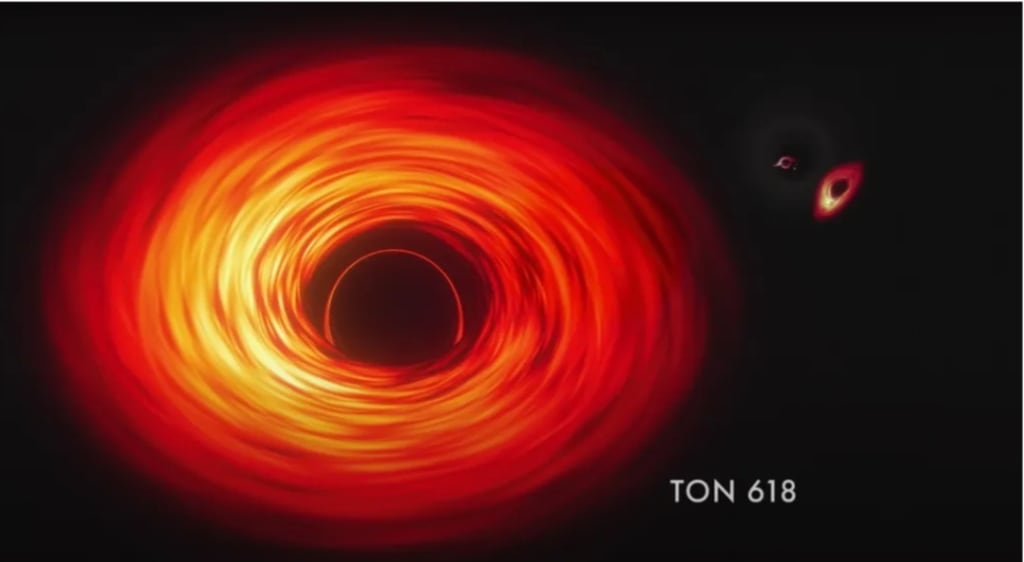
The James Webb Space Telescope (JWST) has once again transformed our understanding of the universe. In a new series of observations, Webb has provided compelling evidence that reshapes scientists’ ideas about how the universe’s first supermassive black holes came into existence. These cosmic giants, some containing the mass of millions or even billions of suns, were already in place surprisingly early in the universe’s history. Until now, their rapid appearance has been one of the greatest mysteries in modern astrophysics.
Webb’s findings suggest that the earliest supermassive black holes may have formed through a faster, more direct process than previously believed, offering a fresh origin story for these enigmatic objects.
---
The Long-Standing Black Hole Puzzle
Supermassive black holes sit at the centers of most large galaxies, including our own Milky Way. In the nearby universe, astronomers have a fairly good idea of how they grow—by accreting gas, dust, and stars over billions of years, and through mergers with other black holes.
The problem has always been the early universe. Observations over the past two decades revealed quasars—extremely bright objects powered by supermassive black holes—existing less than a billion years after the Big Bang. According to traditional models, there simply wasn’t enough time for black holes to grow that large through slow, steady feeding alone.
This timing mismatch led scientists to propose alternative explanations, but evidence remained limited—until the James Webb Space Telescope came online.
---
Webb’s Unique View of the Early Cosmos
Launched to peer deeper into space and further back in time than any telescope before it, JWST is uniquely suited to study the universe’s infancy. Its powerful infrared instruments allow it to observe light from the earliest galaxies, stretched into longer wavelengths by cosmic expansion.
Using this capability, astronomers targeted extremely distant galaxies that existed just a few hundred million years after the Big Bang. What Webb found was remarkable: signs of massive black holes embedded within young, compact galaxies that lacked the mature structure expected from slow evolutionary growth.
These observations hint that the seeds of supermassive black holes may have been born big.
---
A New Origin Story: Direct Collapse Black Holes
One of the most exciting implications of Webb’s data is renewed support for the “direct collapse” theory. Instead of forming from the remnants of the first stars, some black holes may have formed directly from the collapse of enormous clouds of primordial gas.
In this scenario, vast gas clouds in the early universe avoided fragmenting into stars. Instead, under the right conditions, they collapsed inward as a whole, forming black holes tens of thousands—or even hundreds of thousands—of times more massive than the Sun right from birth.
Webb’s observations of unusually bright, compact galactic cores align with predictions from this model, suggesting that direct collapse black holes could explain how supermassive black holes grew so quickly.
---
Rethinking the Role of the First Stars
Traditional models relied heavily on the deaths of the universe’s first stars, known as Population III stars. These massive stars were thought to leave behind black hole “seeds” that slowly grew over time.
However, Webb’s findings indicate that stellar remnants alone may not account for the immense black holes seen so early in cosmic history. While early stars likely contributed, the data suggests they were not the sole or dominant pathway.
This doesn’t rule out star-based growth, but it does mean the early universe may have hosted multiple black hole formation channels operating simultaneously.
---
Implications for Galaxy Formation
The discovery has profound consequences beyond black holes themselves. Supermassive black holes and galaxies evolve together, influencing each other through powerful radiation and energetic outflows.
If massive black holes formed earlier and faster than previously thought, they may have played a critical role in shaping the first galaxies. Their intense energy output could have regulated star formation, heated surrounding gas, and even influenced how galaxies assembled in the early universe.
In other words, black holes may not just be passengers in galactic evolution—they may have been key architects from the very beginning.
---
Why This Discovery Matters
Webb’s revelations challenge long-standing assumptions and force scientists to revisit fundamental questions about cosmic history. Understanding how the first supermassive black holes formed helps answer bigger questions about the structure and evolution of the universe itself.
It also highlights the power of next-generation observatories. With every new dataset, JWST is proving that the early universe was more complex, dynamic, and surprising than models once suggested.
---
What Comes Next for Astronomers?
Researchers are now planning deeper surveys and follow-up observations to confirm the nature of these early black holes. Future studies will focus on identifying chemical signatures, measuring growth rates, and determining how common direct collapse black holes were in the early cosmos.
As Webb continues its mission, scientists expect even more revelations that could further refine—or completely rewrite—our understanding of black hole origins.
---
Final Thoughts
The James Webb Space Telescope has opened a new chapter in the story of the universe. By revealing a plausible new origin story for the first supermassive black holes, it has solved one mystery while unlocking many new questions.
What is clear is that the universe grew up faster and more dramatically than we once believed—and with Webb watching, the cosmos is finally beginning to tell its earliest secrets.
About the Creator
Keep reading
More stories from Salaar Jamali and writers in Beat and other communities.
Wheeling: Power Division Approves Annual Auction Quantum for 800MW in 5 Years
In a significant development for Pakistan’s energy sector, the Power Division has approved the annual auction quantum for 800 megawatts (MW) of electricity over the next five years, under the government’s wheeling policy. This initiative is designed to allow private power producers to supply electricity directly to consumers through the national grid, promoting efficiency, competition, and investment in the country’s power infrastructure.
By Salaar Jamaliabout 20 hours ago in Beat


Comments
There are no comments for this story
Be the first to respond and start the conversation.