
Tirah: Buried Under Snow and Circumstance
How the remote Tirah Valley faces harsh winters, infrastructural neglect, and enduring human resilience.

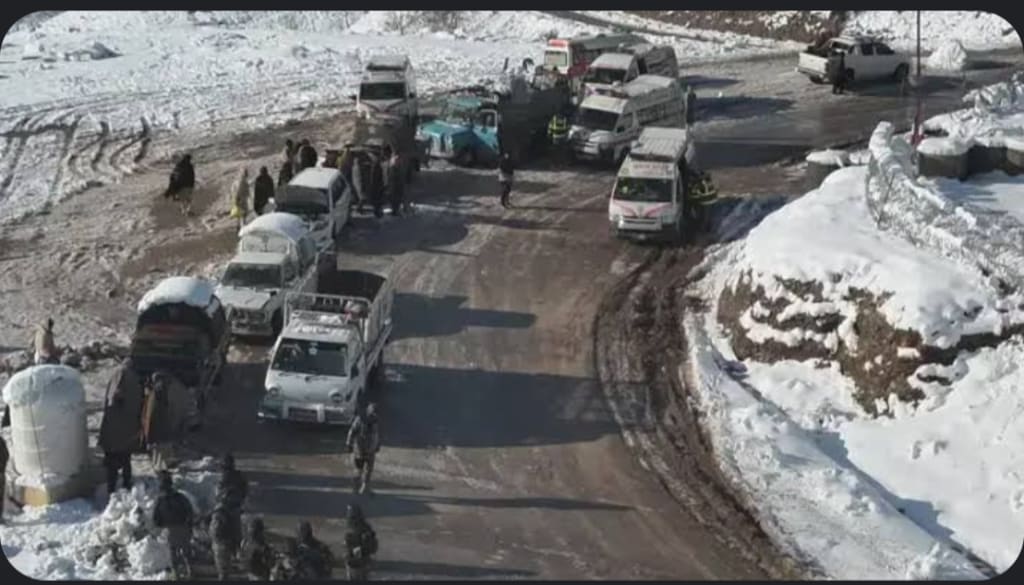
The Tirah Valley, nestled in the rugged mountains of Pakistan’s Khyber District, has long been described as a land of both breathtaking beauty and formidable hardship. In recent weeks, the valley has come into focus as unusually heavy snowfall has compounded the challenges faced by its residents, leaving villages isolated and underscoring the long-standing neglect of infrastructure and development in the region. The phrase “buried under snow and circumstance” aptly captures both the literal and metaphorical burdens weighing on Tirah.
---
A Winter Like No Other
This year, Tirah Valley has experienced record-breaking snowfall, with some areas reporting over two meters of snow in just a few days. The heavy snow has blocked roads, made basic travel impossible, and stranded residents in remote villages. Schools have closed, medical access is severely restricted, and daily life has come to a near standstill.
Local resident Sher Jan, a farmer from the upper Tirah region, described the situation: “We are used to snow, but this year it feels different. Roads are buried, and we cannot get even the simplest supplies. It is as if the mountains have trapped us.”
Emergency services have struggled to respond, hampered by poor infrastructure and limited resources. Even basic tasks such as transporting food, fuel, and medicines have become life-threatening endeavors.
---
Geography and Isolation: A Double Burden
Tirah Valley’s geographical remoteness compounds the difficulties posed by winter. The valley is surrounded by high, snow-laden mountains and narrow passes, including the famous Tirah Pass, historically used as a strategic route connecting Afghanistan with the rest of Pakistan. While these natural features have historically provided defense and identity, they also contribute to isolation during extreme weather events.
The region’s rugged terrain, combined with underdeveloped road networks, means that even small-scale emergencies can escalate quickly. For villagers dependent on agriculture and local trade, winter effectively halts economic activity, forcing families to rely on stored supplies and traditional coping mechanisms.
---
Historical Context: Conflict and Neglect
Tirah Valley has long been caught at the crossroads of geopolitical struggles. Over decades, the valley has seen military campaigns, tribal disputes, and strategic interventions, all of which have left their mark on the local population. These historical circumstances contribute to a chronic lack of infrastructure and basic services.
Government projects, often delayed or abandoned due to security concerns, have left the valley with inadequate roads, healthcare facilities, and communication systems. When harsh winter conditions hit, these systemic shortcomings become immediately evident.
Academics studying the region note that Tirah has been “buried under more than snow — under decades of policy neglect and geographical marginalization.” This duality makes every natural disaster disproportionately severe for the local population.
---
Human Resilience Amid Harsh Conditions
Despite these challenges, the residents of Tirah Valley display remarkable resilience. Families rely on traditional knowledge of snow management, stockpiling food, and preparing shelters to withstand heavy snowfall. Villagers often band together to clear paths, help neighbors reach medical aid, or share scarce resources.
Local tribal councils have historically played a key role in coordinating such responses. In many villages, elders organize collective snow removal and food distribution, reflecting a community-based approach to survival that predates formal government intervention.
For example, in Upper Tirah, residents used horses and mules to transport essential supplies to families stranded by snow, navigating narrow and treacherous mountain trails. These acts of solidarity highlight both the human cost and the enduring social fabric that binds the valley together.
---
Calls for Long-Term Solutions
Experts argue that Tirah Valley’s recurring struggles demand sustainable development solutions. Proposed measures include:
1. Improved road connectivity to ensure year-round access.
2. Emergency infrastructure, such as local snow-clearing equipment and weather monitoring stations.
3. Healthcare access improvements, including mobile clinics and telemedicine facilities.
4. Economic diversification, reducing reliance on agriculture alone and promoting small-scale local industries.
Government officials have acknowledged the valley’s challenges, but progress has been slow. Security concerns, funding constraints, and the sheer difficulty of operating in mountainous terrain have delayed large-scale interventions.
Non-governmental organizations and community groups are stepping in to provide immediate relief, distributing food, blankets, and medical supplies. However, these efforts can only serve as temporary measures unless long-term infrastructure development is prioritized.
---
Tirah in the National Consciousness
Tirah Valley is emblematic of Pakistan’s forgotten regions, where natural beauty and cultural richness coexist with hardship and isolation. The snow that blankets the valley each winter is both a symbol of its scenic allure and a stark reminder of the obstacles its residents face.
Journalists and social media activists have begun drawing attention to Tirah’s plight, emphasizing that the valley’s needs cannot be addressed only in moments of crisis. Raising awareness about sustainable development and climate resilience is seen as a crucial step toward ensuring that future winters do not have such devastating effects.
---
Conclusion: Buried but Unbroken
The recent heavy snowfall in Tirah Valley highlights a broader narrative: that of a region buried under snow and circumstance. Isolation, historical neglect, and underdeveloped infrastructure converge to create challenges that test the resilience of its residents. Yet, amid these hardships, the valley’s communities demonstrate remarkable endurance and solidarity, navigating the harshest conditions with courage and ingenuity.
As attention turns to Tirah, the pressing question remains: will systemic solutions arrive to match the extraordinary human resilience on the ground? The story of Tirah is far from over — it is a call to action for policymakers, aid organizations, and the broader public to ensure that the valley’s beauty and people are not lost under layers of snow and circumstance.
About the Creator
Keep reading
More stories from Salaar Jamali and writers in Beat and other communities.
Chinese Satellite Forces 4,400 of Its Starlink Rivals into Lower Altitude: Study
China has reportedly forced more than 4,400 satellites belonging to SpaceX’s Starlink constellation into lower orbits, according to a recent study by independent space analysts. The action represents a dramatic escalation in the high-stakes competition for space dominance and raises questions about orbital safety, commercial satellite operations, and international norms in space.
By Salaar Jamali4 days ago in Beat
Rewriting the Rules at 41
Alex Mattar is an Indie artist based in Charlotte, North Carolina, quietly proving that reinvention has no expiration date. A self-described bedroom producer with a deep respect for music history, Mattar’s journey into original music didn’t begin in his teens or twenties—it began at 41, driven by curiosity, passion, and the simple question: “How hard could it be to make a song from scratch?” What followed was not just a song, but the start of a deeply personal and disciplined creative evolution.
By mysoundMusic2 days ago in Beat




Comments
There are no comments for this story
Be the first to respond and start the conversation.