
Transformative Factors in Modern Global Music: The Impact of Technology, Migration, War, and Mass Media
How technology, migration, war, and media reshape modern music. Exploring the forces driving global musical transformation.

Transformative Factors in Modern Global Music: The Impact of Technology, Migration, War, and Mass Media
Author: Islamuddin Feroz, Former Professor, Department of Fine Arts, Music Faculty, Kabul University
Abstract
Music in the modern world is continuously influenced by social, political, technological, and cultural processes. This article examines the factors that play the most significant role in the transformation of contemporary music, including wars and their psychological and social consequences, cultural migration and community displacement, advancements in audio and digital technologies, the emergence of artificial intelligence in music production and analysis, the expansion of the internet and social networks, the mass media industry, and cultural globalization. These factors have not only altered the methods of music production and distribution but have also reshaped listening patterns, the emergence of new styles, and aesthetic structures. This article seeks, while examining each of these factors, to analyze their interactions and their short- and long-term impacts on global music. The findings indicate that modern music is the product of a complex network of historical, technological, and social variables, and its transformation will continue into the future.
Keywords: Modern music, cultural transformation, migration, technology, artificial intelligence, mass media
Introduction
Music has always been one of the most fundamental elements of human culture, serving not only as a reflection of the social and political conditions of each historical period but also as a shaping force for identities and cultural values. In the modern world, the pace of social and technological change has increased dramatically, and these widespread transformations have had a direct and undeniable impact on music. Unlike in the past, when musical changes were often gradual and confined to specific geographic regions, today’s music is being transformed rapidly under the influence of a global network of factors. From wars and political tensions that generate new emotional and narrative experiences, to widespread migrations that lead to the blending of styles and instruments; from technological advancements and the emergence of digital tools, to the undeniable role of artificial intelligence in the production, arrangement, and distribution of music—these all constitute parts of this pervasive transformation.
Moreover, the expansion of the internet and mass media has made music more accessible than ever before, allowing global audiences to engage in listening and sharing without temporal or spatial limitations. Consequently, modern music is the product of the interaction between social, political, cultural, and technological structures, and understanding it requires a multi-layered and interdisciplinary analysis. This article aims to provide a comprehensive examination of these factors and to analyze the mechanisms that drive the transformation of music in the modern world, offering insights into future trends.
Music and Constant Change
Music, as one of the most fundamental expressions of human culture, has always been in a state of change and evolution. These transformations are not only the result of artists’ creativity and the emergence of new styles but also arise from the wide-ranging effects of social, political, economic, and technological conditions. From the era of European classical music, with its evolution in forms and instrumentation, to folk and traditional music that has continuously evolved under the influence of migrations, cultural interactions, and the transmission of musical knowledge and skills, all demonstrate the constant dynamism of music.
In the modern world, the pace and scope of musical changes have increased dramatically. Digital technologies, music production software, the internet, and social networks have enabled music creation, dissemination, and access on a global scale, leading to rapid shifts in tastes and listening patterns. Furthermore, the emergence of artificial intelligence and data analysis systems has not only transformed the process of music creation but has also challenged our perception of creativity and the role of humans in music.
From this perspective, music is not a static entity but a dynamic phenomenon that responds to its surrounding environment. Understanding this dynamic nature provides a necessary foundation for examining the various factors that shape the transformation of modern global music—factors including war, migration, technology, artificial intelligence, the internet, and mass media—each of which plays a significant role in influencing musical styles, aesthetic structures, and the listening experiences of audiences.
Transformation of Music under the Influence of War
War and political tensions have always played a decisive role in shaping culture and the arts, and music is no exception. The experiences of World War I and II provide clear examples of the impact of socio-political conditions on the formation of musical styles, functions, and themes. During these periods, music generally served a dual function: on one hand, boosting the morale of the armed forces, and on the other, acting as a tool for controlling and directing public opinion, as observed in the United Kingdom during World War II. Even before the onset of conflicts, music was often employed as a means of social mobilization and reinforcing a “common purpose.” For instance, in 1930s Nazi Germany, music played a key role in large Nuremberg rallies by fostering a sense of focus, authority, and unity. Similarly, in Croatia on the eve of the 1990s war, tapes produced by ultra-nationalist Croatian groups were systematically created and distributed. In Serbia, turbo-folk music became a tool to reinforce narratives of national exceptionalism. In Kosovo, Albanians utilized music videos to represent national identity and encourage readiness for war (Bergh & Sloboda, 2010, p. 4).
The role of music in the context of war is not limited to mobilization and propaganda. In post-war periods, music often serves as a medium to express suffering, loss, and collective memories. In the contemporary world, protest, anti-war, and political music has emerged in many countries as a response to social discontent, political crises, and experiences of violence. In the Middle East, the persistence of wars and political instability has turned music into a tool for expressing collective pain and resistance. Styles such as social rap in Afghanistan, Iran, and some Arab countries have developed in reaction to crises and structural discrimination, becoming a medium for anger, advocacy, and redefining the identity of the younger generation (Hatef–Farid, 2023).
In Western countries, genres such as rock, punk, and hip-hop have historically reflected political and social protest during various periods. In Ukraine, music has taken on a political and resistant function amid the full-scale Russian invasion that began in 2022. New musical works reflect revolutionary sentiments and the country’s historical spirit of resistance against Russian dominance, thereby mapping a continuum of cultural confrontation with violence and occupation (Daughtry & Joshua, 2025).
Furthermore, wars have facilitated large-scale population movements, contributing to cultural blending and the emergence of new musical styles. A prominent example is the migration of European Jews to the United States during World War II, which played a significant role in the development of jazz, film music, and the Hollywood industry. Thus, wars not only generate new emotional and social experiences but also reshape the trajectory of musical transformation through the displacement and reconfiguration of cultural flows.
Dynamics of Musical Cultures in the Context of Migration
Globalization in recent decades has created the conditions for a profound transformation in contemporary music—a transformation in which genre boundaries dissolve and diverse cultures interact and merge within a fluid space. In this process, traditional and local music blends with modern styles; from the fusion of Afghan music with contemporary pop to the incorporation of Eastern instruments in rap and EDM. The result is an increased musical flexibility and the emergence of new genres that manifest as “world music” and within emerging regional scenes (Endona, 2025).
These transformations have been intensified by factors such as migration and diaspora. Migration exposes individuals to new cultural and social spaces, thereby increasing interaction among diverse values, lifestyles, and aesthetic systems. Migrants bring elements of their own culture into new communities, and through their engagement with the host culture, they create new “hybrid” cultural formations (Aksakal, 2014). Diasporic communities, while maintaining their rooted identities, contribute to the development of new styles and cultural affinities through interaction with host cultures (Ang, 2003).
Advances in technology, digital media, and social networks have accelerated this process, enabling the exchange of sound, imagery, and art at unprecedented speeds. Tourism, labor mobility, and transnational communications also contribute to the formation of new musical networks. Mary Louise Pratt refers to these interactions as “contact zones,” spaces in which cultures encounter, negotiate, and merge with one another (Pratt, 1992). Homi Bhabha, with the concept of “hybridity,” explains that cultures undergo transformation at the moment of contact, producing novel forms. Stuart Hall further emphasizes that contemporary migration has made cultural hybridization an inevitable phenomenon (Hall, 1990).
In summary, globalization and migration, by creating dynamic multicultural spaces, have paved the way for the emergence of new musical forms—music that reflects today’s fluid world, where identities, sounds, and traditions continuously engage in dialogue and co-creation.
The Impact of Technology on Musical Creativity and Experience
Since the late nineteenth century, technology has played a decisive role in the structural transformation of music. From the invention of the gramophone in 1877 to the widespread use of microphones, audio recording, and phonograph records, the methods of documenting and reproducing music were revolutionized, and radio in the 1920s extended this transformation to mass audiences. In the mid-twentieth century, the presence of music in public spaces and the popularity of stereo vinyl, cassettes, and CDs diversified listening experiences, while devices such as the Walkman enabled music portability.
With the advent of digital technology and the internet in the late twentieth century—particularly with the emergence of Napster and later social media—access to and distribution of music became democratized, and physical formats were replaced by interactive and streaming-based media. This shift reduced the power of recording companies and enhanced the role of independent artists, transforming music from a “physical product” into a “digital service”; a change now manifested in platforms such as Spotify, Apple Music, YouTube, and SoundCloud, and one that has made the economic structure of the industry reliant on streaming revenues, online performances, and digital content (Kumar, 2024).
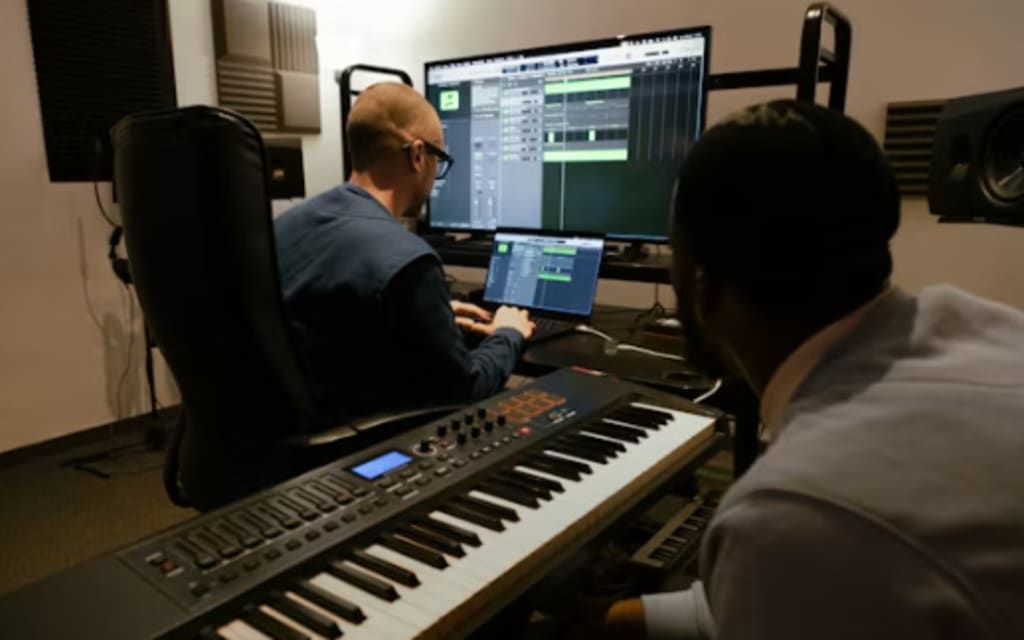
Advancements in digital tools—software such as Ableton Live, FL Studio, and Logic Pro—have enabled music production without the need for large studios, greatly democratizing the composition process (Li, 2025). These technologies have also redefined the sonic structure of music, with genres such as EDM, techno, house, and trap emerging entirely from the digital environment. Even traditional music has been transformed through the integration of electronic effects and processing, resulting in new forms of cultural fusion (Souvaliotis, 2022).
Changes in the streaming economy have also influenced song structure, promoting new patterns such as the reduction of long intros and an emphasis on “instant hooks” to capture listeners’ attention within the first few seconds (Catellani, 2018). These developments have not only enhanced the quality of music production but also expanded artists’ creativity, allowing them to experiment with new styles. Moreover, AI- and virtual reality-based tools have created novel listening and performance experiences for audiences, transforming the way they interact with music. Overall, technology has not only revolutionized the production and distribution processes but has also significantly expanded the boundaries of creativity and artistic experience in music.
Artificial Intelligence and Musical Transformations
In the past decade, artificial intelligence (AI) has emerged as one of the most significant driving forces of transformation in contemporary music. Generative music models—capable of producing melodies, harmonies, rhythms, and even replicating singers’ voices—have introduced both new opportunities and challenges for artists, publishers, and the music industry. Tools such as Flow Machines, Magenta Studio, and Zotope Ozone now play a role at multiple stages of music creation, from production and arrangement to mastering, and are considered essential components of the expanding digital music ecosystem (Torres, 2024, pp. 3–10).
The integration of AI into music production has not only expanded creative capacities but has also redefined the relationship between artists and technology. These systems, by generating works in diverse styles, have pushed the boundaries of traditional creativity and raised critical questions regarding intellectual property, the definition of artistic creativity, and the role of humans in the musical creation process. However, increasing reliance on algorithms also presents challenges such as the commodification of music, homogenization of tastes, and reduction of artistic authenticity. Additionally, issues like algorithmic transparency, data bias, and fairness in the visibility of works have raised serious ethical concerns in the digital music domain (Ibid, pp. 30–35, 41).
One of the most controversial topics is the use of vocal deepfakes and AI’s ability to recreate artists’ voices without their consent. Examples such as viral works produced by FlowGPT or AI-recreated albums in the style of Kanye West on platforms like SoundCloud—including the album Honcho Jack 2 (AI)—have blurred the line between artistic inspiration and legal infringement. These works have drawn widespread attention to issues of copyright, personality rights (Right of Publicity), and the challenges arising from unauthorized use of artists’ voices and styles (Ibid, pp. 41–49).
Overall, although AI has remarkable potential to enhance creative processes, optimize music production, and expand access to advanced tools, its use requires clear legal and ethical frameworks. The future of digital music depends on responsible synergy between humans and machines—a synergy capable of amplifying human creativity without jeopardizing the rights and identity of artists.
The Role of the Internet in the Globalization of Music
The internet can be considered one of the most significant and influential factors in the globalization of music in the contemporary era. With the expansion of platforms such as YouTube, TikTok, Spotify, SoundCloud, and other social networks, access to global music has been facilitated in an unprecedented manner. In the past, discovering the music of other cultures required the physical distribution of recordings or limited radio and television programming, but the internet has removed these barriers, allowing users today to access musical productions from any part of the world with just a few clicks. This phenomenon has not only transformed the concept of the “music market” but has also multiplied the speed of music circulation and consumption.
Digital platforms, particularly social networks, play a key role in the rapid dissemination and viral spread of music. Many songs achieve global fame not through traditional channels such as radio or the publishing industry, but via TikTok challenges, Instagram trends, short videos, or internet memes. This trend has also transformed music production patterns; many artists and producers now design a significant part of their songwriting process based on the potential for “network acceleration,” creating short, catchy tracks with segments suitable for short-form videos. In other words, the dynamics of attention economy in the virtual space have reorganized musical creative structures.
Moreover, the internet has created new pathways for artist visibility, challenging the traditional hierarchical structure of the music industry. Independent artists can now release their works directly online without reliance on major publishers, managers, or distribution networks, and engage with global audiences. Numerous emerging artists have gained worldwide recognition solely through a single viral track—a phenomenon reflecting the redistribution of power in the music industry and the diminishing monopoly of production structures. This open and accessible space has led to a remarkable increase in the diversity of styles, languages, and musical forms in the mainstream global music scene.
Furthermore, the internet has fundamentally changed music consumption patterns. Audiences today are no longer restricted by geographical or cultural boundaries. They simultaneously consume Korean, Arabic, African, Latin American, and European music, and from this combination, multicultural and fluid tastes are formed. In such a context, the musical identity of younger generations is less tied to local traditions and has become more global and intercultural than ever before. This shift in listeners’ cultural repertoire has also contributed to the formation of hybrid and fusion styles, where musical elements from diverse cultures are combined (Jones, 2000, p. 222).
Overall, the internet has not only transformed how music is accessed but has also influenced the structure of production, distribution, consumption, and even the perception of music. The globalization of music in the digital age results from a combination of processes including widespread accessibility, rapid distribution, recommendation algorithms, the attention economy, and the formation of online musical communities. These developments demonstrate that music, more than ever, has become a global domain, with the internet at the core of this extensive transformation.
Conclusion
Modern global music is the product of a complex network of social, political, cultural, and technological factors that continuously interact to transform it. Wars and political crises give rise to protest styles and new emotional narratives, while large-scale migrations lead to cultural blending and the creation of multi-rooted genres. Technology, through the development of digital tools and advanced software, has revolutionized the music production process, making it more accessible to independent artists and the general public. The emergence of artificial intelligence has also challenged the boundary between human and machine production, opening new possibilities in composition, arrangement, and music analysis.
Alongside these transformations, the internet and mass media play a decisive role in shaping global audiences. Music now circulates in a worldwide environment, and listeners’ tastes have transcended geographical boundaries. Today’s audience may listen to music from Africa, Europe, Latin America, or Asia in a single day, and this diversity itself fosters the emergence of intercultural and innovative musical styles. What is important to recognize is that modern music is no longer the product of a single culture or nation; rather, it is the result of multilayered global interactions.
Ultimately, the transformation of music in the modern world is not a temporary phenomenon but a dynamic process that will continue alongside technological advancement, intensified migration, political changes, and the expansion of social networks. Therefore, the study of contemporary music requires an interdisciplinary approach to reveal the complex connections between society, politics, technology, and art. The music of the future will reflect a world that is increasingly interconnected and continuously evolving and transforming.
References
Aksakal, E. (2014). Kulturel kimligin ins¸a surecinde melez bir kavram olarak alevilik. Ataturk Universitesi Edebiyat Fakultesi Sosyal Bilimler Dergisi. pp 215-235.
Ang, I. (2003). Together-in-difference: Beyond diaspora, into hybridity. Asian Studies Review, 141-154.
Bergh, Arild and Sloboda, John. (2010). Music and Art in Conflict Transformation: A Review. Music and Arts in Action | Volume 2 | Issue 2. University of Exeter.
Catellani, Federico. (2018). Spotify vs Apple Music: a strategic fight for the music streaming industry . https://www.slideshare.net/slideshow/spotify-vs-apple-music-103579538/103579538#18
Daughtry, J Martin and Joshua, Adewole Kerobo. (2025). Music and Resistance in War and Other Conflicts. Vol. 9, No. 2 .University of Michigan.
Endona Bardhi. (2025). Globalization, the Impact of this Phenomenon on Musical Genres in Kosovo. Journal of Arts Humanities and Linguistics. SRC/JAHL-108.DOI: doi.org/10.47363/JAHL/2025(1)106
Hall, S. (1990). Cultural Identity and Diaspora: Identity: Community, Culture, Difference. Londra: Lawrence and Wishart.
Hatef – farid, ayoubi. (2023). remix nasle jang remix by: bamikan beatz artists.
https://www.youtube.com/watch?v=moK-vc-y9ho&list=PLekPGtaa36HcY_TxXLdc-hGh-zRorbRHC
Jones, Steve. (2000). Music and the Internet. Popular Music (2000) Volume 19/2. Copyright 2000 Cambridge University Press. Printed in the United Kingdom. Pp 217-230.
Kumar, Santosh. (2024). Music and Technology. Sangeet Galaxy e-Journal. Vol. 13, No.1 (January 2024) pp. 200- 206 ISSN: 2319-9695
Li, Ruien. (2025). A Comparative Study of FL Studio, Logic Pro, and Ableton: Features, Limitations and Future Prospects. Proceeding of ICIHCS 2025 Symposium: Integration & Boundaries: Humanities/Arts, Technology and Communication DOI: 10.54254/2753-7064/2025.KM28508. pp 198-203.
Pratt, M. L. (1992). Imperial Eyes: Travel Writing and Transculturation. Routledge: London.
Souvaliotis, Tiana. (2022). Learning EDM The "Schooling" of Electronic Dance Musicians. Thesis for: Bachelor of Music (Music Education), Sydney University. Advisor: James Humberstone.
Torres, S.P. Vieira. (2024). Artificial Intelligence in the Modern Music Industry: The Cases of Digital Distribution and Creation. University College Tilburg Tilburg School of Humanities and Digital Sciences Tilburg University.
About the Creator
Prof. Islamuddin Feroz
Greetings and welcome to all friends and enthusiasts of Afghan culture, arts, and music!
I am Islamuddin Feroz, former Head and Professor of the Department of Music at the Faculty of Fine Arts, University of Kabul.
Keep reading
More stories from Prof. Islamuddin Feroz and writers in Beat and other communities.
Musical Traditions in the Urban and Rural Life of Kabul: Cultural Practices, Rituals, and Historical Development
Musical Traditions in the Urban and Rural Life of Kabul: Cultural Practices, Rituals, and Historical Development Author: Islamuddin Feroz, Former Professor, Department of Music, Faculty of Fine Arts, University of Kabul
By Prof. Islamuddin Feroz2 months ago in Beat
NEW TRAVEL UPDATES: UAE Unites with Saudi Arabia, Qatar in Aviation Shutdown as Airlines Suspend Routes to Israel, Iran, Bahrain During Rising Gulf Tensions
As geopolitical tensions escalate sharply in the Middle East, civil aviation across the region is facing unprecedented disruptions. Countries including the United Arab Emirates (UAE), Saudi Arabia, and Qatar have effectively shut critical aviation routes, prompting airlines to suspend flights to and from Israel, Iran, Bahrain and other neighboring states. The ripple effects are being felt across global air travel — leaving passengers stranded, airlines rerouting aircraft, and international travel deeply unsettled.
By Salaar Jamali8 days ago in Beat




Comments
There are no comments for this story
Be the first to respond and start the conversation.