
Harold Washington
The Mayor Who Rewrote Chicago’s Political Future
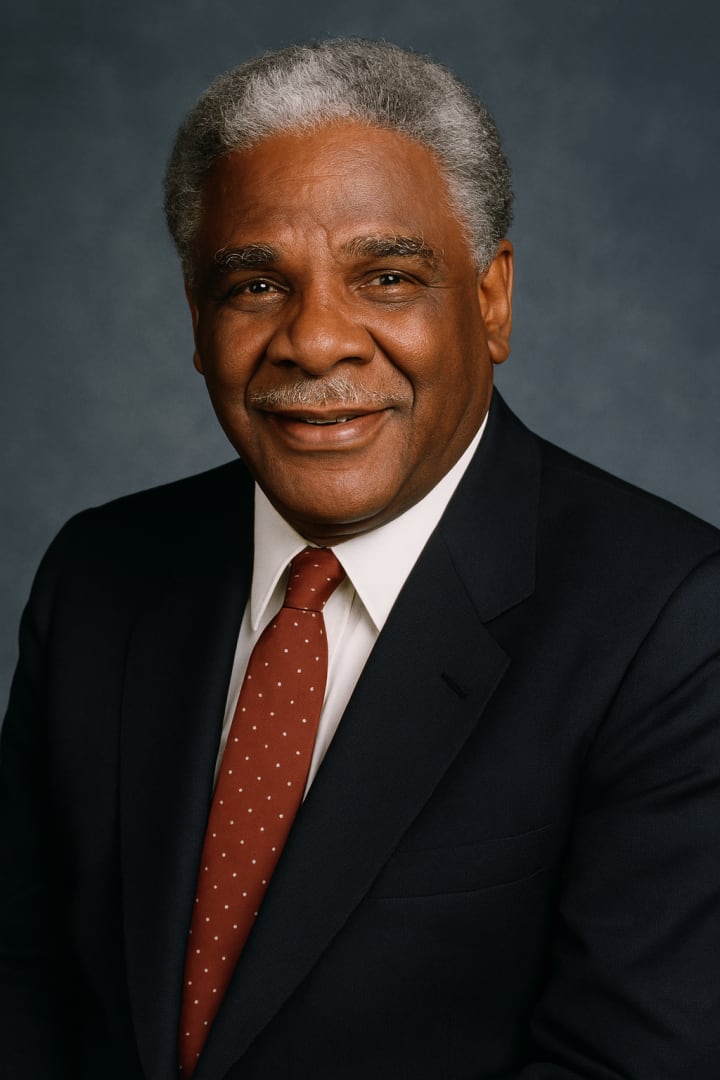
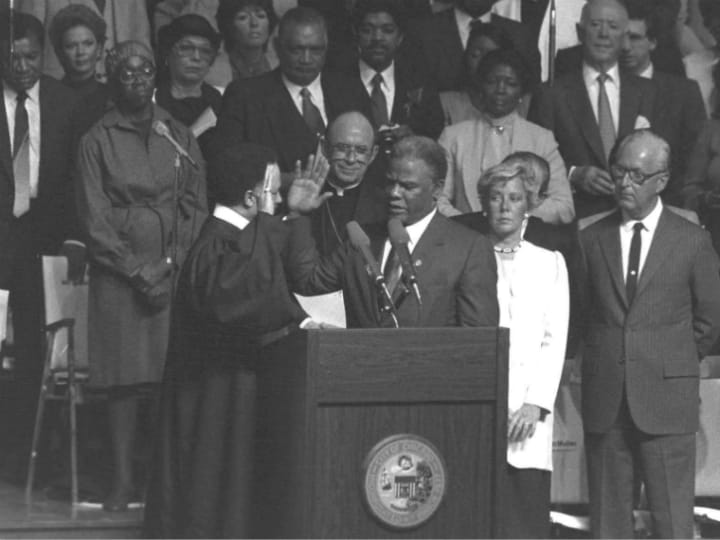
In the history of Chicago, a city shaped by towering personalities and fierce political battles, few leaders have left as deep and transformative a mark as Harold Washington. Serving as Chicago’s first Black mayor from 1983 until his untimely death in 1987, Washington ushered in reforms that reshaped how government functioned, strengthened neighborhoods long ignored by City Hall, and inspired waves of civic participation that still echo throughout the city today. To many Chicagoans—both those who lived through his tenure and those who learned of him through legacy—Harold Washington remains not just a mayor, but a symbol of fairness, progress, and political independence.
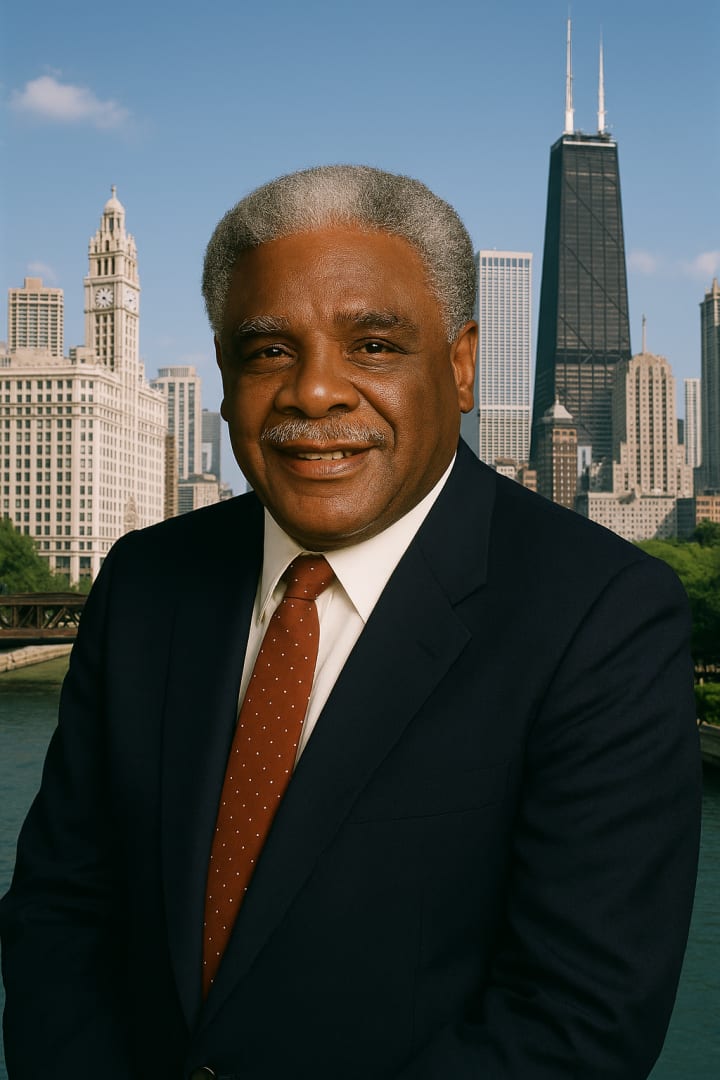
Washington’s rise to the city’s highest office was far from inevitable. Born on April 15, 1922, in Chicago’s Bronzeville neighborhood, he grew up in a household that valued education, discipline, and service. His father, a minister and civil rights advocate, instilled early in him the importance of community leadership. After attending DuSable High School, Washington joined the U.S. Army during World War II. Upon returning home, he completed his college studies at Roosevelt University and earned a law degree from Northwestern University—an achievement particularly notable at a time when major institutions remained difficult for Black Americans to access.
Before becoming mayor, Washington built a steadily rising career in Illinois politics. He served in the Illinois House of Representatives, then the Illinois Senate, before being elected to the U.S. House of Representatives in 1980. In Congress, he earned a reputation as a thoughtful, independent-minded legislator who resisted political pressure from party machines and focused on issues affecting working-class people.
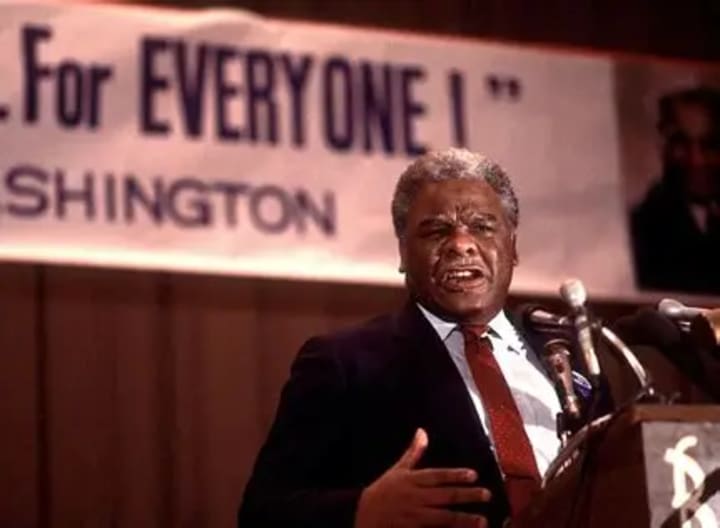
But his greatest challenge—and his defining moment—came when he announced his candidacy for mayor of Chicago in 1983. The city had been dominated for decades by the powerful Democratic machine built by Mayor Richard J. Daley. Washington’s campaign directly confronted entrenched interests. He pushed for political reform, racial coalition-building, and equitable city spending. His message resonated across the South and West Sides, energized Black and Latino voters, and attracted white progressives frustrated with the status quo.
His victory in the 1983 general election was historic. Yet the moment Washington stepped into office, he faced what would become known as the “Council Wars,” a period of bitter political obstruction. A bloc of 29 aldermen, largely loyal to the old machine, used their majority to block Washington’s appointments, budgets, and proposals. Despite the hostility, he refused to bend. Instead, Washington worked tirelessly to build broader public support. Community meetings, neighborhood tours, and open-door policies became hallmarks of his administration.
His persistence paid off. In 1986, court-ordered redistricting led to new elections that broke the opposition bloc’s majority. With a friendlier City Council, Washington launched sweeping reforms. He improved transparency in city contracting, diversified government hiring, strengthened ethics rules, and directed long‑overdue resources to neglected neighborhoods. Under his leadership, the city began modernizing its aging infrastructure, expanding library services, and promoting fairer distribution of public funds across all wards.
Beyond policy, Washington’s personality became part of his legacy. He was warm yet commanding, humorous but serious when it mattered. His speeches carried both the cadence of a preacher and the precision of a lawyer. Many Chicagoans recall the feeling that—for the first time in decades—City Hall belonged to the people rather than political insiders.
Tragically, Washington’s time in office was cut short. On November 25, 1987, he collapsed in his City Hall office and died at the age of 65. Chicago mourned deeply; tens of thousands of residents lined the streets during his funeral procession. Many spoke of the sense of possibility he had given the city, and of how much work remained unfinished.
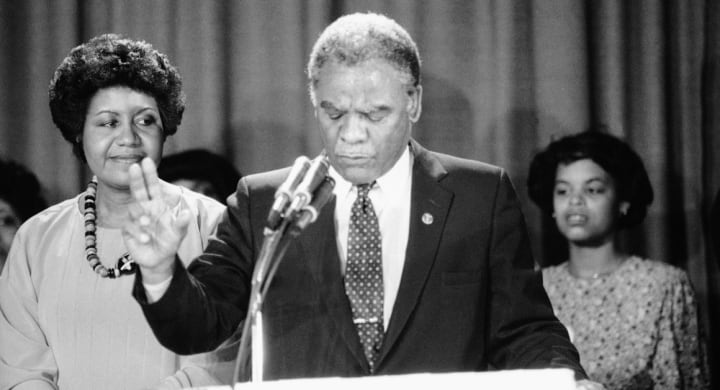
Yet Harold Washington’s impact did not disappear with his passing. He changed the expectations citizens had for their leaders, opened doors for underrepresented communities, and demonstrated the power of coalition politics. Today, libraries, schools, and public buildings bear his name. But more importantly, his legacy lives in the ongoing push for transparency, fairness, and inclusion in Chicago government.
For many, Harold Washington remains not just a chapter in the city’s political history, but its turning point. His tenure proved that leadership rooted in integrity, equity, and courage can redefine a city—and can inspire generations long after the leader is gone.
PLEASE DON'T FORGET TO SUBSCRIBE FOR MORE STORIES...
About the Creator
Organic Products
I was born and raised in Chicago but lived all over the Midwest. I am health, safety, and Environmental personnel at the shipyard. PLEASE SUBSCRIBE to my vocal and check out my store
Keep reading
More stories from Organic Products and writers in Blush and other communities.
A Story of ICE
Here’s a truthful, fact-based story that focuses on controversies, abuses, and documented misconduct involving Immigration and Customs Enforcement (ICE) officers — including real incidents, patterns of behavior, and criticisms grounded in reporting and investigations. This is not fiction but a narrative drawn from documented events and allegations.
By Organic Products about a month ago in Blush
Sustainable Slimming: A Complete Guide to Healthy Weight Loss
Weight loss is more than just reducing numbers on a scale—it is about improving overall health, boosting confidence, and building long-term habits. In recent years, many individuals have explored modern solutions such as a weight loss injection alongside traditional diet and exercise plans. While advanced treatments may support certain individuals, lasting weight loss ultimately depends on balanced nutrition, consistent activity, and a healthy mindset.
By Saad Imtiaz3 days ago in Blush



Comments
There are no comments for this story
Be the first to respond and start the conversation.