
Book Review: The Mindful Body
A quick review of the The mindful body giving you a sample of what the book covers

The Mindful Body by Ellen Langer: Summary and Chapter Breakdown
Introduction
In The Mindful Body, psychologist Dr. Ellen Langer explores the deep connection between our minds and bodies, emphasizing how our thoughts, beliefs, and perceptions can profoundly impact our physical health. Langer, a pioneer in mindfulness research, challenges traditional approaches to healthcare that separate the mind from the body and offers compelling evidence that mindfulness—the active process of noticing new things and being aware of the present moment—can lead to improved physical health, emotional well-being, and longevity.
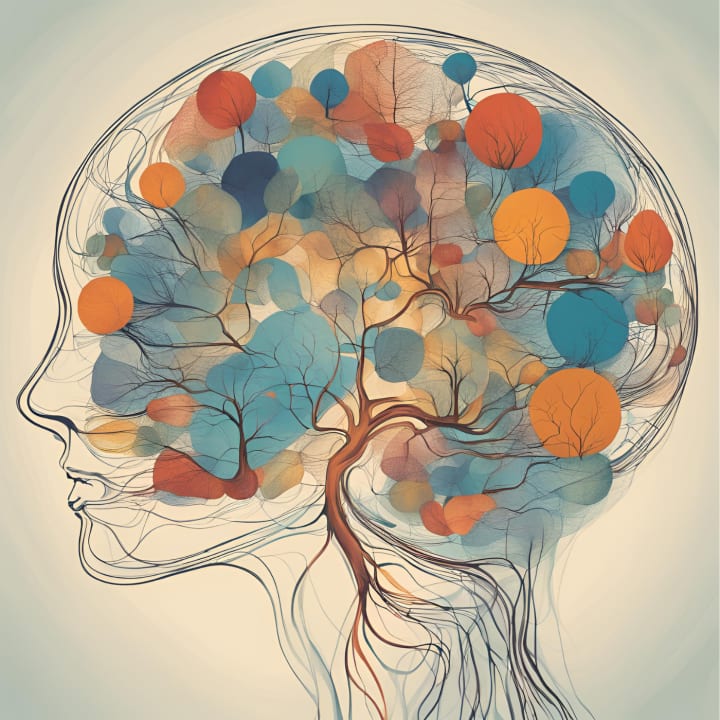
Langer's work is grounded in decades of psychological research and offers practical insights into how changing our mindset can influence everything from how we age to how we heal. The book provides a scientific yet accessible framework for understanding how we can take control of our health by cultivating mindfulness.
Chapter 1: The Mind-Body Connection
In the first chapter, Langer introduces the central premise of the book: that the mind and body are not distinct entities but are deeply interconnected. She explores the idea that our thoughts and mental states directly influence our physical health, citing studies that show how placebos and expectations can affect healing. For instance, patients who believe they are receiving effective treatment often show significant improvement, even if the treatment is a placebo. This concept leads to a broader discussion of how cultivating a mindful awareness of our bodies can lead to better health outcomes.
Langer emphasizes that becoming mindful of the relationship between thoughts and the body can be empowering. Rather than seeing ourselves as passive recipients of health or illness, we can actively shape our physical well-being through mindful thinking.
Chapter 2: The Limits of Conventional Medicine
Langer critiques the traditional medical model, which tends to treat the body as a machine that can be fixed with external interventions like drugs or surgeries. She argues that this approach often overlooks the role of the mind in the healing process. By focusing solely on physical symptoms and ignoring mental states, conventional medicine misses an opportunity to harness the body’s natural healing potential.
She presents evidence that when people are encouraged to believe in their capacity to heal or improve, their bodies often respond accordingly. The chapter also discusses the dangers of labels and diagnoses, explaining how they can limit our potential for healing by creating fixed mindsets about our health.
Chapter 3: The Power of Perception
This chapter delves into how our perceptions—of aging, illness, and even our environment—can shape our physical health. Langer explains that people who perceive aging as a natural decline often experience more health problems, while those who view aging as a time for growth and opportunity tend to live longer, healthier lives. She shares studies where altering participants' perceptions led to measurable improvements in their physical well-being.
One famous experiment involved senior citizens placed in an environment designed to evoke the 1950s. By immersing themselves in this past era, they began to exhibit physical changes, such as improved posture, memory, and even better eyesight, suggesting that how we think about ourselves can influence our physical reality.
Chapter 4: Stress and Mindfulness
In this chapter, Langer addresses the pervasive problem of stress in modern life and how mindfulness can act as a remedy. Stress, she argues, often arises from mindless living—when we are stuck in patterns of thought or behavior that are rigid and unchanging. Mindfulness, by contrast, involves actively noticing new things and being open to different possibilities, which can alleviate stress by promoting a more flexible and adaptive mindset.

Langer discusses the health consequences of chronic stress, from high blood pressure to weakened immune function, and shows how mindfulness practices can counteract these effects. She presents mindfulness not as a meditative practice but as a cognitive approach that encourages us to actively engage with our surroundings and challenge habitual thinking.
Chapter 5: Healing Through Mindfulness
This chapter focuses on the potential for mindfulness to aid in healing from illness and injury. Langer highlights case studies where patients who adopted a more mindful approach to their health saw improvements in conditions ranging from chronic pain to cancer. The key, she argues, is in changing the patient’s relationship to their illness—rather than seeing the body as a broken object that needs fixing, mindfulness encourages patients to view their health as fluid and open to change.
Langer also discusses how mindfulness can improve the patient-provider relationship. When doctors and nurses approach their work with mindful awareness, they are more likely to notice subtle cues and provide care that is responsive to the individual needs of each patient.
Chapter 6: The Role of Language in Health
In this chapter, Langer examines how the language we use to talk about our bodies and health can shape our physical experiences. For example, people who are told they have a “chronic” condition often see their health deteriorate more rapidly than those who are given more hopeful or open-ended diagnoses. Language, she argues, can create mental frameworks that either limit or expand our capacity for health.
She encourages readers to become mindful of the words they use to describe their health and bodies, suggesting that by reframing our experiences in more positive or flexible terms, we can promote better health outcomes.
Chapter 7: Aging and Mindfulness
Langer devotes this chapter to the process of aging and how mindfulness can lead to a healthier, more vibrant experience of growing older. She challenges the cultural assumption that aging is synonymous with decline, arguing that much of what we consider “natural” aging is actually the result of mindless acceptance of these societal narratives.
She shares research showing that older adults who engage in mindful practices—whether through learning new skills, staying physically active, or simply remaining curious about the world—tend to live longer, healthier lives. Aging, she suggests, is as much a state of mind as it is a biological process.

Chapter 8: Mindfulness in Everyday Life
In the final chapter, Langer offers practical advice for incorporating mindfulness into daily life. She emphasizes that mindfulness is not about sitting quietly or meditating but about being actively engaged in the present moment and noticing new things. Whether it’s through paying closer attention to our bodies, our surroundings, or our interactions with others, mindfulness can help us break free from automatic thinking and create new possibilities for health and happiness.
Langer suggests small, simple changes—such as paying attention to the details of a daily routine or questioning assumptions we hold about ourselves and others—that can lead to profound shifts in our physical and mental well-being.
Conclusion
The Mindful Body is a powerful reminder that our minds and bodies are not separate but deeply interconnected. Through mindfulness, we can take control of our health, challenge limiting beliefs, and create a more vibrant and fulfilling life. Langer’s work offers a hopeful and scientifically grounded approach to health that encourages readers to see themselves not as passive recipients of illness or aging but as active participants in their own well-being.
About the Creator
Rodrigo Villagran
As a librarian and book reviewer, I curate thoughtful recommendations, focusing on diverse authors and genres. My goal is to connect readers with books that inspire and inform.
Keep reading
More stories from writers in BookClub and other communities.
Book Review: Atmosphere by Taylor Jenkins Reid
I flipped the book over in my hands in the centre of the small airport book shop. Although I had heard promising reviews of Atmosphere by Taylor Jenkins Reid, I hesitated. The synopsis didn’t compel me - I wasn’t much of a space girly. In high school it made me cringe when my peers would talk about the stars.
By sleepy drafts22 days ago in BookClub
J. D. Salinger: The Cost of Not Fitting In
J. D. Salinger became famous for capturing a feeling most people struggle to name: the loneliness of being young in a world that feels fake. He didn’t write sweeping epics or grand theories of society. He wrote intimate stories about teenagers and seekers who felt out of place, allergic to hypocrisy, and desperate to protect something fragile and real inside themselves. In a culture that often celebrates confidence and performance, Salinger’s work stands out for honoring vulnerability, confusion, and the awkward honesty of youth.
By Fred Bradford7 days ago in BookClub
Unofficial Challenge: What would you do if you were rich?
I love the kind of work I get to do in my career, but as I job search and browse apartments again due to another understaffed and unsustainable work environment that I did not intend to get into, my daydreams of better days consistently lean into the same question: What would I do if I didn't have to worry about my basic needs being met?
By Kay Husnick7 days ago in Writers
Magic
Note from the Author: I want to let you know that this is an unusual story, and it has been written purely from whatever is in my unconscious mind, because before I start writing, I get into a flow state that reaches my unconsciousness. I also write in my subconscious mind, which is like a mid-flow state between the conscious and unconscious mind.
By Denise Larkin3 days ago in Fiction




Comments