
Cormac McCarthy: When the Rules Are Gone
Cormac McCarthy: When the Rules Are Gone

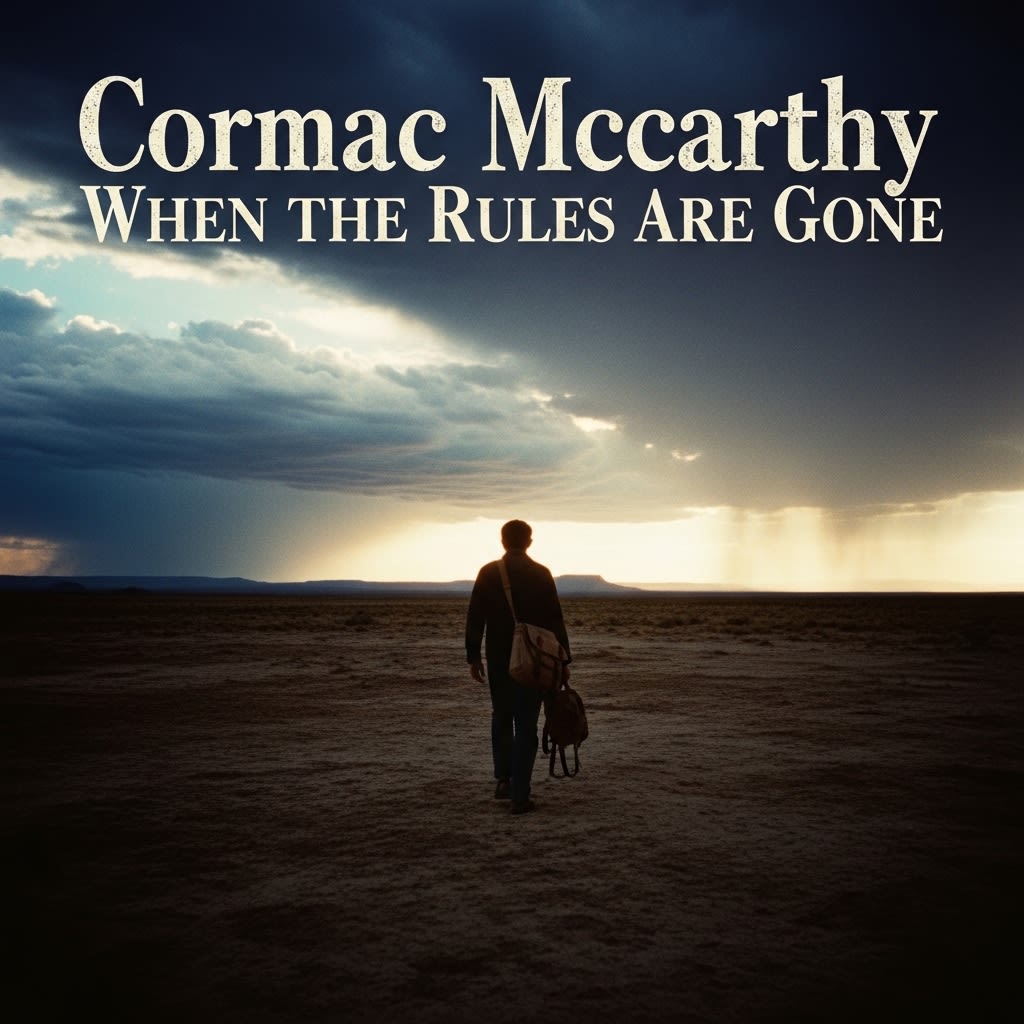
Cormac McCarthy wrote like the world had been stripped down to bone and ash—and then asked what kind of people would survive in what was left. His novels don’t comfort. They confront. They place you in landscapes where the sky feels too wide, the roads too empty, and every choice carries the weight of life or death. In a culture that loves neat heroes and clean morals, McCarthy’s work is a cold wind across the face: bracing, unforgiving, and impossible to forget.
McCarthy came to fame late, but he arrived fully formed. His style is instantly recognizable: spare punctuation, biblical rhythms, dialogue that sounds ancient and modern at the same time. He writes as if language itself is being tested—how little can be said while still telling the truth? That restraint gives his stories their power. When violence appears, it isn’t dressed up with clever metaphors. It’s blunt. When tenderness shows up, it feels earned because it’s so rare. You don’t read McCarthy for plot twists. You read him to watch human nature under pressure.
At the heart of his work is a hard question: what is a person when the rules are gone? In many McCarthy worlds, law has collapsed, institutions have failed, and survival is the only obvious goal. But survival alone doesn’t make you human. His characters are constantly deciding whether to become predators or caretakers, whether to treat others as obstacles or as fellow travelers through the dark. The tension isn’t between good guys and bad guys—it’s between different ways of being alive. Do you choose to “carry the fire,” as one of his most famous images puts it, or do you let the fire go out?
McCarthy’s landscapes matter as much as his people. Deserts, borderlands, ruined highways, scorched forests—these places aren’t just backdrops; they’re moral environments. The land is vast and indifferent. Nature doesn’t judge, and it doesn’t rescue. That indifference forces his characters to become the source of meaning themselves. In a world without guarantees, every small act of mercy becomes radical. Every refusal to dehumanize another person becomes a form of rebellion. McCarthy seems to say that ethics don’t arrive from the sky; they are chosen, moment by moment, in the dust.
Violence is everywhere in his work, but it’s never glamorous. He doesn’t let you enjoy it. His scenes are often shocking because they deny the reader the comfort of spectacle. There’s no triumphant music swelling in the background—only consequence. This is McCarthy’s quiet critique of a culture addicted to sanitized brutality. When violence becomes entertainment, empathy dulls. McCarthy sharpens it again by making you sit with what violence does to bodies, to communities, to memory. The cost lingers long after the act.
Yet calling McCarthy “bleak” misses the point. Yes, his worlds are harsh. But he’s not interested in despair for its own sake. He’s interested in what survives despair. In his darkest stories, the smallest gestures—sharing food, protecting a child, refusing to betray a companion—glow with significance. Hope doesn’t arrive as a grand solution. It arrives as stubborn decency in a landscape that offers no reward for it. That kind of hope feels truer than optimism. It doesn’t deny the darkness; it insists on a way of moving through it.
McCarthy also wrestles with fate and choice. Are we doomed by our nature, our history, our hunger? Or do we carve ourselves out of the world through the decisions we make under pressure? His villains often speak with terrifying certainty about destiny, power, and inevitability. They believe the world is a game to be mastered by those willing to be ruthless enough. McCarthy sets this worldview against quieter characters who choose restraint not because it’s profitable, but because it’s right. The clash isn’t just physical—it’s philosophical.
Why does McCarthy matter now? Because we live in an age of collapse narratives—climate anxiety, political fracture, technological upheaval. His fiction doesn’t offer policy solutions, but it does something more primal: it asks what kind of people we want to be when systems fail. Will we reduce others to resources? Will we retreat into cruelty because it feels efficient? Or will we practice a stubborn humanity even when no one is watching and nothing is promised?
Reading McCarthy is like standing on an empty road at dusk, the horizon stretching forever. It’s uncomfortable. It’s clarifying. He doesn’t tell you who to be. He shows you what happens when people choose different ways of being—and leaves the rest to your conscience.
About the Creator
Fred Bradford
Philosophy, for me, is not just an intellectual pursuit but a way to continuously grow, question, and connect with others on a deeper level. By reflecting on ideas we challenge how we see the world and our place in it.
Keep reading
More stories from Fred Bradford and writers in BookClub and other communities.
Fyodor Dostoevsky: A Writer Too Honest for Comfort
Fyodor Dostoevsky didn’t just write stories—you could say he wrote autopsies of the human soul. His novels don’t entertain you from a safe distance; they pull you into moral chaos, force you to sit with uncomfortable questions, and then quietly ask, “So—who are you, really?” More than a century later, his work still feels uncomfortably modern because the conflicts he explored never went away: guilt, freedom, faith, resentment, pride, and the terrifying power of ideas.
By Fred Bradford2 days ago in BookClub
Book Review: Atmosphere by Taylor Jenkins Reid
I flipped the book over in my hands in the centre of the small airport book shop. Although I had heard promising reviews of Atmosphere by Taylor Jenkins Reid, I hesitated. The synopsis didn’t compel me - I wasn’t much of a space girly. In high school it made me cringe when my peers would talk about the stars.
By sleepy drafts13 days ago in BookClub
7 Amazing Books With Unique Concepts To Read In 2026
In a world overflowing with stories, it’s rare to stumble upon books that truly defy convention—those that twist familiar narratives, challenge perceptions, and linger in our minds long after the last page. Whether you’re an avid reader looking for fresh perspectives or someone eager to explore ideas that expand your imagination, diving into books with unique concepts can be transformative. These aren’t just entertaining reads; they’re windows into new ways of thinking, storytelling, and understanding the world.
By Diana Merescabout 7 hours ago in BookClub


Comments
There are no comments for this story
Be the first to respond and start the conversation.