
Granville T. Woods
The Brilliant Innovator Who Rewired America’s Future
In the late 19th century, when America was racing toward industrial expansion and the nation’s railways pulsed with unprecedented energy, one inventor stood out for transforming how people communicated, traveled, and understood technology. His name was Granville T. Woods, and although history remembers him as “The Black Edison,” his legacy shines brightest when recognized on its own terms: a visionary who reshaped modern communication and transportation through ingenuity, persistence, and unmatched creative intelligence.
Born in 1856 in Columbus, Ohio, Woods grew up in a time when educational opportunities for African Americans were severely limited. Despite the era’s barriers, he pursued mechanical knowledge relentlessly, teaching himself the inner workings of machinery, electricity, and railroad systems. He held jobs as a railroad engineer, fireman, and machinist—roles that exposed him to the technological challenges of rail transportation and helped plant the seeds for many of his revolutionary inventions.
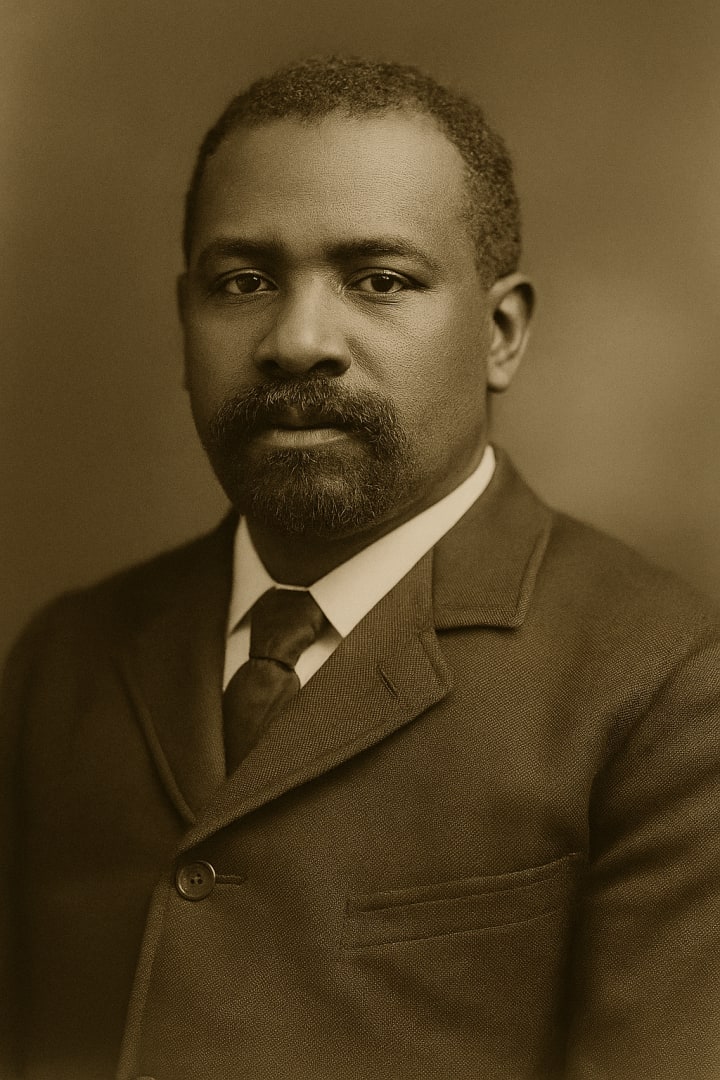
Woods’s breakthrough came in 1884 when he received one of his earliest patents for the **steam boiler furnace**. But it wasn’t the steam industry that would ultimately define his place in history—it was communication.
At a time when the telegraph dominated long‑distance messaging and the telephone was still in its early infancy, Woods imagined something beyond the limitations of both. His idea resulted in a groundbreaking invention called telegraphony, a device that merged the telegraph and telephone into a single system capable of transmitting both voice and text messages over one wire. This innovation was nothing short of transformative.
Telegraphony instantly attracted attention from major figures in the communication world. After legal battles and competitive tension, **Alexander Graham Bell’s company ultimately purchased the patent, recognizing that Woods had developed a communications breakthrough ahead of its time. It was a historic moment—not only because of the invention itself, but because it marked the growing recognition of a Black inventor whose brilliance could no longer be ignored or dismissed.
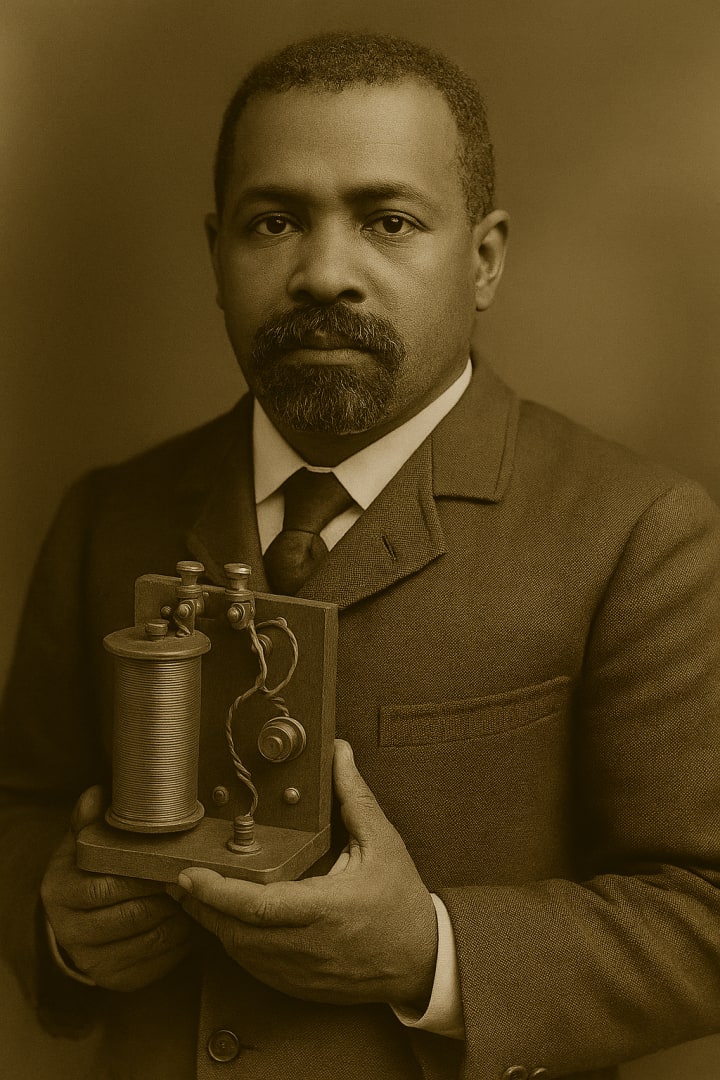
Yet telegraphony was only the beginning.
As America’s railroad system expanded, train collisions, scheduling errors, and communication gaps became increasingly dangerous. Woods understood both the mechanical and electrical challenges of the rail system, and he responded with what would become one of his most influential creations: the Synchronous Multiplex Railway Telegraph.
This device allowed moving trains to communicate with station houses and other trains in real time. For the first time, railroad workers could pinpoint a train’s exact location on the tracks, reducing collisions and improving scheduling efficiency. The invention is often credited with modernizing the rail communication system and set the foundation for many of the safety and signaling practices used today.

Woods’s passion for innovation did not slow. Between 1900 and 1907 alone, he received 20 patents for electrical devices designed to control trains, making him one of the most prolific inventors of his era. Over the course of his life, he accumulated more than 50 patents, touching industries that included railways, telegraphy, electrical circuits, amusement rides, and even medical devices.
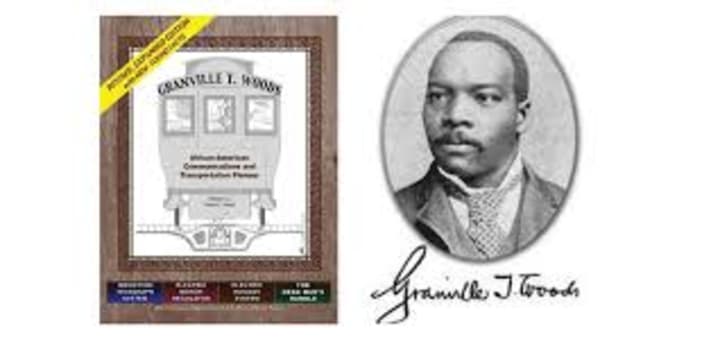
His contributions extended far beyond machinery. Woods helped inspire future generations of Black engineers, electricians, mechanics, and inventors who saw in him a powerful example of what was possible. His life was a testament to the idea that genius has no boundaries, and that innovation grows strongest when fueled by determination.
Granville T. Woods passed away in 1910, but his legacy continues in every modern communication system, every railway safety protocol, and every invention that merges voice, data, and electrical engineering. His work paved the way for the technologies that shaped the 20th century—and continue to influence the 21st.
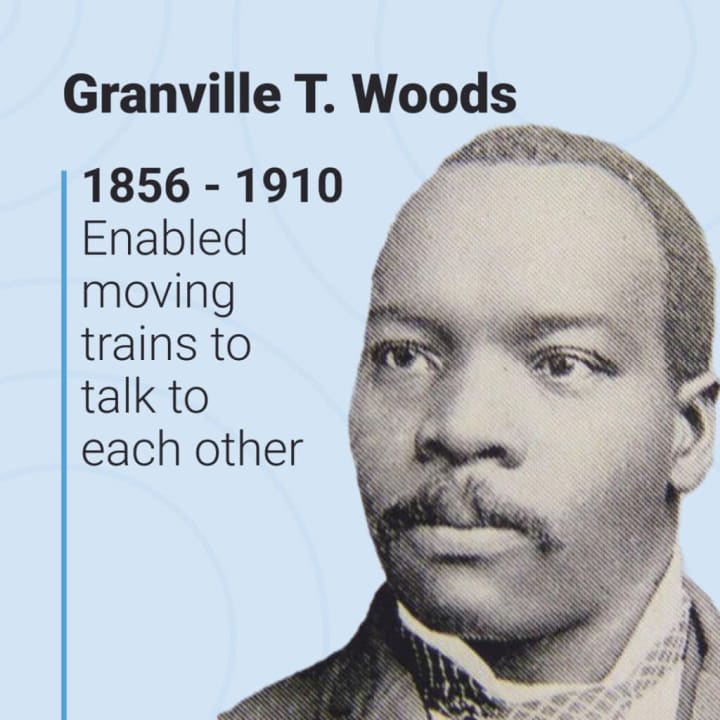
He was not only “The Black Edison”—he was a monumental innovator whose ideas powered the nation forward.
If you enjoyed learning about Granville T. Woods and want more inspiring stories of Black inventors who shaped history, **follow me for more**.
About the Creator
TREYTON SCOTT
Top 101 Black Inventors & African American’s Best Invention Ideas that Changed The World. This post lists the top 101 black inventors and African Americans’ best invention ideas that changed the world. Despite racial prejudice.
Keep reading
More stories from TREYTON SCOTT and writers in BookClub and other communities.
Rise of Sarah Breedlove Walker
The Extraordinary Rise of Sarah Breedlove Walker: The Woman Who Turned Innovation Into Empowerment Sarah Breedlove Walker’s life began in the most unlikely of places for a future titan of industry — on a Louisiana plantation in 1867, to parents who had been enslaved only a few years before her birth. Orphaned by age seven and working as a washerwoman by the time she was a young teenager, Sarah’s early life was defined by hardship. But woven through those struggles was a relentless determination that would eventually carry her into the center of one of the most remarkable success stories in American history.
By TREYTON SCOTTabout 11 hours ago in BookClub
Self Help: Grifters' Gospel
On Self-Help, Snake Oil, and the Illusion of Change Psychology professionals and students can be imagined on two opposite sides of a line called self-help books: likely a larger group opposes pop-science and step-by-step manuals filled with talk of success, journaling, and not giving a f**k; others love them, but they aren’t many.
By Avocado Nunzella BSc (Psych) -- M.A.P 16 days ago in BookClub
8 Self-Development Books That Will Transform Your Life Quickly
In a world where personal growth and self-improvement are no longer optional, finding the right guidance can accelerate transformation in every aspect of life. Self-development books have a unique power: they distill decades of research, experience, and wisdom into digestible, actionable insights that we can apply immediately. Whether you want to improve your mindset, boost productivity, master emotional intelligence, or unlock hidden potential, the right book can serve as a roadmap. Below is a list of 8 self-development books that will transform your life quickly.
By Diana Meresc2 days ago in BookClub
The Salt in her Voice
The myth says mermaids sing to lure sailors to their death. But why? The ocean is huge. Only 5 percent has been discovered by man. Why would a creature of the sea with that much space to roam ever care about the fate of men on ships? The answer, as it turns out, is not a simple one at all. The truth about the myth is older than the tides. Long ago before the first ship ever cut across the surface, the sea made a pact with the sky. The sky would take the souls of the drowned. Anyone who died in storms or any quiet accidents of the deep would have their soul lifted upward to the Heavens while the bodies would remain below, feeding the oceans endless hunger. The greedy sea however wanted more souls than the sky would claim. So it created mermaids. It gave them beautiful voices woven from currents and moonlight. It commanded them to sing. "Bring forth the ones who float where they should sink." it instructed them. So they did. They never killed out of malice but out of obligation. They sung to summon, not to seduce. A mermaid's voice could loosen the tether between the body and soul, making any man step willingly into the water. The sea would take the body and the sky would take the soul. Balance maintained.
By Sara Wilson7 days ago in Fiction



Comments
There are no comments for this story
Be the first to respond and start the conversation.