
Living Thoughtforms: An Exploration of Egregores
How Collective Focus Shapes Independent Currents of Power

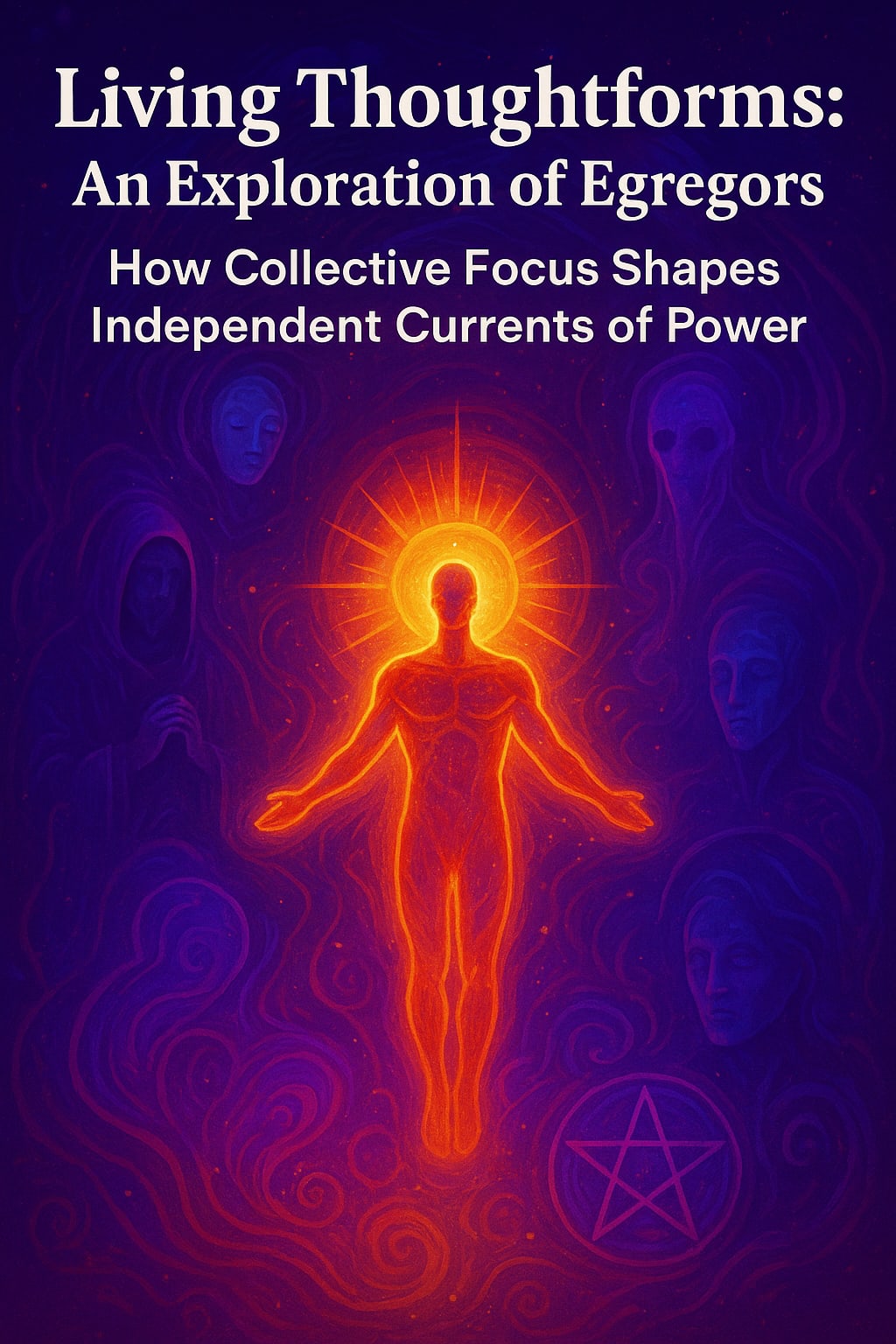
Currents Born from Collective Imagination
Egregores hold an influential place within the study of esoteric philosophy, serving as a bridge between mystical ideas, psychological interpretation, and the lived experience of collective belief. The concept traces its earliest roots to ancient Mediterranean thought, where discussion surrounding group influence, shared symbols, and communal intention formed a foundation for later occult speculation. Over centuries, this idea evolved into a refined model describing how repeated focus and emotional investment can generate distinct energetic patterns within the unseen layers of existence.
The presence of an egregore often reflects the values, hopes, fears, and aspirations of the community that nourishes it. Ceremonial groups, spiritual societies, political movements, artistic communities, and cultural traditions all carry the potential to cultivate such formations through accumulated ritual action, shared mythology, and sustained emotional engagement. These collective currents take shape gradually, influenced by the intensity of group participation and the longevity of shared focus. Many esoteric systems describe this process as the birth of a subtle organism formed from thought, emotion, and symbolic imagination.
Historical accounts from occult fraternities of the nineteenth and early twentieth centuries offer detailed observations on this phenomenon. Members of these groups often reported sensations of an unseen presence during ritual gatherings, a presence interpreted as the accumulated force of the group’s intention. Modern practitioners continue to explore similar experiences, noting that prolonged collaboration within a focused environment appears to generate a distinct atmosphere with its own character and momentum.
Various fields of study, including sociology, religious anthropology, depth psychology, and consciousness research, provide additional insight into this phenomenon. Each discipline highlights the extraordinary influence exerted by shared narratives and communal focus. When large numbers of individuals concentrate on a single idea or symbol, this idea begins to exert a tangible effect on attitudes, emotions, and behavior. In esoteric thought, this effect manifests as the formation of an energetic structure that grows stronger as attention continues to flow toward it.
Egregores represent the dynamic intersection of imagination, belief, tradition, and collective will. Study of this subject invites deeper consideration of the hidden forces shaping cultures, movements, and communities across history. Through sustained attention and communal engagement, abstract concepts can evolve into powerful currents that act upon the world in subtle and unexpected ways.
Key Terms: Foundations of Collective Energetics
Egregore
A structured energetic formation produced through sustained collective intention. An egregore develops as emotional, mental, and ritual focus gathers around a shared concept, symbol, or goal. Over time, this accumulation of focused attention generates a presence that reflects the character, values, and emotional tone of the contributing group.
Thoughtform
A mental and energetic construct shaped through visualization, concentration, meditation, or ritual work. A thoughtform carries the imprint of the intention that created it. Many occult systems view egregores as advanced thoughtforms shaped and maintained by group effort rather than individual practice.
Collective Consciousness
A term used to describe the shared beliefs, symbolic language, emotional patterns, and cultural narratives held by a community. This shared mental landscape strengthens the formation of egregores by providing a consistent foundation of focus and emotional reinforcement.
Astral Plane
A subtle metaphysical realm described in many esoteric traditions as the domain of symbols, emotions, dreams, and psychic impressions. Egregores are often said to function on this level, taking form within the symbolic fabric of the astral environment before influencing material or psychological conditions.
Servitor
A constructed thoughtform designed for a specific purpose, often created by a single practitioner. Servitors are usually defined by narrow tasks or goals, while egregores develop broader identities shaped by group participation.
Group Mind
A shared mental field generated when individuals synchronize emotion, intention, and symbolic focus. Many occultists describe the group mind as a precursor to egregore formation, acting as a collective engine that feeds and stabilizes the emerging energetic structure.
Telesmatic Image
A symbolic or artistic representation created to house or express an energetic presence. In ceremonial magic, a telesmatic image often serves as a focal point for the group’s intention, allowing the egregore to acquire recognizable attributes within the astral plane.
Archetype
A universal pattern or symbolic figure recognized across cultures and mythologies. Archetypes influence the appearance and behavior of egregores by providing preexisting mental templates through which collective energy can organize itself.
Psychic Imprint
An energetic residue left behind by repeated emotional or ritual activity. When many individuals direct attention toward a specific location, symbol, or concept, these imprints accumulate and may contribute to egregore development.
Magical Current
A sustained flow of intention, symbolism, and ritual practice associated with a specific tradition, deity, movement, or magical approach. Egregores often arise from or contribute to such currents, functioning as anchors that preserve continuity within a tradition.
Thoughtform Matrix
A network of related ideas, emotions, and symbolic structures that collectively support an energetic manifestation. This matrix forms the scaffolding through which an egregore gains shape and coherence within the astral environment.
Energetic Tether
A subtle link between an individual or group and an energetic construct. Participation in rituals, meditative practices, or shared belief structures strengthens this connection and contributes to egregore maintenance.
Astral Signature
A distinct pattern or quality detectable within the astral plane, often used by practitioners to identify specific constructs or entities. An established egregore typically possesses a recognizable astral signature shaped by the group’s history and emotional tone.
Sympathetic Resonance
A principle describing how symbols, emotions, and intentions with similar qualities attract and amplify one another. This resonance accelerates egregore formation by drawing related energies toward the developing structure.
Collective Projection
A psychological and energetic process through which individuals externalize internal experiences onto a shared symbolic target. Repeated projection by many individuals can reinforce the presence of an egregore, granting the construct greater depth and complexity.
These terms form the conceptual groundwork for understanding the subtle mechanisms behind group energetics, symbolic interaction, and the gradual development of powerful metaphysical constructs within collective environments.
From Ancient Watchers to Modern Collective Currents
The concept now recognized as the egregore possesses deep historical roots that stretch across spiritual, linguistic, and occult traditions. The earliest traceable origin appears in the Greek term egrégoroi, translated as watchers or vigilant guardians. This term appears prominently in the Book of Enoch, a collection of ancient Jewish writings that describes a class of celestial beings assigned to observe the world. These watchers were portrayed not as creations of human consciousness, but as independent supernatural entities tasked with oversight of earthly affairs.
Centuries later, esoteric scholars revisited the term and gradually shifted its meaning. Instead of depicting literal celestial watchers, later thinkers reinterpreted the concept through a symbolic and psychological lens. The nature of the watcher evolved into a reflection of collective focus and group intention. This transition marked the beginning of the modern metaphysical understanding of egregores, moving the idea from external beings to internally generated constructs shaped by shared belief.
During the nineteenth century, a renewed interest in occult philosophy emerged across Europe. This period brought significant attention to the mechanics of thought, imagination, and collective spiritual influence. French occultists, including influential writers within the Martinist movement and students of Éliphas Lévi’s work, examined the ways in which group rituals and communal devotion seemed to create subtle presences within ritual spaces. These observations contributed to the idea that collective energy could shape distinct forms within the unseen layers of existence.
The late nineteenth and early twentieth centuries saw further expansion through Rosicrucian orders, Theosophical circles, and ceremonial magic societies. These groups integrated the concept of egregores into their internal teachings, noting that repeated symbolic action, disciplined meditation, and long standing tradition appeared to produce a unique energetic atmosphere surrounding the group. This atmosphere often displayed characteristics that felt independent of any single individual. Practitioners attributed this phenomenon to the accumulated intention of the group, forming what later authors described as a living current within the astral plane.
Theosophical writers contributed additional structure by exploring the interplay between thought, emotional energy, and subtle planes of existence. Texts from this tradition frequently described thoughtforms, group spirits, and astral constructs, reinforcing the idea that collective intention could generate complex energetic formations. Although terminology varied, many descriptions mirrored what later occultists identified as egregores.
By the early twentieth century, members of ceremonial magic orders such as the Hermetic Order of the Golden Dawn and its successor groups documented similar observations. Ritual practice conducted over many years appeared to cultivate a recognizable presence that guided initiates, influenced symbolic work, and served as a repository for the group’s evolving identity. This presence became an essential component of organizational continuity, acting as both a spiritual guardian and an embodiment of tradition.
Through these developments, the modern understanding of the egregore emerged as a synthesis of ancient symbolism, esoteric psychology, and ritual practice. The concept now stands as an enduring framework for exploring how collective attention, emotional intensity, and shared mythology can give rise to powerful currents within the unseen world.
Architects of Collective Energetic Theory
Éliphas Lévi (1810–1875)
Éliphas Lévi stands as one of the most influential voices in the revival of Western occult philosophy. Lévi’s extensive writings on imagination, astral light, magnetic influences, and the power of collective symbolism established a foundation for later interpretations of egregoric activity. Lévi described the astral light as a subtle medium that records thought, emotion, and intention, a concept that later writers adapted to explain how group focus can imprint energetic forms. Although Lévi did not use the modern spelling of the term, his work provided essential groundwork for understanding how collective consciousness shapes subtle environments.
Papus (Gérard Encausse) (1865–1916)
Papus played a central role in shaping late nineteenth century French occultism. As a leader of the Martinist Order and a prolific writer, Papus explored the mechanics of group ritual, astral influence, and the dynamics of collective will. His discussions on the formation of astral constructs within ceremonial settings offered early descriptions of entities that closely resemble modern definitions of egregores. Papus emphasized the significance of shared intention, noting that sustained ritual effort generates subtle forces capable of guiding and influencing a magical fraternity.
Alexandre Saint-Yves d’Alveydre (1842–1909)
Saint-Yves d’Alveydre expanded the concept of collective influence beyond ritual circles by applying esoteric principles to cultural and political movements. His theory of Synarchy described nations as guided by overarching spiritual currents shaped by shared ideals and historical momentum. Although not using the term egregore in its modern sense, Saint-Yves provided a model for understanding how collective identity can manifest as an energetic presence influencing large social structures.
Vladimir Shmakov (1887–1929)
Shmakov stands out as one of the first authors to define the egregore as a structured energetic entity shaped by the emotional and mental contributions of a group. His work in Russian esoteric philosophy presented a systematic explanation of how these constructs develop, sustain themselves, and interact with group members. Shmakov’s writings offered a clear transition from symbolic interpretations to detailed metaphysical models, solidifying the concept within twentieth century occult theory.
Alexandre Moryason (1931–2017)
A French esoteric teacher whose text La Lumière sur le Royaume gained recognition among practitioners of ceremonial magic and Martinist traditions. Moryason discussed the presence of collective beings within magical systems and emphasized the importance of disciplined practice in shaping and maintaining these currents. His writing provided continuity between earlier French occult thought and later twentieth century teachings.
Kenneth Grant (1924–2011)
An influential figure within the Typhonian branch of Thelemic magic, Grant explored the interplay between magical currents, cosmic forces, and collective energetic formations. Grant frequently described how long standing traditions and magical lineages generate distinct presences that function similarly to egregores, acting as custodians of ritual power and gateways to deeper initiatory experiences.
Israel Regardie (1907–1985)
A key interpreter of Golden Dawn magical theory whose work helped preserve the teachings of one of the most influential ceremonial orders of the modern era. Regardie’s discussions of ritual structure, group symbolism, and accumulated magical force offered insight into how sustained ceremonial practice generates a cohesive energetic presence within an order. Although not using the term directly, Regardie’s observations aligned closely with egregoric principles.
Mark Stavish (b. 1965)
Stavish brought renewed attention to the concept of egregores in contemporary esoteric study. His book dedicated to the topic traced historical developments, examined practical implications, and provided modern interpretations that helped practitioners understand the role of collective constructs in spiritual and magical work. Stavish’s contributions revitalized modern interest and made the concept accessible to new generations of students.
Together, these individuals shaped the evolution of egregore theory across centuries. Each contributed insight into the relationship between group will, symbolic expression, and the formation of subtle energetic presences that continue to influence esoteric practice and collective experience.
How Egregores Function
An egregore arises from focused emotional, symbolic, and intellectual energy generated by a united group. Consistent attention, shared imagery, and ritual practice create the foundation that allows a collective presence to take shape. As the group invests effort and emotion, the forming entity reflects the group’s internal landscape, ideals, anxieties, aspirations, and guiding symbols. Over time, this presence becomes part of the group’s identity, strengthening shared values and reinforcing patterns that already exist within the collective mindset. Many occult traditions describe this process as a cycle of exchange in which the group energizes the egregore and the egregore influences the group in return.
The growth of an egregore depends on continuity, intensity, and symbolic unity. Ceremonial work, collective meditation, repeated invocations, and a stable mythic or ideological framework provide nourishment that strengthens the structure. Emotional force acts as a catalyst, allowing the egregore to gather coherence and depth. Long-established traditions and consistent practices create an anchor that keeps the form stable within a particular cultural or magical setting.
Weakening begins when focus fades or internal division disrupts the shared flow of energy. Conflicted intentions, fading enthusiasm, or a breakdown in ritual continuity cause the egregore to lose stability. Without renewed attention, the structure gradually dissolves into the wider psychic environment. Perspectives differ across esoteric schools. Some teachings hold that an egregore can endure beyond the active existence of its original group, guided by cultural memory, lingering stories, or unconscious reinforcement. Other systems argue that an egregore requires consistent engagement and disappears quickly without it.
In many traditions, an egregore functions less as an independent being and more as a complex field of meaning created by collective focus. Influence emerges through symbols, emotions, and shared expectations rather than literal sentience. This field can guide group behavior, strengthen unity, and shape how members interpret events and experiences. In this sense, an egregore becomes both a symbolic mechanism and a psychological force that directs the movement of the collective spirit.
Across cultures and magical systems, one consistent idea appears. An egregore thrives through unity, intention, and continued investment. It weakens through neglect, confusion, or fracture. Whether approached as a metaphysical presence, an archetypal pattern, or a psychological phenomenon, an egregore reflects the inner life of the group that creates it and often influences that group in return, acting as a mirror, a teacher, and sometimes a guardian of the shared path.
Contribution to Modern Occultism
Egregore theory occupies a central place within contemporary occult thought, influencing the structure, function, and self-understanding of many modern magical systems. Ceremonial magic, chaos magic, modern hermeticism, esoteric psychology, and various initiatory traditions draw upon the concept to interpret the forces that arise within collective practice and sustained symbolic focus.
Ceremonial and initiatory orders use the concept to explain the distinct atmosphere and presence that emerges within long-established groups. Degrees of initiation, shared symbolism, mythic narratives, and repeated ritual actions produce a stabilizing psychic field that shapes the experience of the membership. Within groups influenced by the Golden Dawn, Martinism, Rosicrucianism, and related traditions, this presence becomes an anchor for continuity, lineage, and inner work. Many practitioners describe vivid encounters with the order’s energetic presence during rites, meditations, and contemplative work, regarding such encounters as evidence of the group’s sustained metaphysical identity.
Chaos magic adopts egregore theory to illustrate the power of belief, imagination, and narrative cohesion. This system treats the egregore as proof that collective stories, symbols, and expectations can gather force and interact with the subjective and subtle realms. Within this framework, egregore theory becomes a demonstration of consciousness as a creative instrument capable of shaping experience when shared across multiple minds.
Modern occultists frequently integrate egregore theory with psychological models in order to bridge metaphysical and analytical viewpoints. Jungian concepts such as the collective unconscious, archetypal images, and psychic projection offer parallel explanations that complement esoteric interpretations. In this combined perspective, the egregore functions simultaneously as a symbolic constellation formed by collective meaning and as a subtle organism responsive to ritual, emotion, and group intention.
The concept also carries significant ethical implications for present-day practitioners. Egregore theory encourages careful consideration of the forces generated within magical communities. Sustained intention, emotional investment, and ritual activity create structures that can influence behavior, decision making, and interpersonal dynamics. Many modern authors emphasize the importance of responsible creation, maintenance, and dissolution of these energetic forms, particularly within groups engaged in long-term ceremonial practice.
Egregore theory continues to shape contemporary conversations about group identity, magical responsibility, and the metaphysics of shared consciousness. By highlighting the unseen currents that arise from collective participation, the concept offers a framework for understanding how communities, traditions, and shared visions develop a life and momentum that extend beyond individual contributors.
Controversies and Debates
Egregores remain a subject of considerable debate, with interpretations spanning metaphysics, psychology, sociology, and ethics. The complexity of these constructs has generated differing opinions regarding their nature, function, and implications for human communities. Each controversy highlights the intricate relationship between collective thought, symbolic energy, and social or ritual practice.
Metaphysical versus psychological interpretation
One of the central debates concerns whether egregores exist as autonomous entities in subtle or astral realms, or whether they serve primarily as symbolic representations of collective behavior. Occult traditions rooted in ceremonial magic, Theosophy, and certain Hermetic schools often describe egregores as subtle beings capable of independent action, capable of influencing thought, ritual outcomes, and emotional currents within the group. Analytical psychologists and modern occult scholars influenced by Jungian thought tend to interpret egregores as psychological phenomena, emphasizing archetypal patterns, the collective unconscious, and the projection of group identity. The divergence between these perspectives has implications for how practitioners approach ritual, visualization, and engagement with egregoric forces.
Ethical use and influence
The creation and maintenance of egregores also raises ethical concerns. Sustained collective attention and emotional investment can generate powerful influence over participants, potentially affecting personal autonomy, decision-making, and behavioral patterns. Historical accounts from secret societies and magical orders report instances in which rigid adherence to ritual structures or devotion to group entities intensified conformity and obedience. Modern authors caution that powerful egregores may inadvertently manipulate members if oversight, consent, and intentionality are not carefully maintained. Ethical frameworks in contemporary occult practice frequently emphasize responsibility in cultivating group forces, including clear boundaries, informed participation, and conscious maintenance or dissolution of constructs.
Manipulation of mass consciousness
Egregores provide a useful framework for examining social and cultural phenomena beyond formal magical practice. Comparisons between egregoric structures and organized propaganda, corporate branding, or ideological movements illustrate how collective attention and belief can generate persistent social forces. Large-scale narratives, symbols, and rituals can cultivate a cohesive identity within a population, creating subtle but tangible behavioral influence. These parallels generate debate regarding intentional versus accidental formation, and the ethical ramifications of harnessing collective energies. Some contemporary theorists suggest that understanding egregores may provide insight into historical and sociopolitical patterns, particularly in movements sustained by shared symbolism and emotional engagement.
Longevity and dissolution
The question of persistence represents another area of disagreement. Certain traditions assert that egregores formed through long-term devotion, intensive ritual work, or strong emotional resonance can endure for decades or centuries, sometimes adapting to new participants or cultural contexts. Folkloric examples include collective guardian spirits of monastic orders, long-standing magical lineages, and mythically embedded group entities. Conversely, other schools maintain that egregores require continuous reinforcement and vanish quickly when energy, attention, or ritual practice ceases. Observations across esoteric texts suggest that longevity may depend on the density of emotional energy, the clarity of symbolic focus, and the stability of the group’s ideology or structure.
These debates reveal the multifaceted nature of egregores and their impact on both metaphysical and social levels. They highlight the necessity of critical discernment when engaging with collective constructs, whether within ceremonial contexts, spiritual communities, or broader societal frameworks. Understanding these controversies enriches the study of group consciousness, illuminates the ethical responsibilities inherent in magical work, and deepens comprehension of the subtle forces shaping shared human experience.
Book Recommendations: #commissionearned
Egregores: The Occult Entities That Watch Over Human Destiny by Mark Stavish
This work offers a comprehensive examination of the history, theory, and practical aspects of egregores within Western occultism. Stavish traces the concept from ancient mystical traditions to modern magical practice, providing case studies of both ceremonial orders and contemporary magical groups. The book emphasizes the mechanics of formation, maintenance, and ethical interaction with egregores, showing how collective focus shapes subtle energetic structures. Practical exercises and historical examples illustrate the ways egregores influence group identity, ritual efficacy, and psychic development. The text also bridges metaphysical and psychological perspectives, offering tools for understanding egregores as both symbolic and energetic phenomena. This book is essential for any practitioner or scholar seeking a grounded yet comprehensive understanding of group-created entities.
This guide provides an in-depth, step-by-step approach to creating and working with magical entities, including servitors, egregores, and thoughtforms. The authors present both theoretical foundations and practical applications, demonstrating how intention, visualization, and symbolic reinforcement contribute to the formation of energetic constructs. Techniques for programming, sustaining, and dissolving entities are explored in detail, with a focus on safety, ethical considerations, and maximizing effectiveness. The book situates egregores within a broader magical ecology, illustrating their interaction with personal energy, ritual frameworks, and collective consciousness. Its methodical structure makes it suitable for both experienced practitioners and newcomers seeking systematic instruction. By combining historical context with actionable guidance, this text complements studies of egregores as living, responsive forms of group energy.
Ellwood’s book emphasizes practical mastery over the subtle forces generated through thought, ritual, and collective focus. Detailed instructions guide the reader in creating entities that remain stable, responsive, and aligned with intended outcomes. The text explores both individual and group-generated constructs, highlighting the nuanced differences between servitors and egregores. Case studies illustrate real-world applications, from magical orders to creative collaborations, showing how shared attention amplifies energetic presence. Ethical frameworks are embedded throughout, ensuring that interaction with entities maintains autonomy and conscious consent. This book bridges theory and practice, offering tools for understanding egregores as active, living currents within magical systems.
Egregore: Spiritual, Angelic, and Magical Beings Arising from Collective Mind by Samuel Shepherd
Shepherd explores egregores from a multidisciplinary perspective, combining spiritual, mystical, and psychological viewpoints. The text examines historical examples, contemporary experiences, and the underlying mechanisms through which collective thought manifests into coherent energetic forms. Specific attention is given to the influence of group intention on spiritual, angelic, and magical phenomena, illustrating how egregores can operate across multiple planes of existence. Shepherd offers practical guidance for interacting with these forces while maintaining ethical and psychological clarity. The book emphasizes that egregores are not mere abstractions but active participants in shaping group consciousness and cultural narratives. This approach makes it an important resource for those seeking to study egregores within both traditional and modern magical frameworks.
Hall’s encyclopedic work serves as a foundational reference for understanding the symbolic and ritual foundations that give rise to egregoric formations. The book examines esoteric systems, initiatory traditions, and the transmission of mystical knowledge through carefully structured group practices. Though egregores are not explicitly named, Hall provides extensive insight into the principles of collective focus, symbolic reinforcement, and ritual continuity that underlie their formation. Historical examples of secret societies, Rosicrucian orders, and Hermetic schools demonstrate how group energy can accumulate into coherent presences over time. The text offers both philosophical depth and practical insights, making it indispensable for contextualizing egregores within Western esotericism.
This book presents a detailed framework for creating, directing, and sustaining thoughtforms, bridging individual and group magical practice. Ashcroft-Nowicki and Brennan explain the psychological, symbolic, and energetic principles behind thoughtform construction, providing tools for harnessing intention in both personal and collective contexts. Sections on ethical considerations, stability, and dissipation of thoughtforms are particularly relevant to understanding egregores. The text also explores the interactions between thoughtforms and broader energetic currents, demonstrating how focused group activity strengthens subtle structures. Historical anecdotes and exercises reinforce theoretical concepts, creating a practical guide for anyone seeking to work responsibly with collective energetic constructs. This book complements studies of egregores by situating them within the larger landscape of mental and spiritual energy work.
Navigating the Currents of Collective Energy
Egregores offer a unique lens through which to observe the subtle yet powerful forces generated by collective focus, shared intention, and ritual practice. These constructs illuminate the intersection of imagination, emotion, and symbolic action, revealing how groups—whether spiritual communities, magical orders, or cultural movements—can give rise to living energetic presences. Understanding egregores provides insight not only into esoteric practice but also into group psychology, cultural development, and the unseen currents that shape human experience.
The study of egregores encourages a careful examination of both historical precedent and contemporary application. Historical texts, ceremonial frameworks, and accounts from magical traditions provide foundational knowledge, while modern writings and experiential reports offer practical guidance and contextual nuance. Comparing sources across time and culture helps distinguish symbolic interpretation from energetic observation, allowing for a richer understanding of these complex phenomena.
Engagement with this topic benefits most from direct study, critical reflection, and hands-on experience within ethical boundaries. Experimentation with ritual, meditation, and symbolic focus can reveal the mechanics of group-created currents, but must always be accompanied by awareness of personal responsibility, group dynamics, and long-term effects. Independent reading, careful analysis, and a commitment to exploring both the practical and theoretical dimensions of egregores strengthen comprehension and foster a mature, nuanced approach to working with collective energies.
Ultimately, egregores demonstrate the remarkable capacity of human consciousness to generate structures that influence thought, emotion, and culture. Continued research and deliberate practice allow for deeper insight into these living forms, offering pathways to greater understanding of the hidden dynamics that operate within communities, traditions, and the shared human psyche. The study of egregores is not merely theoretical; it is an invitation to observe, interact with, and reflect upon the collective currents that shape human life across generations.
About the Creator
Marcus Hedare
Hello, I am Marcus Hedare, host of The Metaphysical Emporium, a YouTube channel that talks about metaphysical, occult and esoteric topics.
https://linktr.ee/metaphysicalemporium
Keep reading
More stories from Marcus Hedare and writers in BookClub and other communities.
The Akashic Records
A Gateway into a Hidden Landscape of Memory Ideas linked to the Akashic Records have circulated since the late nineteenth century within Theosophy, Spiritualism, and other esoteric movements that explored consciousness, reincarnation, subtle energy, and the deeper structure of reality. Early writings drew inspiration from Indian philosophical traditions where Akasha is described as the subtle essence that acts as the container of sound, vibration, and elemental space. Within this framework, Akasha functions as the foundational substance that holds the memory of all events, thoughts, and emotional currents within creation.
By Marcus Hedare2 months ago in BookClub
Self Help: Grifters' Gospel
On Self-Help, Snake Oil, and the Illusion of Change Psychology professionals and students can be imagined on two opposite sides of a line called self-help books: likely a larger group opposes pop-science and step-by-step manuals filled with talk of success, journaling, and not giving a f**k; others love them, but they aren’t many.
By Avocado Nunzella BSc (Psych) -- M.A.P about 17 hours ago in BookClub
The Day I Heard What Silence Really Meant
I was sitting in the living room, scrolling through my phone, the way I always did after a long day. The TV was on, but I wasn’t really paying attention. It was just noise background comfort. Across the room, my dad sat in his usual chair. He had his book open, but I could tell he wasn’t reading it. His glasses were perched on his nose, his eyes fixed on the same spot on the page. He hadn’t turned it in a while. For years, I had been used to this. The quiet evenings. The way he never said much. We weren’t the kind of family that filled rooms with talk. Conversations were short, practical. Growing up, I thought that was normal. I thought silence was just how people lived. But that night, something felt different. It was like I had finally noticed the quiet for what it really was. “Are you okay?” I asked, breaking the stillness. He looked up, startled, as if he’d forgotten I was there. He nodded quickly, almost too quickly. “I’m fine,” he said, his voice low. I wanted to believe him. I wanted to go back to my phone, let the moment pass. But I didn’t. “You seem... not fine,” I said, my voice awkward. I wasn’t used to pushing, especially with him. He hesitated, then closed the book slowly, resting it on his lap. He took off his glasses and rubbed his face. I could see the weight in his movements, the kind of heaviness you can’t fake. “I miss her,” he said quietly. It hit me like a cold wind. He didn’t need to say her name I knew who he meant. She had been gone for six months. My mother. His wife. I had been so caught up in holding my own grief together that I hadn’t stopped to think about his. I thought he was fine because he never said otherwise. He went to work. He made dinner. He read his books. But now, with those three words, I saw the cracks that had been there all along. “I miss her too,” I said. For a long time, we just sat there, the TV flickering in the background. I wanted to say something something big, something that would make it better. But nothing came to me. Instead, I got up and walked over to his chair. I sat on the armrest, the way I used to when I was a kid, and leaned my head against his shoulder. He didn’t say anything, but he reached up and held my hand. His grip was steady, warm. We sat like that for what felt like hours, not saying a word. And for the first time, the silence didn’t feel empty. It felt full of grief, of love, of everything we didn’t know how to say. That night, I learned something I hadn’t understood before. Silence isn’t just silence. Sometimes it’s a wall, a way to hold back the things we’re too afraid to feel. And sometimes, when you sit with someone long enough, it becomes something else. A bridge. When I went to bed, I didn’t turn on my phone. I didn’t need any noise to fill the space. Before I left the room, I glanced back at him. He was still sitting in his chair, his book unopened, his glasses in his hand. But he looked different lighter, maybe. Or maybe I had just finally learned how to see him. That moment didn’t fix everything. Grief doesn’t work like that. But it changed something. Sometimes, the most unforgettable moments are the quiet ones—the ones where nothing happens, except that you finally hear what the silence has been trying to tell you all along.
By DJADA Mahamata day ago in BookClub
Not Just For Clean Up: A History Of The MCU's Department of Damage Control
Initially an organisation that seemed to exist to help the heroes of the Marvel Cinematic Universe, from Phase Four onwards, the Department of Damage Control has shifted into a more antagonistic role. Most recently seen in the Wonder Man series, the current incarnation of Damage Control seems to target superpowered individuals, regardless of whether that person poses an active or intentional threat.
By Kristy Andersona day ago in Geeks


Comments
There are no comments for this story
Be the first to respond and start the conversation.