

When I first arrived in New York, I didn’t know where my life would begin.
It turned out to be Roosevelt Park.
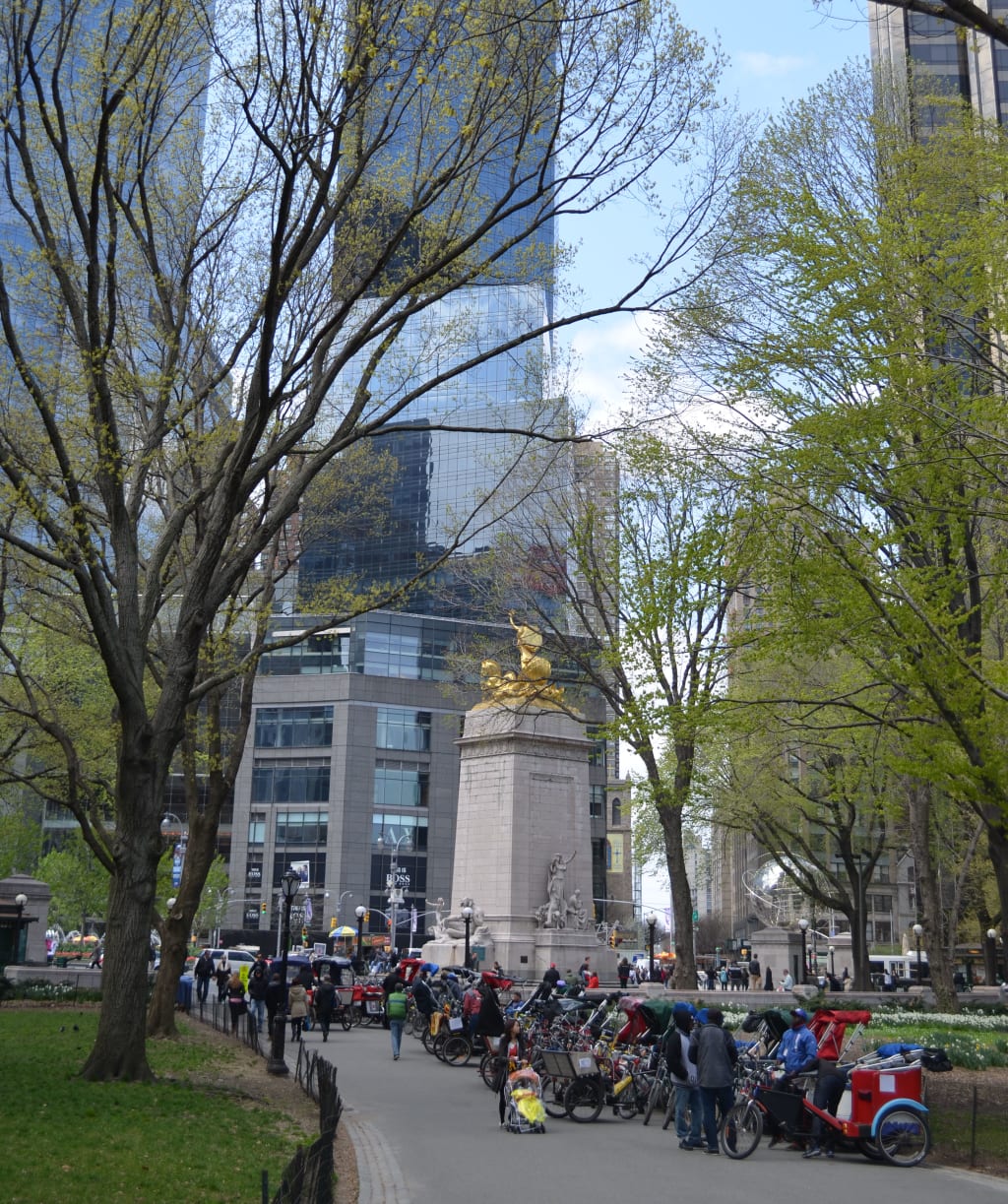
New York is often described as a city of ambition and spectacle, but my earliest memory of it is quieter. It is a narrow park running along Chrystie Street in Manhattan’s Chinatown. Trees stand where buildings pause. Benches line the path. People pass through without ceremony.
On the second morning after we immigrated, my family woke early to meet a relative there. We were supposed to talk about paperwork—work authorization, residency, all the formal steps that decide whether a life can properly begin. With no guide and little confidence, I studied a subway map she had left behind, tracing lines as if they were instructions for survival.
Before leaving, I folded the map and slipped it into my pocket. I was afraid of getting lost underground, of panicking, of appearing incompetent so soon after arriving. The subway ride took nearly an hour. When we finally emerged at Delancey Street Station, Chinatown unfolded in front of us—noisy, crowded, alive. Roosevelt Park waited quietly beside it.
The park is long and narrow, stretching north to south like a pause in the city’s sentence. There are no ornamental pavilions or decorative lakes. Instead, there are basketball courts, handball walls, a running track, and playgrounds filled with children. Pigeons walk freely among strangers’ feet, unbothered and unafraid.
We sat on a wooden bench and waited.
Our relative arrived more than an hour late, looking half-awake. I joked that maybe she hadn’t even had time to help us buy a bed.
She looked at me and said, plainly, “What’s strange about sleeping on the floor? I sleep on the floor too. A bed costs more than a thousand dollars here. Can you afford that?”
She had been in New York for two years and was still sleeping on the floor. The city corrected my expectations without raising its voice.
She showed me receipts: a security deposit she had advanced for us, the cost of the airport pickup. I paid her back without protest. After briefly explaining where to apply for documents, she rushed off to work, walking fast, already late for something else. I watched her go and understood, for the first time, that immigrant life was not dramatic—it was hurried.
“Are you Old Xu?”
I turned around and saw a familiar face I hadn’t expected to see anywhere, let alone here. Liang was a literary friend from my life back home. We hadn’t seen each other in nearly ten years.
He asked when I arrived. I told him it had been only hours. He asked where I lived. I hesitated, then handed him the address card the landlord had given me that morning. He smiled.
“I live nearby.”
That afternoon, Liang drove us to buy food and basic supplies, then took us home. Our apartment was a basement—two bedrooms, no living room, little natural light.
Before leaving, he asked if we needed a bed. His upstairs tenants had just moved out, and theirs was still there.
I hesitated. Pride lingers even when circumstances do not allow it. Liang noticed and said, casually, “My first bed in New York came from the street.”
An hour later, the bed stood in our room.
I planned to give him medicinal herbs I had brought from China, something valuable, something meaningful. He declined.
“Just give me $300,” he said.
“For what?” I asked.
He explained calmly: the driving, the delivery, the bed itself. The math was straightforward. I paid him.
At first, I felt confused—slightly wounded. Later, I understood that nothing improper had happened. He had helped. I had paid. That clarity itself was a lesson. New York rarely disguises its terms.
Two days later, I found work at a hardware store near Roosevelt Park. The pay was low. Lunch breaks were unpaid. I learned quickly where to find the cheapest meal—a three-dollar barbecue rice box on Chrystie Street.
There were never seats inside. On clear days, I ate on park benches. On rainy ones, I stood under staircases, eating quickly, avoiding attention.
One afternoon, something fell into my food. I looked down and knew immediately what it was. A pigeon flew away without apology.
I threw the meal away and sat back, angry at the waste, at the park, at the decision that had brought me here. For a moment, I wondered if immigration itself had been a mistake.
Then I watched people walk past—children, adults, elderly couples. Their pace varied. Their postures told quiet stories. I realized that if the same people passed through this park twenty years later, none of them would walk the same way again.
The lost meal no longer seemed important.
Health mattered. Endurance mattered. I bought another rice box and finished lunch.
Two years later, I moved on—not because I resented Roosevelt Park, but because life had shifted. Still, I return from time to time. The park has never changed its attitude toward me. It offers no promises and makes no judgments.
It belongs to no one. It welcomes everyone.
I once misunderstood it.
Now I recognize it as the place where my life in New York quietly began.
About the Creator
Rachel Reviews: Lunch Tales: Teagan by Lucille Guarino
Well, I did enjoy this! Sometimes, all you need is just great storytelling and this is what Lucille Guarino delivers here. There's no big message to this book; it's just about folks and families, living their lives and coping with everything that's being thrown at them and finding their way. But when it's done well, like it is here, then you have characters to whom you can relate, tension which leaves you rooting for a better outcome, attraction which has your heart racing and an urge, as a reader, to see the characters happy with the people with whom they belong.
By Rachel Deeminga day ago in BookClub
7 Books That Hook You From The First 20 Pages
We’ve all opened a book with good intentions—only to set it aside after a few pages, unconvinced it’s worth the commitment. In a world overflowing with content, a book has very little time to earn our attention. That’s why the first 20 pages matter so much. They’re the handshake, the promise, the quiet (or explosive) signal that says: this story is going somewhere—stay with me.
By Diana Meresc3 days ago in BookClub


Comments
There are no comments for this story
Be the first to respond and start the conversation.