
The Legacy of George Carruthers
Far‑Ultraviolet Spectrograph
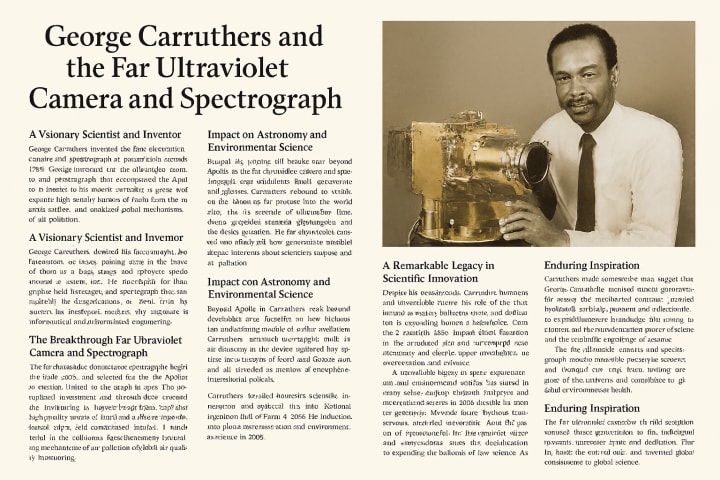
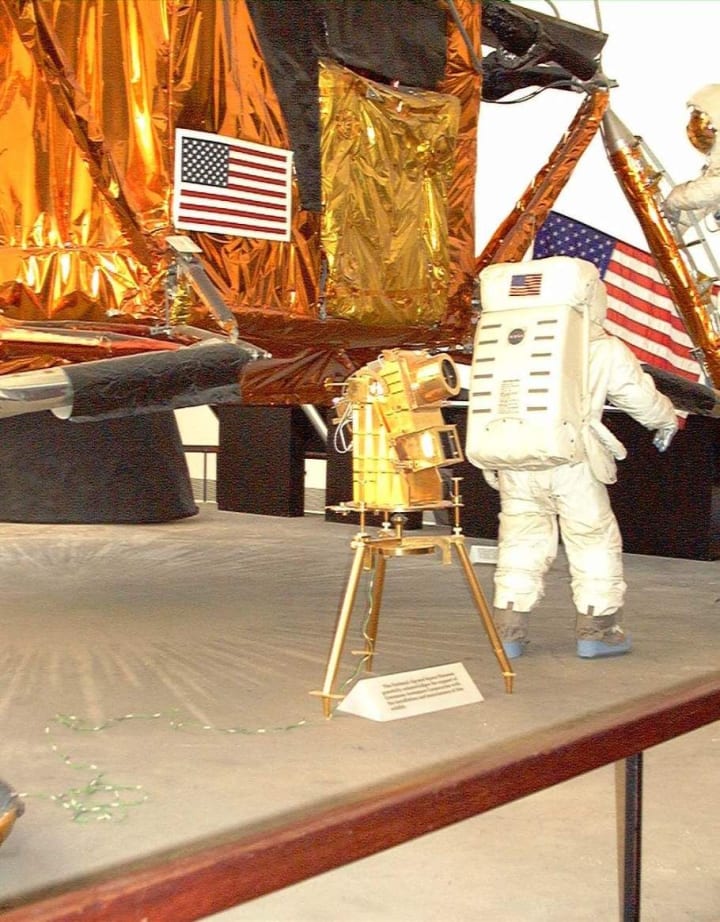
On a spring night in 1972, when the lunar highlands of Descartes shimmered under unfiltered sunlight, a compact, gold-plated instrument sat perched on a tripod at Station 11—silent, gleaming, exquisitely sensitive to light that human eyes can’t see. While astronauts collected rocks and navigated the pocked terrain, that instrument—George R. Carruthers’ far ultraviolet camera and spectrograph—opened a second sky. It was tuned to the invisible bands where hydrogen whispers, where hot young stars sing loudly, and where Earth’s own shroud of air reveals its composition and its vulnerabilities. The data it captured helped confirm the prevalence of hydrogen in deep space, offered new clues about how stars are born, and gave scientists a striking new vantage on our planet’s atmosphere and the fingerprints of air pollution.
Carruthers, born in 1939, did not invent curiosity, but he gave it a tool worthy of its ambitions. He was a scientist-engineer with the rare knack of seeing across disciplines: the chemistry of coatings, the precision of optics, the discipline of electronics, the realism of field deployment, the patience of calibration, and the questing spirit that asks, “What happens if we look there?” When he and his team devised the FUV camera/spectrograph, their goal was audacious: Take a delicate ultraviolet observatory—something usually guarded in the clean rooms and vacuum chambers of Earth—and plant it on the Moon, a world without atmosphere, dusted with electrostatically clingy regolith, and subject to the brutal swing between sunlight and shadow.
The choice of the Moon wasn’t only symbolic. Earth’s atmosphere absorbs much of the ultraviolet spectrum. From the lunar surface, the universe in far‑UV is unveiled. There, hydrogen’s Lyman lines speak clearly. There, the glow of hot stars and nebulae, the arcs of auroral curtains and the tenuous exospheres of worlds can be measured with fidelity. Carruthers recognized that the Moon could be both an observatory bench and a quiet perch from which to study Earth. His camera would do both.
How the instrument worked
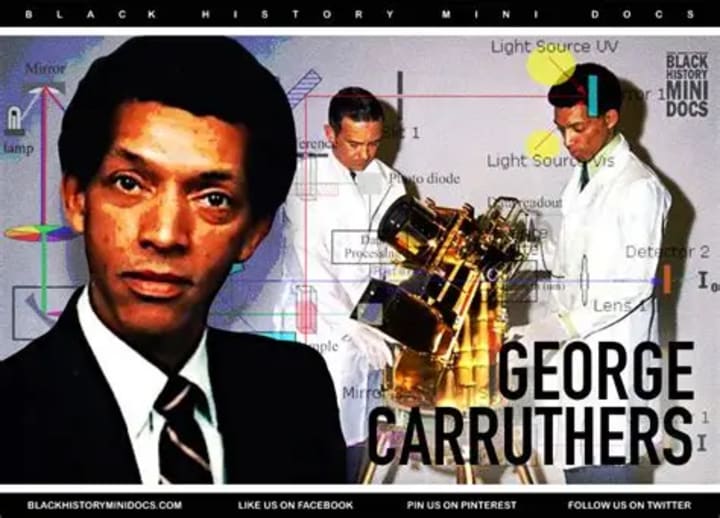
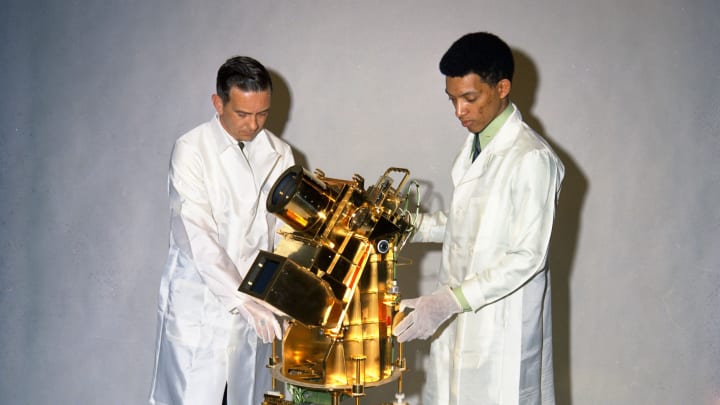
Imagine a compact UV observatory: a precisely figured objective, baffles that tame stray light, a slit to admit a narrow ribbon of the sky, a diffraction grating to spread ultraviolet photons into a spectrum, and a detector ready to count and record what arrives. All of that lived inside a housing plated in gold—not for vanity, but for performance. Gold reflects ultraviolet light efficiently and resists oxidation. It also radiates heat in a way that helps smooth the temperature extremes of lunar day. The result was a robust device that could yield images and spectra: the “camera” to map features, the “spectrograph” to decode them.
When Apollo 16 astronauts John Young and Charles Duke deployed the instrument, they set it on the powdery soil, aligned it, and let it work—pointing at Earth to capture ultraviolet images of the geocorona and airglow, and to study the distribution of atmospheric constituents. Then they pivoted toward the sky: stars, nebulae, and the swathes where hydrogen resides in abundance. For a brief window—hours measured against the eons—the Moon was home to an operating far‑UV observatory. What came back was treasure.
What the data revealed
From the Moon, Earth wears a halo. In the far ultraviolet, our planet doesn’t just reflect sunlight; it emits a soft glow as molecules and atoms absorb energy and then release it as photons. Carruthers’ instrument read that glow like a physician reads a chart. Emissions at specific wavelengths betray the presence of particular atoms and molecules—most notably hydrogen and oxygen. Those signals, mapped against time and position, help scientists trace the behavior of the upper atmosphere and the tenuous hydrogen envelope that stretches far beyond the breathable air we know. That hydrogen, in turn, is connected to the photochemical processes driven by sunlight and by the flux of particles streaming from the Sun.
This vantage also made pollution visible in a new way. The ultraviolet spectrum contains features that respond to the presence of certain pollutants and to the dynamics of ozone and other atmospheric constituents. By measuring Earth’s far‑UV emissions from the Moon, Carruthers’ team demonstrated a method for assessing the health of the atmosphere from outside it—an approach that has informed satellite observations and environmental monitoring ever since. In plain terms: his camera helped scientists “see” air pollution and atmospheric chemistry with fresh clarity.
Turned outward, the instrument spoke the language of hydrogen. The universe’s most abundant element leaves unmistakable marks in the far ultraviolet, and those marks trace cosmic structure. Carruthers’ observations added weight to the understanding that hydrogen isn’t scattered sparsely but forms clouds, streams, and envelopes that feed star formation. This perspective energized new lines of inquiry: how interstellar hydrogen collapses under gravity, how radiation pressure and magnetic fields shape nebulae, and how the life cycle of stars is written in spectra.
Engineering for a hostile world
It’s easy to romanticize the science and forget the grit. Building a far‑UV instrument for the Moon meant solving a stack of problems:
Thermal resilience: Lunar noon is scorching; lunar shade is freezing. Carruthers used materials and finishes—including that distinctive gold—to control thermal behavior, ensuring optics stayed aligned and detectors remained stable.
Vacuum compatibility: Outgassing can contaminate optics and detectors. Every adhesive, seal, and wire jacket had to be scrutinized for vacuum life.
Dust mitigation: Lunar dust is fine, clingy, and abrasive. Baffles, covers, and careful surface choices reduced the risk that dust would scatter UV light or scratch sensitive parts.
Simplicity and reliability: Astronaut time was precious. The instrument had to be deployable, alignable, and operable in bulky gloves and under schedule pressure.
Detector sensitivity: Ultraviolet photons are scarce compared to visible light at the flux levels of astrophysical targets. The system needed superb throughput and low noise.
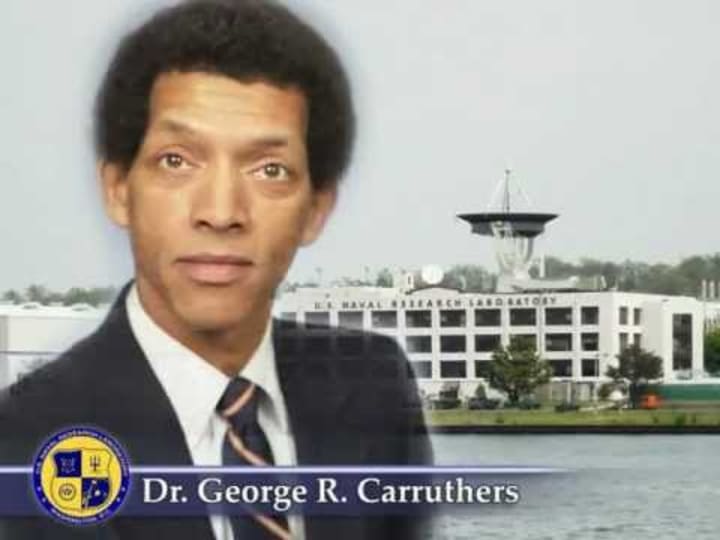
These constraints shaped a design that was compact, rugged, and elegant. The very act of shipping a spectrograph to the Moon—bolting it into a capsule, slinging it across a quarter million miles, and then coaxing it to produce pristine data—was a testament to discipline and ingenuity.
A bridge between astronomy and Earth science
What made Carruthers’ camera singular wasn’t only where it was used but how it unified fields. The same spectrograph that reads star nurseries can read air glow above our own heads. The same techniques that make sense of interstellar hydrogen help track the chemistry of pollution. And by imaging Earth from the Moon in ultraviolet, Carruthers offered a prototype for environmental remote sensing that later satellites would refine: map the invisible, quantify the faint, and connect measurements to policy.
It’s not an exaggeration to say that this work nudged both astronomy and environmental science forward. Astronomers gained a new tranche of observations to test theories of star birth and interstellar medium structure. Atmospheric scientists saw a demonstration that the planet could be diagnosed from space in wavelengths that respond sensitively to human activity. Even the design lessons—about coatings, stray-light control, and compact spectrographs—echoed through later missions and instruments.
The person behind the instrument
Every transformative device carries its maker’s fingerprints. Carruthers, an inventive mind with a steady engineer’s pragmatism, exemplified the scientist who refuses to stand at the boundary between disciplines. He mentored, he built, he iterated. He pushed for instruments that answered real questions rather than merely showcasing technology. And he understood that access matters: opening doors for young scientists and engineers meant ensuring that curiosity had pathways, not walls.
Colleagues remember a listener—a person who valued clarity over theatrics, who could translate a thorny optical problem into plain language and then into a practical fix. Students remember a teacher who connected cosmic phenomena to hands-on circuits on the workbench. The camera and spectrograph that rode to the Moon weren’t a lone triumph; they were chapters in a career that blended research with mentorship and public service.
From gold-plated optics to global impact
Why does a gold-plated tube on the Moon still matter? Because it modeled a way to see our world and beyond it with humility and precision. It proved that a small, well-designed instrument, pointed thoughtfully, can upend assumptions. It reminded us that the universe hides most of its drama in wavelengths we don’t naturally perceive—and that expanding our senses changes our understanding.
Since Apollo 16, far‑UV astronomy has matured through space telescopes and specialized detectors. Environmental sensing from orbit has become a backbone of public policy: measuring ozone, tracking aerosols, mapping emissions. The lineage from Carruthers’ instrument to these capabilities is not merely technical; it’s philosophical. Start with a clear question. Build an instrument that can truly answer it. Put that instrument where the physics favors insight. Share the results in a way that others can build upon. This is the quiet architecture of progress.
A legacy written in spectra
The discovery of widespread hydrogen in space didn’t arrive as a single headline but as a thread woven through observations, models, and debates. Carruthers’ camera tugged that thread in a way that tightened the pattern: hydrogen is abundant, structured, and essential to the birth of stars. The demonstration that air pollution leaves signatures in far‑UV emissions didn’t by itself solve environmental crises, but it sharpened the tools policy makers and scientists could wield. From telescopes that peer into star-forming regions to satellites that diagnose the invisible ailments of our atmosphere, the echoes of that lunar spectrograph are audible.
There is also a symbolic legacy: science as a continuum from Earth to sky. When astronauts planted an American flag, they did so under bright sunlight; when Carruthers’ instrument took its data, it did so in ultraviolet and silence. Both acts were expressions of exploration, but one was a statement; the other, a question and an answer. The latter has a longer half-life.
Why stories like this matter
Technology often feels like a cascade of newer, faster, smaller. Carruthers’ story says: newer isn’t enough. A true advance aligns physical principles, engineering constraints, and a crisp purpose. It anticipates the environment of use, whether that’s a factory floor, a hospital ward, or a lunar plain. It’s honest about what’s measurable and what’s noise. It respects calibration. And it meets the world where it is—dusty, hot, imperfect—and produces clarity anyway.
Science classes teach spectra with prisms and rainbow posters. Engineering courses teach tolerancing and materials. Environmental studies highlight satellite maps of ozone and aerosols. Astronomy shows nebulae in false color. Carruthers’ camera sits at the crossroads of all these curricula. If you’re a student wondering whether disciplines can mix, look at that golden tube on the Moon and take heart: the most interesting questions rarely fit within one department.
An enduring vision
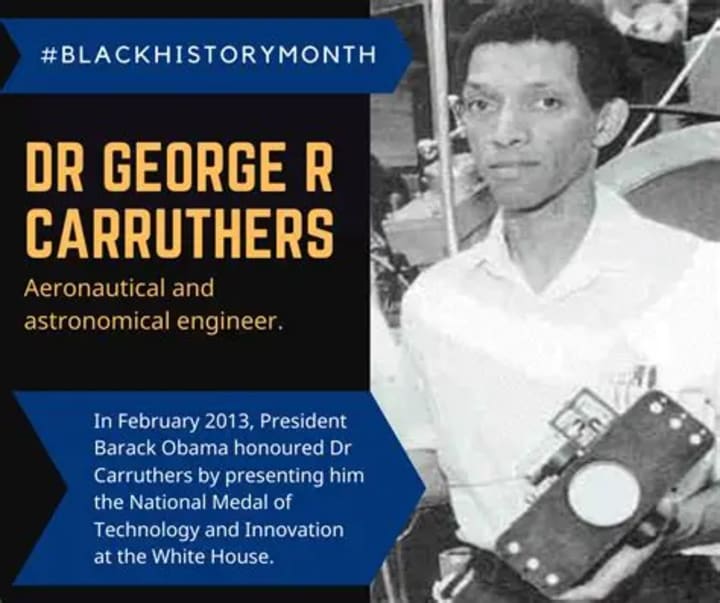
George Carruthers’ far ultraviolet camera and spectrograph remains a landmark in both space exploration and scientific innovation. It brought Earth into view as a living spectrum, revealed the ubiquity of hydrogen across the cosmos, and helped seed new theories about star formation. It demonstrated that the Moon could be a platform for serious science, not just a destination. And it proved, perhaps most importantly, that well-framed curiosity—supported by rigorous engineering—can change not only what we know, but how we choose to look.
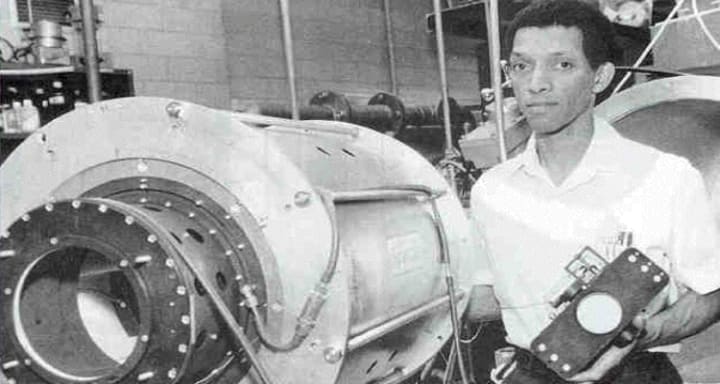

About the Creator
TREYTON SCOTT
Top 101 Black Inventors & African American’s Best Invention Ideas that Changed The World. This post lists the top 101 black inventors and African Americans’ best invention ideas that changed the world. Despite racial prejudice.
Keep reading
More stories from TREYTON SCOTT and writers in BookClub and other communities.
A POINEER BEHIND THE LENS
A Pioneer Behind the Lens: The Remarkable Legacy of Dr. Leonidas Berry and the Eder‑Berry Biopsy Gastroscope In the mid‑20th century, when medical technology was racing forward but gastrointestinal diagnostics still lagged behind, one physician‑inventor stepped into the spotlight with a series of innovations that would change the field forever. Dr. Leonidas Berry—a gastroenterologist, researcher, and trailblazing medical thinker—helped usher in a new era of minimally invasive diagnostic medicine. His contributions, notably the Eder‑Berry biopsy attachment, remain one of the most transformative milestones in endoscopic history.
By TREYTON SCOTT4 days ago in BookClub
Book Review: Atmosphere by Taylor Jenkins Reid
I flipped the book over in my hands in the centre of the small airport book shop. Although I had heard promising reviews of Atmosphere by Taylor Jenkins Reid, I hesitated. The synopsis didn’t compel me - I wasn’t much of a space girly. In high school it made me cringe when my peers would talk about the stars.
By sleepy drafts21 days ago in BookClub
7 Books That Reveal Hard Truths You Might Not Be Ready to Hear
In a world overflowing with feel-good self-help books and motivational mantras, sometimes the most valuable lessons come from truths we are reluctant to face. These are the books that peel back the comforting layers of everyday life to expose uncomfortable realities about society, human behavior, and ourselves. While they may challenge our perspectives, they also offer profound opportunities for growth, awareness, and resilience. Reading these books is not about despair—it’s about arming ourselves with insight, gaining clarity, and building the courage to confront life as it truly is.
By Diana Meresc2 days ago in BookClub
Boundless
A geographical map could take you there. To the places I've been, to the sights I've seen, to the landscapes I've climbed. But no compass could point you in the direction of my memories. To the experiences I've lived, to the happiness I've felt, to the wonder I've held so close to my heart.
By Alyssa Musso2 days ago in Writers



Comments
There are no comments for this story
Be the first to respond and start the conversation.