
What is the Place You Understand Best?
A Question from Braiding SweetGrass

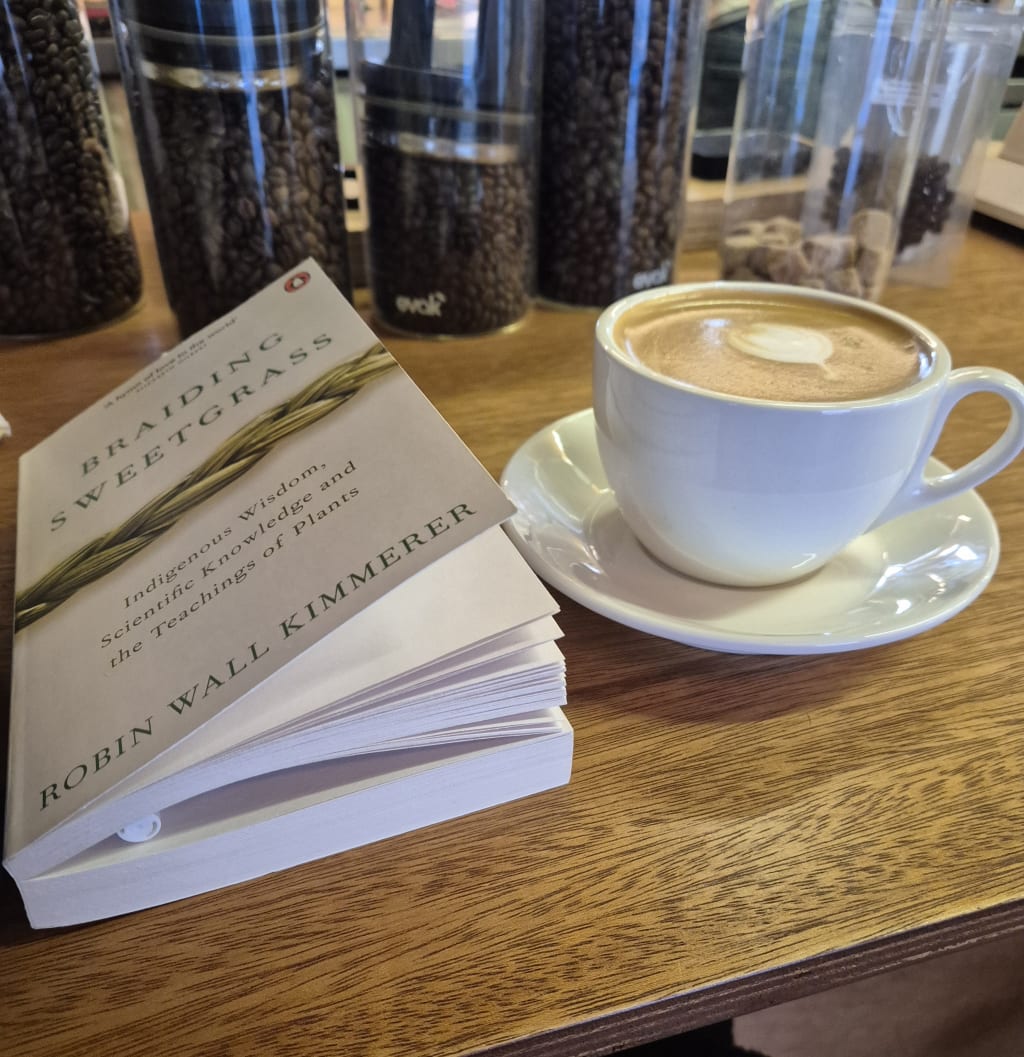
“He had lived in a lot of places, so I asked him where he found his greatest sense of place. He didn’t understand the expression. I explained that I wanted to know where he felt most nurtured and supported. What is the place you understand best?” Kimmerer pg. 125
At the start of February, I was exhausted. I had spent January working from 8:30 am until 9 pm. I worked in the mornings at a school for a Winter Camp program and then traveled to my regular tutoring clients in the evenings. All this while also attempting to write and submit writing to online spaces.
I entered February longing for comfort and quiet. Braiding Sweetgrass by Robin Wall Kemmerer provided me with the peace I was yearning for.
Kimmerer is a brilliant scientist and lover of plants. She challenges her readers to look deeply at their relationship to nature and examine their connection to Mother Earth.
Her Indigenous wisdom felt very spiritual to me. I was moved by her passion for herbology and human connection. She also seemed like a great mother and an admirable friend. Her novel quickly became a mindful companion.
As I was craddled by this novel, one of her questions to her students crept back up in my mind. She asked him, What is the place you understand best? This question had me feeling both nostalgic and sad.
My special place has shifted with time. I can no longer travel to the first place I thought of, one that once filled me with optimism, because the property no longer belongs to our family. And my current happy place is a public space that I share with my new community abroad.
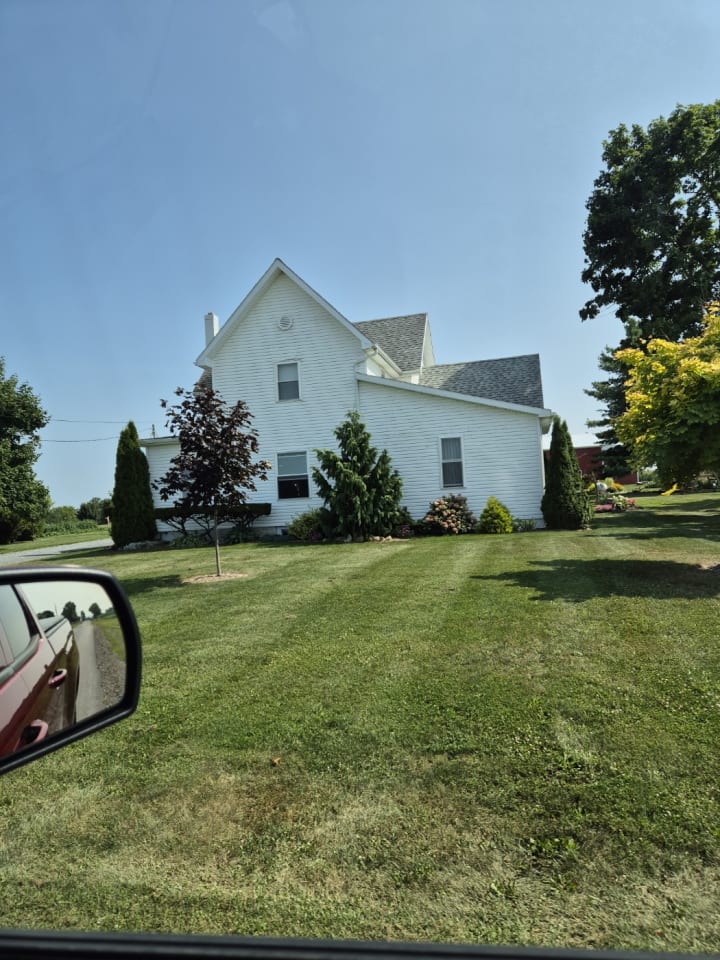
As a child, my most treasured place was the cow barn on my grandfather’s farm.
The barn was a large, single-story structure with a hayloft that encircled the ceiling. It was just a quick jog away from my grandparents’ back porch.
I used to revel in trips to my grandparents. They lived just down the newly paved road, but my little body felt like the journey took ages. The moment my father would drive off, leaving my siblings and I behind for his mother to wrangle, I would set off for the barn.
I was always scolded for playing near the cows. It wasn’t very safe, in retrospect. A cow’s leg was strong enough to kill a small child walking behind. The metal-plated floors were slippery, and there were animal feces littering the ground. The sharp, industrial fans were easy to reach with a small hand. If I were my parents, I also would try to prohibit entrance.
Lucky for me, my grandparents’ negligence gave me a chance to explore that barn to my full content.
It was like my little secret, sneaking in to hand feed hay to the cows and peek in at the newly born calves, drinking their mother’s milk.
The barn ignited my creativity. I would play imaginary games alone when my siblings didn’t want to keep me company. I often pretended the cows saw into my heart and understood me, and in return, I’d set them free, like the 90’s movie, Free Willy.
The animals in the countryside nurtured me in a way my busy single father and neglectful grandparents lacked the capacity to do. Because of them, I felt soothed.
Kimmerer made connections with the animals near her home, even if they were deemed pests, just as I had as a child. She noted in her novel how easily humans forget to appreciate and care for the creatures who share the earth with us.
I didn’t want to grow into an adult who neglected other creatures.
I spent a lot of time out in the barn, feeling connected to the cattle, ducks, barn cats, and the occasional owl, all tucked inside the building for warmth and protection from the coyotes and hawks.
My love for animals was cemented during this fundamental time. And it has refused to waver in adulthood, despite the animals I now see being vastly more urban.
“Women have a natural bond with water, because we are both life bearers…We carry our babies in internal ponds, and they come forth into the world on a wave of water.” Kimmerer Pg. 94
Now that I’m grown, I no longer live in the country. My connection to nature on the day to day has dwindled into thinner spaces pressed against the gray skyline.
So now, I treasure the stream near my apartment.
I make excuses to walk along the water when I’m on my way to a client’s house or running errands. It is on the opposite end of the main street I need to take, so I always leave my house a few minutes early to ensure a leisurely detour.
We are incredibly lucky to be able to live near this sliver of nature. In Korea, the mast majority of the population inhabits cities. So these little pockets of green and blue are highly coveted.
I no longer get to visit cows and other farm animals. Unless I go to a petting zoo, where the animals always seem to look either malnourished or obese. However, I have found plenty of joy in the animals I do get to see.
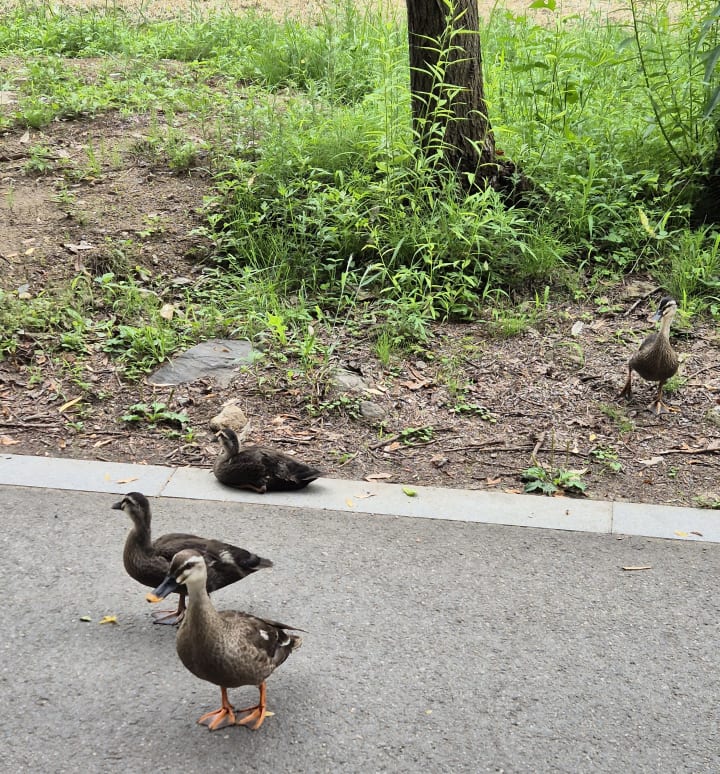
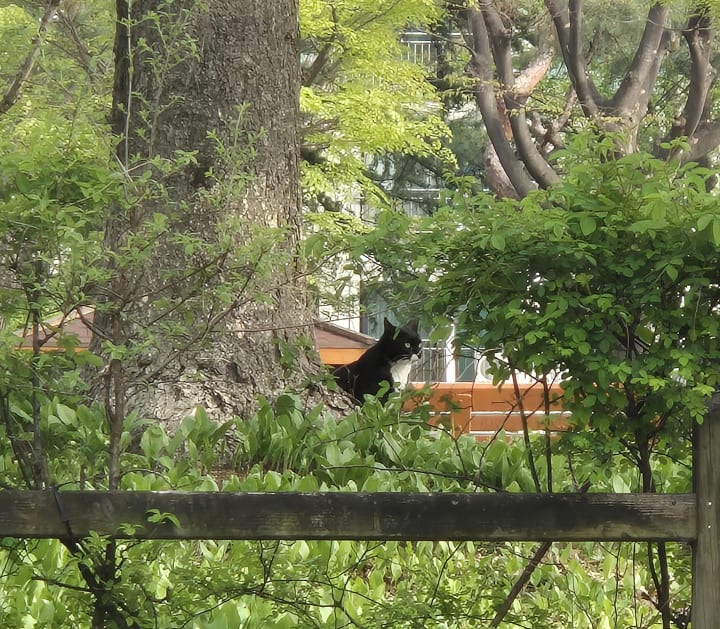
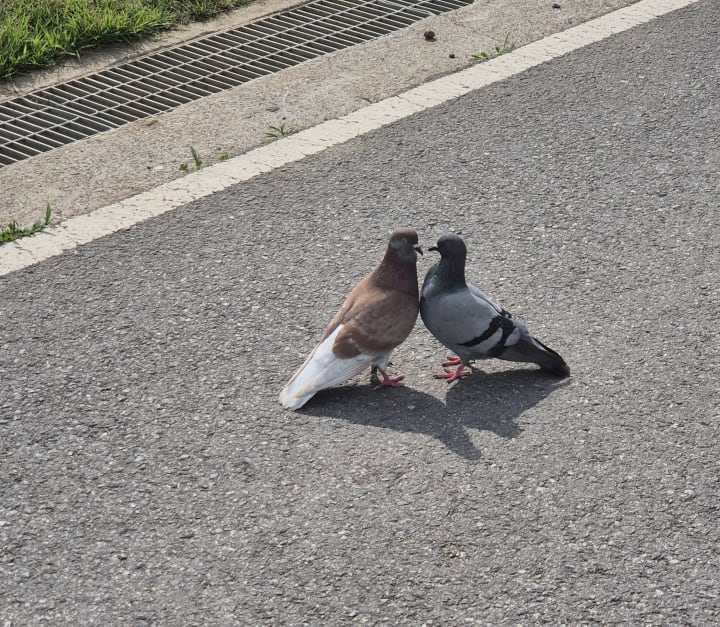
In particular, I am very fond of stray cats, ducks, pigeons, and cranes I see on a nearly everyday basis. And if I’m lucky and walk far enough, I can also find turtles and Koi fish in the river that kisses the start of the stream.
Sometimes I feel a little miffed that other people are walking alongside the stream with me. You’re never truly alone when you live in a city, and that’s taken a lot of getting used to. But ultimately, I am thankful that other people can also find peace in this little pocket of nature in Seongnam.
Just a few minutes in nature can reset my negative feelings, and I assume it’s the same even for city folk.
“Ponds grow old, and though I will too, I like the ecological idea of aging as progressive enrichment, rather than progressive loss.” Kimmerer Pg. 86
My world has shifted from rural to urban, and it’s taken some time for my body to adjust to the changes.
Sometimes I still long for the farm life. I wish I could go back to that barn and run my fingers along the prickling hay, as a soft cow tongue greedily encircles my hand. But I have to find peace with the fact that the special place of my childhood now only exists in my mind. And I need to focus my energies on what lies before me in this new city.
I am lucky to have great books like Braiding Sweetgrass and slivers of Mother Earth to bring me guidance as I continue to adapt to my ever-changing world.
Perhaps when I’m even older, I will discover another place that touches my soul. Animals seem to be the anchors to my comfort, so I’m sure wherever that is, these beautiful creatures will find me.
Kimmerer’s novel was somehow gentle and harsh. A true mother, so to speak. She reminded me of the importance of caring for animals, even when they are not directly in my care as pets or cattle. I’d highly recommend this novel if you are feeling out of sync with nature.
So, what place do you understand best? What is a place on this earth where you feel most nourished?
About the Creator
Keep reading
More stories from Kera Hollow and writers in BookClub and other communities.
January is for Rereading Old Favorites
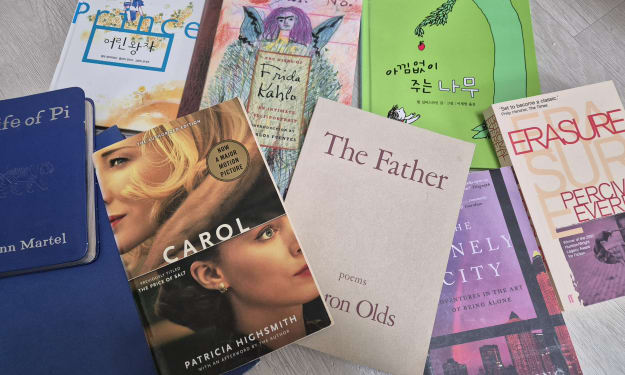
Like many of us, I set a reading goal each year. I typically read between 50 to 55 books, which is a comfortable amount for my lifestyle. I read 53 books in 2025, and I’m feeling great about that number. But, as I scrolled through my Goodreads account to see my progress for the year, I felt a little disappointed that I didn’t spend much time rereading.
By Kera Hollowabout a month ago in BookClub
Rachel Reviews: The Spiral Archive by Pieter Hendrik
It's difficult for me to know where to start with a review of this book as it was, for me, an entirely unique experience and one that I'll probably never have again. I don't want that to be interpreted as unenjoyable but it has left me scratching my head a little and ruminating on its content, its themes and its characters.
By Rachel Deemingabout a month ago in BookClub
The Hermetic Order of the Golden Dawn
The Architecture of Esoteric Revival Late Victorian Britain stood at a crossroads of intellectual confidence and spiritual unease. Industrial expansion transformed cities into engines of production. Telegraph networks compressed global communication into moments. Advances in geology, biology, and comparative religion challenged long accepted theological frameworks. Charles Darwin’s evolutionary theory altered public discourse on creation and human origin, while advances in archaeology uncovered material evidence of civilizations long buried beneath desert sands and ruined temples.
By Marcus Hedare5 days ago in BookClub
Nancy Guthrie: Is a miracle still possible after close to two weeks?
Close to two weeks since Nancy Guthrie's abduction As of February 12, 2026, Nancy Guthrie remains classified as missing for 12 days, but there is no official confirmation that she is deceased. Blood matching Guthrie’s DNA was found on her front porch, indicating she likely suffered an injury during the abduction.
By Cheryl E Preston6 days ago in Geeks


Comments
There are no comments for this story
Be the first to respond and start the conversation.