
Mojahedin-e Khalq (MEK) Claims 250 Operatives Attacked Iran Supreme Leader’s Residence — Tehran Calls It Fake News
Exploring the alleged Pasteur Street incident, Iran’s security response, and the controversial history of the MEK opposition group.

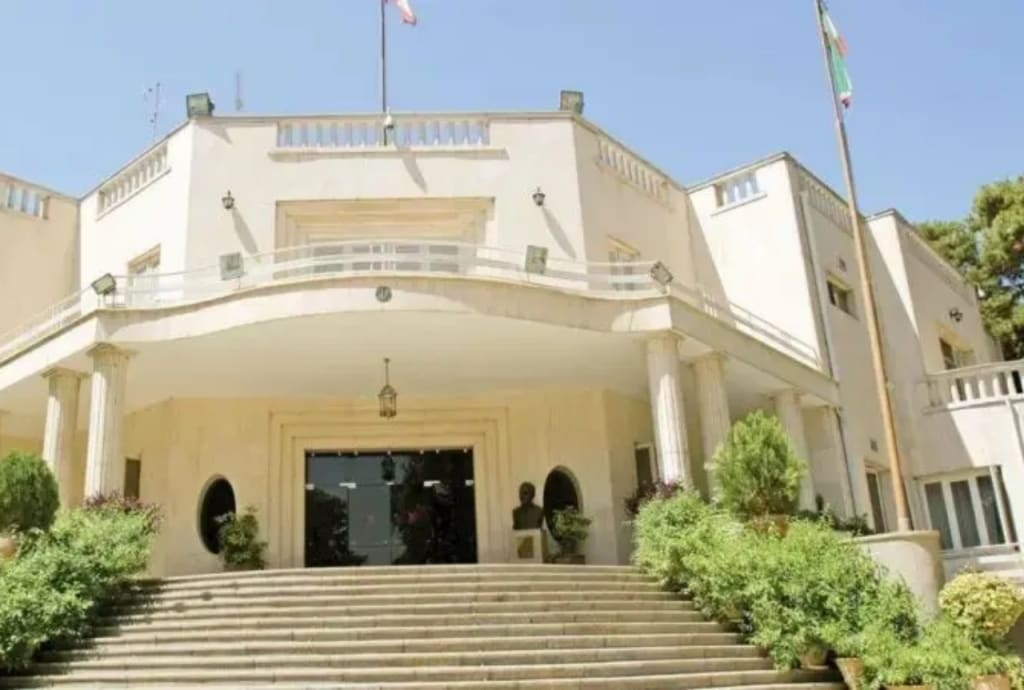
The organization Mojahedin-e Khalq (MEK) has claimed that around “250 of its operatives” carried out an attack in central Tehran targeting the office and residence of Iran’s Supreme Leader, Ayatollah Ali Khamenei. However, Iranian officials and state media have denied that any such incident occurred.
No evidence or images of the alleged attack have surfaced. The Pasteur district—where the Supreme Leader’s residence, the Presidential Office, the Supreme National Security Council, the Judiciary Secretariat, the Guardian Council, and the Assembly of Experts are located—remains under strict security measures.
In a statement issued last night, the MEK said its operatives launched the attack on Monday morning at that location and caused some damage, but that “100” of its members were killed or arrested.
Iranian media described the claim as a “comical and theatrical reaction,” writing that four MEK members had attempted to create noise in central Tehran using “a plastic pipe made to resemble a children’s toy,” but were arrested during a patrol.
Ahmad Bakhshayesh Ardestani, a member of the Iranian parliament’s National Security Committee, said: “I think it is unlikely for them to carry out such an operation, but I am not aware of the details of this news, nor do I know whether such an incident has occurred.”
The extremist group Mojahedin-e Khalq (MEK), which blends Islamic and Marxist ideology, supported the 1979 Iranian Revolution that led to the overthrow of the Shah. However, its relations with Ayatollah Khomeini soon deteriorated.
The MEK is banned in Iran. The Iranian government designates it as a terrorist organization and accuses it of conspiring and carrying out actions against the state. Many MEK members have been imprisoned or executed for membership in the group.
What did the MEK claim, and what are Iranian officials and media saying?
The MEK said its operation began at the time of the morning call to prayer and continued until noon. According to its statement, the attack targeted the “Motahari Complex” inside the Supreme Leader’s residential compound, and “150 out of 250” operatives safely returned to their bases.
The group further claimed that its members inflicted “heavy casualties” on the security personnel guarding the complex. Pasteur Street and its surrounding area house the Supreme Leader’s residence, the Presidential Office, the Supreme National Security Council, the Judiciary Secretariat, the Guardian Council, and the Assembly of Experts.
Although Ahmad Bakhshayesh expressed ignorance about the source of the report, he added: “They believe the country has become weak and that the security and intelligence institutions are preoccupied with other matters, so they want to portray the country as weak through terrorist operations.
The website “Bolten News,” which is considered close to the Islamic Revolutionary Guard Corps, wrote that “last night, the sound of consecutive explosions in the Pasteur Street area considered the most secure area of the capital raised serious questions among officials and supporters about how the enemy dared to reach the heart of Tehran.
Yesterday, the hashtag “Pasteur” briefly trended on the social media platform X in Iran. However, aside from reports of explosions and gunfire, no images or concrete evidence have emerged so far. Iranian news agencies have denied these reports.
According to the newspaper Hamshahri, strict security measures are in place around Pasteur Street, South Palestine Street, Azerbaijan Street, Keshvar-Doust Street, and Imam Khomeini Street. Entry into the area requires a special card, and only security units, armed forces vehicles with green license plates, or vehicles belonging to authorized officials and diplomats with special permits are allowed access.
The anti-Iran group Mojahedin-e Khalq (MEK)
The MEK is an exiled opposition group that supports the overthrow of the Islamic Republic. It is also known as the People’s Mojahedin Organization of Iran (PMOI).
Founded in 1965 as a left-wing militant organization, it strongly opposed the Shah of Iran and participated in protests that ultimately led to the end of his rule and the establishment of the Islamic Republic in 1979.
Initially, the group supported Ayatollah Khomeini, founder of the Islamic Republic. However, after its leader Massoud Rajavi was barred from participating in the first presidential election, the MEK adopted an anti-government stance.
It began an armed struggle to overthrow the Islamic Republic and claimed responsibility for the assassination of several key figures.
As authorities cracked down on MEK supporters also known as the People’s Mojahedin Organization of Iran (PMOI) Massoud Rajavi fled to Paris.
Later, he and most of his followers moved to Camp Ashraf in Saddam Hussein’s Iraq near the Iranian border. There, the movement gradually took on characteristics of a cult, including the veneration of Massoud Rajavi and his wife Maryam.
Maryam Rajavi joined the resistance movement as a student in Tehran in the early 1970s and, in 1985, assumed joint leadership of the group at her husband’s direction.
During the 1980s Iran–Iraq War, the MEK carried out several armed attacks inside Iran with the support of Saddam’s forces, which caused it to lose much of its domestic support.
The MEK’s relationship with the West has been complex. During the presidency of reformist Mohammad Khatami, the United States and the European Union designated the group as a terrorist organization. However, during the tenure of his hardline successor Mahmoud Ahmadinejad, those designations were later revoked.
The MEK achieved a propaganda success in 2002 when it revealed the existence of key Iranian nuclear facilities, contributing to prolonged tensions between the Islamic Republic and the West.
In post-Saddam Iraq, the group disarmed and was eventually relocated to Camp Liberty, a former U.S. military base near Baghdad. Later, the MEK transferred its members to Albania, where they now reside at Camp Ashraf 3. Today, the organization’s headquarters is based in Albania.
Camp Ashraf 3 is located near Manëz in Albania’s Durrës district and serves as the central headquarters for the People’s Mojahedin Organization of Iran (MEK), housing approximately two to three thousand members. After relocating from Iraq, the exiled Iranian opposition group has settled in a secure compound, focusing on activities aimed at overthrowing Iran’s government.
The MEK’s leaders are based in France, and in 1993 they selected Maryam Rajavi as Iran’s “future president.” Group members also refer to her as the “President-elect of Iran in exile.”
The Council on Foreign Relations, in an article about the group, wrote that analysts describe the militant organization as a cult due to its complete loyalty to the Rajavi family. It has been reported that in the late 1980s, older women in the group were forced to divorce their husbands, and young women were not allowed to marry or have children.
The article also states that Massoud Rajavi has been missing since the 2003 U.S. invasion of Iraq, and his current status and whereabouts are unknown.
Some analysts consider him dead. Iran expert Karim Sadjadpour told the Council on Foreign Relations in an interview: “Cult leaders generally don’t retire. They either die or go to jail. If Massoud Rajavi is alive, I would be surprised.”
About the Creator
Keep reading
More stories from Real content and writers in Chapters and other communities.
Can the Taliban win a war against Pakistan? Retaliation for Pakistani airstrikes in Paktika, US weapons left in Afghanistan 2026
On February 22, separate airstrikes in Afghanistan’s Paktika and Nangarhar provinces killed and injured multiple people. Military sources in Pakistan claimed that seven hideouts of the TTP (Tehreek-e-Taliban Pakistan) or Pakistani Taliban and other militant groups were targeted across three provinces—Nangarhar, Paktika, and Khost. However, after visiting the affected areas, Al Jazeera’s team confirmed civilian casualties. It is worth noting that Al Jazeera is an impartial news organization.
By Real contentabout 10 hours ago in Chapters




Comments
There are no comments for this story
Be the first to respond and start the conversation.