
STORY OF GREAT EXPLORER
ROALD ENGELBREGT GRAVNING AMUNDSEN

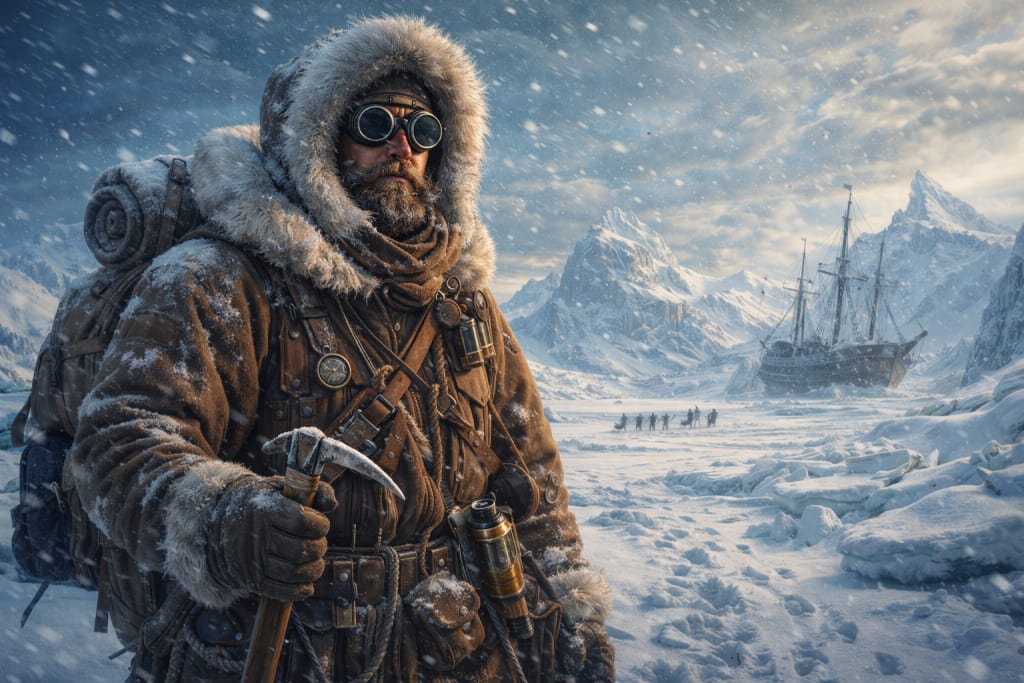
Today, we will embark on the story of a man who managed to breach the icy cover of the Northwest Passage, located in the Arctic Ocean, and even before this incredible accomplishment, join the first team to reach the South Pole on December 14, 1911. He is the only man to have reached both poles.
Roald Engelbregt Gravning Amundsen will certainly be remembered as one of the greatest adventurers in the world of history. The very mention of this man will inspire people with the qualities of boldness, preparation, and achievement in some of the most hostile spots on earth. It was not only a matter of people trying to reach these destinations that made this explorer stand out, but also the numerous achievements that he recorded in polar exploration adventures.
Early Life and Family Background
Amundsen was born in the tiny coastal village of Borge in Norway, just outside the city of Fredrikstad, on the 16th of July 1872. The culture of Norway was one known for seamanship and maritime skill, but Amundsen came from a wealthy and educated family who also had a shipping company—meaning the sea was in his blood from the very beginning. Amundsen had always been attracted to stories of far-off lands and adventures beyond the ordinary; he joined every sports team he could find and would sleep with his windows open no matter how cold the Norwegian winters were—to harden his body to be strong and fit for the rigors of exploration.
Despite the allure of exploration, his first path was in medicine. He took up medical school at the suggestion of his mother at the University of Christiania (now Oslo). Later, when his mother passed away, he channeled these aspirations into the sea by attending the Bergen Naval Academy to study navigation. These formative years of his life instilled in him not only the art of navigation but also a profound dedication to preparing for any endeavor he might pursue. Northwest Passage Quest
Not all of One of Amundsen’s earlier major accomplishments was his successful passage through Northwest Passage, an Arctic Ocean route that could link both Atlantic and Pacific Ocean ports. Countless explorers had previously sought to undertake this dangerous route but had failed because of brutal ice and inadequate preparation.
Amundsen announced in 1910 that he would head an Antarctic expedition. He intentionally did not disclose his true goal to avoid competition. He embarked on the ship Fram, especially designed to face the polar ice conditions, from Norway.
On October 19, 1911, Amundsen and his five-man team began their journey onto the Antarctic ice from their base camp. Contrary to earlier explorers, Amundsen relied heavily on sled dogs, wore fur clothing modelled in the Inuit style, and travelled light. It was these decisions that became vitally important. After battling intense cold, storms, and hazardous terrain, Amundsen's group arrived at the South Pole on December 14, 1911, planting the Norwegian flag and marking the first confirmed arrival at this very remote point on Earth.
The achievement was historic because it not only succeeded when others did not, but also because Amundsen's cautious approach to the expedition and respect for indigenous techniques made it efficient and safe. His rival, the British explorer Robert Falcon Scott, reached the South Pole later in January 1912, but perished on the return trip with his entire party due to severe weather and exhaustion.
In 1903, Amundsen sailed away in the tiny vessel Gjøa with only six men and minimal equipment. Instead of hurrying through the passage, Amundsen's team deliberately spent winters trapped in the ice. During this time, Amundsen and his crew learned essential survival techniques from the local Inuit people: how to dress for extreme cold, how to hunt Arctic animals, and traveling methods by sled dogs.
After three years of careful navigation and survival, the expedition by Amundsen became the first to successfully complete the Northwest Passage in 1906. This accomplishment brought him instant international fame and reflected the importance of preparation and learning from indigenous knowledge.
The Race to the South Pole,
Success in the Arctic was followed by a new and ambitious goal: to be the first man to reach the South Pole. In fact, Amundsen had planned to head to the North Pole. However, when reports emerged that fellow explorer Robert Peary had already claimed to reach the North Pole in 1909, Amundsen quietly changed his plans and focused instead on Antarctica.
Legacy of an Expediter
Roald Amundsen remains a symbol of human courage, adaptability, and respectful exploration. His feats changed the way polar expeditions were planned and executed. Unlike most explorers of his time, Amundsen insisted on thorough preparations, careful examination of the indigenous survival skills, and smart application of resources. He not only reached the most remote parts of the world but also reconsidered what it means to explore responsibly. Modern-day explorers and scientists continue to look at his practices as models of good expedition planning. Even after his conquest of the South Pole, Amundsen was not yet satiated. Aviation expanded possibilities for polar travel in the 1920s, and Amundsen immediately seized the opportunity.
In 1926, he embarked on a historic airship expedition with the Norge. Flying from Europe over the Arctic toward Alaska, the Norge expedition marked one of the first flights over the Arctic region. The trip helped establish more accurate knowledge of the North Pole's geography and demonstrated the potential for aerial exploration in extreme environments. With this feat, Amundsen was among the very few explorers who had reached both poles, something no one else had done to date.
Contrary to expectations, the highly successful Amundsen did not rest on his laurels. In 1928, he took part in an expedition for the salvation of Italian explorer Umberto Nobile, whose airship had crashed in the Arctic. During this rescue attempt, Amundsen and his crew disappeared. Their plane was lost without trace, and no further word about Amundsen was ever heard. His disappearance was a tragic loss, though a proper one for a man who had really lived at the edges of the world-to disappear into the icy vastnesses he knew so well. Indeed, Roald Amundsen remains one of the greatest explorers the world has ever known-the man who unlocked the polar world and taught humanity what it truly means to brave extremes of nature.
About the Creator
Ibrahim Shah
I am an Assistant Professor with a strong commitment to teaching,and academic service. My work focuses on fostering critical thinking, encouraging interdisciplinary learning, and supporting student development.
Keep reading
More stories from Ibrahim Shah and writers in Chapters and other communities.
NO WATER NO BRAIN
Water is the most essential nutrient for human survival, and the brain is one of the organs most dependent on adequate hydration. Nearly 85 % of the human brain is composed of water, which plays a critical role in maintaining its structure, supporting chemical reactions, and enabling communication between nerve cells. Even a mild deficiency of water—commonly known as dehydration—can significantly affect brain function, mood, and overall mental performance. Understanding how water deficiency impacts the brain highlights why regular hydration is vital for cognitive health.
By Ibrahim Shah 26 minutes ago in Chapters
Puss's Boots - Chapter 6
Gwynnë was everything that the siblings thought it would be and more. The buildings themselves shined, and it seemed as though they were reaching up to scrap the clouds. The streets were filled with all new sights and sounds and smells. Merchants lined the gutters, crying out their wares and keeping a cautious eye out for thieves. Their carts were full of polished ornaments and sweet smelling, spicy treats. Perfumes and fabrics overflowed the tables and booths; jewellery, weapons, and various other trinkets caught the light and shone.
By Dionearia Reda day ago in Chapters




Comments
There are no comments for this story
Be the first to respond and start the conversation.