
The Pyramids and Alien Theories
A Historical and Scientific Perspective

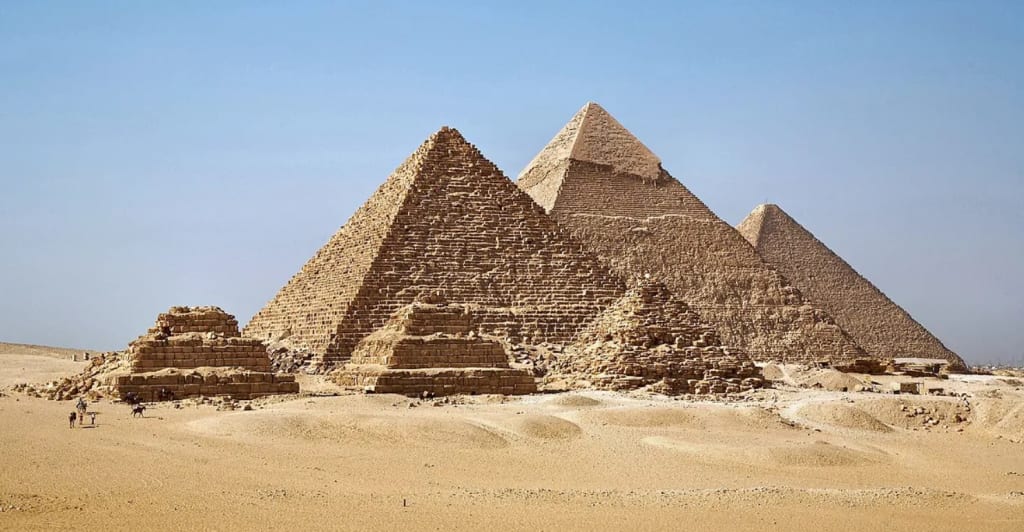
The Great Pyramids of Giza, standing as monumental testaments to ancient Egyptian ingenuity, have long fascinated historians, archaeologists, and the general public alike. Built during the Fourth Dynasty of the Old Kingdom around 4,500 years ago, these colossal structures — particularly the Great Pyramid of Khufu — continue to be the subject of awe and speculation. Among the many theories surrounding their construction, one of the most controversial and intriguing is the idea that the pyramids were built with the assistance of extraterrestrial beings. This article delves into the origins of this theory, the evidence for and against it, and the scientific explanations for the construction of these ancient wonders.
Origins of the Alien Theories
The notion that the pyramids were constructed by or with the help of aliens gained popularity in the 20th century, fueled by a combination of pop culture, speculative books, and the mysterious nature of the pyramids themselves. One of the earliest proponents of this idea was Erich von Däniken, whose 1968 book “Chariots of the Gods?” proposed that advanced extraterrestrial civilizations visited Earth in antiquity and influenced human culture and technology. Von Däniken argued that the precision and scale of the pyramids’ construction, along with other ancient architectural feats, were beyond the capabilities of the societies of the time.
Arguments for the Alien Theory
Proponents of the alien theory often cite several points to support their claims:
1. Technological Improbability: The precision with which the pyramids were constructed, including the alignment with cardinal points and the near-perfect measurements, seems implausible given the technological limitations of the ancient Egyptians.
2. Advanced Knowledge: The mathematical and astronomical knowledge required to design the pyramids with such precision, particularly the alignment with celestial bodies, suggests a level of understanding that some believe could only have come from an advanced civilization.
3. Inexplicable Engineering: The sheer size and weight of the stones used, some weighing up to 80 tons, and the methods required to transport and assemble them remain topics of debate, leading some to speculate about the use of advanced, possibly alien, technology.
Scientific Explanations
Despite the allure of the alien hypothesis, the overwhelming majority of historians and archaeologists support the theory that the pyramids were the result of human ingenuity, labor, and sophisticated engineering techniques. Several key points counter the alien theory:
1. Historical Records and Evidence: Archaeological discoveries, including workers’ villages, tools, and records, provide substantial evidence that the pyramids were built by a large, well-organized workforce of skilled laborers, not slaves or aliens. Inscriptions and graffiti found in the pyramids also indicate the names of work crews and their leaders.
2. Engineering Techniques: Modern experiments and research have demonstrated plausible methods by which the ancient Egyptians could have transported and erected the massive stones. Techniques such as wetting the sand to reduce friction for moving large blocks, and the use of ramps and levers, have been successfully recreated in contemporary studies.
3. Astronomical Knowledge: Ancient Egyptian civilization had a profound understanding of astronomy, as evidenced by their detailed star maps and the alignment of temples and monuments. This knowledge, coupled with trial and error over generations, could explain the precise alignment of the pyramids.
4. Cultural Context: The design and construction of the pyramids are deeply rooted in Egyptian religious and cultural beliefs, particularly concerning the afterlife and the pharaohs’ divine status. The construction techniques evolved over centuries, with earlier pyramid forms like the step pyramid of Djoser showing the progression of architectural skills.
While the theory that aliens built the pyramids captures the imagination and offers a tantalizing explanation for the mysteries of ancient engineering, the weight of evidence strongly supports the conclusion that the pyramids were human achievements. The ancient Egyptians possessed the necessary knowledge, organizational skills, and manpower to construct these awe-inspiring structures. The fascination with extraterrestrial involvement reflects both the enigmatic nature of the pyramids and the human tendency to seek extraordinary explanations for extraordinary achievements. Ultimately, the true story of the pyramids is a testament to human innovation, perseverance, and the enduring quest for greatness.
About the Creator
Keep reading
More stories from Gustavo Woltmann and writers in Chapters and other communities.
The Science Behind the Zombie Apocalypse
The Concept of the Zombie Virus The fictional zombie virus is typically depicted as a highly contagious pathogen that spreads rapidly through a population, transforming its victims into aggressive, cannibalistic beings. While the specific origins and mechanisms vary across different narratives, several common elements define the concept:
By Gustavo Woltmann9 months ago in Chapters
Bruce Lee and The God of War: Kuan Ti
It starts with love.. The Power to the God Of War and Wealth Walk into a Chinese restaurant (even in Oklahoma, USA), a Chinese police station, a kung fu martial arts studio or even a Chinese temple and you often see a red faced warrior holding a heavy quan-do (spear like weapon).
By SAMURAI SAM AND WILD DRAGONS29 days ago in Chapters
Tattoos and Rail Guns Chapter 16: When the Silo Finally Explodes
The morning came. Walker shoved Douglas awake. Douglas tried to cast a spell, but the motion caused him to fall off the bunk. He glared at Walker. After they had dressed, Walker gave Douglas his assigned knife; he had already put on the matching set. “This mission should help test out the daggers.”
By Jamais Jochima day ago in Chapters




Comments