
Trump Visits L.A. Fire Zone While Proposing Big FEMA Changes
Trump's FEMA Proposal Sparks Debate Amid Rising Disasters
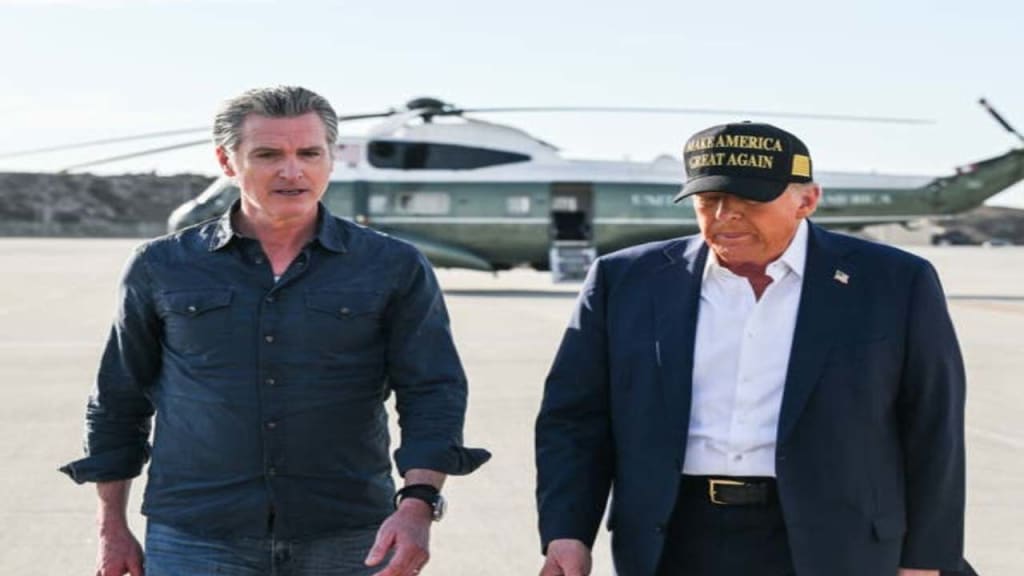
President Donald Trump recently toured disaster-hit regions, sparking controversy with remarks suggesting the closure of the Federal Emergency Management Agency (FEMA). His comments come at a time when wildfires rage in California and recovery efforts continue in North Carolina after Hurricane Helene's devastation.
Touring Disaster Zones: North Carolina and Los Angeles
Trump began his tour in Asheville, North Carolina, where Hurricane Helene left severe damage. He then headed to Los Angeles, where ongoing wildfires have caused destruction and displaced thousands. These visits were intended to highlight disaster recovery efforts, but his remarks have shifted focus to FEMA's future and disaster management policies.
Suggesting FEMA Be Eliminated
In Asheville, Trump proposed shutting down FEMA, claiming states could manage disaster recovery better. “When you have a problem like this, I think you want your state to fix it,” Trump stated, suggesting that federal funds could be directly allocated to states. He further criticized California’s environmental policies, threatening to withhold disaster aid if changes aren’t made.
Trump doubled down on this idea during a Fox News interview, saying, “FEMA is getting in the way of everything,” and suggesting states like Oklahoma handle tornado disasters independently, with the federal government providing financial aid only when necessary.
Understanding FEMA's Role
FEMA is not designed to take over local disaster response efforts but to assist states when they cannot manage on their own. According to Pete Gaynor, former FEMA administrator, disaster response is “locally executed, state managed, and federally supported.” Gaynor emphasized that FEMA acts as a backstop rather than a first responder.
Critics argue that Trump’s statements mischaracterize FEMA’s role, causing unease among its staff. An anonymous FEMA employee revealed that workers feel “betrayed and scared,” adding that the agency already faces burnout due to the increasing frequency of natural disasters.
Calls for Reform
Trump’s suggestion to shutter FEMA aligns with the Republican-backed Project 2025, a blueprint for reshaping federal disaster management. The project proposes shifting 75% of the financial burden for small disasters to states, with the federal government covering only 25%. The plan also includes a “disaster deductible,” reducing federal aid to states that fail to prepare for disasters.
Russell Vought, Trump’s pick to lead the Office of Management and Budget, supports these changes. Ken Cuccinelli, another key contributor to Project 2025, believes such reforms would push states to take a more proactive role in disaster preparedness. However, most states have resisted increased financial responsibility, preferring more federal assistance instead.
Debate Over FEMA’s Future
The debate about FEMA’s future comes at a time when climate change is increasing the frequency and severity of natural disasters. Experts argue that shifting the financial burden to states could leave them struggling to manage large-scale events like hurricanes and wildfires.
Roy Wright, a former FEMA official, said, “We need a different approach,” suggesting that subtle reforms haven’t worked. However, others warn that too much responsibility on states could weaken the nation’s overall disaster response capabilities.
Concerns Over Leadership
Trump’s choice of Cameron Hamilton as acting FEMA administrator has also raised eyebrows. Hamilton, a former Navy SEAL with no prior experience managing large-scale disasters, contrasts with previous FEMA leaders who had significant emergency management experience.
This change in leadership comes at a critical time when FEMA faces immense challenges due to extreme weather events. Critics worry that underqualified leadership may hinder the agency’s ability to respond effectively.
Environmental Policies Under Scrutiny
Trump’s criticism of California’s environmental policies adds another layer to the debate. He has often blamed the state’s forest management practices for its wildfire problems. However, experts argue that climate change and urban development play significant roles in worsening wildfires.
Despite these criticisms, Trump’s administration has rolled back several climate policies designed to build resilience against natural disasters. This has sparked concerns that the U.S. is becoming less prepared for future climate shocks.
Balancing Local and Federal Roles
While Trump’s proposal to shift more responsibility to states has its supporters, it also faces significant pushback. Historically, FEMA has played a crucial role in helping states during crises, especially when resources are stretched thin. Daniel Kaniewski, a former FEMA deputy, acknowledged the need for reform but cautioned against reducing federal support too drastically.
“The real question is how those burdens should be shared at all levels of government,” Kaniewski said, emphasizing the importance of collaboration between local, state, and federal agencies.
Looking Ahead
As natural disasters become more frequent and severe, the debate over FEMA’s future is unlikely to fade. While Trump’s comments have reignited discussions about disaster management reforms, the path forward remains uncertain. Balancing the roles of local, state, and federal governments will be critical in ensuring the nation’s readiness for future disasters.
In the meantime, FEMA employees and disaster-stricken communities continue to navigate challenges on the ground. Whether Trump’s proposals gain traction or face bipartisan resistance will depend on how the public and lawmakers weigh the risks and benefits of such sweeping changes.
By raising questions about FEMA’s role, Trump has sparked a national conversation on disaster preparedness. But as experts point out, reforming the system without compromising its effectiveness will require careful planning and bipartisan cooperation.
About the Creator
Fair Exchange, No Robberies
Dark Memoirs - Index There are at least two kinds of people in the world: those who write this half-arsed kind of intro to a story that looks to separate the rare and the norm, and those who realise it's an overused framing device and don't.
By Paul Stewart28 days ago in Chapters




Comments
There are no comments for this story
Be the first to respond and start the conversation.