
US-Iran Crisis: Trump Sets 10-Day Deadline as Geneva Nuclear Talks Resume
Iran warns of “ferocious” response to limited strikes while Omani mediators push for a final deal in Switzerland.

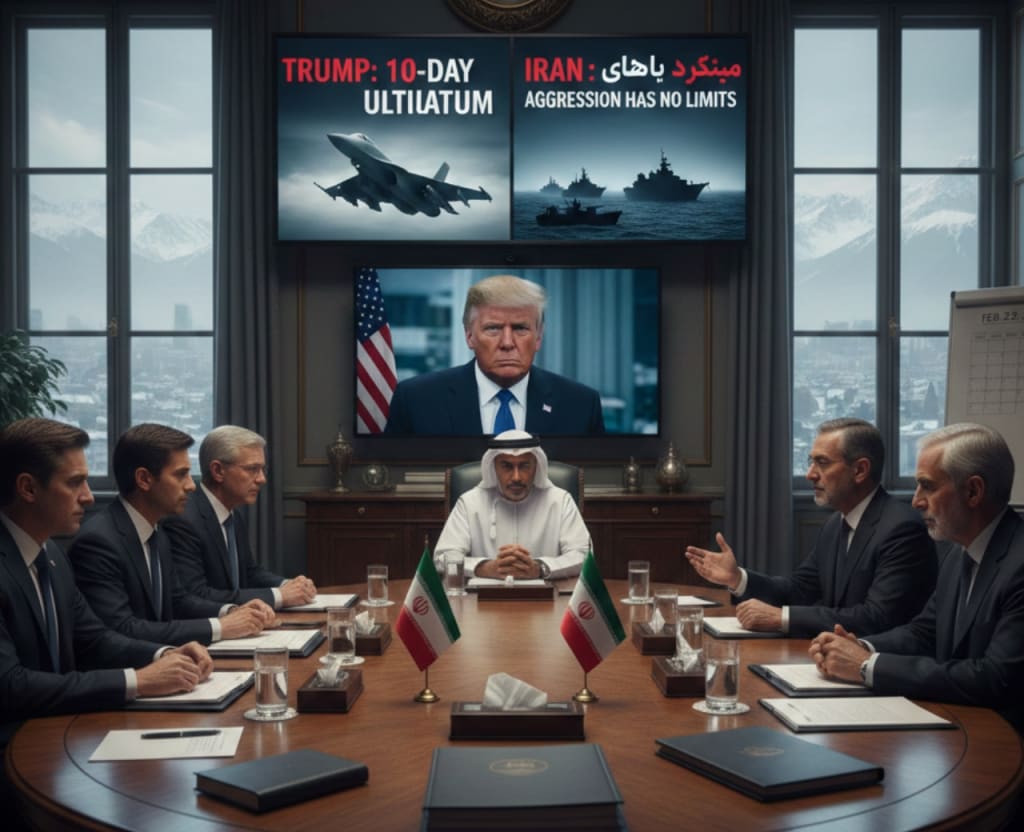
Iran has once again made it clear that any type of American attack would be considered “aggression” and would be met with a response.
Iran’s Foreign Ministry spokesperson, Esmail Baghaei, said in a press conference that “aggression has no limits. Any kind of attack, even if limited, is an example of aggression and will have its own consequences.”
Accusing the United States of making “contradictory claims,” the Iranian Foreign Ministry spokesperson said that Iran has no interest in prolonging negotiations.
He added, “Whether it was the negotiations before June last year or the rounds of talks taking place in the current period, we have repeatedly announced that for meaningful progress we are ready to continue uninterrupted negotiations for days and weeks. Holding talks at intervals of ten or fourteen days is not our preferred method, and we have no interest in dragging out the negotiations.”
It is worth recalling that three days ago U.S. President Donald Trump said that if a nuclear deal is not reached, he may consider a “limited” military strike on Iran. In an earlier statement last week, Trump also said that it would become clear within the next ten days what would happen with Iran, and that if no agreement is reached within that timeframe, the possible consequences would be very severe.
Two rounds of indirect talks between the United States and Iran have taken place under Omani mediation. On Monday (February 22), Oman’s foreign minister confirmed that the third round of talks between the U.S. and Iran will be held in Geneva on Thursday.
Oman, which is acting as a mediator between the two sides, said the talks were arranged as “an additional effort to finalize an agreement with positive progress.”
It should be noted that after the second round of talks between the U.S. and Iran held in Geneva on February 17, both Washington and Tehran expressed concerns along with some encouraging statements.
Following the February 17 meeting, U.S. Vice President J.D. Vance said that diplomatic talks between the U.S. and Iran had been good “in some respects” and that the parties had agreed to hold another meeting. Meanwhile, Iranian Foreign Minister Abbas Araghchi said that “an understanding on fundamental principles” had been reached with the United States.
Vice President Vance also said that Iran is still not ready to accept “certain red lines” set by President Trump.
He indicated that the U.S. would continue on the diplomatic path, but that President Trump would decide “when to abandon diplomacy.”
He further said that Washington does not expect matters to reach that point, but if they do, the decision would be President Trump’s.
On the other hand, Iranian Foreign Minister Abbas Araghchi described the second round of talks as more positive than the first and said that “both sides will prepare two draft documents of a possible agreement and exchange them. But this does not mean we will soon reach an agreement; however, we have certainly set out on the path toward one.”
Prepared to defend the country
On Tuesday, Iran’s Commander-in-Chief of the Army, Major General Amir Hatami, said that amid current tensions with the United States, “millions of soldiers are ready to sacrifice their lives in defense of the country.”
According to the Tasnim News Agency, Major General Hatami said at a graduation ceremony for military officers that although the “enemy” believes it has superiority over the Islamic Republic of Iran, “great Iran cannot be swallowed.”
He stressed that “resistance” is the most effective weapon against opponents. He also praised Supreme Leader Ayatollah Ali Khamenei’s February 17 warning that U.S. aircraft carriers “can be sent to the bottom of the sea.”
He added that the Iranian people will remain steadfast and defeat this “dangerous plan,” which he described as American bullying. He argued that the U.S. is not invincible, as demonstrated in decades-long wars in Vietnam, Afghanistan, and Iraq.
What is Oman’s role in mediating between Washington and Tehran?
Following regional diplomatic efforts, Oman is trying to help both sides reach an agreement.
Oman’s Foreign Ministry has emphasized the importance of returning to the negotiating table and resolving differences peacefully to help establish peace and security in the region and the world.
It is worth recalling that under Omani mediation, Tehran and Washington began indirect talks in Muscat on February 6.
Last year, talks between the two sides were halted when Israel launched a war against Iran in June. After that major impasse, this dialogue marks the first progress.
Oman’s Foreign Minister Badr Hamad Al Busaidi has stressed in several official meetings the need to expand opportunities for compromise and coordination so that an agreement can be reached in line with the expectations of all parties.
Military preparations and exercises
Alongside negotiations, both Washington and Tehran appear to be taking steps to increase pressure on each other.
U.S. officials have said that the American military is preparing for the possibility of operations against Iran that could last several weeks if President Donald Trump orders strikes following a failure of negotiations.
Meanwhile, Iran said that on Tuesday its Revolutionary Guards had conducted military exercises in the Strait of Hormuz in recent days and temporarily closed parts of the strait for several hours as part of those drills.
The Strait of Hormuz is a key international waterway and the main route for oil exports from Gulf Arab countries. On Monday, Iran began military exercises in the strait, which continued into Tuesday.
In light of the situation, Gulf countries have called for a diplomatic solution to end the dispute.
It should be noted that in January the United States deployed the aircraft carrier USS Abraham Lincoln along with other warships to the Gulf, and afterward the Gerald R. Ford was also deployed to the Middle East.
On Monday, Mohammad Akbarzadeh, commander of the Revolutionary Guards Navy, said that all foreign warships in the region are “under full intelligence surveillance and within range of our defensive capabilities.”
According to him, Akbarzadeh stressed that “the armed forces are fully prepared and monitoring enemy movements. No kind of threat will be ignored.”
Do you like this personality?
About the Creator
Keep reading
More stories from Real content and writers in Chapters and other communities.
El Mencho Killed: Mexico at a Crossroads After CJNG Cartel Leader’s Death
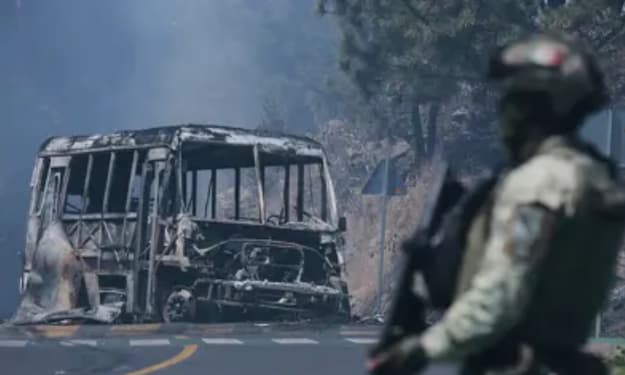
Cartel Leader Killed Mexico at a Crossroads Mexico woke up to bombshell news this week: Nemesio Rubén Oseguera Cervantes, better known as El Mencho, is dead. He wasn’t just any criminal he was the boss of the Jalisco New Generation Cartel (CJNG), one of the world’s most feared and elusive drug lords. Now, after years on the run, he’s gone.
By Real contenta day ago in Chapters
Sparrow on a Plank Chapter 18: Of Wild Parties and Annoyed Predators
The trip home was blessedly uneventful. There were sharks, whales, and the occasional seagull, but nothing attacked them or even appeared to follow them. Hajime and the other mages did a thorough search of the ship, looking for anything that didn't belong. They couldn't find anything, but that didn't mean that there wasn't anything there; it just meant that it was hidden rather well. Although they were sure that there was something hidden, they lacked the immediate means to deal with it.
By Jamais Jochima day ago in Chapters



Comments (1)
like