
What is DePIN (Decentralized Physical Infrastructure Networks) in crypto?
DePIN

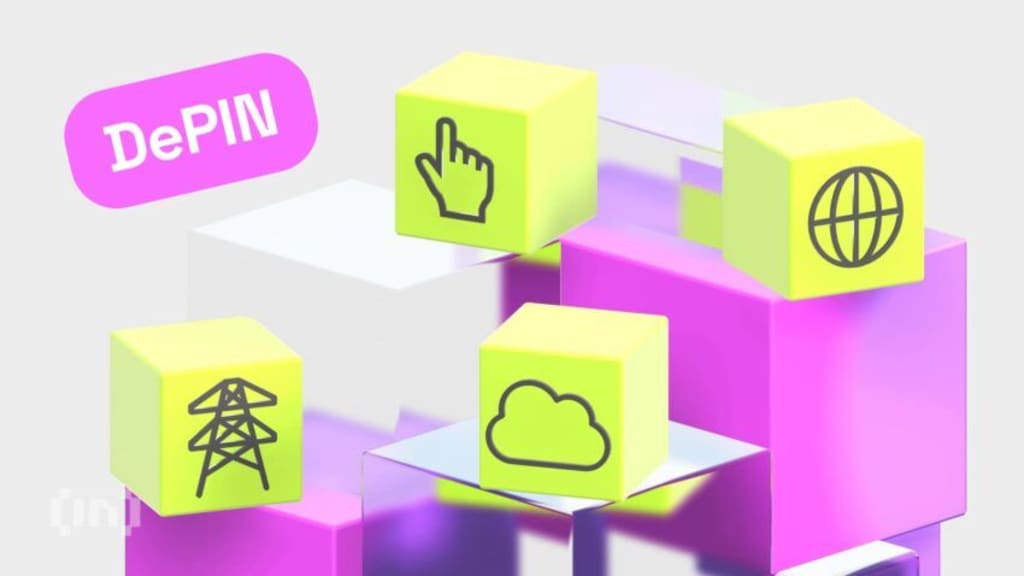
DePIN is about integrating real-world infrastructures such as wireless networks into a blockchain-based system. Venture capitalists are very interested, but the customer base is still small.
Venture capitalists have invested billions of dollars in the DePIN sector, with some funds fully invested in DePIN protocols. Despite a market cap in the tens of billions, the sector still faces a challenge common in the crypto world: a limited number of users.
Analysts believe that the most promising DePIN projects are those where there is clear demand for the service, indicating existing customer interest. Unlike much of the cryptocurrency sector, which deals with abstract concepts such as data transactions on blockchains and fluctuating price charts, DePIN development company projects target concrete, real-world applications. Examples include the Helium protocol, which supports a wireless network over a token-based ecosystem, and Filecoin 's data storage platform.
What is DePIN?
DePIN, short for Decentralized Physical Infrastructure Networks, represents a transformative approach to blockchain technology that connects it with real-world infrastructure to decentralize and democratize access to services traditionally controlled by large corporations. This sector uses token-based reward systems to encourage public participation in the management and expansion of various infrastructures, from wireless connectivity and transport to data storage and computing power.
In the past, infrastructure services like wireless networks have been centrally controlled by large companies like AT&T and Deutsche Telekom, where customers pay a fee to use them and have limited influence over the network. In contrast, DePIN projects like Helium offer a decentralized model where individuals can set up hotspots in their area and earn tokens - in Helium's case, specifically HNT tokens - by contributing to the network's expansion and efficiency.
According to recent reports from Crypto.com and CoinGecko, the market cap of DePIN tokens has risen above $25 billion, a testament to the growing investor interest that is predominantly coming from institutional backers and venture capitalists rather than retail investors. While still in its early stages, this emerging sector has already seen significant engagement from large investors, making it a potential goldmine for those looking to diversify their portfolios with DePIN-related tokens, despite the current challenge of their limited availability on mainstream, retail-friendly exchanges.
Decentralized Physical Infrastructure Network in Crypto
Decentralized Physical Infrastructure Networks (DePINs) represent a groundbreaking shift in the management and delivery of physical infrastructure services, leveraging the decentralized nature of blockchain technology. This concept enables a peer-to-peer (P2P) ecosystem where individuals contribute various physical infrastructure resources such as data storage, wireless connectivity, energy grids, and even environmental data such as noise levels.
The essence of DePIN lies in its ability to democratize access to infrastructure services traditionally dominated by large companies or centralized systems. By using a public blockchain ledger, DePINs not only record every transaction and service provided, but also manage administrative functions and transfers through this decentralized system. This approach ensures transparency, as every action is publicly verifiable, and enables a permissionless environment where anyone with the necessary resources can participate as a service provider.
Solana's role in DePINs
Several decentralized computing networks such as Render, io.net, and Nosana, which allow individuals to provide computing resources for community use, are being developed on the Solana (SOL) blockchain. According to the Solana Foundation, about 20 DePIN projects currently use Solana's platform. Notably, Helium (HNT) switched from its native blockchain to Solana last year, citing Solana's greater reliability and stability, although Solana has had issues with outages in the past, as detailed in Helium's blog posts.
Sean Farrell, head of digital asset strategy at FundStrat, explains that Solana's architecture simplifies the process for many DePIN projects that would otherwise have to build their own high-throughput blockchain or operate on one with low adoption. "Solana's emergence as a credible platform has effectively addressed these infrastructure challenges," he explained.
One of Solana's clear advantages over other primary blockchains such as Ethereum (ETH) is its ability to handle a high volume of transactions at a relatively low cost without having to outsource them to a more efficient secondary layer. Ethereum, known for its high transaction costs and slower speeds, has led to the development of several Layer 2 solutions within its ecosystem. Conversely, Solana offers a more streamlined and cost-effective alternative.
How does DePIN work?
DePINs (Decentralized Physical Infrastructure Networks) integrate blockchain technology with real physical infrastructures, revolutionizing the management and distribution of services and resources. This integration is characterized by several core components that make DePINs a transformative technology for connecting the digital and physical worlds.
Physical infrastructure: At the heart of DePINs are the physical assets such as sensors, routers, solar panels and network devices. These assets are typically owned and managed by private providers who may have owned these facilities before integrating them into the DePIN ecosystem. These physical components are essential for the actual transfer of data, resources or information within the network.
Middleware and Blockchain System: Middleware plays a crucial role by serving as a bridge between the physical infrastructure and the blockchain. It works similarly to a decentralized oracle network (DON) that collects data from physical facilities and relays it to the blockchain. This system ensures that the activities of each facility are accurately recorded and submitted to the blockchain, which then acts as both an administrator and a remittance system.
Off-chain network: The off-chain network component includes data transactions that take place outside the blockchain but are essential for DePINs to function. This includes sourcing necessary resources such as computing power, data storage, and connectivity, which are procured from external service providers.
Token Rewards: To encourage participation and contribution to the network, DePINs reward participants with tokens. These tokens are not only a form of compensation but also help in managing the network and improving the decentralized nature of the infrastructure.
By combining these elements, DePINs enable a decentralized network where multiple vendors can contribute their physical infrastructure to a shared ecosystem. This setup not only reduces dependence on centralized systems, but also democratizes access to resources and enables more efficient distribution and use of infrastructure. DePINs' model shows a future where blockchain not only secures digital transactions, but also plays a crucial role in managing and optimizing operations in the physical world.
Types of decentralized physical infrastructure networks
Decentralized Physical Infrastructure Networks (DePINs) represent a cutting-edge blend of blockchain technology with physical and digital assets and are divided into two main types: physical asset networks (PRNs) and digital asset networks (DRNs). Each of these categories performs unique functions and meets different needs within the decentralized ecosystem.
Physical Resource Networks (PRNs):
PRNs consist of location-based physical infrastructures where vendors deploy hardware resources that are inherently localized and often immobile. These resources include connectivity devices, mobility solutions, energy systems, and geospatial data collectors. The services provided by PRNs are typically tied to specific locations, making the resources non-fungible – that is, they cannot be replaced with identical elements elsewhere due to their fixed nature and location-specific utility.
Digital Resource Networks (DRNs):
In contrast, DRNs consist of networks of digital resource providers that provide fungible resources that are not tied to a location. These include computing power, shared bandwidth, and storage facilities. DRNs enable greater flexibility and scalability because the resources provided can be pooled, shared, and used on a global scale, regardless of physical location constraints.
Benefits of decentralized physical infrastructure networks (DePIN)
Decentralized Physical Infrastructure Networks (DePINs) offer a number of benefits that transform the way infrastructure is developed, managed and used. These benefits arise from the unique properties of blockchain technology combined with the principles of decentralization and crowdsourcing.
Scalability and flexibility:
DePINs enable horizontal scalability, where networks can increase their resources rather than the capacity of each individual resource. This model enables flexibility and allows the network to scale up or down as needed without significant structural changes. In high-demand scenarios, DePINs can activate inactive resources, seamlessly increasing the overall capacity of the network. This ability to infinitely scale, governed by blockchain mechanisms, allows DePINs to dynamically respond to different levels of demand.
Decentralization and community control:
Similar to decentralized finance (DeFi), DePINs shift control from centralized entities to a collective of individual resource providers. This model distributes control among providers, similar to how miners work in a Proof of Work (PoW) blockchain. Essentially, DePINs function as industrial Decentralized Autonomous Organizations (DAOs) where each participant's influence is proportional to their contribution, fostering a nearly perfect decentralized ecosystem.
Cost efficiency and fair pricing:
DePINs are inherently cost-efficient as the network itself incurs minimal operational costs. Providers have the flexibility to offer their services to multiple networks, increasing service efficiency. Pricing models in DePINs reflect the actual costs incurred by providers and are free of the excessive markups typical of centralized services. This results in cheaper and fairer pricing for users as costs are spread across the network's participants without any central overheads.
Permissionless access:
DePINs operate on public blockchains, meaning they are permissionless and accessible to anyone with the necessary resources. This open access ensures that anyone can contribute to or benefit from DePIN services without encountering barriers such as price negotiations or user verification. This inclusivity promotes a broader user base and a more robust, diverse network.
Incentives and economic opportunities:
DePINs use incentives as a key tool to encourage participation. Providers can earn passive or active income by providing underutilized resources to the network, thereby turning idle resources into productive ones. Projects like Nunet, for example, use AI to optimize the use of computing power and provide income opportunities to resource providers.
Borderless expansion and rapid deployment:
Because DePINs are decentralized and not bound by government controls, they can quickly expand into new areas without bureaucratic delays. This borderless nature enables rapid scalability across jurisdictions, further promoting network growth and rapid service deployment.
Self-sustainability:
Through efficient resource allocation and the economic incentive model, DePIN networks can generate sufficient revenue to independently maintain and expand their infrastructure. This self-sustainability reduces dependence on external investments and makes DePINs more resilient and operational in the long term.
In summary, DePINs leverage the decentralized, open and flexible nature of blockchain technology to create scalable, efficient and economically viable networks. These networks not only challenge traditional infrastructure models but also provide a more equitable and participatory framework for infrastructure development and management.
DePIN Risks and Challenges
decentralized physical infrastructure network development solution (DePINs) represent an innovative fusion of blockchain technology with physical infrastructure, but face several challenges and risks that could impact their scalability and sustainability. These obstacles range from early-stage adoption issues to the inherent complexities of managing a decentralized network.
Adoption and market density issues:
DePINs are still in their early stages, with only a limited number of blockchain enthusiasts and asset owners showing interest. The success of DePINs depends heavily on creating a robust network of users and providers to maintain the operational flywheel. Currently, the low participant density poses a challenge to generate sufficient momentum for these networks. Overcoming this barrier will not only require time, but also significant efforts in community building and user education to expand understanding and participation.
Technical and operational complexities:
The concept of DePIN can seem daunting due to its technical complexity. Potential participants may find the barrier to entry high, thus discouraging participation. In addition, the operational costs of maintaining private facilities can be significant and may outweigh the benefits unless these networks reach a critical mass of active users and providers. Therefore, it is essential for DePIN projects to invest in educational initiatives that simplify the technology for a wider audience and demonstrate the tangible benefits of participation.
Financial viability and profitability:
The economic model of DePINs depends on the balance between token rewards and operational costs. Projects must ensure that the rewards distributed are at least equal to the costs incurred by providers for the system to be attractive and financially viable. However, in the early stages of these projects, user and provider engagement is often limited, which can lead to insufficient token demand and lower profitability. This is further complicated by the price volatility of the tokens, which can prevent ongoing participation if rewards are perceived as an unreliable source of income.
Risk profile and market dynamics:
According to industry experts such as Strahinja Savic and Brian Rudick, DePIN projects are positioned higher on the risk curve compared to more traditional crypto investments such as exchanges or mining infrastructure. The reliance on tokens with potentially unstable long-term value to fuel the development of costly physical infrastructure carries high financial risk. While DePIN projects can theoretically pass on lower infrastructure costs to customers to drive demand, the actual quality of the services provided may lag behind that of established solutions that have been optimized over decades.
Strategic approaches and long-term viability:
DePIN projects that follow a “build it and they will come” strategy often face challenges in scaling due to speculative demand and an ever-increasing token supply. Projects that identify and leverage existing demand for specific services, on the other hand, have a better chance of success. These projects are more likely to create an economic moat and achieve a sustainable balance between token supply and demand early in their lifecycle.
In summary, while Depin development solutions have significant potential to revolutionize physical infrastructure through blockchain technology, the path to widespread adoption and success is fraught with challenges. Overcoming these will require strategic planning, robust economic models, and ongoing community engagement to ensure that DePINs can effectively compete with traditional centralized systems and create a new paradigm for infrastructure management.
About the Creator
Jasper zak
At BlockchainX tech, we help startups, medium-sized enterprises, and large-sized businesses providing end-to-end blockchain development services such as token creation, landing page design, whitepaper writing, and smart contract creation.
Keep reading
More stories from Jasper zak and writers in Chapters and other communities.
Why Choose Tron for Token Development?
In the rapidly expanding world of blockchain technology, selecting the right platform for token development is a pivotal decision for businesses and developers. Tron, a blockchain platform designed to support decentralized applications (dApps) and digital assets, has emerged as a compelling choice. With its scalability, low transaction fees, and developer-friendly ecosystem, Tron offers a robust foundation for creating tokens tailored to diverse industries and use cases. This blog explores why Tron stands out as a preferred platform for tron token development and how it empowers projects to thrive in the decentralized future.
By Jasper zakabout a year ago in Chapters
Bruce Lee and The God of War: Kuan Ti
It starts with love.. The Power to the God Of War and Wealth Walk into a Chinese restaurant (even in Oklahoma, USA), a Chinese police station, a kung fu martial arts studio or even a Chinese temple and you often see a red faced warrior holding a heavy quan-do (spear like weapon).
By SAMURAI SAM AND WILD DRAGONSabout a month ago in Chapters
Firebug: Ch. 19 - The Durants
The last time Roman had seen Theo so angry, Jasper's face got dented with a dodgeball. His bandaged hands shook from gripping his sheets so tight, his freckled face darkening from off-white to blood red within seconds. When he saw the tears gathering in the corners of the shorter teen's eyes, Roman felt a spark of anger ignite behind his own sternum.
By Natalie Grayabout 6 hours ago in Chapters
📢 Raise Your Voice Thread: 02/05/2026
Our “Raise Your Voice Threads” are hosted most alternating Thursdays at 12PM ET to offer creators more avenues to uncover exceptional stories on Vocal. As we are continuously searching for fresh creators and inspiring stories, this thread provides an opportunity to exchange and discuss the stories that have moved and motivated us on Vocal.
By Raise Your Voice by Vocala day ago in Resources



Comments
There are no comments for this story
Be the first to respond and start the conversation.