
Why Muslims Break Their Fast with Dates: Health Benefits During Ramadan
Benefits of Dates During Ramadan Fasting: Energy, Hydration & Digestion

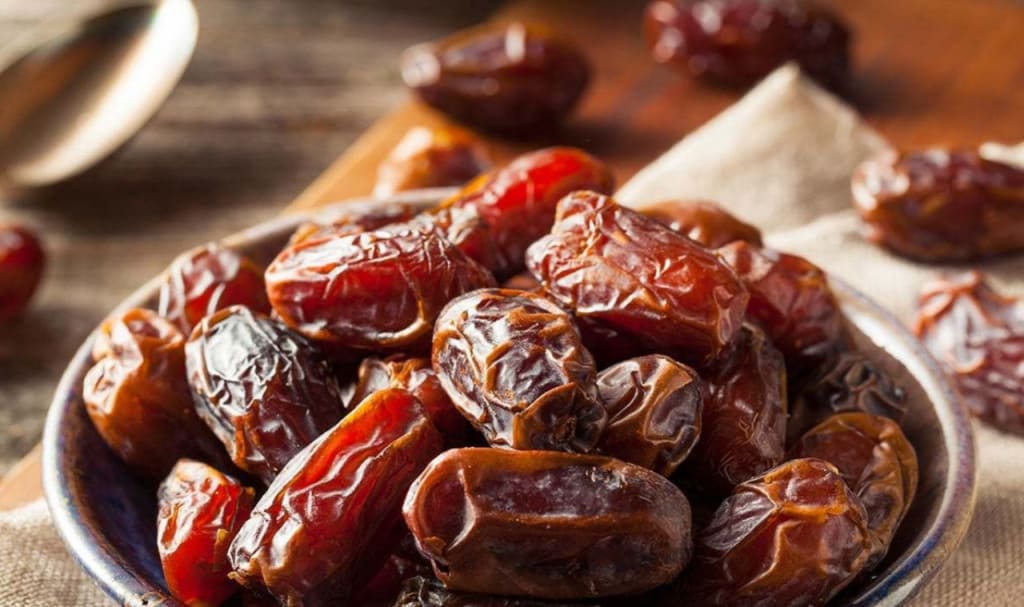
During the month of Ramadan, millions of Muslims in Pakistan and around the world will do almost the same thing at sunset: they will break their fast with dates.
Fasting is one of the five pillars of Islam. During Ramadan, Muslims refrain from eating and drinking from sunrise to sunset.
According to Islamic traditions, the use of dates to break the fast was recommended by the Prophet of Islam, and dates are also mentioned in several places in the Qur’an, the holy book of Muslims.
But what health benefits do dates have that make them an ideal food for those who fast?
Nutritional benefits
When you have not eaten for a long period of time, such as from sunrise to sunset, the nutritional composition of dates makes them an excellent food for the human stomach.
UK-based nutritionist Shehnaz Bashir says, “When you break your fast, your body immediately tries to produce glucose because it needs it as fuel.”
Dates contain a high amount of sugar, which raises blood sugar levels much faster compared to other foods.
Shehnaz Bashir further says, “Dates are unique in that they contain both simple sugars and complex carbohydrates.”
This means that this fruit continues to provide the body with a large amount of energy. It is ideal for a person who has not eaten for a long time. Dates are rich in vitamins A, K and B6 as well as iron, and help provide all essential nutrients to the body in a short time.
Preventing dehydration
Although dates are a dried fruit, they still prevent dehydration in the body.
They naturally contain the electrolyte potassium, which acts like a magnet for water and fills the body’s cells with water.
According to Shehnaz Bashir, “Many people break their fast with dates along with water. This is best for maintaining energy as well as keeping the body hydrated.
She further said, “After this, there is often no need to take additional electrolytes.”
Overeating
Some people lose weight during Ramadan, but if you overeat at the time of iftar, fasting can also cause weight gain.
Traditionally, some Muslims eat dates in an odd number (three, five, seven or nine) as soon as they break their fast and then immediately offer the Maghrib prayer, after which they return to eat food.
As soon as the human body begins to digest the fiber-rich dates, the desire to overeat may decrease and a person may eat in moderation.
Shehnaz Bashir says, “This (dates) gives your body a chance to understand that it has actually received some food and that the process of digestion has begun.
Digestion
Complaints of constipation and bloating become common among fasting Muslims. This is because on normal days eating and drinking continue throughout the day, so the intestines also keep moving, whereas during long fasts this process slows down.
Dates are an excellent source of fiber, which helps waste pass easily through the intestines.
The UK National Health Service recommends consuming 30 grams of fiber daily.
Shehnaz Bashir says, “Sometimes during Ramadan we crave simple carbohydrates, but if we cook with planning we can ensure the presence of fiber in it.”
Using dried fruits in food is an easy way to increase the amount of fiber.
If I do not like dates, what should I do?
Fasts during the month of Ramadan are observed on religious grounds. Apart from this, the trend of not eating for a long period for health reasons is also gaining popularity around the world.
According to Shehnaz Bashir, “It is almost exactly like how we fast during Ramadan.”
If you do not like dates, it does not matter; there are hundreds of varieties of dates available, try a few.
Shehnaz Bashir says, “All of them have different textures, some are chewy, some very soft, some have thick skin and some thin.”
She says, “Blend dates and milk together, add a little yogurt and dried fruits to it and use it. These are good foods that benefit the body in many ways.
About the Creator
Keep reading
More stories from Real content and writers in Chapters and other communities.
Bajaur Blast: 11 Security Personnel Killed in Suicide Attack on Check Post in Khyber Pakhtunkhwa
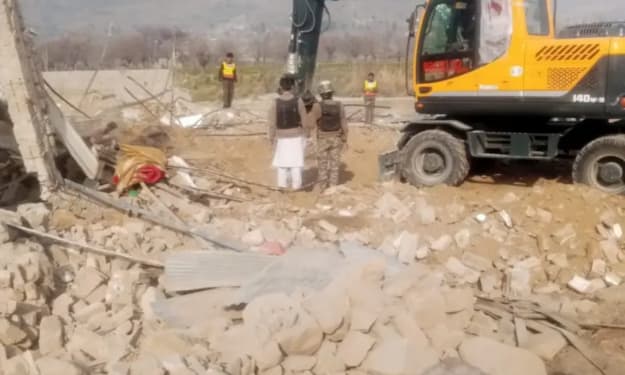
When we were pulling people out from under the rubble, there was still firing at the check post. The personnel stationed there returned fire. And when the wounded were being transported to the hospital in ambulances and vehicles, there was firing at that time as well. This is the account of an eyewitness who reached the site to help after an explosion at a joint check post of the FC and law enforcement agencies in Bajaur district of Khyber Pakhtunkhwa province on Monday evening. Given the situation in the area, he requested that his name not be disclosed. According to him, after the Isha prayer, a powerful explosion was heard in the area, and it felt as though it had occurred right in their immediate vicinity. “More or less, this was the situation in every house in the area, where people felt as if the powerful blast had happened near their own homes.” On Tuesday afternoon, in a statement issued by the military’s media wing, ISPR, it was said that 11 security personnel and one girl were killed in the attack. ISPR stated that on Monday, militants attacked a joint check post of the security forces and law enforcement agencies in Bajaur district. According to the statement, the militants rammed an explosives-laden vehicle into the check post, causing the building to collapse. According to ISPR, nearby buildings were also damaged in the explosion, resulting in the death of a girl and injuries to seven civilians. Firing also took place while the injured were being transported Since the incident, there has been an atmosphere of fear in Bajaur district. According to local residents, security forces have cordoned off the blast site in the Loi Mamond area and are not allowing anyone to approach. Residents said that helicopters were seen in the sky early in the morning, after which the bodies were transported to the hospital. So far, no organization has claimed responsibility for the attack. The Chairman of Tehsil Nawagai, Dr. Khalil-ur-Rehman, said that he was in his hujra (guest house) last night when suddenly the door burst open due to the powerful explosion. “We couldn’t understand what was happening. Our hujra is located a few kilometers from the blast site.” He said he received calls from nearby areas reporting that an explosion had occurred near their homes. Similar reports were coming in from nearby villages, but it was unclear what exactly had happened. According to Dr. Khalil-ur-Rehman, he went to the affected check post after receiving the information. He said that residential houses near the check post were also damaged in the explosion and several civilians were injured. Dr. Khalil-ur-Rehman added that when the injured were being transported in ambulances, unidentified individuals opened fire, to which the forces responded. An eyewitness, describing the incident and subsequent rescue operations, said that the destroyed check post was a two-story building. He said that after the explosion, announcements were made from local mosques informing residents and asking them to come to the site to help rescue those trapped under the rubble. According to locals, the building had previously been used as a religious seminary. The eyewitness said, “When we arrived there and began pulling people out from the rubble, unidentified individuals were still firing at the check post.” He added, “It was a difficult time. Six bodies were recovered during the night.” The Chief Minister of Khyber Pakhtunkhwa, Suhail Afridi, condemned the attack, calling it a cowardly act. He said that after the Bajaur blast, rescue agencies had been directed to carry out immediate and comprehensive relief operations. The Chief Minister added that a comprehensive and effective strategy is essential for the complete elimination of terrorism. ‘A month and a half ago, people were sent back saying the area had been cleared’ A few months ago, a military operation was carried out in the Loi Mamond area against armed militants. Dr. Khalil-ur-Rehman said that a large number of people had displaced themselves for the operation, leaving their homes and staying in camps. He said that people spent about a month and a half in the camps. According to him, about a month and a half ago, people were sent back to their areas after being told that the region had been cleared. He said the government should review its policies, as such policies are causing harm to the people. The situation in Bajaur has been tense for a long time, and attacks have targeted not only security forces but also religious leaders and their gatherings. Some attacks have been claimed by the banned organization ISIS. On July 30, 2023, a suicide bombing at a Jamiat Ulema-e-Islam (Fazl-ur-Rehman) rally in the Khar area killed 60 people and injured more than 100. ISIS claimed responsibility for that attack. Similarly, in July 2025, an attack was carried out on the Assistant Commissioner’s convoy on Nawagai Road in Bajaur, in which the Assistant Commissioner and four others were killed. During that period, there were also incidents of targeted killings of police officers and attacks on tribal leaders.
By Real contenta day ago in Chapters
Valentine's Dates Over the Years
Colin grinned as Brooklyn slipped into the living room. “Is it all set?” he asked. The twenty-one year old grinned. She was in her last year of college and Colin knew that Lincoln was proud of her. Although she had been away at college, she’d eagerly helped Colin plan his surprise for Lincoln. “I’m so glad you’re finally doing this,” she said.
By Reb Kreyling6 days ago in Chapters
I Was Never Supposed to Make It
I don’t remember the first home I lived in. I remember boxes. Not big ones. Not the kind people pack carefully when they’re moving toward something better. Small plastic bags. Trash bags sometimes. Clothes folded quickly. Toys missing pieces. My life was reduced to what could be carried. What I remember is the feeling of not staying long enough to belong anywhere.
By Jeannie Dawn Coffmana day ago in Chapters


Comments
There are no comments for this story
Be the first to respond and start the conversation.