
Assessing Michael Carrick's Initial Impact at Old Trafford
How Has Michael Carrick Transformed United's Fortunes?

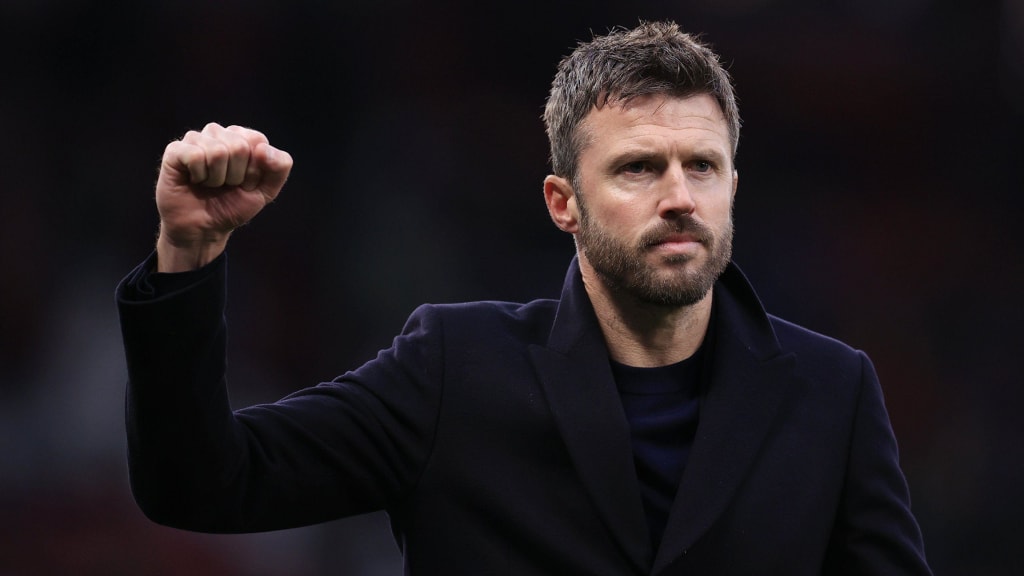
Many fans and pundits could have predicted Man United’s upturn in the aftermath of Ruben Amorim’s dismissal, with the Portuguese manager’ tactical inflexibility and scorched earth approach to man management attracting significant scrutiny.
His replacement Michael Carrick has adopted a seemingly more logical, measured and positive approach, seeking to encourage his players while also creating a more straightforward tactical blueprint that suits those at his disposal.
But how has Carrick actively improved the Red Devils, and can this initial impact be sustained throughout the remainder of the season?
Addressing Carrick’s 4-2-3-1 Shape and Impact on the Midfield
Amorim was clearly a skilful and learned coach, but one who struggled to adapt his vision or tactical philosophy to suit the current crop of United players.
Conversely, Carrick is best described as an adaptive and more pragmatic coach, who deploys a more straightforward and suitable system complete with in-game tweaks that account for the opponent’s strengths and weaknesses.
By switching to an initial 4-2-3-1 formation, Carrick has allowed full backs Diogo Dalot and Luke Shaw to operate in their best positions. This has also enabled Lisandro Martinez and the returning Harry Maguire to form a solid understanding at centre back, without the need for one of the pair to regularly step out into midfield during defensive phases.
In the midfield, Carrick has also returned to a more familiar structure that serves two key purposes. Firstly, it has released Bruno Fernandes into his preferred number 10 position, enabling him to orchestrate United’s attacks and lead the team’s press in the offensive third.
During Carrick’s first three matches in charge, Fernandes created 11 chances at an average of 3.66 per 90 minutes. This is a slight improvement on this season’s average of 3.53 per 90, while the Portuguese is undoubtedly creating more chances from open play in his new role.
In a more advanced role, Fernandes has also contributed to a more cohesive and energetic press. It should be noted that he completed 211 ball recoveries in the 2024/25 season, only just behind Chelsea’s Moises Caicedo. This skill is now been deployed higher up the pitch once again, allowing United to win the ball closer to their opponents’ goal.
Then there’s Kobbie Mainoo. The precocious youngster, who is arguably United’s best central midfielder, was inexplicably frozen out by Amorim and bizarrely pitted in direct competition against his skipper. Under Carrick, however, he has started all three matches, while retaining possession superbly and seamlessly linking attack and defence.
Across Carrick’s first three games, Mainoo played all 270 minutes and completed an impressive 87.8% of his attempted passes. This is noticeably higher than both Fernandes (83.0%) and Casemiro (82.0%) this season, so Mainoo has clearly helped United retain and progress the ball and build attacks more successfully.
From a defensive perspective, Mainoo has also covered an average of 11.66km per 90 minutes, including 12.01km during the Manchester derby alone. This was more than other player, and has at least partially defeated the claim that the 20-year-old struggles physically or during defensive phases.
United’s Greater Attacking Width
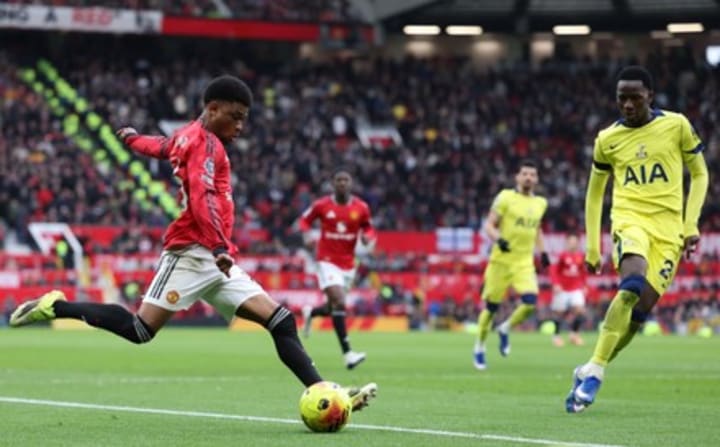
One of the biggest issues with Amorim’s 3-4-2-1 formation was its lack of genuine attacking width. Amad Diallo was the only winger to play at wing back during Amorim’s tenure, with Patrick Dorgu, Noussair Mazraoui and the aforementioned Dalot often struggling in advanced wide positions.
Prior to Carrick’s arrival, these three players had produced a combined total of just five goal contributions (including one goal and four assists). Dorgu provided two of the four assists, but it wasn’t until the away trip to Burnley (in the game immediately after Amorim’s dismissal) that he finally set up a goal with a cross from the left flank.
Even Diallo only produced five goal contributions (including three assists), with a disproportionate amount of his time spent defending in the wing back role and tracking (or marking) his opposing full back.
This was evident as United constructed attacks under Amorim. The ball would be progressed slowly between the back three before moving out wide, where the wing backs often lacked the quality or space to produce a cross or final delivery. The ball was subsequently recycled infield, before a cross was launched from a much deeper and less advantageous position.
This issue was exacerbated by Amorim’s obsession with possession and penchant for playing both wing backs on their weaker side. This always encouraged them to come inside, often leaving the Red Devils without any tangible width at all.
Under Carrick, Dorgu has played with far greater freedom, while also being allowed to operate higher and on his natural side where he can use his pace and power offensively. Amad has also played higher and been given the freedom to commit his full back and attempt take-ons both in and outside, without fear of losing possession.
Most crucially, wide players are being deployed in their natural positions, and in a shape that releases them higher in the attacking third. This has increased United’s attacking threat, while freeing up greater space for Fernandes and other central attackers.
The Last Word
Ultimately, Carrick’s positive impact is not only demonstrable, but also the result of simple tactical tweaks and a focus on improving the balance between defence and attack. It’s clearly evident in less tangible ways too, from the morale among the players to their on-field interactions and improved link-up play.
Following Benjamin Sesko’s late winner against Fulham, the Slovenian striker was engulfed by all of his teammates. This included rival forward and substitute Joshua Zirkzee, who looked overjoyed for the team despite his own lack of playing time and reported desire to leave the club.
The question that remains is whether this impact can be sustained. If so, it’s likely to lead Manchester United to a Champions League place, especially as both Liverpool and Chelsea remain inconsistent. The current coefficient rankings also mean that England is likely to receive five ULC spots via the Premier League this season.
Depending on the quality and consistency of United’s performances, this could also see Carrick considered for the permanent managerial role at Old Trafford. This should remain a talking point for another day, however, especially when you consider the wealth of managerial talent that will become available after the summer World Cup.
About the Creator
Keep reading
More stories from Lewis Humphries and writers in Cleats and other communities.
Is Ruben Amorim Part of the Problem at Old Trafford?
As the dust begins to settle on the 2024 Europa League final, the true scale of the challenge facing runners-up Manchester United is beginning to dawn. Certainly, head coach Ruben Amorim cut a despondent and apologetic figure at full-time, against a backdrop of fan and player unrest.
By Lewis Humphries9 months ago in Cleats
11 February 2026 — A Day Forever Etched in Cricket History
11 February 2026 became a day that will always be remembered in cricket history. At the Narendra Modi Stadium in Ahmedabad, what unfolded was not just a match but a nerve-shredding drama, a test of character, and ultimately, a decision left to fate.
By Ibrahim Shah 3 days ago in Cleats
Cleats in the Rain
The rain started an hour before kickoff, light at first, then steady and cold. By the time Aarav stepped onto the field, the grass had turned slick and heavy beneath his cleats. The stadium lights reflected off the wet surface, making everything shine in sharp white streaks. It was the regional final—his last match as captain of the school football team. Scouts were rumored to be in the stands, watching quietly from beneath umbrellas. For Aarav, this was more than a game. It was the thin line between a scholarship and a future he wasn’t ready to accept.
By Sudais Zakwan4 days ago in Cleats
The Pride Flag and the Diversion
For nearly a decade, the LGBTQIA Pride Flag rippled in the wind at Christopher Park, a kaleidoscope of color staked into the soil of America’s first national monument to LGBTQIA+ liberation. That flag came down this week. Federal officials, citing new guidance from the Trump Administration, silently lowered the rainbow flag from its pole across the street from the Stonewall Inn. The birthplace of the modern gay rights movement now flies only the United States flag.
By Tim Carmichael6 days ago in Pride



Comments
There are no comments for this story
Be the first to respond and start the conversation.