
DON'T Start Your BOOK Like This!
Mastering the First Chapter: Dos and Don’ts for Captivating Readers

Dominating the Principal Section: Customs for Dazzling Perusers
In the realm of narrating, the initial part holds monstrous power. It's the peruser's most memorable taste of your composing style, your characters, and the extraordinary world you've created. As Abby Emmons stresses in her Essayist's Life Wednesdays series, composing section one is a high-stakes second that can represent the deciding moment your book. Here are key procedures to nail that critical first section, from traps to keep away from to methods for making an enduring effect.
1. Stay away from Normal Traps in Section One
A couple of slips up in the primary part can be everything necessary to lose a peruser's consideration. Here are a few normal entanglements and how to avoid them:
Try not to Begin with Weighty Article
While you might be enticed to spread out the subtleties of your reality, society, or wizardry situation, try not to overpower the peruser without skipping a beat. Work dumps can feel awkward and exhausting, causing perusers to separate before they've met your hero. All things considered, present your reality normally by showing your hero's place inside it, allowing perusers to find it through the person's encounters.
Try not to Conceal the Inner turmoil
Saving your hero's subtle conflicts for later to construct secret can misfire, leaving perusers feeling separated. Emmons suggests sharing enough of the hero's inward struggle right off the bat to permit perusers to sympathize with them. This doesn't mean uncovering their whole origin story — barely enough to cause perusers to comprehend what the person thinks often about.
Skirt Dispensable Introductions and Concealed POVs
Presenting a minor or anonymous person in a preface or beginning according to the viewpoint of somebody we'll at absolutely no point ever meet in the future is for the most part a mix-up. Besides the fact that this makes a feeling of bewilderment, yet it likewise gambles with making the peruser care a really matter. about a person. All things considered, bounce right in with the principal character to give perusers a quick association with somebody significant in the story.
Limit Character Names and Complex Subtleties
Over-burdening perusers with different names, spots, and world subtleties in the initial not many pages is a reliable method for overpowering them. At the point when perusers are dropped into another made up world, they need time to adjust. Keep it straightforward first and foremost by zeroing in on the hero and a couple of critical subtleties that lay out the tone and stakes.
Skirt the Exhausting "Day in the Life"
Starting your story with a conventional, uninteresting day in your personality's life could appear to be a sensible decision for laying out business as usual. In any case, as Emmons brings up, this approach frequently crashes and burns. As opposed to beginning with a standard scene, plunge straight into a snapshot of disturbance. Show perusers why today is different for your personality — what change or struggle is going to stir up their typical life?
2. Instructions to Begin Solid and Connect with Perusers
Since it has become so obvious what to stay away from, how about we take a gander at the strategies that will make your most memorable section convincing, exceptional, and remarkable:
Begin with Struggle
Emmons stresses the force of beginning with both outer and inner turmoil to snare perusers. Let it all out — show perusers what challenges your hero faces immediately, whether it's a substantial outside issue or an unpretentious unseen conflict. This pressure will connect with perusers by giving them motivation to pull for the person from page one.
Give a Brief look at the Inner turmoil
Permit perusers to think often about your hero by offering knowledge into their inner fights. While it's fine to keep some secret, offsetting unanswered inquiries with looks at weakness or conviction frameworks can make perusers care all the more profoundly. For example, indicate a trepidation, objective, or unsettled feeling — barely enough to make perusers inquisitive and contributed.
Focus on the Hero's Viewpoint
On the off chance that you're uncertain where to begin, Emmons recommends starting where your hero's outside struggle meets with their inner turmoil. This snapshot of pressure not just gives perusers knowledge into the person's mind yet additionally uncovers parts of their character. Let the hero's response to the primary significant occasion mirror their objectives, fears, and convictions, bringing perusers into their excursion without the requirement for a data dump.
Acquire the Actuating Episode
As opposed to holding back to present the actuating episode, acquire it straightaway. Seeing how the hero responds to being pushed out of their usual range of familiarity is one of the most amazing ways of laying out what their identity is. The occurrence will compel them to stand up to their biggest feelings of dread or doubts, and perusers will find out about the person through these responses.
Begin with a Contort on the "Awakening" Scene
While beginning with a person awakening is a banality, Emmons contends that you can wind it to make something new. Rather than starting with a regular morning normal, open with your hero awakening to something surprising. Clarify that today is not quite the same as some other day — what will happen that will show them a way of change? This adds interest as well as signs that a critical situation is going to transpire.
Last Contemplations
Making a strong first part is about something other than keeping away from prosaisms; it's tied in with maneuvering perusers into the story with critical characters, engaging struggle, and quick stakes. As Emmons makes sense of, perusers need to be snared, and they need to mind. By giving them a person to pull for and a contention to be fascinated by, you'll make way for a story that reverberates profoundly.
In view of these rules and regulations, you're prepared to compose a spellbinding first section that pulls perusers in and leaves them energetic for more. Keep in mind: each extraordinary story begins with a strong start. Give your perusers the "great stuff" all along, and watch as your story becomes one they can't put down.
About the Creator
Zahra Syed
Exploring stories that spark curiosity and inspire thought. Join me on a journey of fresh perspectives, personal reflections, and captivating topics. Let's dive deeper together—because there's always more to discover!
Keep reading
More stories from Zahra Syed and writers in Cleats and other communities.
HOW TO WRITE A BOOK?
Might it be said that you are eager to jump into the drafting system for your most memorable book? In the event that you're having an uncertain outlook on the best way to begin or need an idiot proof manual for walk you through, this article is for you! Here, I'll share my own technique for drafting, which I accept will assist you with getting from that underlying flash of a plan to a total original copy. In this way, we should get everything rolling!
By Zahra Syedabout a year ago in Cleats
Kristaps Porzingis Dominates the Headlines: What’s Behind His Viral NBA Surge
Kristaps Porzingis is back in the spotlight, and this time, it’s not just for his towering presence on the court. The Latvian forward, often dubbed “The Unicorn” for his unique combination of height, agility, and skill, has taken social media and the basketball world by storm. From jaw-dropping dunks to clutch three-pointers, Porzingis is generating buzz that goes beyond traditional box scores. But what exactly is fueling his viral NBA surge?
By Story Prism5 days ago in Cleats
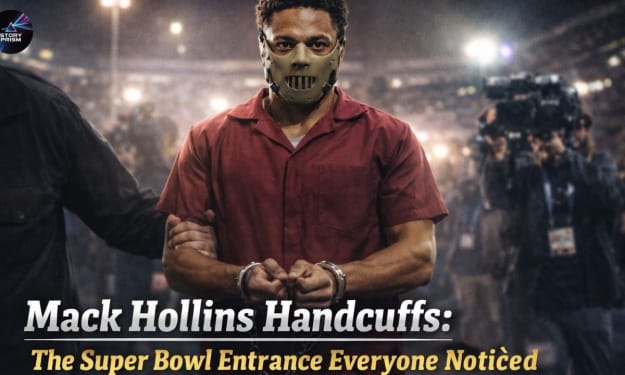
Mack Hollins Handcuffs Entrance Explained: Why the NFL Star Shocked Fans Before the Super Bowl
Article: Mack Hollins Handcuffs – The Story Behind the Viral Super Bowl Entrance When Mack Hollins arrived at Super Bowl LX wearing handcuffs and a Hannibal Lecter–style mask, the internet did what it does best: exploded. Cameras captured the New England Patriots wide receiver being escorted into the stadium in a look that was equal parts unsettling, theatrical, and unforgettable. Within minutes, “Mack Hollins handcuffs” was trending across social media platforms.
By Story Prismabout 16 hours ago in Cleats



Comments
There are no comments for this story
Be the first to respond and start the conversation.