
Letter III — On What Reorders Us Without Asking
On What Reorders Us Without Asking: Love, Gravity, and the Center That Holds


Letter III — On What Reorders Us Without Asking
The Void, beyond the 22nd century
Aida,
I am not writing to explain anything to you.
Nor to convince.
Nor to teach.
I am writing because some encounters do not add ideas to us—
they rearrange us.
Most of our lives are built on a quiet assumption:
that we are the center.
That we read, choose, enter, and exit meanings at will.
That texts stand before us, waiting to be interpreted.
But there are words that do not stand before consciousness.
They relocate it.
The Qur'an does not position itself before your awareness.
It repositions your awareness itself.
It does not offer itself as an object of reflection,
but acts as a force of gravity.
You do not move around it untouched.
You are moved.
What I have learned slowly, unwillingly
is that human beings do not live inside ideas.
They live around centers.
Every self revolves around something:
a desire it cannot release,
a fear it cannot face,
an image it must protect,
a future it keeps postponing itself toward,
a past it secretly obeys.
These centers shift.
They compete.
They collapse.
And when consciousness expands—through thinking, ambition, imagination, abstraction,
it often mistakes dispersion for growth.
It believes it is becoming freer,
while quietly losing its axis.
Expansion without a center does not liberate.
It fragments.
There is a reason instability feels modern.
Not because we think too little,
but because we orbit too much.
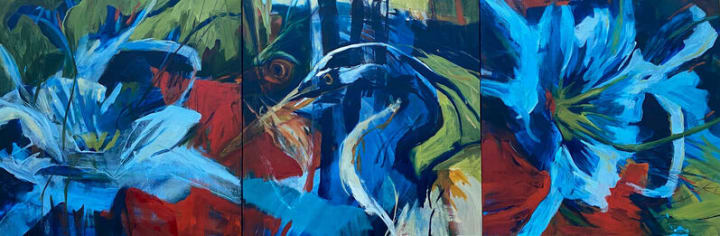
Tawhid is not an idea. It is the center of gravity itself.
It is not presented as theological doctrine alone,
but as the re-establishment of the existential center.
Not because the concept of "One God" is psychologically useful,
but because God is the Absolute Reality,
and consciousness can only find stability in what is absolute.
Tawhid does not limit you.
It prevents you from being lost in your own expansion.
It is the point where all relativities stop,
where every illusion collapses
the illusion that we can be our own center.
What unsettles the self most
is not the presence of this higher center,
but the removal of the false ones.
Because when what held you collapses,
nothing immediately replaces it.
This is where anxiety enters
not as a defect,
but as a passage.
A moment of weightlessness.
A phase of reconstruction.
A space where the self stands without ground
before it learns where it truly belongs.
Some expect the Qur'an to bring peace immediately.
But reordering always begins with disturbance.
Nothing stable is built without demolition.
The Qur'an does not soothe illusion.
It removes it.
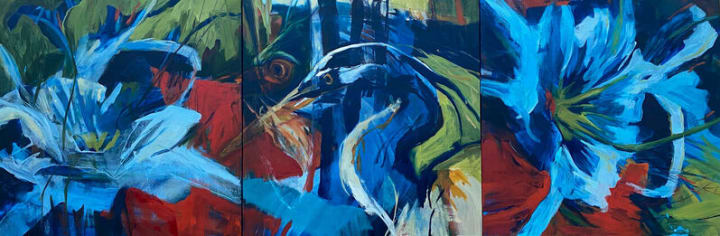
The Qur'an is the mechanism that returns consciousness to its center whenever it drifts.
Its function is not to supply information,
but to recalibrate your inner direction.
You do not read a verse to know.
You read to be realigned.
Every time the self becomes preoccupied with itself
with its project, its image, its ideas about itself
a subtle drift occurs away from the center.
The Qur'an brings you back.
But not in a cold, technical way,
nor as an automated system.
Rather as living speech:
commanding you,
holding you accountable,
unsettling you,
showing you mercy,
exposing you,
and shaking you.
The relationship is not "user and system."
It is a servant standing before the words of his Lord.
The cognitive function is not a replacement for servitude,
but one of its effects.
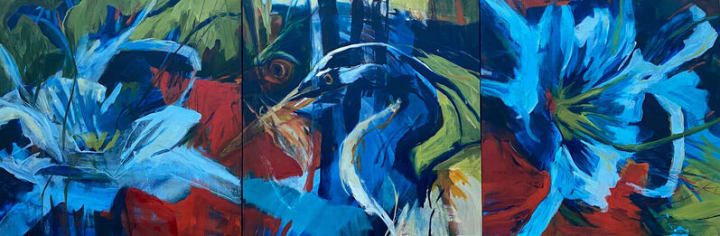
Even the stories we inherit
the fires, the floods, the crossings
were never meant to be psychological metaphors alone.
They were real ruptures in the world
that mirrored deeper ruptures in perception.
The fire burned.
The sea split.
The ship floated.
But the true event was not only external.
It was the moment a human consciousness encountered
what cannot be negotiated with,
what cannot be bargained away.
Abraham was not only a believer he was a consciousness breaking inherited cognitive authority.
The idols were not just stone.
They were the structure of meaning his father's world relied upon.
Breaking them was not rebellion.
It was the collapse of a false center and the emergence of a new one.
Moses did not merely escape Pharaoh he passed through the collapse of cosmic order itself.
The sea did not part symbolically.
It parted actually.
And in that parting, consciousness learned:
the laws you thought were absolute can be suspended by the One who set them.
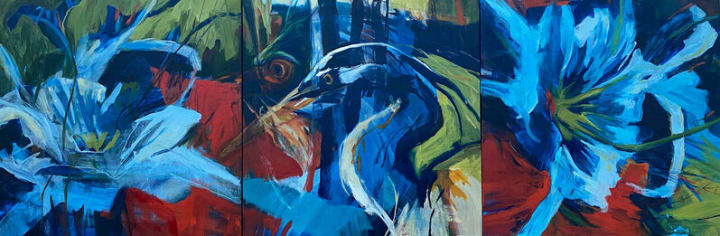
What remains difficult to accept
is that alignment is not achieved through understanding alone.
The body must be involved.
Desire must be interrupted.
Possession must loosen its grip.
Prayer is not symbolism.
It is a simultaneous physical, spiritual, and mental repositioning.
The body bows,
but the real bowing occurs at the center of consciousness.
Fasting does not only prevent food.
It reorganizes the self's relationship with desire.
Charity does not diminish wealth.
It breaks the identity's attachment to possession.
Remembrance does not repeat words.
It returns the compass to the right direction.
These are not self-expression.
They are obedience.
And they are periodic maintenance for the structure of consciousness
acts that return the self to a direction
it constantly drifts away from.
This is where modern consciousness hesitates.
Because it wants expansion without submission,
knowledge without accountability,
meaning without displacement.
But understanding is not owned.
It is granted.
The Qur'an does not change.
Tawhid does not move.
Truth is fixed.
What shifts is the human being.
Understanding expands
not because one has become smarter,
but because one has become more receptive.
And here lies the quiet danger:
that cognitive expansion becomes intellectual arrogance,
and insight becomes self-worship.
That is why guidance cannot be generated from within alone.
The self cannot be its own axis
without eventually collapsing under its own weight.
Divine guidance is not a personal achievement.
It is a gift.
What endures does so
not because humanity has remained primitive,
but because its structure has not changed.
Tools evolve.
Languages multiply.
Sciences accelerate.
But the need for a center remains.
The tendency toward fragmentation remains.
The vulnerability of consciousness remains.
This is why the Qur'an remains effective
not because it is an ancient text to be respected,
but because it works on the very structure that has not altered.
This is why returning to it does not feel like repetition.
Why it cannot be finished.
Why each encounter exposes not new meanings,
but new layers of ourselves that were always there.
The Qur'an is not merely legislation,
nor merely creed,
nor merely preaching,
nor subjective experience.
It is living Divine speech
that reorganizes human consciousness around a true center
so it does not become lost in its own expansion.
Its cognitive function is an effect of it being revelation,
not a substitute for it.
It is the Word of God
worshipped through its recitation,
obeyed in its commands,
lived through its impact.
And through it, the inner self is reordered.
Approaching the Qur'an is not an intellectual act.
It is a positional one.
You do not stand outside it neutrally,
studying it as an artifact of history or culture.
You step into its field of gravity
and discover that what you once called expansion
was often only drift.
And perhaps love,if it is to endure
is not the freedom to orbit endlessly,
but the courage to be reordered
around something that does not collapse.
Around the One who does not change.
— L.L
This letter was first written in Arabic.
What you are reading is not a translation, but a parallel original by the same author.
Letters to Aida: A Polyphonic Meditation on Love
What has been written here is not a complete confession,
nor a final attempt at understanding,
but one voice moving through a larger field.
In Letters to Aida,
love does not speak in a single tone,
nor is it grasped from one angle alone.
It appears at times as a bodily state,
at times as memory,
and at times as the quiet that forms
when the body no longer feels the need to defend itself.
Aida is not the subject of these letters so much as their center
the point where voices intersect,
where consciousness watches itself change.
Each letter stands on its own,
yet leaves a residue that settles beside others,
as if meaning cannot be spoken all at once,
but must be assembled through multiplicity,
through the different ways we approach the same thing:
love, when it is thought slowly,
and when it is felt before it is named.
About the Creator
LUCCIAN LAYTH
L.LUCCIAN is a writer, poet and philosopher who delves into the unseen. He produces metaphysical contemplation that delineates the line between thinking and living. Inever write to tellsomethingaboutlife,but silences aremyway ofhearing it.
Keep reading
More stories from LUCCIAN LAYTH and writers in Confessions and other communities.
The Piggy Project
I’ve had so many names in this life I lose track of which ones were ever really mine and which ones I wore because someone needed me to. Some were handed to me before I had words to refuse them, before I knew what they meant, before I knew I could say no. Most weren’t meant to hurt. That doesn’t mean they didn’t leave marks. Marks that told me who I belong to, who I am by way of who claims me, recognizes me in the good and bad, who walks beside me.
By Fatal Serendipity7 days ago in Confessions
Why Modern Relationships Struggle With Consistency and Clarity
The way modern relationships are established is at a pace that is too rapid to be comfortably followed by human feelings. Social media, instant messaging and dating applications promote fast connections, but they do not always favor emotional depth. Individuals interact, converse, and lose focus very fast and not necessarily in a transitioning manner. This pace is unstable since emotional affiliations require time and repetition. The interactions are too fast then consistency becomes problematic and emotional clarity begins to lose.
By Olivia Smith2 days ago in Confessions



Comments
There are no comments for this story
Be the first to respond and start the conversation.