

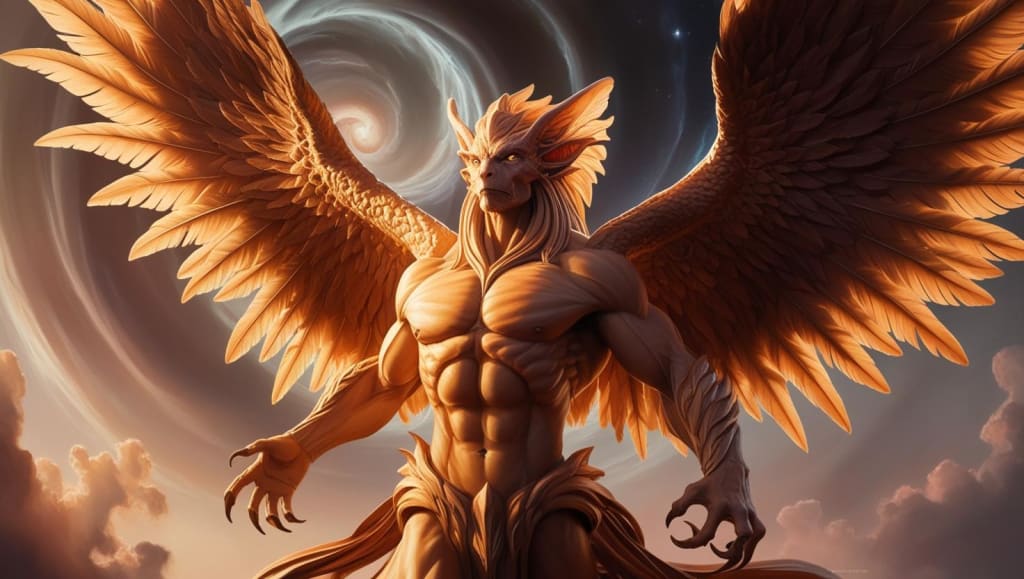
Nephilim: The Mysterious Giants of the Ancient World
Few figures in ancient religious texts have sparked as much mystery, fascination, and controversy as the **Nephilim**. Shrouded in ambiguity and mentioned only briefly in the Bible, these enigmatic beings have become the subject of centuries of speculation among theologians, historians, and even conspiracy theorists.
Were they giants? Demigods? Fallen angels’ offspring? Or something else entirely? In this deep dive, we’ll explore the origins, interpretations, and ongoing legacy of the Nephilim—those “heroes of old, men of renown.”
Biblical Origins of the Nephilim
The word *Nephilim* appears in only two places in the canonical Bible—Genesis 6:1–4 and Numbers 13:33. Despite this limited mention, these verses are among the most puzzling and debated in all of Scripture.
Genesis 6:1–4 (NIV):
"When human beings began to increase in number on the earth and daughters were born to them, the sons of God saw that the daughters of humans were beautiful, and they married any of them they chose. Then the LORD said, ‘My Spirit will not contend with humans forever, for they are mortal; their days will be a hundred and twenty years.’ The Nephilim were on the earth in those days—and also afterward—when the sons of God went to the daughters of humans and had children by them. They were the heroes of old, men of renown.”
This passage is both poetic and perplexing. It suggests a union between divine beings (“sons of God”) and human women, resulting in the birth of the Nephilim. But who exactly were these "sons of God"? And what made their offspring so notable?
Interpretations Through the Ages
There are several competing theories about who or what the Nephilim were. Interpretations vary depending on religious tradition, translation, and theological viewpoint.
1. Nephilim as Giants
The traditional Jewish and early Christian interpretation holds that the Nephilim were **giants**—enormous beings with extraordinary strength and possibly terrifying power. This is supported by the Septuagint (the Greek translation of the Old Testament), which renders *Nephilim* as *gigantes*, or "giants." This interpretation has stuck in many later translations and popular retellings.
In Numbers 13:33, when Israelite spies report on the land of Canaan, they claim:
“We saw the Nephilim there (the descendants of Anak come from the Nephilim). We seemed like grasshoppers in our own eyes, and we looked the same to them.”
This description reinforces the idea that the Nephilim were physically massive, intimidating beings.
2. Nephilim as Fallen Angels’ Offspring
A more supernatural theory, common in **ancient Jewish apocrypha**, is that the Nephilim were the offspring of angels who fell from grace. This interpretation heavily relies on texts like the **Book of Enoch**, which expands on the Genesis narrative.
In Enoch, the "Watchers" are angels who descend to earth and take human wives. Their children, the Nephilim, are portrayed as violent giants who corrupt the earth, leading God to cleanse the world through the Great Flood. These children of angels and humans were unnatural—blurring the boundaries between heaven and earth.
The Nephilim in this view are not just physically dangerous, but spiritually toxic—teaching humans forbidden knowledge like sorcery, metallurgy, and astrology.
3. Nephilim as Mighty Human Kings or Warriors
A more grounded interpretation views the Nephilim as merely powerful humans—perhaps ancient kings, warriors, or tribal leaders known for their might and fame. In this reading, "sons of God" could refer to nobility or rulers, and their union with common women would symbolize the elite abusing their power.
This view attempts to remove the supernatural elements and place the story within the cultural and historical context of early Mesopotamian or Canaanite societies, where divine kingship was a common belief.
Extra-Biblical Sources: The Book of Enoch and Beyond
While the canonical Bible says little about the Nephilim, **extra-biblical texts** dive much deeper. Among the most famous is the **Book of Enoch**, a Jewish text written between the 3rd century BCE and 1st century CE.
The Watchers and Their Judgment
In Enoch, 200 angels led by **Semjaza** and **Azazel** rebel against heaven and descend to Mount Hermon, where they swear an oath and take human wives. Their children—the Nephilim—grow into ravenous giants who consume all the resources of humanity. Eventually, the Nephilim begin to turn on mankind and even each other.
God sends the archangels Michael, Raphael, Gabriel, and Uriel to imprison the fallen angels and destroy their offspring with a flood. This dramatic myth elaborates on the sparse Genesis account, adding layers of cosmic conflict, divine judgment, and mythological grandeur.
The Book of Enoch was widely read in Jewish communities and early Christianity. The **Epistle of Jude (Jude 1:14–15)** even quotes Enoch directly, indicating its influence.
Nephilim After the Flood: How Did They Survive?
Genesis 6:4 notes that the Nephilim were on the earth “in those days—and also afterward.” But if the flood wiped out all of humanity and their corrupted offspring, how did the Nephilim reappear in **Numbers 13**?
There are a few theories:
- Second Incursion: Some believe that fallen angels may have once again mated with human women after the flood.
- Survivors: Others suggest that some Nephilim survived the flood—perhaps aboard the ark, or by other supernatural means.
- Figurative Use:The term “Nephilim” in Numbers may simply refer to later giants who were metaphorically likened to the original Nephilim.
The **Anakim** and **Rephaim**—other biblical tribes described as giants—are often linked to the Nephilim, though the relationships among them are not clearly defined in the text.
---
## **Nephilim in Pop Culture**
From fantasy novels and horror films to video games and comic books, the Nephilim have become a rich source of inspiration in modern storytelling. Their dual nature—part divine, part human—lends itself well to themes of inner conflict, forbidden power, and tragic destiny.
Popular Examples:
- Darksiders(video game series): Portrays Nephilim as powerful warriors born of both angel and demon blood.
- Supernatural (TV series): Features a Nephilim as the child of an archangel and a human.
- Mortal Instruments / Shadowhunters** (novels/TV): Nephilim are angel-blooded humans who fight demons.
- Marvel Comics: Occasionally references Nephilim-like characters in its mythos of superhuman beings.
These modern portrayals often cast the Nephilim as misunderstood heroes, tragic antiheroes, or even saviors—very different from the destructive giants of ancient texts.
Symbolism and Legacy
Beyond their literal or mythological existence, the Nephilim symbolize **transgression**, **power**, and the dangers of blurred boundaries. Their story touches on:
- The mixing of the divine and the mortal
- The abuse of power
- The consequences of forbidden knowledge
- The chaos that arises when natural order is violated
In many ways, the Nephilim narrative functions as a mythological warning: that greatness without humility, or power without restraint, leads to downfall.
Conclusion: Giants of Mystery
The Nephilim continue to captivate the imagination because they exist at the crossroads of myth, scripture, and speculation. They’re not just relics of ancient texts—they’re symbols that have evolved and adapted through time, representing everything from lost civilizations to divine rebellion.
Whether you view them as literal giants, demigods, or metaphors, one thing is certain: the mystery of the Nephilim endures, towering over the boundaries of religion, history, and legend—just like the giants themselves.
About the Creator
Gabriela Tone
I’ve always had a strong interest in psychology. I’m fascinated by how the mind works, why we feel the way we do, and how our past shapes us. I enjoy reading about human behavior, emotional health, and personal growth.
Keep reading
More stories from Gabriela Tone and writers in Confessions and other communities.
The Rhythm of Little Stars
The Rhythm of Little Stars A Journey to Finding the Perfect Baby Schedule When Emma first brought baby Oliver home from the hospital, she thought she was ready. She had read the books, joined the forums, listened to every piece of advice from mothers, grandmothers, neighbors, and strangers in grocery store lines. "Sleep when the baby sleeps," they said. "Feed on demand." "Let them cry it out." "Never let them cry it out."
By Gabriela ToneExclusive • 10 months ago
Blessed 33
So I woke up on the morning of February 5, 2026 and guess what and you know what I realized? It’s my 33rd birthday. Do you know what that means? Yes, technically I’m getting old, but what I couldn’t have guessed was this would be one of the best days of my life.
By Joe Patterson4 days ago in Confessions
Understanding Trust And Compatibility During The First Few Dates
The initial couple of dates of a new relationship are very significant in determining trust as well as compatibility. Such first experiences predetermine the emotional attachment and communication styles, as well as future prospects. Local singles need to pay attention to conduct, communication mannerism, and similar values at the same time being cautious of openness. Early awareness of trust and compatibility will help avoid the mistakes of being burnt emotionally, misinterpretation, and inappropriate expectations. It enables one to spend time productively on people who are really compatible with their agenda, their emotional needs, and values of building relationships. Being conscientious at an early age creates the basis of valuable and enduring relationships.
By Tiana Alexandra2 days ago in Confessions
from death into life
Young Aldin of Wiloh had never contemplated death. It was almost strange — so many around him had the tendency to obsess over it, to clamor and claw almost desperately at their own perceptions of the end to know death as much as they could: when it would come, why it would come, where it would take them when it did.
By angela hepworth4 days ago in Fiction




Comments
There are no comments for this story
Be the first to respond and start the conversation.