
Ashes of Palermo
A Sicilian Mafia Story of Love, Loyalty, and the Cost of Redemption
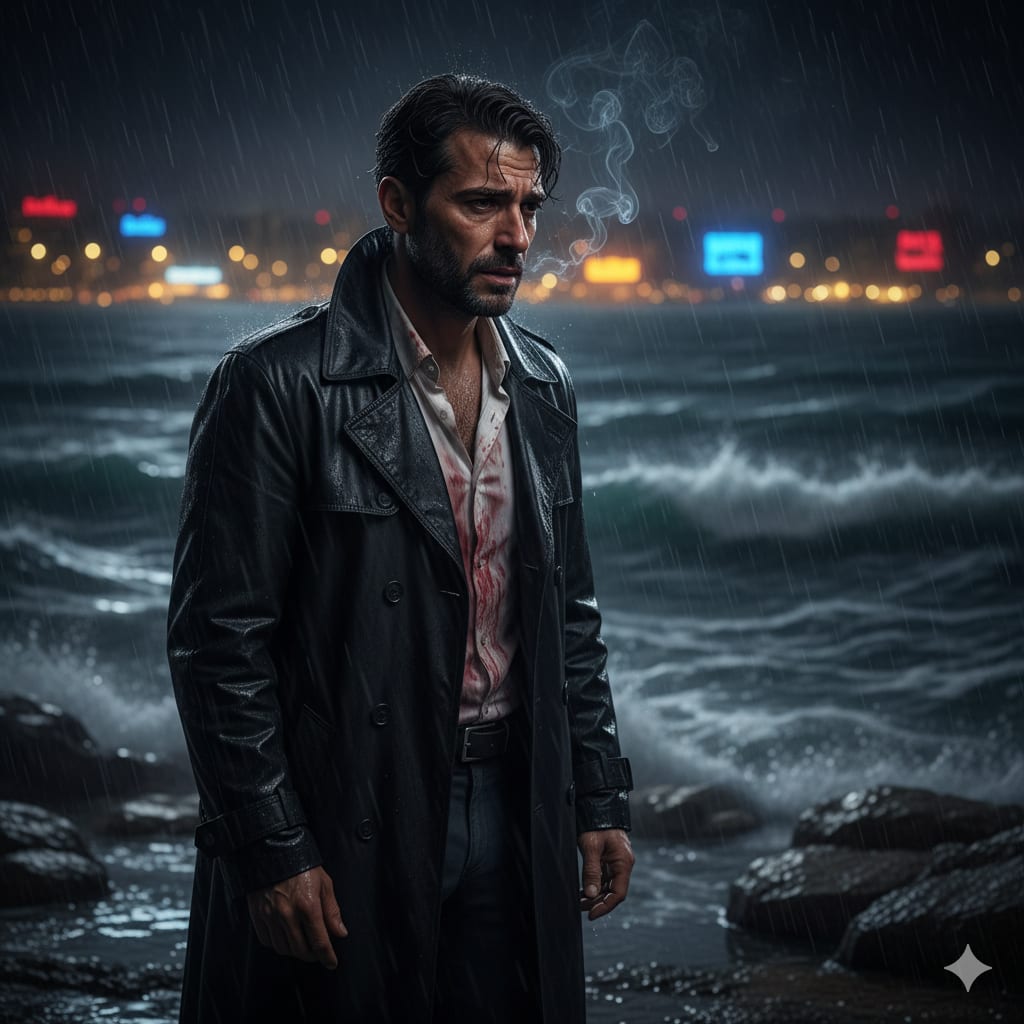
Palermo smelled of salt, smoke, and secrets. The narrow streets whispered history — blood that had soaked the stones, names spoken only in church confessions. And in that city of saints and sinners, Luca Romano was born to both.
His father, Don Vittorio Romano, was a legend — the kind of man whose handshake could build an empire or end one. His mother, a woman of grace and quiet faith, prayed every morning for the day her son would choose peace over power.
But peace was never written in Luca’s destiny.
From a young age, he was groomed for the family business. While other boys played football in the alleys, Luca learned how to lie without blinking, how to shoot without trembling, how to smile in the presence of betrayal.
By thirty, he was already the shadow his father once was — calm, sharp, and feared. Yet, deep inside, he carried a storm that no one saw.
That storm had a name: Isabella.
She was not from his world — a painter from Florence who had come to Palermo to capture its decaying beauty. They met when her car broke down near the Romano docks. Luca stopped to help, though he rarely did such things. She thanked him with a smile that felt like sunlight on old stone.
“You look like a man running from something,” she said.
“Maybe I’m just trying to catch something instead,” he replied.
They met again — and again. Each time, the walls around Luca cracked a little more. He found himself walking with her through the old markets, laughing under the scent of oranges, listening to her speak about art, peace, and the meaning of color.
But love, for men like him, is a dangerous luxury.
Luca’s world began to shift. The old men in the family — men who feared change — grew restless. His cousin Marco, hungry for power, whispered to the elders that Luca was weak, distracted, unfit to lead.
And one night, as Luca and Isabella dined by the sea, Marco struck.
Gunfire shattered the silence. Luca pushed Isabella to the ground, bullets tearing through glass and candlelight. He fired back, hitting two men before the rest fled. Isabella screamed his name as blood spread across his sleeve.
“You have to go,” Luca gasped. “Now.”
“I won’t leave you.”
“If they see you, they’ll kill you too.”
She left crying, barefoot, as sirens wailed in the distance.
Luca survived, but barely. The doctors patched him up, and his men cleaned the blood, but something in him broke beyond repair. His father ordered revenge — “blood for blood” — but Luca refused.
“No more,” he said. “I won’t bury my soul just to keep the family alive.”
That was the day Don Vittorio turned his back on his son.
For the first time, Luca was alone.
He tried to find Isabella, but she had vanished — gone back to Florence, maybe, or farther. He never knew. Her absence was louder than gunfire.
Months passed. The Romano family fractured — Marco rose fast, feeding on the chaos. Luca withdrew to the countryside, living in a small villa overlooking the ocean. The nights were long and quiet — the kind of quiet that kills slowly.
One afternoon, a letter arrived. The handwriting was soft, careful.
“Luca,
I’ve painted the sea the way you described it that night — calm, dangerous, endless.
If there is still a part of you that believes in light, come to Florence.
— Isabella”
He didn’t hesitate. He drove through the night, through winding mountain roads and rain that blurred the world into silver ghosts. When he reached her studio, he found her painting — a canvas of the Sicilian coast burning under twilight.
She turned. They said nothing. Sometimes silence says everything.
For a few weeks, they tried to build a new life. She painted. He fixed things around her home, cooked, smiled again. It was fragile, beautiful — a dream made of glass.
But the past is patient.
Marco’s men found them. Two cars, four gunmen. The first bullet shattered the window; the second hit Isabella. Luca dropped to his knees beside her, hands shaking, blood on his palms.
“Stay with me,” he whispered.
“You were always running,” she breathed. “Now you can rest.”
Her eyes closed before he could speak again.
Something inside him turned to stone.
By dawn, Marco’s men were dead. Every one of them. Luca disappeared after that night. Some say he drowned himself in the Tyrrhenian Sea. Others say he fled to Argentina, living under a new name.
Years later, a painting surfaced in a Florence gallery.
It showed a man standing at the edge of the sea, his back to the viewer, smoke rising in the distance. The title was simple — “Ashes of Palermo.”
No one knew who painted it.
But in the corner, faintly scratched into the frame, were two initials — L.R.
About the Creator
shakir hamid
A passionate writer sharing well-researched true stories, real-life events, and thought-provoking content. My work focuses on clarity, depth, and storytelling that keeps readers informed and engaged.
Keep reading
More stories from shakir hamid and writers in Criminal and other communities.
The King of Broken Streets
Nairobi, 2006. The rain had stopped, but the smell of smoke still clung to Nairobi like guilt. Puddles reflected the fractured glow of streetlights, matatus honked through the fog, and somewhere in the maze of slums and skyscrapers, Malik Mwangi ruled the night.
By shakir hamid4 months ago in Criminal
The Sole Survivor: A Silent Scream in the Face of Death
The most heart-wrenching stories often begin in places where safety should be guaranteed: at home. In 1987, the lives of Saye Rivazfar, her younger sister Sara, and their brother Arash took a dark turn following the divorce of their parents, Patricia and Ahmad. While their father, of Iranian descent, settled in New York, the three children remained with their mother in Pensacola, Florida.
By Mayar Younesabout 8 hours ago in Criminal
The Last Confession
M Mehran The police file labeled Case 417-B had gathered dust for seven years. No arrests. No suspects. Just one body and a city full of silence. Until tonight. Detective Aaron Cole stared at the man sitting across the interrogation table. Thin. Pale. Calm in a way that made the room feel colder. His name was Elliot Moore, a night-shift janitor at St. Vincent Hospital. Elliot had walked into the police station at 2:13 a.m. and said only one sentence: “I killed Daniel Harper.” Daniel Harper’s murder was the most disturbing unsolved crime the city had ever known. Aaron pressed the recorder button. “Start from the beginning,” he said. Elliot smiled faintly. “That’s where it gets complicated.” A Crime That Shook the City Seven years ago, Daniel Harper—a respected journalist known for exposing corruption—was found dead in his apartment. No forced entry. No weapon. No fingerprints except his own. The autopsy revealed poisoning, but the toxin was rare, expensive, and untraceable. The media called it The Perfect Crime. Aaron had been a rookie detective back then. The case haunted him. It had ruined careers. It had ended marriages. And now, suddenly, a confession appeared out of nowhere. Too perfect. The Janitor No One Noticed Elliot described his life in careful detail. Invisible. Ignored. He cleaned hospital floors while saving lives walked past him every day. “No one looks at janitors,” he said. “That’s why I was perfect.” Aaron frowned. “Perfect for what?” “For watching.” Elliot explained that Daniel Harper had been visiting the hospital frequently before his death—always late at night, always nervous. Elliot overheard phone calls. Arguments. Names that didn’t belong in public conversations. Politicians. Judges. CEOs. Daniel wasn’t just exposing corruption. He was about to publish something that would destroy powerful people. “And they noticed,” Elliot whispered. The Twist No One Expected Aaron leaned forward. “So you killed him?” Elliot shook his head slowly. “No. They did.” The room went silent. “I just made sure they couldn’t get away with it.” Elliot explained that he had followed Daniel one night, out of curiosity. He saw him meet someone in a parking garage—someone Elliot recognized from the news. A senator. Elliot watched as Daniel was handed a drink. Watched as his hands began to shake. Watched as the senator walked away calmly, leaving Daniel to die on the cold concrete floor. “I didn’t stop it,” Elliot said, his voice cracking for the first time. “I was scared.” A Crime Within a Crime Instead of calling the police, Elliot made a decision that would change everything. He dragged Daniel’s body back to his apartment. Cleaned the scene. Removed evidence. Made the murder look like a mystery. “Why?” Aaron demanded. “Because I knew the truth would never survive,” Elliot replied. “Power protects itself.” Elliot spent years collecting proof—audio recordings, documents, hidden files Daniel had given him in his final moments. “They thought they committed the perfect crime,” Elliot said. “I gave them one.” Seven Years of Silence Elliot waited. He watched elections come and go. Promotions. Awards. Smiles on television. Meanwhile, Daniel Harper’s name faded into a footnote. Until tonight. “I’m dying,” Elliot said quietly. “Cancer. Stage four.” Aaron’s chest tightened. “So I came here,” Elliot continued. “Because I don’t need justice for myself. I need truth for him.” He slid a flash drive across the table. “Everything is there.” The Real Criminals Forensic analysis confirmed the files were authentic. Recordings of bribes. Emails ordering Daniel’s murder. Bank transfers tied to offshore accounts. Within forty-eight hours, arrests shook the nation. A senator. A judge. A corporate tycoon. The headlines exploded. THE PERFECT CRIME WAS NEVER PERFECT JANITOR EXPOSES MURDER COVER-UP Elliot Moore pleaded guilty—not to murder, but to obstruction of justice. He accepted his sentence without protest. “I did what I had to,” he told Aaron during their last meeting. “History needed time to be ready.” The Final Confession Elliot died six months later in prison medical care. On his grave, someone left a simple note: Truth doesn’t need power. It needs patience. Aaron visited that grave every year. Because some criminals wear suits. Some wear uniforms. And some carry mops, waiting quietly for the world to notice. Why This Story Matters The city still talks about Daniel Harper. But Aaron knows the real story belongs to the man no one ever saw. The janitor who turned a perfect crime into a perfect confession. Keywords (SEO-friendly): criminal story, true crime style fiction, crime short story, murder mystery, psychological crime, unsolved murder, criminal justice, suspense story, Vocal Media crime
By Muhammad Mehran7 days ago in Criminal
A Letter to the Firestarter
Dear Firestarter, We can all see you, we've been watching you since you began. In case you didn't know we were here before you and we will be here after. We witnessed your rise, your setbacks, your guilt and your lies. We witnessed you start the fire.
By Donny Foley8 days ago in Poets




Comments
There are no comments for this story
Be the first to respond and start the conversation.