
Say It Right or Say Nothing:
The Linguistic Laziness of True Crime Culture

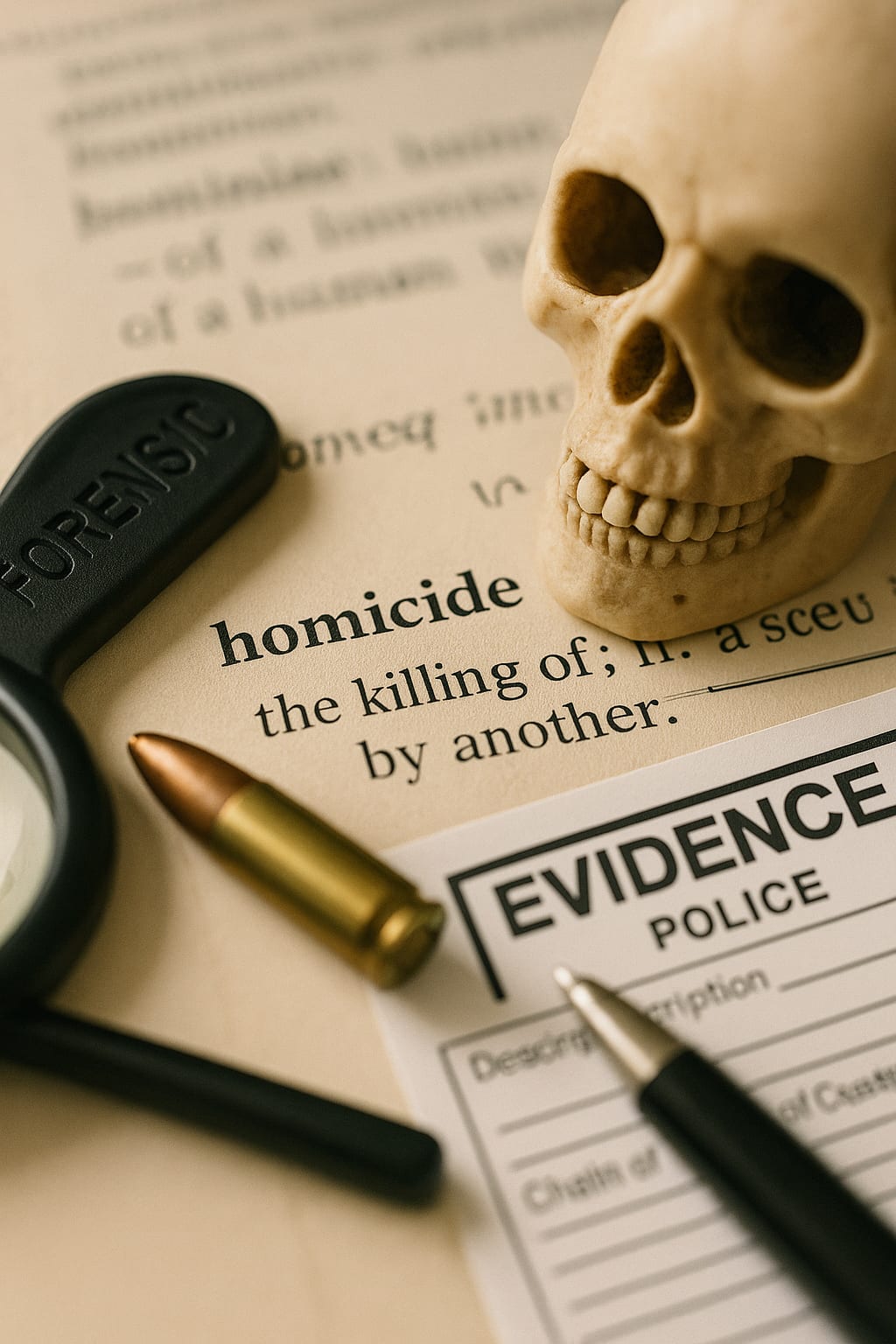
The popularity of “true crime” content has given birth to an entire subclass of self-appointed experts who speak with confidence but truly have little comprehension.
Somewhere between dramatized reenactments and podcast theatrics, even the words themselves have become victims. Every time a host mispronounces an industry word, a little credibility dies on the spot.
Words used in forensics carry weight. They are more than sounds; they are signals of lived experience. Within real investigative and behavioral work, language is part of the evidence chain. A single mispronunciation can expose whether someone learned the material from field manuals or from the algorithm.
Take homicide.
The correct pronunciation—HAH-muh-side—is sharp and deliberate, a word that belongs in a police report or autopsy room. But amateur commentators soften it to HOME-ih-side, as though naming a smoothie flavor. In a discipline that lives or dies by precision, diction reflects discipline.
The word pedophile suffers even worse abuse. Across digital platforms, it becomes PED-oh-file—a rounded, almost sanitized version that erases its disturbing nature. In American forensic psychology, it is PEE-duh-file, rooted in the Greek pais (child) and philos (love). British usage occasionally favors PED-uh-file, which only adds to the confusion. In both forms, the “ee” or “eh” sound carries the etymological truth of its subject matter—something clinical, not cosmetic.
Even forensics itself is misunderstood. Too many over-zealous narrators pronounce it fuh-REN-zics with a buzzing “z.” The proper sound is fuh-REN-six—clean, soft, exact. It comes from forensis, Latin for “of the forum,” referring to evidence presented before judgment. The meaning reminds us that forensics was never about viral reach; it was about responsibility.
Somehow, words like autopsy and criminology have joined the casualty list. The correct AW-tuh-psee becomes aw-TOP-see—a performative lilt that belongs on stage, not in a morgue. Criminology becomes crime-nology, a blend of laziness and ego. The more confident the speaker, the further they drift from linguistic accuracy, revealing the paradox of modern expertise: style without substance.
Language, in any investigative field, is not decoration—it’s evidence. It tells us who has actually done the work. I’ve sat in federal briefings where a rookie pronounced skeletal as skuh-LEET-al. No one corrected him on record, but the silence in the room did.
The difference between trained and untrained is often heard long before it’s seen.
What most content creators fail to grasp is that pronunciation is part of professional ethics. When you misstate a clinical or legal term, you trivialize the subject matter. You turn testimony into theater. Every victim’s name, every report, every recorded word deserves better than performance.
Accuracy in speech is not pretentious. It is respect—for the science, for the field, and for the people whose stories are not entertainment.
- Those who practice real forensic work know this instinctively.
- Those who only imitate it, don’t.
The truth is simple. If you can’t say the words right, you probably shouldn’t be saying them at all.
Sources That Don’t Suck:
Oxford English Dictionary, forensic and legal term entries
Cambridge Dictionary: American vs. British pronunciations for homicide, pedophile, forensics
U.S. Department of Justice: Terminology for Crime Scene Investigation (training manual)
American Academy of Forensic Sciences (AAFS) Style and Usage Guide
Merriam-Webster Pronunciation Database (phonetic audio references)
About the Creator
Dr. Mozelle Martin
Behavioral analyst and investigative writer examining how people, institutions, and narratives behave under pressure—and what remains when systems fail.
Keep reading
More stories from Dr. Mozelle Martin and writers in Criminal and other communities.
Strengthening Forensic Science in the United States:
Forensic science sits at the intersection of evidence, behavior, and belief. When performed with discipline, it brings order to chaos and truth to uncertainty. When it drifts into assumption or politics, it risks turning science into spectacle.
By Dr. Mozelle Martin4 months ago in Criminal
The Amityville Legacy: The Silent Massacre at 112 Ocean Avenue
Introduction: The Illusion of Suburban Peace In the picturesque South Shore of Long Island, New York, the village of Amityville stood as a symbol of the post-war American dream. Its streets were lined with majestic trees and large, stately homes. None was more iconic than the Dutch Colonial at 112 Ocean Avenue, a house featuring distinctive quarter-moon windows that looked like watchful eyes. But on a frigid night in November 1974, that dream dissolved into a waking nightmare. The DeFeo family, pillars of this quiet community, were systematically erased in a crime so baffling and brutal that it remains the focal point of American true crime and paranormal folklore.
By Mayar Younes4 days ago in Criminal


Comments