product review
Product reviews for true crime fans. Forensic kits, creepy collectibles, novelty gifts and more.
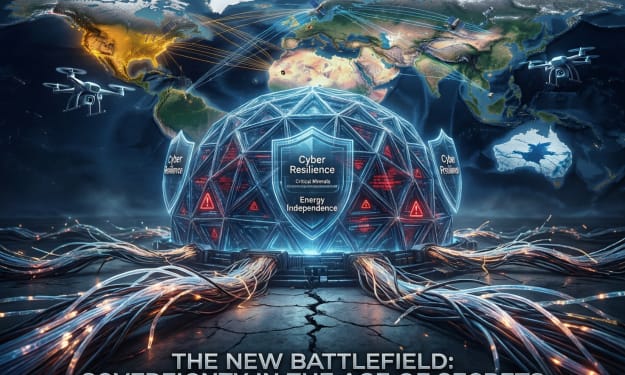
The New Battlefield: Sovereignty in the Age of Secrets
The New Battlefield: Sovereignty in the Age of Secrets As we look deeper into modern global conflicts, it becomes clear that the battlefield has changed. Wars are no longer fought mainly on physical borders or traditional frontlines. Instead, the real fight now happens inside a nation itself, within its financial systems, digital networks, infrastructure, and even public thinking. This internal structure can be compared to a human nervous system. If it is damaged, the entire body becomes weak, even if no physical attack takes place.
By Wings of Time about 4 hours ago in Criminal
The Race for Resources: The Final Frontier of Power
The Race for Resources: The Final Frontier of Power As the struggle for influence intensifies, the world is entering a new era of resource competition that will define the next century. While the previous chapters of this story focused on cyber security and political interference, the next major shift is happening on the ground—and under the ice. The "Race for Resources" is no longer just about oil and gas; it is about the rare materials needed for the next generation of technology and the strategic routes that connect the East and the West. As nations like China expand their reach through massive investment projects, the Western world is waking up to a new reality: if you do not own the supply chain, you do not own your future.
By Wings of Time a day ago in Criminal
The Silent Struggle for Control
The Silent Struggle for Control In the world we live in today, the lines between business, politics, and our personal safety are starting to disappear. From the government offices in Canada and the United States to the growing power of China, a complex game of control is being played at the highest levels. This is no longer a world where power is only measured by the size of an army. Instead, power is measured by who controls the information, who owns the technology, and who can influence the mind of a nation. To understand our future, we must look closely at the hidden tactics used to influence nations and the digital systems we use every single day. One of the most serious warnings for any modern country is how easily its foundation can be hurt through invisible means. Experts believe that a national collapse does not always start with a physical war or a visible invasion. Instead, it begins quietly within our banking systems and our digital infrastructure.
By Wings of Time a day ago in Criminal
The Man Who Reported His Own Murder
M Mehran At exactly 11:59 p.m., the emergency line received a call that should not have existed. “I’ve been murdered,” the voice said calmly. “My name is Kamran Yousaf. You’ll find my body in twelve hours.” The call disconnected. Inspector Rehan Qureshi listened to the recording three times. It wasn’t a prank. The caller’s voice was steady, intelligent—almost relieved. Criminal investigations begin with chaos. This one began with certainty. A Body Right on Time At noon the next day, police found Kamran Yousaf’s body in a locked apartment downtown. No signs of forced entry. No struggle. The cause of death: a gunshot wound to the chest. Time of death matched the call. Rehan felt something cold settle in his stomach. Criminals don’t predict their own deaths—not unless they already know how the story ends. A Life Carefully Erased Kamran Yousaf was a data analyst for a private security firm. No criminal history. No enemies on record. No obvious motive for suicide—and the angle of the shot ruled that out anyway. Even stranger, Kamran had deleted most of his digital footprint in the week before his death. Emails wiped. Social media gone. Bank accounts emptied and donated anonymously to multiple charities. People who plan escape do that. People who plan death usually don’t. The First Lie Rehan questioned Kamran’s colleagues. One name surfaced again and again—Naveed Iqbal, Kamran’s former business partner. They had launched a cybersecurity startup years ago. It failed. Naveed disappeared. Kamran rebuilt his life quietly. When Naveed was finally located, his hands shook as he lit a cigarette. “I hated him,” Naveed admitted. “But I didn’t kill him.” Naveed revealed the truth Kamran had uncovered recently—his security firm wasn’t protecting people. It was selling surveillance data to criminal networks, enabling blackmail, extortion, and disappearances. Kamran had found proof. And once you find something like that, you don’t get to unknow it. The Second Phone Call Rehan received another call that night. Same voice. Same calm. “You’re close,” Kamran said. “But you’re looking in the wrong direction.” Rehan froze. “You’re dead,” he whispered. “Yes,” Kamran replied. “But my murder isn’t over yet.” The call ended. Phone trace led nowhere. In twenty years of criminal investigations, Rehan had chased killers. Never a ghost. The Woman in the Photograph Hidden in Kamran’s old apartment files was a single photograph: Kamran with a woman named Areeba Khan, a freelance journalist declared missing six months earlier. Rehan found her last article draft. Unpublished. It exposed the same security firm. Same data trafficking. Same names. Areeba hadn’t vanished. She’d been silenced. Kamran knew he was next. A Death Designed as Evidence The truth unfolded piece by piece. Kamran didn’t call the police to save himself. He called to trap them. He had recorded every threat. Every illegal transaction. He had scheduled files to be released only after his death. The call, the timing, the locked room—it was all designed to force a real investigation. Because if he disappeared quietly, no one would look. If he died loudly, everyone would. The gun that killed Kamran was traced to the security firm’s head of operations, Fahad Mirza. Surveillance footage—previously “corrupted”—was recovered. Payments surfaced. The murder was clean. The cover-up was not. The Final Truth Fahad Mirza was arrested three days later. During interrogation, he said only one thing: “He wanted to die a hero.” Rehan corrected him. “He wanted the truth to live.” The public fallout was massive. Arrests followed. The firm collapsed. International investigations began. And Areeba Khan’s name was finally cleared. The Last Message Weeks later, Rehan received a scheduled email. Inspector Rehan, If you’re reading this, it means the system worked. I didn’t report my murder because I wanted attention. I reported it because silence is the real weapon criminals use. Thank you for listening. Rehan closed the file and stared at the city lights. In criminal history, there are killers. There are victims. And then there are people who turn their own death into a confession— not of guilt, but of truth.
By Muhammad Mehran4 days ago in Criminal
He Confessed to a Crime He Didn’t Commit
M Mehran The confession came at 4:46 a.m. Detective Ayaan Sheikh stared at the recording screen as the man across the table folded his hands and said calmly, “I killed her.” No hesitation. No trembling voice. No lawyer. That alone made it strange. The accused was Bilal Hassan, a 29-year-old school teacher with no criminal record, no history of violence, and no clear motive. Yet here he was, confessing to the murder of Sana Mir—one of the most high-profile cases the city had seen in years. In criminal investigations, confessions are supposed to bring relief. This one brought questions. The Body by the River Sana Mir’s body was found near the riverbank, wrapped in a white dupatta, hands folded neatly over her chest. There were no defensive wounds, no signs of struggle. The autopsy revealed death by poisoning—slow, deliberate, and personal. Sana wasn’t just anyone. She was a popular investigative journalist known for exposing corruption and organized crime. She had received threats before. Many. Bilal Hassan was not on that list. According to CCTV footage, Bilal was seen near the river that night. His fingerprints were found on Sana’s phone. The evidence lined up neatly—too neatly. Criminal cases are rarely that generous. A Confession That Didn’t Fit During interrogation, Bilal repeated the same line again and again. “I poisoned her tea. I walked with her to the river. I watched her die.” But when Ayaan asked details—what poison, how much, where he got it—Bilal’s answers became vague. “I don’t remember,” he said softly. “I just know I did it.” People who commit murder remember something. Fear. Anger. Regret. Bilal remembered none of it. The Forgotten Connection Digging into Bilal’s past, Ayaan discovered something buried deep—a connection from seven years ago. Sana Mir had once written a small article about a private school accused of covering up student abuse. The case disappeared within weeks. No arrests. No follow-up. Bilal had been a student there. When Ayaan visited Bilal’s old neighborhood, he met Bilal’s younger sister, Hira. Her eyes hardened when Sana’s name was mentioned. “She destroyed nothing,” Hira said bitterly. “She exposed it—and then she walked away.” That night, Ayaan reread Sana’s old notes recovered from her laptop. One line stood out: “The real criminal isn’t always the one who commits the crime—but the one who makes others carry it.” The Second Voice The breakthrough came unexpectedly. A prison psychiatrist requested a meeting. “Bilal isn’t lying,” she said. “But he isn’t telling the truth either.” Bilal suffered from dissociative identity disorder, triggered by unresolved childhood trauma. Under extreme psychological stress, another personality emerged—one that accepted blame easily. But DID doesn’t create murderers. It creates victims. Someone had manipulated Bilal—fed him a story, planted memories, pushed him to confess. The question was: who? The Man Behind the Curtain Ayaan returned to Sana’s final investigations. One name appeared repeatedly but never publicly—Rashid Kamal, a powerful education board official with deep political connections. The same man who shut down the abuse investigation years ago. Sana had been working on a follow-up story. One that could end Rashid’s career. Phone records revealed Rashid had met Sana two days before her death. He had also visited Bilal’s neighborhood that same week. Rashid didn’t poison Sana. He did something worse. He convinced Bilal that he had. Using fear, guilt, and carefully planted information, Rashid recreated the night of the murder inside Bilal’s fractured mind. He knew Bilal would confess—and the case would close quickly. In criminal psychology, it’s called manufactured guilt. And it works frighteningly well. The Truth Breaks Free Confronted with evidence, Rashid denied everything—until Ayaan played the final recording. Sana’s hidden audio file. “I know what you did,” her voice echoed. “And if something happens to me, your name goes public.” Rashid panicked. He poisoned Sana himself—then created a scapegoat. The case reopened. Rashid Kamal was arrested on charges of murder, manipulation, and obstruction of justice. The media erupted. Protests followed. Bilal Hassan was released after six months in prison. Six months stolen from an innocent man. The Weight of a False Confession Before leaving the station, Bilal looked at Ayaan and asked, “Why did I believe it so easily?” Ayaan had no easy answer. Because guilt is heavier than truth. Because criminals don’t always use weapons—sometimes they use minds. As the city moved on to the next headline, Ayaan filed the case under a personal category he never spoke about. Crimes where the real damage can’t be measured by law. Because Sana Mir was dead. Bilal Hassan was broken. And Rashid Kamal was only one man among many who knew how to hide behind power. In the end, the most terrifying criminal wasn’t the killer— It was the one who convinced someone else to carry the sin.
By Muhammad Mehran4 days ago in Criminal
Global Implications If Nuclear Command Systems Weaken
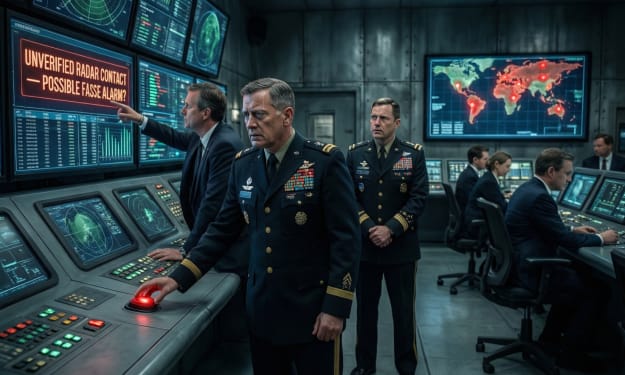
Global Implications If Nuclear Command Systems Weaken Nuclear weapons are often described as the ultimate tools of deterrence. They are meant to prevent war, not start it. But this balance depends on one critical factor: strong and stable command systems. If these systems weaken, the danger is not limited to one country. The impact spreads across the entire world.
By Wings of Time 6 days ago in Criminal
Nuclear Command Risks in a Time of Internal Tension
Nuclear Command Risks in a Time of Internal Tension When people think about nuclear power, they often focus on missiles, warheads, and military strength. But the most important part of any nuclear system is not the weapon itself—it is the command structure behind it. Clear leadership, trusted decision-making, and reliable communication are what prevent disasters. When these systems face internal tension, the risks grow quietly but dangerously.
By Wings of Time 6 days ago in Criminal
Can Aircraft Carriers Survive the Drone Age?
Can Aircraft Carriers Survive the Drone Age? For more than seventy years, aircraft carriers have stood at the center of global military power. They are mobile airbases, capable of projecting force anywhere on the planet without relying on foreign soil. Their presence alone can alter diplomacy, deter rivals, and reassure allies. But a new challenge is rising—quietly, cheaply, and rapidly. The age of drones is forcing militaries to confront an uncomfortable question: are aircraft carriers becoming vulnerable giants in a world of unmanned warfare?
By Wings of Time 8 days ago in Criminal
Drones vs Aircraft Carriers
Drones vs Aircraft Carriers For decades, aircraft carriers have symbolized ultimate military power. They are floating cities, armed with fighter jets, guided missiles, radar systems, and layered defenses. A single carrier strike group represents not just military strength, but political will. Wherever it sails, it sends a message: power has arrived.
By Wings of Time 8 days ago in Criminal
Floating Power and Fragile Diplomacy
Floating Power and Fragile Diplomacy In recent weeks, renewed attention on U.S. naval movements, particularly carrier strike groups operating across strategic waterways, has highlighted a deeper shift in how global power is projected. From the South China Sea to the Indian Ocean, the presence of American naval assets is no longer just a show of strength—it is a message shaped by technology, deterrence, and fragile diplomacy.
By Wings of Time 8 days ago in Criminal
You Shall Be Hanged by the Neck
A Cruel Love I finished watching the film “A Cruel Love.” I was initially drawn to it because of the actor Toby Jones, who plays a solicitor in the film. He was the main actor in the ITV drama “Mr Bates vs the Post Office.” This was a look into the prosecution of about 700 post office workers in Great Britain. It’s called the nation’s worst miscarriage of justice. I wrote about this in an earlier story as part of my “Dirty Dozen” series.
By Calvin London10 days ago in Criminal