
The Man Who Stole Time
A Crime No One Could Prove

In the city of Brookhollow, crime was usually predictable. Pickpocketing in crowded markets, the occasional burglary in quiet neighborhoods, and once in a while, a carefully planned bank fraud. Detective Haris Malik had spent fifteen years studying patterns, believing that every criminal left behind a trail—no matter how small. But the case that unsettled him most involved a suspect who seemed to steal something no camera could record and no law clearly defined: time.
The complaints began subtly. Office workers reported losing entire hours in the middle of the day with no explanation. A teacher claimed she had started a lesson at ten in the morning and somehow found herself dismissing class at noon without remembering the intervening period. Shopkeepers noticed discrepancies between surveillance timestamps and their own memories. At first, authorities assumed stress, overwork, or faulty electronics. But as reports increased, the pattern became impossible to ignore. The missing time always occurred within a specific four-block radius downtown.
Haris examined security footage from the area. On the surface, nothing seemed unusual. People walked, cars moved, traffic lights changed as expected. Yet when he slowed the recordings frame by frame, he discovered micro-glitches—tiny visual distortions lasting less than a second. During those distortions, one man appeared repeatedly in different locations: a tall figure wearing a gray coat and carrying a slim briefcase. His face remained indistinct, blurred not by camera quality but by something stranger, almost deliberate.
The media nicknamed him “The Time Thief.” Panic spread quickly. Businesses feared productivity losses, and rumors circulated about experimental technology or government cover-ups. Haris, however, focused on evidence rather than speculation. He mapped each reported incident and noticed a precise interval: exactly fifty-seven minutes vanished every time. Not random. Calculated.
One evening, Haris positioned himself within the affected zone, determined to experience the anomaly firsthand. He checked his watch at 8:03 p.m. The streets were calm, illuminated by storefront lights and the distant hum of traffic. He spotted the gray-coated man standing near a bus stop, perfectly still. Their eyes met briefly, and in that instant, Haris felt a strange pressure behind his temples, like the sensation before a migraine. The air seemed to vibrate.
Then everything shifted. Haris blinked—and his watch read 9:00 p.m. The street was quieter. A café that had been open moments earlier was now closed. His phone displayed missed calls from his partner, all timestamped within the missing hour. Yet he had no memory of anything occurring between those two moments.
Unlike previous victims, Haris retained one fragment: the faint sound of ticking, amplified and rhythmic, as if he had been standing inside a giant clock. That detail led him to an abandoned clock repair shop within the radius. Inside, dozens of antique clocks lined the walls, all ticking in unsettling unison. In the center of the shop stood the gray-coated man.
“You’re not stealing time,” Haris said carefully. “You’re compressing it.”
The man smiled faintly. “People waste so much of it,” he replied. “I simply reallocate.” He explained that he had developed a device capable of condensing unused minutes—moments of distraction, hesitation, inefficiency—into measurable segments he could store. The fifty-seven minutes taken from the public were being transferred elsewhere, though he refused to say where.
Haris faced an impossible dilemma. No physical harm had occurred. No property had been stolen. Yet something deeply personal had been taken from hundreds of citizens. “Time isn’t yours to redistribute,” Haris insisted.
“Neither is it theirs to squander,” the man countered.
Before Haris could react, the clocks chimed simultaneously. The air pulsed again, and the man vanished, leaving behind only silence and stopped pendulums. This time, Haris’s watch read 10:00 p.m. Another hour gone.
The case was never officially solved. Reports of missing time gradually decreased, then ceased entirely. But Haris began noticing subtle changes in himself. He became more deliberate with his minutes, more aware of how easily they slipped away.
He never proved the crime in court. Yet he understood its lesson clearly: time may not leave fingerprints, but once taken, its absence echoes louder than any stolen object. And in a world obsessed with gaining more of it, perhaps the greatest crime is forgetting how precious it truly is.
About the Creator
Sudais Zakwan
Sudais Zakwan – Storyteller of Emotions
Sudais Zakwan is a passionate story writer known for crafting emotionally rich and thought-provoking stories that resonate with readers of all ages. With a unique voice and creative flair.
Keep reading
More stories from Sudais Zakwan and writers in Criminal and other communities.
Whispers Beneath the Wooden Floor
The house on Alder Street had been empty for nearly two decades before the new owners arrived. It was an aging structure with peeling paint, narrow windows, and wooden floors that groaned under the slightest pressure. Most buyers avoided it because of rumors. People claimed the house had a history, though no one explained what that meant. When Amelia and her father purchased it at a low price, they dismissed the whispers as neighborhood exaggeration. Old houses made noise. Old stories survived without proof.
By Sudais Zakwan5 days ago in Criminal
Canada Shooting Shocks the Nation: Inside the Deadly Tumbler Ridge Tragedy
A Rare and Devastating Act of Gun Violence Rekindles National Debate on Safety, Mental Health, and Firearms in Canada Canada is mourning after one of the deadliest mass shootings in its modern history unfolded in the small community of Tumbler Ridge, British Columbia, leaving ten people dead, including the suspected shooter, and more than two dozen injured. The attack, which took place on February 10, 2026, shattered the sense of security in a country where such violence remains rare and deeply unsettling.
By Story Prism7 days ago in Criminal
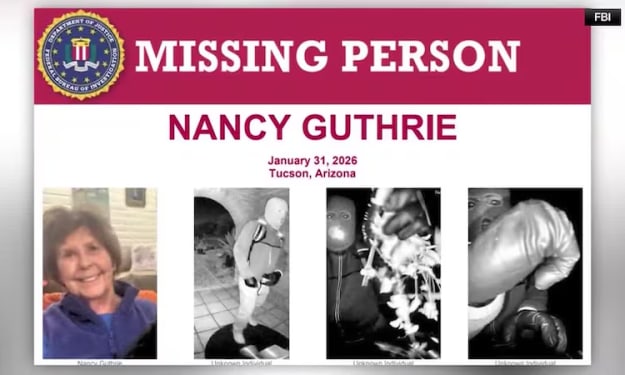
New Developments in the Nancy Guthrie Investigation: DNA Setbacks, Missing Footage, and Signs the Case Is Still Moving
New information released by the Pima County Sheriff’s Office and the FBI has provided a clearer picture of where the Nancy Guthrie investigation stands right now. While some of the most anticipated forensic tests have not produced immediate answers, investigators continue to pursue multiple avenues that could ultimately identify the person responsible.
By Lawrence Leaseabout 17 hours ago in Criminal
The Tango Connection
I suppose I've become a writer so I wouldn't bore everyone to death telling them my stories. Reading them is reading. Not the same. There's rhythm. And timing and, most importantly, drama and suspense. Unless you have tremendous magnetism and an undeniable stage presence, there's no way you can engage an audience the way you can by writing your story. That's my opinion.
By Rene Volpi 5 days ago in Beat



Comments
There are no comments for this story
Be the first to respond and start the conversation.