
Vermont: The St. Albans Tragedy
Most disturbing crime of every state in U.S.A.


"The town was named for St Albans in England. That city was named for the Early Christian English saint and protomartyr.
On October 19, 1864, St. Albans was the site of the St. Albans Raid, the northernmost Confederate land action of the American Civil War. The Confederates conducted a cavalry raid and bank robbery from across the border with Quebec, Canada. The town of St. Albans and the city of St. Albans were not separated until 1902. References to "St. Albans" prior to this date generally refer to the town center, which now belongs to the city. The town was incorporated in 1859, and the city in 1902.
At times after the civil war, Irish men seeking independence for Ireland, made what are known as the Fenian raids on Canada. At least two took place in 1866, and others in 1870–1871. Men were recruited from New York City to St. Albans, Vermont. Henri Le Caron was serving as a secret agent of the British government during this time, but also held the position of "Inspector-General of the Irish Republican Army". He asserted that he distributed fifteen thousand stands of arms and almost three million rounds of ammunition to the men preparing for the raids, which took place in April 1870. Forewarned, United States General George Meade, captured much of these munitions as they arrived. Many of the raiders never made it across the Canadian border. They seemed most successful in causing support to increase for the Canadian Confederation, as Canadians believed they needed to be unified in defense.
By the 1890s, the town of St. Albans had become the butter capital of the world; it had 1,000 farms and 15,000 cows.
Pilot Amelia Earhart was said to have flown here May 22, 1934. This may have been related to promotion for her line of clothing for active wear, which she began that year."
The St. Albans Tragedy is one of the most talked-about events in Vermont's history, with deep emotional scars that remain etched in the local community. On the night of December 15, 1996, a shooting spree rocked the peaceful town of St. Albans, leaving four people dead and several others injured.
It was a chilly winter evening when the violence began. Michael Ross, a 42-year-old local resident, walked into a St. Albans restaurant where he had once worked and shot the owner, 58-year-old William Lawson, in what witnesses described as a cold and deliberate attack. Ross then moved through the restaurant, continuing to shoot at those who had gathered there. The attack lasted only a few minutes, but in that time, Ross claimed the lives of three more victims, including a young waitress.
At first, investigators had difficulty determining Ross's motive. He had been fired from the restaurant a few years prior, but there had been no clear indication that he harbored any ill will toward the people inside. However, as they looked deeper into Ross's background, a more complex picture began to emerge. Friends and family described him as someone who had struggled with mental health issues, including depression and rage. He had also recently lost his job at another local business, which further fueled his sense of hopelessness.
Upon his arrest, Ross reportedly expressed remorse for his actions, though he remained largely silent about his true motives. Law enforcement speculated that the combination of personal failures, financial struggles, and untreated mental health issues had led him to snap in a moment of anger and frustration.
Ross's trial was lengthy, with many in the community closely following the proceedings. In the end, the jury found him guilty of four counts of first-degree murder, and he was sentenced to life in prison without the possibility of parole.
While Ross's conviction brought some measure of justice, the loss of life and the terror that descended upon St. Albans could never be undone. The St. Albans Tragedy left a deep scar in the town, one that would take many years to heal.
In the aftermath of the tragedy, the town of St. Albans came together to mourn and rebuild. Memorial services were held, and the victims were remembered for their kindness and dedication to the community. Efforts to support those affected by the violence, both survivors and families of the victims, led to the creation of counseling programs and mental health outreach initiatives.
Over the years, the tragedy became a symbol of the need for better mental health care and greater awareness of the signs of mental distress. Local officials and advocates continue to work on increasing mental health resources in Vermont, hoping to prevent similar events from happening in the future.
About the Creator
Keep reading
More stories from Sandun Nayanajith and writers in Criminal and other communities.
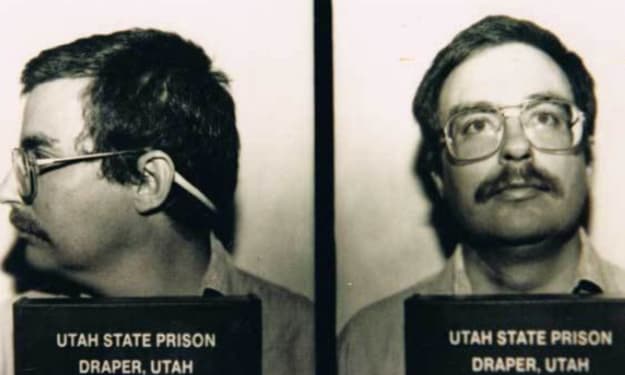
Utah: The Salt Lake City Bombing
"Mark William Hofmann (born December 7, 1954) is an American counterfeiter, forger, and convicted murderer. Widely regarded as one of the most accomplished forgers in history, Hofmann is especially noted for his creation of fake documents related to the history of the Latter Day Saint movement. When his schemes began to unravel, he constructed bombs to murder three people in Salt Lake City, Utah. The first two bombs killed two people on October 15, 1985. On the following day, a third bomb exploded in Hofmann's car. He was arrested for the bombings three months later, and in 1987 pleaded guilty to two counts of second-degree murder, one count of theft by deception, and one count of fraud."
By Sandun Nayanajith12 months ago in Criminal
Unsolved case! Japanese female teacher mysteriously died in a cesspool
The case we are discussing today is one of the most bizarre and spine tingling unsolved cases in post-war Japan - the Fukushima female teacher's tragic death. It does not have the lonely souls and wild ghosts in supernatural legends, but it is more suffocating than any ghost story; It has a clear victim and a specific location of the crime. The police investigated for half a year, but in the end, it was hastily closed as an "accidental death". However, everyone who has seen the scene and heard the details believes that this is definitely not an accident. This incident has been circulating in Japan for decades, and there are still people investigating the truth. Whenever someone mentions that cold public restroom or that strange death posture, it still makes people's hearts tighten and a layer of cold sweat breaks out on their backs.
By Aiden Wang2 days ago in Criminal
The Silence After the Sirens
M Mehran The sirens screamed through the narrow streets of Lahore at 2:17 a.m., but by the time they arrived, the house on Street No. 14 was already silent. Too silent. Inspector Farhan Malik stood at the entrance, staring at the open wooden door. Years in criminal investigations had taught him one thing—when a crime scene feels calm, it’s usually hiding chaos underneath. Inside, the air smelled of iron and dust. On the living room floor lay the body of Ahsan Qureshi, a well-known property dealer with a spotless public reputation and a long list of enemies no one talked about. He had been stabbed once—clean, precise, straight to the heart. No signs of forced entry. No signs of struggle. No weapon. “This wasn’t rage,” Farhan muttered. “This was intention.” A Perfect Man With Imperfect Secrets Ahsan Qureshi was the kind of man newspapers loved. Successful businessman. Charity donor. Family man. But criminal investigations rarely care about headlines. As Farhan flipped through the victim’s file, a different picture emerged. Land grabbing cases buried under settlements. Witnesses who had suddenly gone silent. One junior clerk who disappeared three years ago after accusing Ahsan of fraud. In criminal stories, the dead are rarely innocent. The only person in the house at the time of the murder was Ahsan’s wife, Zara Qureshi. She was found sitting on the bedroom floor, eyes blank, hands shaking—not crying. People who cry easily often hide things. People who don’t… usually know the truth. The Woman Who Knew Too Much Zara told the police she heard a sound, came out, and found her husband bleeding. Her statement was clean, almost rehearsed. But something about her silence bothered Farhan. Later that night, while reviewing CCTV footage from nearby houses, Farhan noticed something strange. The cameras showed no one entering or leaving the house between 11 p.m. and 3 a.m. If no outsider came in, only one conclusion remained. The killer was already inside. But criminal investigations aren’t built on assumptions—they’re built on cracks. And Farhan found one when he reviewed Zara’s phone records. Multiple calls. One number. Deleted messages. The number belonged to Sameer Ali—a former employee of Ahsan Qureshi. The same man who had filed a fraud complaint years ago and then vanished from the legal system. A Ghost From the Past Sameer Ali was found two days later in a rented room near the railway station. He didn’t resist arrest. He didn’t even look surprised. “I didn’t kill him,” Sameer said calmly during interrogation. “But I wanted him dead.” That sentence alone was enough to make him a suspect. Sameer revealed the truth Ahsan had buried for years. Fake documents. Illegal land seizures. Families thrown out of their homes overnight. When Sameer tried to expose him, Ahsan destroyed his career—and threatened his life. “But I left the city,” Sameer insisted. “I came back last week. To confront him. Not to kill him.” Farhan believed him. Criminals lie—but their lies have rhythm. Sameer’s story didn’t. Then who delivered the final blow? The Confession No One Expected The answer came quietly. Zara requested to speak to Inspector Farhan alone. “I didn’t plan to kill him,” she said, her voice barely audible. “I planned to leave.” She revealed a side of Ahsan the world never saw—emotional abuse, threats, control masked as love. The charity dinners, the smiles, the respect—all lies. “He ruined lives,” Zara whispered. “Including mine.” The night of the murder, Sameer had come to the house. Zara let him in. She wanted Ahsan to face someone he had destroyed. But the conversation turned violent. Ahsan laughed. Mocked him. Threatened him again. Then Ahsan turned to Zara. “He said I was lucky to be alive because of him.” That was the moment. Zara picked up the knife from the kitchen—not in anger, but in clarity. “One second,” she said. “That’s all it took.” Sameer ran. Zara stayed. Justice Beyond the Law The court case shocked the nation. Media headlines screamed “Wife Kills Philanthropist Husband”, but the truth was heavier than the words. Zara was convicted of manslaughter, not murder. The judge acknowledged years of psychological abuse. She was sentenced to seven years. Seven years for ending a lifetime of fear. As Farhan watched her being taken away, he felt something rare in criminal investigations—not satisfaction, not victory, but understanding. Criminal justice isn’t always black and white. Sometimes, it’s just silence after the sirens. And the knowledge that the real crime happened long before the knife ever touched the skin.
By Muhammad Mehran7 days ago in Criminal



Comments
There are no comments for this story
Be the first to respond and start the conversation.