
The Real Story Behind Netflix's Crime Thriller Turn of the Tide
What happened in Rabo de Peixe after a "white tide" came ashore

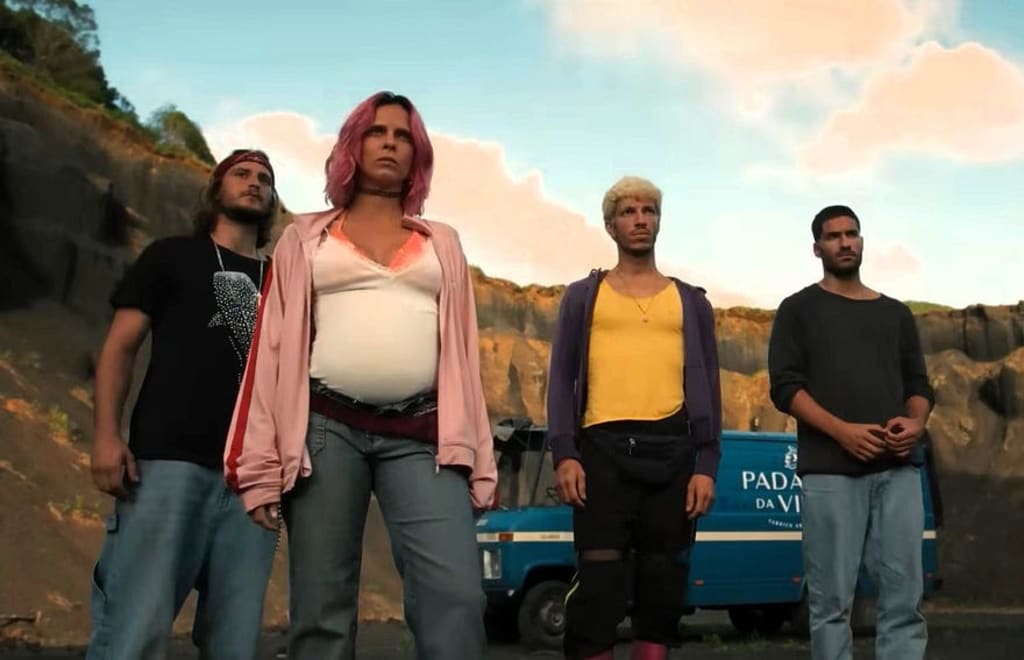
"Too much white, they say, can turn everything black." That haunting line sets the tone for season two of Netflix's Turn of the Tide.
The Portuguese hit series tells the story of a cocaine flood that turned a quiet fishing village in the Azores into a place where Imperial beer glasses filled with cocaine were sold for five contos (about twenty-five euros).
On São Miguel Island in the Azores, Rabo de Peixe was a place where the poorest among the poor called home.
Locals say the village's name, "Fish Tail," comes from the days when its people could only afford what was left of the catch after selling the good parts.
The villagers were used to honest hard work and lived with what the sea gave them, following the rhythm of the tide.
Until that day. Because one stormy night changed everything. Rabo de Peixe would never be the same again. The sea had brought a fortune to its shores, and with it, a curse.
The white tide
It happened in June of 2001, somewhere off the Azores. A Sun Kiss 47 sailboat was fighting its last battle against the sea.
On board, a group of drug dealers turned sailors and their bad luck.
Hidden beneath the deck, packed tight and silent, was a secret worth a fortune: over half a ton of cocaine, pure as snow and worth around $160 million.
The Atlantic wasn't kind that week. The wind came hard, tearing at the sails until the mast snapped.
There was no hope of sailing on, and no chance of docking without raising suspicion.
So the men on board did what desperate men often do. They panicked. The crew decided to get rid of the evidence. Overboard went the bales, vanishing under the waves.
Desperate times call for desperate measures. The saying goes. So, for a moment, it must've seemed like a smart move. But the ocean, as always, had the last word. It spat the cocaine back out.
This was how, one by one, the packages began to wash ashore. Strange white bundles bobbing among the waves came floating around the pier and landed on the beach.
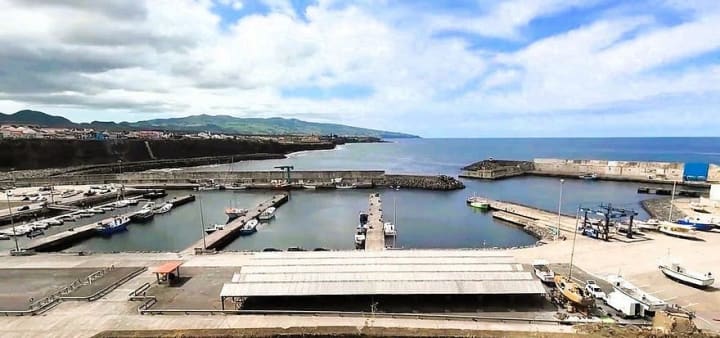
Rabo the Peixe marina | Image by the authorBy dawn, the dark sands were littered with white bundles. Word spread like wildfire through the narrow streets and salt-stained houses.
Soon, everyone, grown men, children, even old widows with their black shawls, rushed down to the pier.
It was chaos. Beautiful, absurd chaos.
Nobody really knew what they were holding at first. Some thought it was flour. Others said sugar and stirred the white dust into coffee.
The powder drove the young into a downward spiral of white madness. Money became an obsession. For many, cocaine was an escape from a harsh reality. While others saw it as a quick path to sudden wealth.
The hospitals filled up. Overdoses spiked. People were dying. The coastal village was drowning in a sea of white.
And as the supply flooded the island, prices plummeted.
Cocaine was suddenly everywhere. So cheap, so easy to get, it might as well have been salt.
There were stories of people selling cups of Nutella filled to the top with the stuff for almost nothing.
Finally, the Judiciary Police was called to the island. Authorities eventually showed up and managed to recover about 400 kilos, but hundreds more had already disappeared into pockets, houses, and up people's nostrils.
I know these stories sound like urban legends, but around these parts, as I had the chance to learn by sitting across from the table with those who actually lived it, legends often start with a little truth.
Between truth and fiction
In May 2023, Netflix dropped Turn of the Tide. The first season took me back to the time I spent in São Miguel Island and the stories many would like to forget, but Augusto Fraga turned it into a popular drama.
As hours turned into days, I found myself regularly taking the road from Ponta Delgada to Rabo de Peixe.
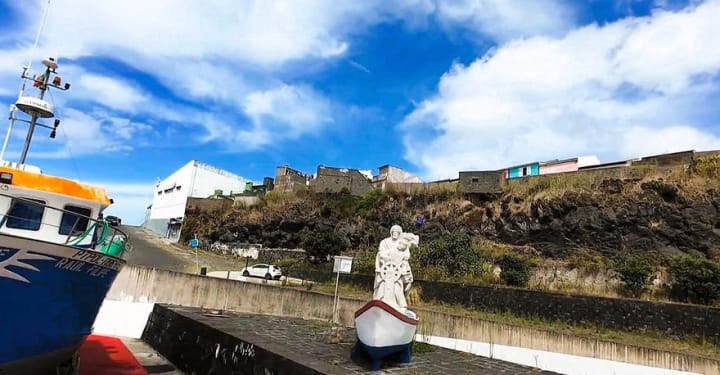
The road winds along the coast. Every curve smells like salt and blue hydrangeas. Back then, I was just another stranger. A tourist with questions. A Portuguese from the Continente.
In the most remote parts of the Azores, people were still suspicious of strangers. But if you stay long enough, buy enough coffees, drink their local beer, then people start talking.
Cafés are where secrets live in the Azores.
Old men with hands like rope. Women who've seen too much. The hiss of the espresso machine. The hum of the radio.
And then, if you've joined in several rounds of cold and foamy San Miguel Especial, a story slips out.
Not all at once. Piece by piece. Like the tide revealing what it had buried.
---
One afternoon, in a small tavern, I met a fisherman.
We'll call him Manel.
He was nursing a Melo Abreu beer, eyes fixed somewhere past the window.
We talked about the sea first. You always start with the sea.
Then the silence stretched, and he said it.
"You know… when the beach turned white."
He told me how he and his friends found the packages. dozens of them scattered along the shore.
They didn't know what it was. Or maybe they did. Doesn't matter now.
Curiosity and hunger share the same face when you've got nothing.
They tried it. Everyone did.
The young, the old.
Some out of thrill. Some out of need.
The first high felt like magic. The second one, like falling through ice.
Manel's story spilled out slow, heavy. He talked about the ones who didn't make it. About his friend who jumped into a bathtub, hoping cold water would slow down his heart, which seemed about to burst from the overdose.
He told me about the trade. Kids selling cups of white dust for a five contos bill, flipping it for more. How the beach had turned into a market. And Rabo de Peixe succumbed to the "white fever."
Then came the stories behind the legend. Women frying horse mackerel in cocaine instead of flour. Kids marking soccer fields with white lines that weren't chalk. Men pouring spoonfuls of it into their morning coffee.
And the strangest thing? Everyone I met told the same stories with grim wrinkles on their foreheads. Not even a nervous smile.
Because here, absurdity wasn't funny. It was a curse.
"We thought the sea had blessed us," Manel said, "but it cursed us instead."
Manel finished his beer, eyes somewhere far away. Outside, the wind howled like it knew the story too.
---
I kept coming back to the Azores. And with every visit, it was as if I peeled away another layer.
Behind the postcard beauty. The white houses, the neat fishing nets drying in the sun, the dark sand, I could feel it in the silence that hung after sundown.
The cocaine didn't just disturb the town's ordinary life. It shattered people's lives.
The white flood impacted everyone and everything. Families. Friendships. Lives turned apart, and even the social order was shattered.
I met mothers who'd pawned wedding rings to feed a habit. Fathers who'd traded their nets for baggies. Kids who grew up learning how to hide money from their parents.
Some houses stood empty, their walls still stained by the salt of the sea and the weight of old ghosts.
For me, Rabo de Peixe became a metaphor of what happens when fortune crashes into poverty. I guess when temptation meets despair, many will lose themselves.
But not everyone stayed lost. Drug addiction claimed lives, but some found their way back.
Manel was one of them. He told me it took years to get back on his feet. The shaking and sweating take only a week, and then they say you're clean.
But forgiving takes decades. Forgiveness takes time. Those who love you will forgive in time, but can you truly forgive yourself?
Now he still goes out to sea, still casts his nets, and still drinks the same beer. But the sparkle in his eyes is different. Tired, maybe. But alive.
"The sea gives, the sea takes," he said.
"That time, it gave too much."
Then, he shuddered his arms, with a grimace for a smile, and a vague melancholy in his dark brown eyes, the kind that only knows pain. And I thought how maybe that's what survival sounds like in a piece of land halfway between continents, that once saw its black sands mixed with white stardust.

Years pass. The sea forgets nothing. It just waits. In each rolling wave, a memory in the foam of days.
I went back to Rabo de Peixe several times. Nothing had changed, at least on the surface.
Maybe Netflix's success brought more visitors to São Miguel's forgotten corners. Tourists come now, chasing the myth.
The "cocaine village," some call it. They buy T-shirts, take selfies by the docks. And next to the graffiti on the pier.
Still, ordinary life seems to go on unstirred.
The fishermen still go out before dawn. The church bell still rings.
But if you stay long enough, if you sit down and listen, the old stories still breathe beneath it all.
The laughter is different. Softer. A little haunted.
Ghosts return to Rabo de Peixe on high tide
And now, here we are for a new chapter in the Rabo de Peixe story. A week from now, on October 17, season two of Turn of the Tide will bring back old ghosts.
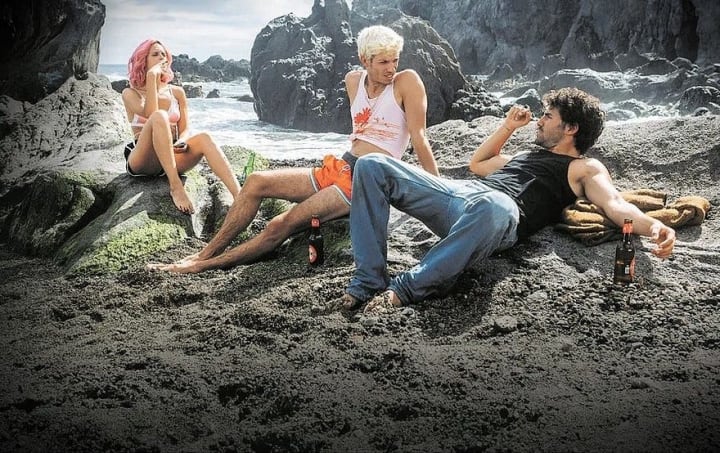
I don't know much about the plot, but from watching the trailer, it seems several months have passed since Eduardo (José Condessa) left for America.
He comes back to the island. Back to salt-soaked streets and restless memories, only to find that everything has changed.
Uncle Joe's (Pepê Rapazote) cocaine stash is now in the hands of someone who will spare no efforts (or lives) for a profit.
The sea still holds its secrets. Quiet on the surface. Restless underneath. So, as the tide turns, even those we thought lost somehow find their way back.
Rafael (Rodrigo Tomás), the friend everyone thought was gone, returns from the dead.
Nothing is simple for those who stayed in Rabo de Peixe. Rafael's girlfriend, Sílvia (Helena Caldeira), is now pregnant with Eduardo's child.
The sea, once again, gives back the unexpected.
And somewhere between truth and fiction, between memory and urban legend, that's where I feel the real Rabo de Peixe waits for its story to unfold on the small screen.
The tide always turns.
It always brings something back.
Sometimes it's a fortune.
Sometimes it's a curse.
Let's wait and see what the next Turn of the Tide brings ashore.
Thank you for reading.
About the Creator
Rui Alves
Hi, I'm Rui Alves, a teacher, army veteran & digital pathfinder. Author, alchemist of sound & Gen-AI artist.
Standing While Falling
Quotation from Friedrich Nietzsche "He who wrestles long with monsters should beware lest he himself become a monster. And if you gaze long into an abyss, the abyss also gazes into you. Man is not destroyed by suffering, but by the meaning he makes of it."
By LUCCIAN LAYTH27 days ago in Critique
Rock Bottom
I began counting backwards to the night Debbie dumped me. Scott said that was an understatement, but hell, our divorce isn’t even final yet, and we were barely married before she started up with her ex behind my back, ultimately leaving me for him after his stupid app made him a millionaire.
By Harper Lewis3 days ago in Critique
Killing him slowly
There’s an intruder in my house again. He stumbles through the door, wet carrier bags in hand. He’s bought me offerings. I show my appreciation, letting him caress my beautiful body. He wants to touch me. I rub myself against his legs. He sighs, dropping the bags. He can’t resist touching me. Running his hand slowly down my spine, I arch my back towards his caress, let out a low purr. It’s what we both need.
By N J Delmas6 days ago in Horror



Comments
There are no comments for this story
Be the first to respond and start the conversation.