
20 of the Most Spectacular Species Discoveries in 2024
A Glimpse Into the Wonderful World of Biology and the Remarkable Pace of Species Discovery Around the Globe


There’s so much of the world yet to discover, and so many remarkable things within it. With so much of Earth mapped and so much of it navigable with modern technology, it can feel like the days of discovery and pioneering are behind us. That is most certainly not the case, however. So many hidden fascinations lurk on and within the lovely, blue planet we call Earth. Even this year, we are discovering more about life and what comprises it as we continue research at a break-neck pace.
Already, 2024 has been a truly fantastic year for biology. Only a little over halfway through the year, there have been many discoveries and innovations — so much so that I had to leave out a massive chunk of them to prevent this article from becoming arduously lengthy.
When investigating through news sites and published papers for this article, my original plan was to find just 10 species that scientists had discovered over the first half of this year. In 2023, that was a fair amount to find. All in all, about 1000 species were discovered that year, many of which were similar enough to each other to be lumped together. Though the total count for 2024 isn’t yet solidified, considering the number of papers this year compared to last, this author speculates we may manage to top 2023’s count.
Read on to discover some of the incredible new species we’ve found around the world in 2024 (so far).
1. Paragonaster hoeimaruae — Common Name Not Yet Coined
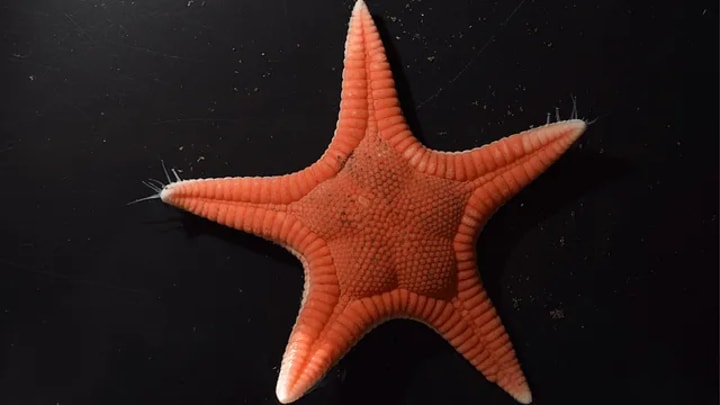
Just a month ago in Japan, a massive collaborative effort between fishers, museum staff, and researchers resulted in the discovery of a new sea star. The bright red echinoderm was discovered off the coast on the seafloor south of Japan as a result of marine surveys that have been ongoing for multiple years in the area.
The team who discovered the creature was surprised that it hadn’t previously been found as it’s both large and charismatically bright in coloration. Paragonaster is a great signifier of just how much of the ocean we have yet to discover and catalog.
Source: Sea star species discovered in Japan, the first for over 50 years
2. Eunectes akayima — The Northern Green Anaconda
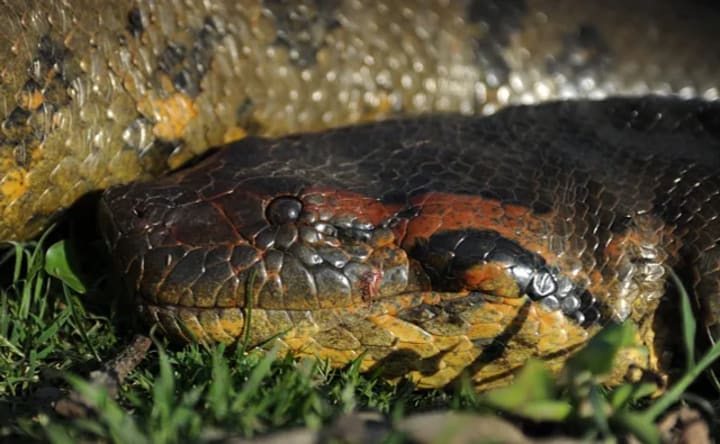
It’s always particularly surprising when a new species of large animal is identified. Recently, this 20-foot-long Amazonian snake became one of the most notable megafauna species to make the new species list. These apex predators of the Bameno region of Baihuaeri Waorani Territory (part of the Amazon in Ecuador), are massively important to the environment, keeping an inordinate amount of creatures regulated by their preying habits.
To determine genetic distinctions between this anaconda and others in the region, researchers spent decades trudging through the Amazon in Ecuador to find anaconda species to take samples from. This year, results showcased just how genetically different this small population of anaconda was from other similar-looking species, causing scientists to split a single species in twain. In the published article describing the species, the research authors suggest that this genetic difference was the result of recent speciation, meaning that these very recently diverged from their closest relative to become their own species!
Source: New giant anaconda species found on Waorani Indigenous land in Ecuador
3. Six New Species of Millipedes in Tanzania
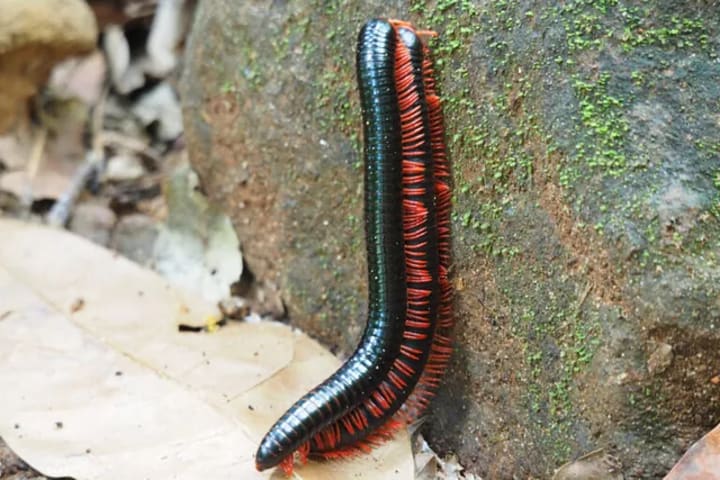
In Tanzania in March, a team of scientists collected insect specimens from the Magombera Nature Reserve and found several new creatures that had never been cataloged. These mountain-dwelling insects are wildly important for the ecology of the area, serving as decomposers of decaying material in the region. Because of their influence, the habitat of the region has better soil fertility and water retention!
This discovery has led to a better understanding of millipede behavior. Before this research, the undisturbed rainforest floor was considered to be the preferred habitat of millipede species. These critters, however, were found crawling around large vines, called lianas, in high-altitude regions. Though it’s still speculative to say, this research may lead to far more discoveries in the millipede group, since scientists now better know where to look for them.
Source: Tanzania’s ‘mountain of millipedes’ yields six new species
4. Solenangis impraedicta — Common Name Not Yet Coined
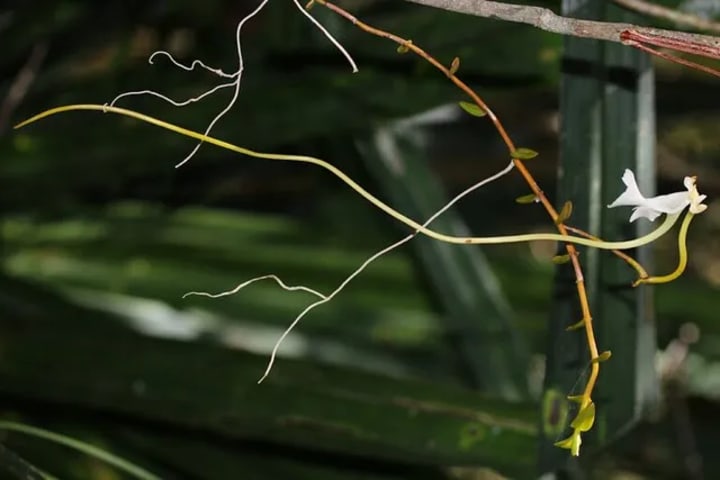
In March of this year, a global team of scientists discovered and named an incredible new species of orchid. Found exclusively in Madagascar, the orchid is identifiable by its incredibly long nectar spur that dwarfs its petals. That spur is so long that obtaining the nectar is only possible by a small selection of insects. Namely, a certain species of hawk moth with a tongue long enough to reach through the entire spur!
This flower will likely have ecological significance for the region, also, as it was found near open-pit nickel and cobalt mines. This find may finally give conservationists grounds to better protect the region from deforestation by these industries!
Source: ‘Mind-blowing’ new orchid species found in Madagascar forest canopy
5. Theobroma globosum, T. nervosum, and T. schultesii — Three New Species of Chocolate Trees
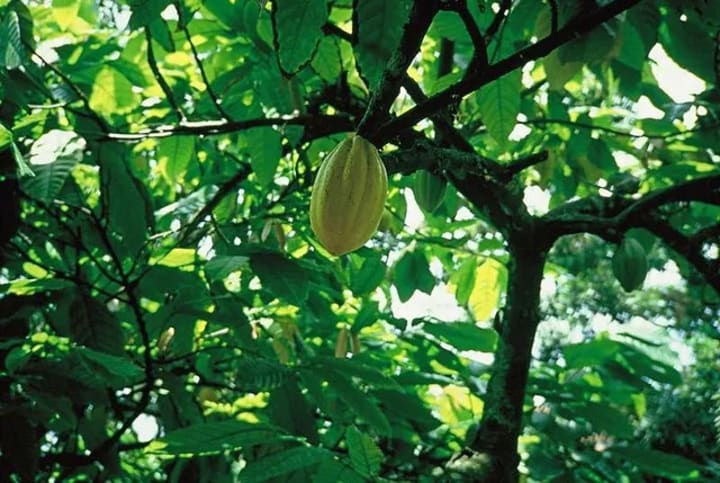
In July, another collective of global scientists worked together to describe three new species of plants very closely related to the plant that produces chocolate. Their research took place in herbaria, however, analyzing old samples of dried plants collected long ago. Though the plants are currently facing conservation challenges, some scientists are hopeful that these variants will help us breed more climate-resistant varieties of cacao trees in the future.
There’s still quite a bit of research needed to determine whether or not these species will have practical uses for extant cacao, however, or if artificially selecting them may yield new varieties of flavors in their own rights. Either way, this discovery highlights the importance of analyzing collected specimens from long ago with new technology — it often yields incredible new results!
Source: New relatives of the cacao tree uncovered in old plant collections
6. Amalophyllon miraculum — Common Name Not Yet Coined
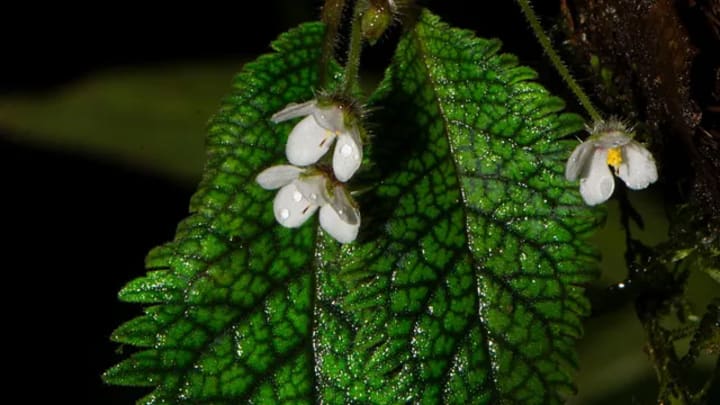
This lovely little flower is particularly interesting because it was found growing in an area that recently experienced heavy deforestation. The area in Ecuador was recently cleared for agricultural purposes, but this resilient little wall climber was found in two different patches among mosses and leaves, trying its best to take back land for the forest.
As far as researchers know, this plant is exceedingly rare, earning it the label, “Critically Endangered” at the moment. But, this is subject to change, should scientists find more in the local region.
Regardless of its abundance and ecological value, the petite miracle flower is strikingly cute, and a delightful addition to the flora we have in the species catalog.
Source: ‘Miracle’ in miniature as rare new plant defies deforestation in Ecuador ; Tiny flower that survived deforestation named as new species | Natural History Museum
7. Leopardus pardinoides — The Clouded Tiger Cat
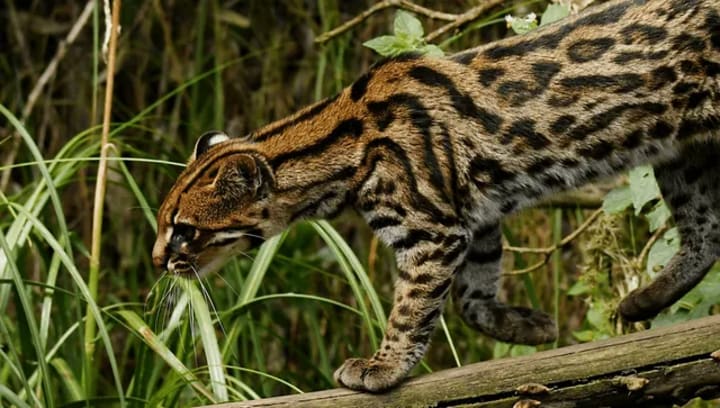
Cat ladies, rejoice! In Central and South America, a new species of cat was identified. This cute little critter, dubbed the Clouded Tiger Cat, looks almost like a cartoon drawn to be particularly adorable. I mean, look at those eyes!
This mountain-dwelling felid is about the size of a house cat, with a predicted range in higher elevations in Peru, Colombia, and Costa Rica. It is particularly elusive and excellent at climbing trees and catching critters. The discovery and subsequently published range was made by a stellar team of researchers working with the Tiger Cats Conservation Initiative and several universities throughout South America.
Source: A tiger cat gains new species designation, but conservation challenges remain
8. Haliotis pirimoana — Manawatāwhi pāua
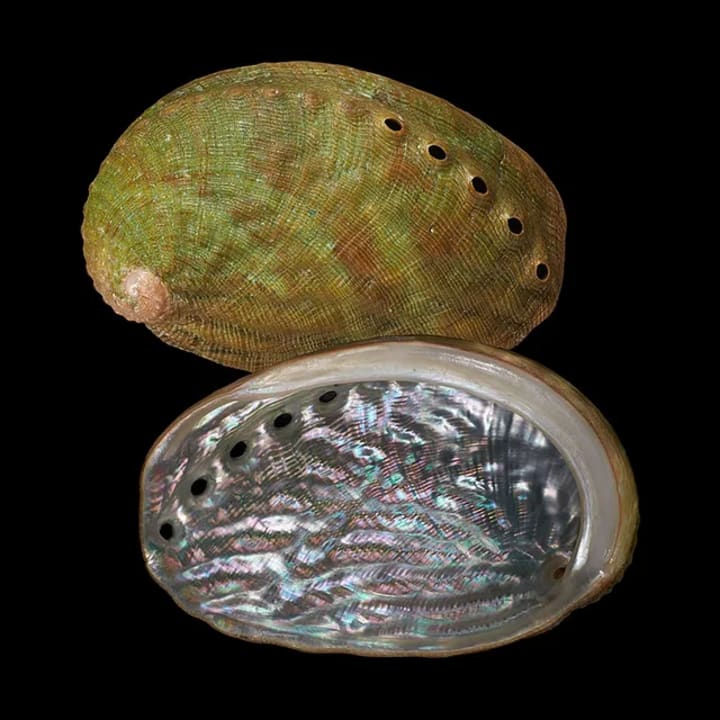
During the writing of this article, a new species was discovered in the waters surrounding New Zealand. The Manawatāwhi pāua, a type of abalone mollusk, is a unique member of the area, found nowhere else in the world as far as the researchers are aware. It’s truly a gorgeous species, with an incredible shell that has quickly earned it quite a lot of love from locals.
This species is not yet considered threatened by human activities, but the scientists involved in discovery have expressed concern about their overfishing and general damage from very nearby marine traffic. They hope that, with the discovery of this incredibly iconic creature, they may be able to help with initiatives to better protect the Three Kings Islands region in which it was found.
Source: New species of paua (abalone) found | ScienceDaily
9. Charadrius seebohmi — The Hanuman Plover
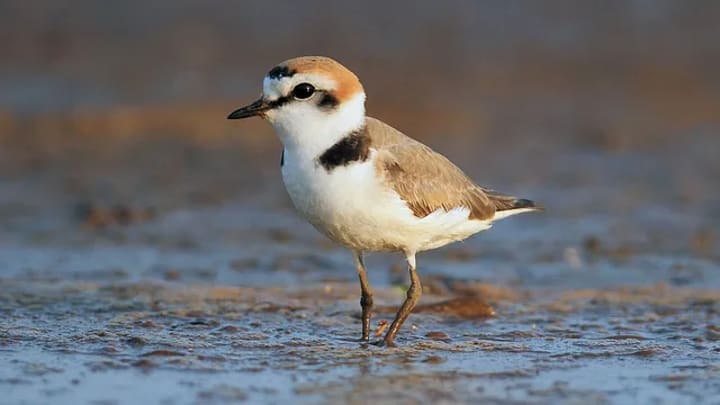
As a bird nerd, I’m particularly partial to this entry on the list. In January of this year, scientists realized another incredible example of speciation in a species of migratory birds: the Kentish plover. Around the late 1800s, scientists noticed that a subsection of this species began ceasing migration back and forth from the Mediterranean shores to Sri Lanka, instead choosing to stay around Southern India.
Recent genetic analysis has revealed that, after nearly 150 years, the two groups have become genetically distinct from one another, making this subspecies a truly different species! The researchers named this cute little shorebird the Hanuman Plover, after the god Hanuman who built a bridge between Sri Lanka and India, the habitat of this species.
Source: Newly identified shorebird species takes its name from Hanuman, a mythical Hindu ape god
10. Guibemantis ambakoana, Guibemantis vakoa, Guibemantis rianasoa — The Pandanus Frogs
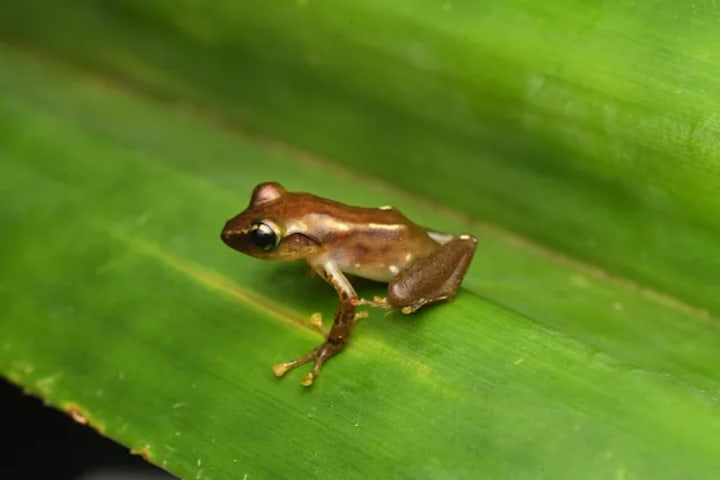
Returning once more to Madagascar, an entirely different team of scientists than the ones in entry 4 were able to find three new species of tree frogs in a well-studied herp hotspot. The team, led by head researcher Hugh Gabriel, tramped through the rainforests and poked about in the region’s Pandanus trees (palm-like plants that function like tiny biodiversity hotspots). Though the team expected to catalog already-known species of tree frogs, they were shocked to discover that the well-studied area had even more frogs hidden.
After careful study, the team described the collection of species as fully dependent on the Pandanus trees, meaning that their viability fully depends on the state of those trees and how they are conserved. It highlights the importance of not only preventing deforestation in the region; but also how important it is to maintain a steady climate, as the frog species relies on enough rainwater accumulating within the grooves of the trees to survive.
Source: Three new species of frogs found nestled in Madagascar’s pandan trees
11. Akarotaxis gouldae — The Banded Dragonfish/ Antarctic Dragonfish
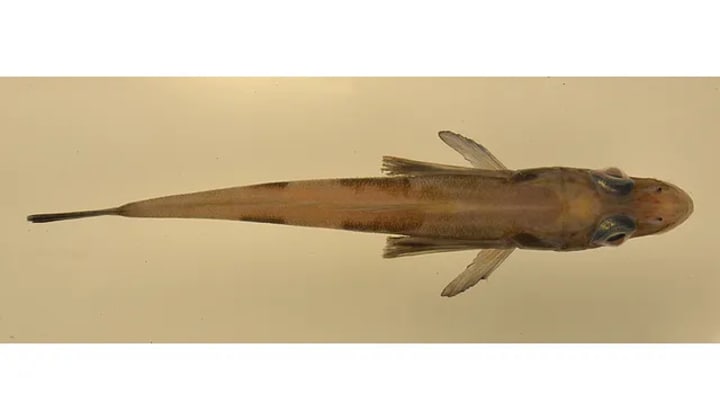
This entry, much like Manawatāwhi pāua, was discovered while I was writing out the other entries of this article. Truly, writing this list while the year marched on has been heartening about the pace of science! At the end of August, the Virginia Institute of Marine Science found a new species of dragonfish off the coast of the western Antarctic. The dragonfish was discovered as a distinct species after DNA analysis indicated that the specimen was dissimilar from all other collected dragonfish in the region thus far.
Upon discovering the difference in DNA, researchers shifted their focus from zooplankton to morphological comparison of multiple different dragonfish captured during the expedition. They found that not only does the DNA differ significantly, but the new species has distinct markings that, thus far, scientists will be able to determine from sight alone.
Source: New species of Antarctic dragonfish highlights its threatened ecosystem | ScienceDaily
12. Kermitops gratus — The Kermitops
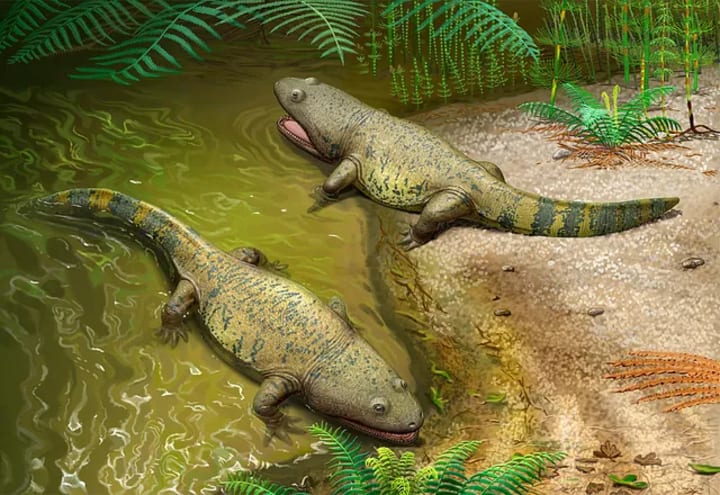
When you take a look at the art created to visualize the extinct Kermitops, it’s no wonder why the scientist who discovered it was reminded of Kermit the Frog. The ancient creature’s awkward mug closely resembles that classic muppet appearance, with a wide mouth and cheeky, green coloration on the artist’s recreation.
Though technically, this fossil has been sitting in the back of a museum for over four decades, scientists gave the 270 million-year-old remnant the attention it deserves in the early months of this year, discovering that, not only was it a unique species, but also a rare transition fossil that shines a light on the origin of salamanders, frogs, and other amphibians.
Source: Ancient amphibian species named after Kermit the Frog | Natural History Museum
13. Myloplus sauron — Common Name Not Yet Coined
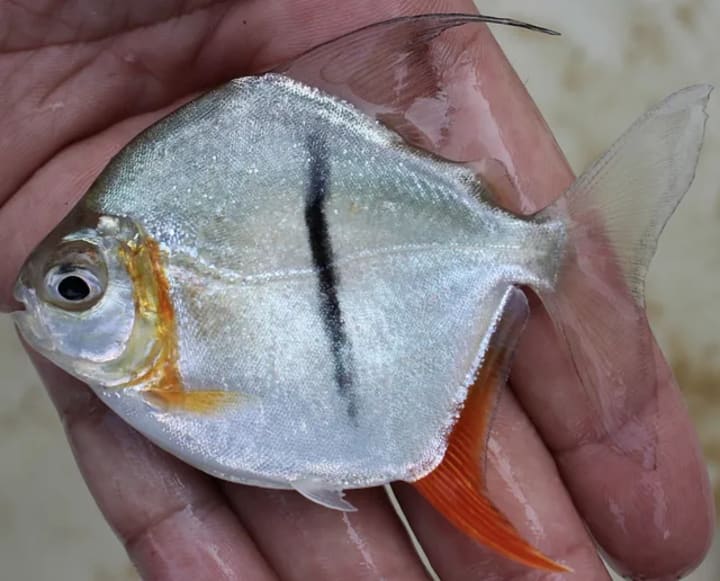
Lord of the Rings nerds, rejoice! A new species of piranha was found in June, with a distinct marking that resembles the villainous eye of Sauron on its side. This rainforest fish, found in Brazil, is an excellent reminder of just how many species are yet uncovered in the Amazon Rainforest — and how important it is that we protect it to uncover the true nature of its biodiversity.
Notably, this piranha is far from villainous. This variety of Piranha primarily eats aquatic vegetation around the Amazon River. Still, unless you’re rather well-versed in fish identification, I wouldn’t recommend sticking your finger in the water near it.
Along with the Sauron Piranha, the study also found a closely related fish which they dubbed Myloplus aylan, after the late son of one of the researchers who published the study.
14. Ero lizae and Ero natashae — Two Species of Pirate Spiders
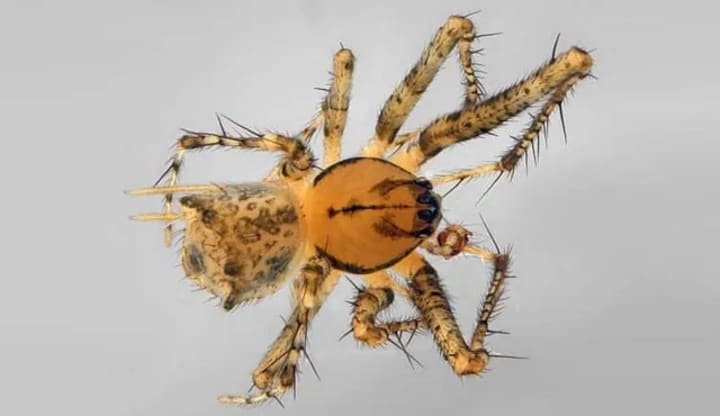
In the South Atlantic, St. Helena Island has been found to house two new species of Pirate Spiders. Named for their dastardly behavior of commandeering other spider webs for themselves, these creepy crawlies were originally thought to be a single species until further DNA analysis split them in twain.
These two varieties of unique pirate spiders can be found in a very small micro-ecosystem on St. Helena island: at the highest peaks on the islands in cloud forests. Considering how little of this environment remains, it highlights just how important it is that we protect the St. Helena ecosystem. The continuing analysis of the DNA records of this island by the research team will likely continue to prove that this island is of incredible ecological significance.
Source: New species of pirate spiders discovered on South Atlantic island | Natural History Museum
15. Abronia cunemica — El Dragoncito de Coapilla/ The Coapilla Arboreal Alligator Lizard
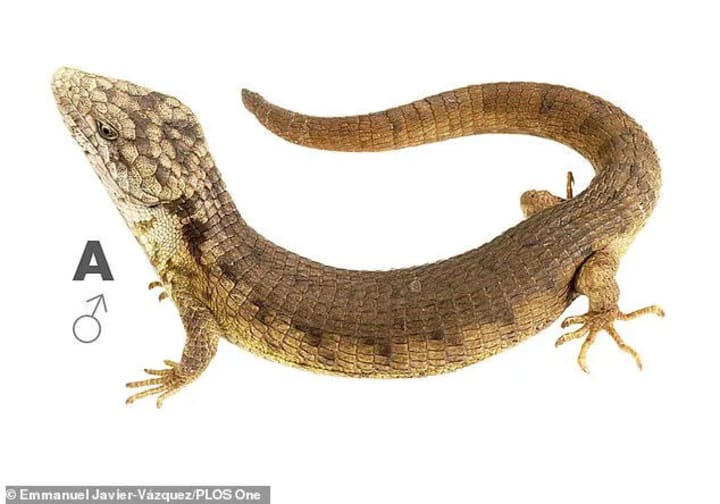
In the mountain forests of southern Mexico, a group of researchers used a combination of morphological and genetic traits to identify a new variety of alligator lizards. The new variant doesn’t only have a significantly different genetic sequence from other local varieties but also has a strikingly different color pattern and body shape to others in the region.
It’s not yet clear whether this species is rare or elusive — or both, as it camouflages well in the trees it lives in. The group that collected specimens for the study spent hundreds of hours searching for more of the creatures and were only able to find a total of five. Despite the difficulty in locating the dragoncito, the team feels emboldened by such a profoundly new discovery. They believe the area is rife with potential for more species discoveries, considering this new species is one of many found in the region in the last few years.
16. Rhynchocalamus hejazicus — Common Name Not Yet Coined
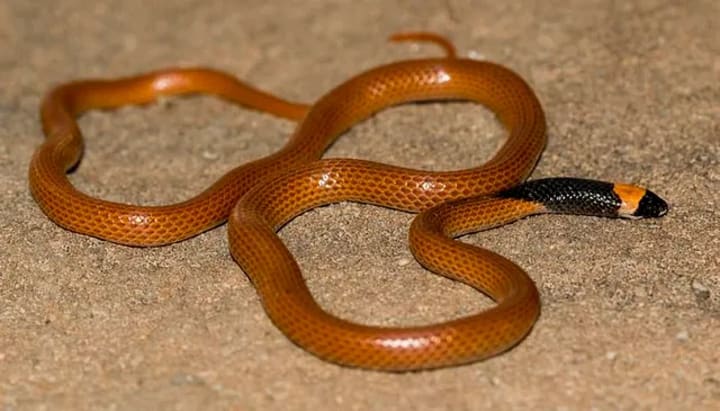
At the end of May, a global team of researchers found a new species of snake that resides in the deserts near Saudi Arabia’s western coast. The authors of the study are still actively working out many of the behavioral details of the small, reddish critter, but they believe it is a fairly common nocturnal species throughout the area that enjoys hiding out in sand and herbaceous vegetations.
The authors were particularly interested in how widespread the snake is, and unbothered by the cities built about the region, too. Considering that even common species are still being discovered, it points to the ecological importance of the region, and how many mysteries are still hiding underneath the sand of the Middle East.
Source: New Snake May Unlock Animal Mysteries — Newsweek
17. Booralana nickorum — Common Name Not Yet Coined
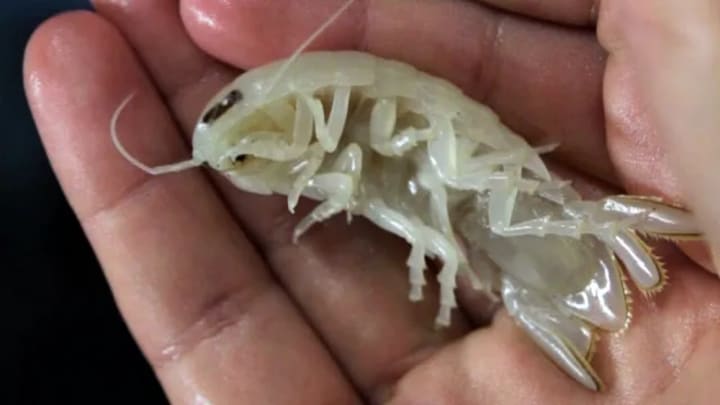
Truly, it’s an incredible year for marine biology discoveries. At the very beginning of the year, a study administered in the Bahamas found a new species of deep-sea isopod: the Booralana nickorum. Notable for its massive eyes and see-through body, this species of isopod is roughly 3 inches in length and looks like a semi-cute combination of a bug and a lobster. Maybe it’s just me, but this little guy looks cute — is it those big eyes?
To find the near-invisible creature, scientists used glow sticks and LED lights to pick up on its translucent exoskeleton. Its deep-dwelling nature makes it unnecessary for any form of pigmentation, not unlike many other creatures that live at its depth (Around 500 meters under the sea!).
Though the species is new to us, scientists estimate that this little sea bug has existed for nearly 300 million years!
18. Eustomias (Nominostomias) robertsi — Roberts’ Dragonfish
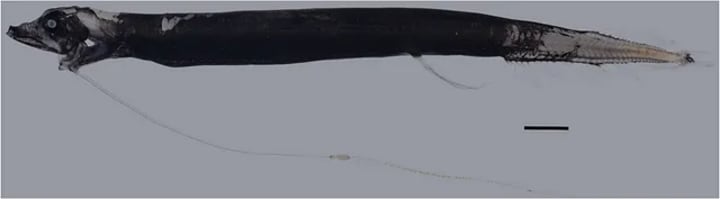
It’s an excellent year for dragonfish biologists. At the start of June, a research vessel located off the coast of New Zealand pulled up an incredible creature from deep below the waves. The jet-black fish was noted by scientists to have a dragon-like appearance, with big fangs and a large snout and eyes to match.
This new species of dragonfish, of which there are over 100 related species already discovered, is about 9 inches in length, with quite a notable, creepy maw, making it, though tiny, quite the frightening-looking deep-sea critter.
Source: New species of ‘dragon’-like fish discovered off New Zealand | Miami Herald
19. The Falkor (too) Expedition — 100 New Species of Deep Sea Creatures
Alright, I’ll admit it, I’m cheating a bit with this entry on the list by lumping in 100 species together. But, as they were all found on the same expedition, it feels wrong to split them up into their own categories. In January, an Ocean Conservancy research vessel explored an underwater mountain range near Chile and, via the use of cutting-edge sonar and deep-sea exploration tech, managed to document an astounding collection of new critters.
With literally tons of new creatures to categorize, including corals, sponges, lobsters, jellies, and cephalopods, this specific expedition deserves our applause. Along with all that new knowledge provided, it’s also a testament to how many species are out there still to discover — and how much new technology we’re developing will aid us in those discoveries.
Source: 100+ New Species Discovered in the Deep Sea
20. 100+ New Species Discovered in Southeastern Africa
Oops, I did it again. Remarkably, the Falkor (too) Expedition wasn’t the only time this year that scientists managed to find over 100+ new species. In April of this year, scientists in southeastern Africa found so many unique species in neighboring habitats that they are proposing the creation of a new ecoregion! The series of inland islands near Malawi and Mozambique in question are home to an overwhelming number of new species that are unique to the archipelago.
Scientists are still actively sorting through these creatures to better understand exactly how many new species can be found here. Likely, many of these will officially be classified in the next year or so. But, due to the incredible findings, this group deserves mention as a single unit, as the sheer size of discovery is particularly of note
Source: Hundreds Of New Species Discovered On Africa’s Isolated Sky Islands
–
This year, we already have a hefty supply of incredible new-to-us creatures — and there are still four months to go. All about the wide world, as I write this and, later, as you read it, researchers are tirelessly working to discover more so that we may better comprehend the complexity of life on our planet. With every single one of those discoveries, we step closer to true understanding.
And yet, there is still so much more to understand, so much that remains hidden in tiny niches of the planet, waiting to be found, waiting to be learned about. The age of exploration and discovery is far from over. We only need to know where to look and where to wonder.
–
Do you know of a species that was discovered that this list missed? Let me know in the comments!
Which new species is your favorite? :)
--
Cross-Posted from Medium. :)
About the Creator
Olivia L. Dobbs
Science Enthusiast, Naturalist, Dreamer, Nerd.
I crosspost my Medium articles here :)
You can find my main account on Medium: https://medium.com/@oliviadobbs13
Check out my science! -> bit.ly/DobbsEtAl
Keep reading
More stories from Olivia L. Dobbs and writers in Earth and other communities.
Why Geomagnetic Storms Are Increasing: The Science Behind Solar Activity
“Sorry, it’s going to be a bit before your card goes through,” said a young, stressed-out shopkeep atop Mount Hood, Oregon in May, “The aurora is killing our internet today.” The customer ahead of me tapped on the counter impatiently as the card reader slowly attempted to connect. “Any chance you have cash on you?”
By Olivia L. Dobbsabout a year ago in Earth
Warships and Fighter Jets: What Is the ‘Massive’ US Armada on Its Way to Iran?
A Show of Force in a Volatile Region The United States has begun deploying what officials and analysts are describing as a “massive” military armada toward the Middle East, amid rising tensions with Iran. The movement includes aircraft carriers, guided-missile destroyers, submarines, and advanced fighter jets, signaling one of the most significant American military postures in the region in recent years.
By Aarif Lashari4 days ago in Earth
Why Earth is round why not plan?
For thousands of years, humans have wondered about the true shape of the world beneath their feet. Early civilizations imagined many possibilities: a flat disc, a giant mountain, or even a floating island. However, careful observation of nature, the sky, and the seas gradually revealed something remarkable — Earth is round. Not perfectly like a ball, but very close to a sphere, slightly flattened at the poles. This shape is called an oblate spheroid. The evidence for this conclusion comes from ancient observations, modern science, and direct images from space.
By USA daily update 7 days ago in Earth


Comments
There are no comments for this story
Be the first to respond and start the conversation.