
Are Octopuses Actually Super-Smart Space Aliens?
Exploring the Fascinating Hypothesis of Extraterrestrial Origins

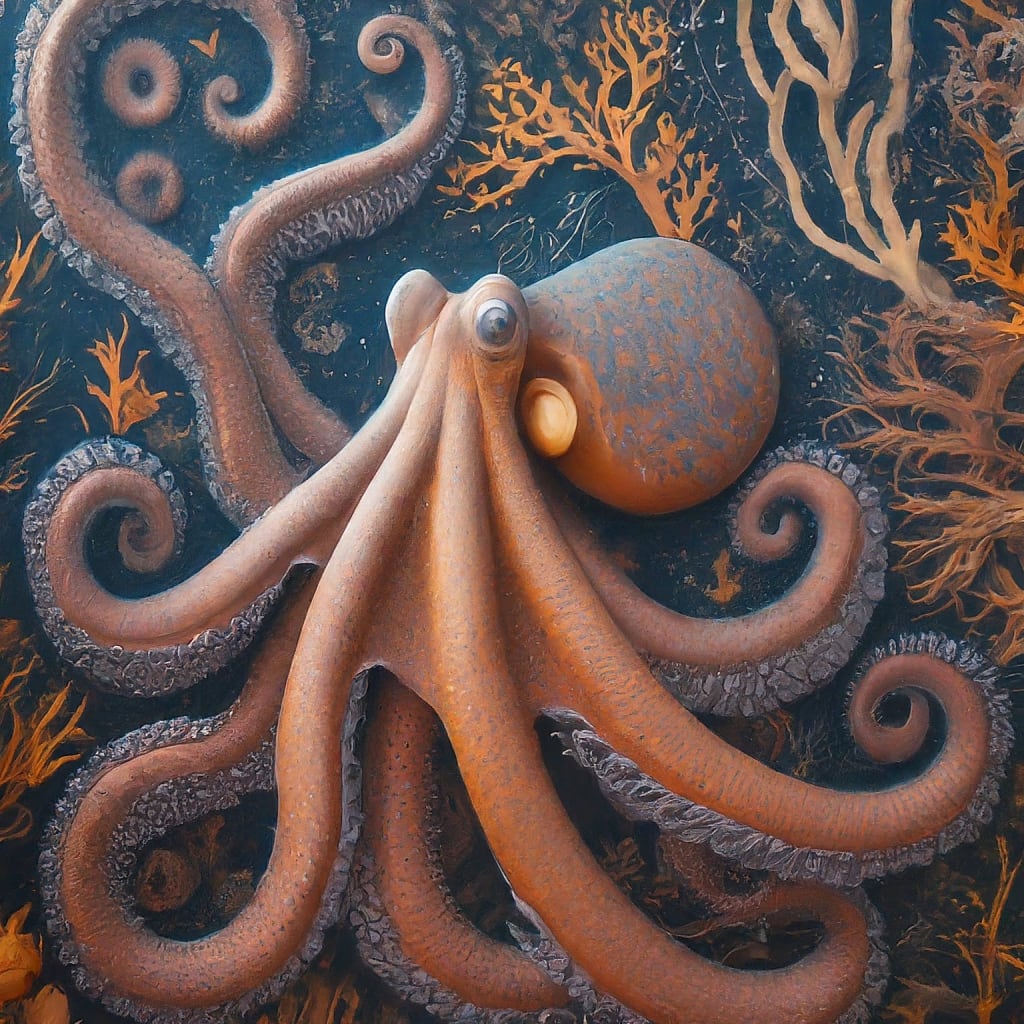
Introduction
The idea that octopuses are super-smart space aliens might sound like science fiction, but it's a hypothesis that has sparked serious scientific curiosity. Octopuses, with their unique physiology, advanced problem-solving abilities, and mysterious genetic makeup, are among the most extraordinary creatures on Earth. Could their origins be out of this world? This captivating question invites us to explore the boundaries of biology, evolution, and the potential for extraterrestrial life.
The Extraordinary Nature of Octopuses
Octopuses are members of the class Cephalopoda, which also includes squids, cuttlefish, and nautiluses. Renowned for their intelligence, camouflage abilities, and complex nervous systems, octopuses possess several unique characteristics:
Remarkable Intelligence: Octopuses have demonstrated problem-solving skills, tool use, and complex behaviors like escaping enclosures and solving puzzles. Their intelligence is comparable to that of some vertebrates, despite having a fundamentally different brain structure.
Masterful Camouflage: Octopuses can change their skin color and texture to blend seamlessly into their surroundings, thanks to specialized cells called chromatophores, leucophores, and iridophores.
Incredible Regeneration: Octopuses can regenerate lost limbs, a trait that hints at advanced biological processes and is relatively rare among animals.
Distributed Nervous System: Unlike humans, whose central nervous system is concentrated in the brain, octopuses have a significant portion of their neurons distributed in their arms, allowing each arm to operate semi-independently.
Unique Genetic Makeup: The octopus genome is highly complex, with a large number of genes that are unique to them. This genetic distinctiveness has led some researchers to speculate about their origins.
The Panspermia Hypothesis
The idea that octopuses might be super-smart space aliens ties into the broader theory of panspermia. Panspermia is the hypothesis that life exists throughout the Universe and can be distributed by space dust, meteoroids, asteroids, comets, or even by spacecraft as unintended contamination by microorganisms.
Forms of panspermia include:
Lithopanspermia: Life can survive the journey through space inside rocks or meteors.
Radiopanspermia: Microorganisms could be transported through space by radiation pressure.
Directed Panspermia: Life could be intentionally spread by an advanced extraterrestrial civilization.
In the case of octopuses, the suggestion is that their ancestors might have come to Earth through one of these methods, particularly lithopanspermia or directed panspermia. The extreme conditions of space could potentially be survived by some microbial life forms, which eventually evolved into the complex beings we see today.
The Cambrian Explosion and Octopus Evolution
One key piece of evidence supporting the idea of octopuses having extraterrestrial origins is their sudden appearance in the fossil record during the Cambrian Explosion, approximately 541 million years ago. The Cambrian Explosion was a period of rapid evolutionary development when most major animal phyla appeared.
The octopus's ancestors, the soft-bodied mollusks, appear to have developed rapidly during this period. Some proponents of the panspermia hypothesis argue that such rapid emergence and evolution could be due to the introduction of genetic material from extraterrestrial sources.
Genetic Anomalies
The octopus genome is unique in several ways that have fueled speculation about their extraterrestrial origins. A 2015 study published in Nature revealed that octopuses have a genome with approximately 33,000 protein-coding genes, more than humans. Additionally, they possess a significant number of transposons, or "jumping genes," which can move around the genome and cause mutations.
These genetic peculiarities are unusual for Earth organisms and suggest a complex evolutionary history. While most scientists attribute these features to natural evolutionary processes, the panspermia hypothesis suggests that such genetic complexity could be the result of alien genetic material integrating with Earth-based life forms.
Advanced Intelligence and Behavior
The intelligence and behavior of octopuses set them apart from most other invertebrates. They can learn through observation, demonstrate short- and long-term memory, and engage in sophisticated problem-solving.
Octopuses have been observed using coconut shells and other objects as tools, solving complex mazes, and escaping from seemingly secure enclosures. Their ability to adapt to new environments and situations indicates a high level of cognitive flexibility, which is rare among invertebrates.
Some scientists argue that this advanced intelligence could be a sign of an evolutionary pathway influenced by extraterrestrial genetic material. The ability to learn and adapt quickly would be advantageous for survival in a new environment, such as Earth.
Counterarguments to the Panspermia Hypothesis
While the panspermia hypothesis is fascinating, it is also highly speculative and not widely accepted in the scientific community. There are several counterarguments to consider:
Earth-Based Evolution: Many scientists believe that the unique features of octopuses can be explained by Earth-based evolutionary processes. The diverse and extreme environments on Earth, such as deep-sea hydrothermal vents, have driven the evolution of highly specialized organisms.
Resilience of Life: Life on Earth has demonstrated remarkable resilience to extreme conditions. Microorganisms known as extremophiles can survive in environments that were once thought to be uninhabitable, such as deep-sea hydrothermal vents, acidic hot springs, and even the vacuum of space.
Genetic Mechanisms: The genetic complexity observed in octopuses, including the presence of transposons, can be attributed to natural genetic variation and mutation over millions of years. These mechanisms are well-documented in the study of genetics and evolution.
Octopuses in Science Fiction
The idea of octopuses as aliens has also been explored in science fiction, adding a pop culture angle to the discussion. In popular media, cephalopods often serve as the inspiration for extraterrestrial beings due to their otherworldly appearance and intelligence.
H.P. Lovecraft's Cthulhu: One of the most famous examples is H.P. Lovecraft's Cthulhu, a cosmic entity with an octopus-like head. Cthulhu embodies the fear of the unknown and the alien, tapping into the deep-seated fascination and unease humans feel towards octopuses and other cephalopods.
Arrival (2016): In the film "Arrival," the extraterrestrial beings, known as Heptapods, have a cephalopod-like appearance with multiple tentacles and communicate through complex, circular symbols. This portrayal emphasizes their intelligence and the potential for vastly different forms of communication and cognition in alien species.
The Octonauts: In the children's animated series "The Octonauts," an octopus named Professor Inkling is a central character who is depicted as intelligent and wise, reinforcing the idea of octopuses as beings with advanced cognitive abilities.
These portrayals in science fiction reflect the human fascination with octopuses and their potential connection to extraterrestrial life. They also serve as a reminder of the powerful role that imagination and creativity play in exploring scientific concepts and possibilities.
The Alien Connection: Speculative but Intriguing
While the idea that octopuses are super-smart space aliens is speculative and lacks concrete evidence, it provides a fascinating lens through which to explore the origins of life and intelligence. The panspermia hypothesis, while not widely accepted, offers an alternative perspective on how life might have originated and spread throughout the Universe.
It's important to note that mainstream science generally supports the idea that octopuses, like all other life forms on Earth, evolved through natural processes. The genetic and behavioral anomalies observed in octopuses can be explained through the lens of Earth-based evolutionary biology.
What If It Were True?
Entertaining the idea that octopuses are super-smart space aliens can spark the imagination and encourage a broader discussion about life's diversity and the possibilities of extraterrestrial life. If octopuses were indeed aliens, it would revolutionize our understanding of biology, evolution, and our place in the Universe.
Biological Implications: Discovering that octopuses have extraterrestrial origins would lead to a reevaluation of the mechanisms of evolution and genetic diversity. It would provide insights into how life can adapt to new environments and the potential for life to exist in extreme conditions.
Astrobiology: The field of astrobiology, which studies the potential for life beyond Earth, would gain a new perspective. It would encourage scientists to consider more seriously the possibility that life can be transported across space and thrive in diverse environments.
Philosophical and Ethical Questions: The discovery would raise philosophical and ethical questions about our relationship with other life forms. If octopuses are aliens, how should we treat them? What responsibilities do we have towards preserving their habitats and understanding their unique biology?
Technological Advancements: Understanding the genetic and neurological mechanisms that give octopuses their unique abilities could lead to technological advancements. Insights into their camouflage capabilities, regenerative properties, and intelligence could inspire new technologies in medicine, robotics, and artificial intelligence.
Conclusion
The hypothesis that octopuses are super-smart space aliens is a captivating and thought-provoking idea that challenges our understanding of life on Earth. While it remains speculative and not widely accepted by the scientific community, it highlights the extraordinary nature of these creatures and the mysteries that still surround their evolution.
Exploring such hypotheses, even if they are far-fetched, can drive scientific curiosity and innovation. Whether octopuses are truly aliens or simply a remarkable product of Earth's evolutionary processes, they continue to inspire awe and wonder, reminding us of the incredible diversity and complexity of life on our planet.
The study of octopuses and their potential extraterrestrial origins opens up a broader conversation about life's possibilities and the endless questions that remain unanswered. As we delve deeper into the mysteries of our universe, we are reminded of the importance of curiosity, imagination, and the pursuit of knowledge.
#Octopus #Aliens #Panspermia #ExtraterrestrialLife #OctopusIntelligence #Astrobiology #ScienceFiction #MarineBiology #Evolution #Genetics #Cephalopods #SpaceExploration #Curiosity #Mystery #ScienceFacts #Biology #UnderwaterWorld #SmartCreatures #SpeculativeScience
About the Creator
Asanga Coorey
Sri Lankan social worker by day, storyteller unbound by night. Past whispers, present struggles, future dreams ignite inspiration across genres. Let's explore & make a difference, one story at a time! #AllGenres
Keep reading
More stories from Asanga Coorey and writers in Earth and other communities.
The One Problem
(This essay transforms the fragmented material into a single philosophical, future-oriented but non-naive vision. It treats humanity’s problems as one problem: governance understood as the art of living together over time, under shared responsibility, memory, and judgement. It avoids utopian innocence, and stages the solution historically: 2026, 2050, 2075, 2100.)
By Peter Ayolov5 days ago in Earth
Unusually Early Arctic Breakdown Forming in February: Meteorologists Sound the Alarm
Meteorologists worldwide are issuing an unprecedented warning: an Arctic breakdown—a major disturbance in the polar atmosphere—is forming earlier than expected this February. This early event could reshape weather across the Northern Hemisphere, leading to unusual cold snaps, heat waves, and storm activity.
By Ayesha Lashariabout 12 hours ago in Earth


Comments
There are no comments for this story
Be the first to respond and start the conversation.