
Can Nuclear Bombs Save the Planet?
A Bold Idea to Fix Climate Change

A Midnight Thought Experiment
Do you ever lie awake at night, staring at the ceiling, your mind spiraling into impossible solutions for problems too big to ignore? I do. Sometimes I imagine some kind of cosmic eraser—something that could just wipe away all our mistakes in one clean sweep. Like nanobots programmed to devour carbon dioxide molecule by molecule, or trees engineered to grow skyscraper-tall and breathe in smog like it’s fresh air. Or maybe… just maybe… there’s a way to pull infinite energy from the fabric of reality itself. (Yeah, right.) Then again, dreams are free.
But this morning, while sipping coffee so bitter it felt like regret in liquid form, I stumbled across something even wilder than my late-night musings: a paper by a physicist proposing we fix climate change with nuclear bombs. Yes, you read that correctly, here you can read the original article. No, they’re not suggesting we nuke ourselves back to the Stone Age. This isn’t about turning Earth into a radioactive wasteland where ash chokes the skies and humanity shivers through an eternal winter. Instead, it’s a plan as audacious as it is bizarre—a targeted detonation beneath the ocean floor designed to kickstart a massive carbon-capture operation. Sounds less apocalyptic, doesn’t it? Well, sort of.
The Big Bang Theory of Carbon Removal
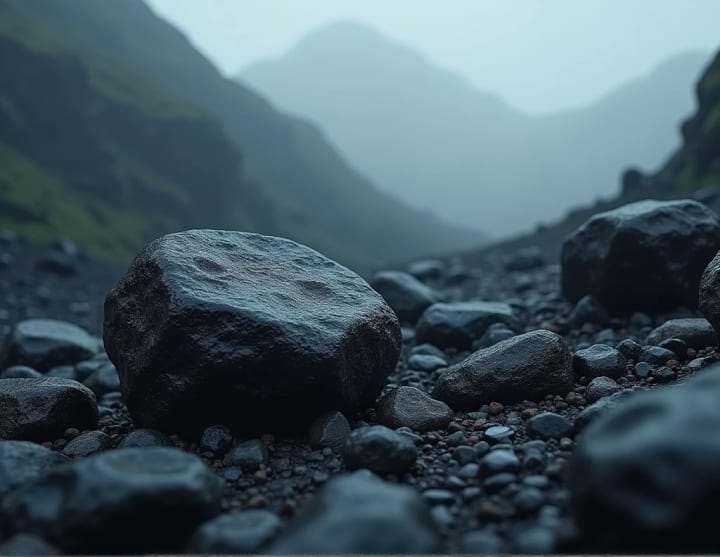
Let me break it down for you. The concept hinges on something called enhanced weathering. Picture this: certain rocks—basalt being one of them—have a natural talent for locking away carbon dioxide. They react with CO2, trapping it forever in mineral form. It’s nature’s own cleanup crew, but here’s the catch—it works slower than molasses dripping uphill. Scientists have toyed with speeding things up by grinding basalt into powder and scattering it over fields. But let’s face it: that approach is clunky, costly, and frankly uninspired.
Now enter the bomb
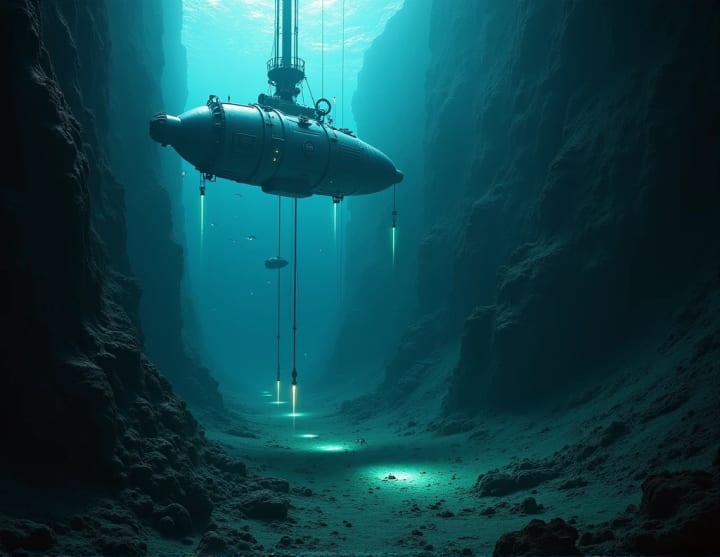
Imagine burying a nuclear device deep under the seafloor, smack dab in the middle of a basalt-rich region. When triggered, the explosion would pulverize billions of tons of rock instantly, creating a fine dust cloud carried by ocean currents across vast stretches of the seabed. Since oceans already act as Earth’s lungs, absorbing CO2 like sponges soaking up spilled wine, this newly created basalt dust would turbocharge the process. One colossal blast could potentially scrub decades’ worth of emissions out of the atmosphere within years.
It’s almost poetic, isn’t it? Using destruction to heal. Turning chaos into salvation. Almost.
Crunching the Numbers—and Facing the Fallout
Here’s where things get tricky. To make a meaningful impact on global carbon levels, the physicist estimates we’d need an explosion equivalent to 81 gigatons of TNT. For perspective, the Tsar Bomba—the most powerful nuke ever detonated—was a mere 50 megatons. That means we’re talking about a weapon 1,000 times stronger than anything humans have built before. Let that sink in for a moment.
And the price tag? A cool $10 billion. Sounds steep until you compare it to the trillions projected in climate-related damages over the next century. Plus, the proposed site—the Kerguelen Plateau in the Indian Ocean—is desolate enough to avoid human casualties. Unless you count penguins. And those French researchers who occasionally visit. Poor guys might wake up to find their lab obliterated.
But hold on. Before you start drafting evacuation plans for Antarctica’s wildlife, consider the risks. What happens if radioactive material leaks into the ocean? What if the explosion destabilizes the seafloor, unleashing tsunamis? What if the sudden influx of pulverized basalt disrupts marine ecosystems? Oh, and don’t forget water vapor—one of Earth’s sneakier greenhouse gases. If the blast sends massive amounts of it rocketing into the stratosphere, we might accidentally crank up global warming instead of dialing it down. Yikes.
Other Outlandish Plans to Cool the Globe

If the idea of nuking the planet seems far-fetched, rest assured, it’s not alone. Humanity has dreamed up plenty of other harebrained schemes to tackle climate change:
- The Mega Chimney: Imagine a towering structure several kilometers high, funneling heat straight into space. Bonus points—it could generate power! The downside? Scaling current prototypes would require building something ten times taller than Dubai’s Burj Khalifa. Good luck getting zoning approval for that.
- Balloon-Assisted Cooling: Release warm air into balloons, float them sky-high, then dump the heat into thinner altitudes where it dissipates faster. Sounds simple, right? Except we’d need millions—maybe billions—of balloons. Where does one even buy that many?
- Space Mirrors: Deploy a giant reflective shield between Earth and the Sun to bounce back a fraction of solar radiation. Unlike injecting particles into the atmosphere, this method comes with a handy off-switch. Still, someone’s gotta foot the astronomical bill.
Each of these ideas has its merits—and its glaring flaws. Yet none of them address the real elephant in the room.
The Real Challenge: Us
At the end of the day, none of these proposals—nuclear explosions, mega chimneys, space mirrors—are technically impossible. We’ve got the tools, the knowledge, and the ingenuity to implement them. So why haven’t we? Because the problem isn’t physics. It’s us.
We’ve known how to transition away from fossil fuels for decades. Solar panels, wind turbines, electric cars—they’re not science fiction anymore. Yet emissions keep climbing. Why? Not because we lack solutions, but because we lack cooperation. Implementing any of these grandiose fixes would demand unprecedented levels of teamwork, funding, and political willpower. And history tells us humanity isn’t exactly great at playing nice together.
So no, I don’t think we’ll be saving the planet with a nuclear bomb anytime soon. But as climate disasters pile up and conventional strategies gather dust on policymakers’ desks, don’t be shocked when fringe theories like this creep closer to the mainstream. Desperation breeds creativity, after all. When the world feels like it’s burning, even the wildest ideas can start looking reasonable.
Final Thoughts: Would You Push the Button?
So here’s the million-dollar question—or should I say the $10-billion-dollar question. If given the chance, would you press the button? Would you gamble the fate of the planet on a single, earth-shattering explosion? Or is this whole thing just another example of scientists indulging in overly ambitious thought experiments?
Personally, I’m torn. On one hand, the sheer audacity of the idea is thrilling. There’s something undeniably cinematic about using humanity’s darkest invention to combat its greatest threat. On the other hand, the potential consequences are terrifying. What if we miscalculate? What if we trade one catastrophe for another?
For now, though, I’ll leave you with this image: a lone penguin waddling across the Kerguelen Plateau, blissfully unaware that somewhere nearby, a group of scientists is debating whether to blow up their backyard.

Life goes on, oblivious to our existential crises. Maybe that’s the lesson we need to learn—not how to save the planet, but how to live in harmony with it.
What do you think? Let me know.
About the Creator
Francisco Navarro
A passionate reader with a deep love for science and technology. I am captivated by the intricate mechanisms of the natural world and the endless possibilities that technological advancements offer.
Keep reading
More stories from Francisco Navarro and writers in Earth and other communities.
Police Identify 18-Year-Old as Suspect in Tumbler Ridge Shooting
On February 10, 2026, one of the deadliest mass shootings in recent Canadian history unfolded in the remote community of Tumbler Ridge, British Columbia, leaving the nation reeling. Police have officially identified the suspect as an 18-year-old local resident, Jesse Van Rootselaar, following a violent rampage that resulted in multiple deaths and scores of injuries.
By Sadaqat Ali8 days ago in Earth



Comments (1)
I love your content ✨