
Environmental Refugees- Climate refugees
Victims of climate change

Study about existing victims of climate change, the predictions of future migrations of environmental refugees and the likelihood of political conflicts and even wars, if the world does not share the situation.
The term “environmental refugees” has increasingly been invoked over the last two decades to describe growing waves of people displaced by environmental problems.
They are people who are forced to flee their homes primarily because of environmental push factors such as desertification, deforestation, extreme weather events, floods and droughts or natural events relating to the Earth’s hydrological cycle. And with even the most modest scenarios for Global Warming showing significant rises and increases in the intensity and probably frequency of extreme weather events, certain parts of the world that are highly populated – along coasts and rivers – are going to become much harder places to live. In some areas that are dependent on rain-fed agriculture, especially in some parts of Sub-Saharan Africa, people are going to find life difficult, if not impossible, to live. So every projection points to a significant increase in the number of environmental refugees. Red Cross research shows that more people are now displaced by environmental disasters than by war.
Environmental changes causing widespread migration
Environment-related migration has been most acute in Sub-Saharan Africa, but also affects millions of people in Asia, for example India. Meanwhile, Europe and the United States are witnessing increasing pressure from victims of often mismanaged and deteriorating soil and water conditions in North Africa and Latin America.
A study focusing specifically on Ghana, Mozambique, Niger and Senegal analyzes the latest data on environmental factors to determine what changes are most likely to trigger migration. Two thirds of Africa is covered by desert or dry land. In the four countries, environmental changes like soil degradation and erosion are especially prevalent in rural areas, where poverty is pronounced.
- In Ghana, these slowly occurring environmental changes, coupled with severe and frequent droughts, have been partly responsible for internal migration from the north to the south.
- In Mozambique, droughts triggered internal migration from rural areas in the south to coastal and urban centers.
- In Niger, environmental changes related to the expansion of the Sahel desert have resulted not only in internal, but also border-crossing and regional migration flows.
- In Senegal, internal and international migration resulted from the environmental changes taking place in the peanut basin, where job and farming opportunities decreased with increasing environmental degradation.
Sana’a, Yemen’s capital, has doubled its population every six years since 1972 and now stands at 900,000. The aquifer on which the city depends is falling by 6 meters a year and may be exhausted by 2010.In China, the Gobi desert expands more than 10,000 square kilometers per year, threatening many villages. Morocco, Tunisia and Libya each lose over 1,000 square kilometers of productive land annually to desertification.
In Egypt, half of irrigated croplands suffer from salinization (the accumulation of soluble salts in poorly drained soil).In Turkey, 160,000 square kilometers of farmlands are affected by soil erosion.
In the United States, Louisiana now loses roughly 65 square kilometers per year to erosion by the sea, while in Alaska 213 communities are threatened by tides that creep roughly three meters further inland each year.
In the low-lying Pacific island state of Tuvalu, Global Warming has become a matter of life and death. The government of Tuvalu has already negotiated an agreement with New Zealand to accept its 11,600 citizens in the event that rising sea levels swamp the country.
The Maldives is home to 350,000 people, all living at eight feet above sea level. With current models showing a sea level rise of up to nine foot by 2100, President Nasheed has decided not to wait for the governments of the world to act, but has gone on a speaking tour around the world and before the UN to argue for support for curbing emissions and money for relocation. He has even gone so far as to have his cabinet get scuba training in order to have a full government cabinet meeting underwater to emphasize the threat of sea level rise due to climate change.
In northern Syria, a sustained drought has led to the abandonment of 160 villages due to climate change, with dwindling resources forcing migration into urban centers.
A report focuses on long-term forecasts that show that the Middle East faces hotter, drier and less predictable climate, and warns that this is a recipe for conflict in the already unstable region. The increasing climate change pressure will lead to food insecurity, hinder economic growth and result in large-scale population movements in
the region. While the report focuses on the pending instability due to climate change, it also suggests proactive steps to address these challenges by promoting conservation, adapting to the impacts, reducing greenhouse gas emissions and initiating greater cooperation to share dwindling resources.
By one rough estimate, as many as 100 million people worldwide live in areas below sea level and/or are subject to storm surge.
Around the world, vulnerability is on the increase due to the rapid development of megacities in coastal areas. Many cities are overwhelmed, incapable of handling with any degree of effectiveness the demands of a burgeoning number of people, many of whom have to take up shelter in flimsy shanties. Combine this trend with rising sea levels and the growing number and intensity of storms, and it is the recipe for a disaster-in-waiting, with enormous potential to create waves of environment-driven migration.
Environmental conflicts or wars
Wars and human conflicts have long been related to conquest and material gain. However, the new commodities in a rapidly warming world are access to water, food and oil. Exact figures vary on how many refugees may be displaced due to environmental factors and conflicts, although experts are predicting numbers from 50 million people by 2010 to 150 million by 2050. Hurricane Katrina in 2005 saw the displacement of more than 15 million people in total, due to impacts to the economy, emergency evacuations, higher gas prices or even lack of drinking water.
Darfur – environmental war on water and land resources
The ongoing and bloody conflict in the Darfur region of western Sudan is considered to be an environmental-based conflict. The conflict started in 2003 between the African farmers and the Arabic herders, both struggling to access the same limited resources. The government is reported to be supporting the people of the Janjaweed tribes, who keep Sudanese farmers from accessing diminishing water supplies and using the arable land. Restoring peace in the region will be extremely difficult until the area’s water and resource shortages are addressed.
Wars on water
Furthermore, water seems increasingly likely to be a cause of war, because there is simply not enough of it to go around. In the mere 40 years up to 1990, global water-use tripled. Its use is inequitable and profligate where it is relatively easy to get. A western family can use 2,000 liters a day; in Africa a few liters of untreated water have to be carried, often for long distances or in war conditions. The world population is still growing, while water tables fall, underground aquifers empty, lakes shrink and wetlands dry up.
There are fears for war over the Euphrates, the object of a vast damming operation in Turkey which will cut Syria’s water supply by a third – and Turkey has threatened to cut Syria off altogether for supporting Turkish dissidents. There are fears for war over the river Jordan: Israel, bent on self-sufficiency, claims all the water it can; but Syria, Jordan and the Palestinians need supplies too. There are fears for war over the Nile: Egypt is diverting river water to irrigate the desert so as to grow crops instead of importing them; eight more countries, including drought-devastated Sudan, are in the queue. President Sadat has said: “The only matter that could take Egypt to war again is water”.
Future environmental refugees
According to current predictions, there will be 75 million environmental refugees displaced due to climate change by 2050. Other models are predicting up to 250 million people. This wide disparity in ranges is because we still do not know how wrong climate change models will turn out to be, as evidenced by the updated 2009 report from IPCC (Intergovernmental Panel on Climate Change), which is drastically worse than scientific estimates by the IPCC in 2007.
We must look further and follow the factors that cause the warming and are responsible for the millions of people who will lose their homes and way of life, and look to the solutions as well. According to the definition by UN High Commissioner on Refugees (UNHCR), a refugee is someone either inside or outside their national borders fleeing persecution due to their affiliation with their social group – for instance ethnic, religious, or political persecution. But a person whose island is swallowed up by rising sea levels has no rights under the refugee law. In fact, such people are considered “migrants”, meaning they are “voluntarily” leaving their country. The first step could be for the United Nations to expand its Charter to encompass those who have to flee their country because of the effects of Global Warming, so they are covered under the current definition of a refugee.
About the Creator
Keep reading
More stories from Abhinav singh and writers in Earth and other communities.
Met Éireann Urges Vigilance as Orange and Yellow Rain Warnings in Effect
Met Éireann, the national meteorological service of Ireland, has issued a series of urgent weather warnings, including Orange and Yellow alerts, as heavy rainfall continues to impact large portions of the country. With the weather forecast indicating persistent and intense downpours over the coming days, authorities are urging the public to remain vigilant, particularly in areas most susceptible to flooding and severe weather conditions. Heavy Rainfall and Potential Flooding The Orange weather warning, the second-highest alert level in Ireland, is currently in effect for several counties, including Galway, Clare, and parts of Limerick. This alert indicates that significant rainfall could lead to localized flooding, as well as difficult driving conditions due to the accumulation of water on roads. Met Éireann has cautioned that rainfall totals may exceed 40 mm in some areas, with more intense bursts likely to occur over a relatively short period of time. In addition to the Orange warning, a Yellow alert has been issued for a wider swath of the country, including the entire eastern coast, Munster, and parts of the Midlands. While the Yellow warning is the less severe of the two, it still highlights the potential for hazardous conditions, including surface water flooding and poor visibility. The accumulation of rainwater, combined with strong winds, may create challenging conditions for motorists and pedestrians alike, making travel unsafe in some regions. The Causes Behind the Storms The heavy rainfall is being caused by a low-pressure system sweeping across the Atlantic, bringing with it intense showers and gusty winds. These weather systems are common during the autumn and winter months in Ireland, but this particular storm is notable for its widespread impact and persistent nature. The system is expected to linger over Ireland for several days, keeping the nation under the threat of continued heavy rain and strong winds. Meteorologists at Met Éireann have explained that the storms are drawing moisture from the Atlantic, causing the already saturated ground to absorb even more water. This increases the risk of localized flooding, especially in areas that have already experienced heavy rain in recent weeks. With more rain expected to fall throughout the week, concerns are mounting that rivers may overflow, and drains could become blocked, exacerbating flooding issues. Impact on Transportation and Infrastructure The weather warnings are expected to have a significant impact on transportation across the country. Motorists are being urged to exercise extreme caution while driving, especially on rural roads and in areas known to be prone to flooding. The increased risk of aquaplaning and reduced visibility due to heavy rain means that drivers should adjust their speed and avoid driving through standing water. Rail services have also been affected, with potential disruptions to some routes due to flood risks and safety concerns. Met Éireann has warned that some railway tracks may be impassable in certain parts of the country, particularly in the west and south. Passengers are advised to check with Irish Rail for real-time updates on service delays or cancellations. In addition, the aviation sector could face minor delays, as low visibility and strong winds may cause temporary issues at airports. The National Roads Authority (NRA) and local authorities have been working to clear any blocked drains, but the heavy rainfall may quickly overwhelm efforts to manage surface water. Safety Tips and Preparedness Met Éireann is strongly advising the public to take precautions to stay safe during the stormy period. For those living in flood-prone areas, it is crucial to be aware of any flood warnings issued by the local authorities and to take immediate action if flooding becomes imminent. People should avoid driving or walking through flooded areas, as even shallow waters can pose serious risks. For those living in coastal regions, the public is being reminded that high tides, combined with strong winds, may cause coastal flooding and erosion. It is recommended to stay away from exposed areas, such as beaches, cliffs, and harbors, during this time. Homeowners are also advised to check that drains, gutters, and downpipes are clear of debris to prevent water from backing up. Those in rural areas should take steps to secure outdoor furniture, equipment, and anything else that could be blown away in the strong winds. If you live in an area where flooding is a particular concern, it is wise to have an emergency kit with essentials such as flashlights, batteries, and a first-aid kit. The Role of Local Authorities Local authorities across Ireland have been working closely with Met Éireann to ensure that the public is kept informed of weather updates and to prepare for any potential flooding. In high-risk areas, sandbags are being distributed to protect properties from water damage, and emergency teams are on standby to address any flooding that may occur. In addition, Irish Water has been monitoring the potential for stormwater overflow, and is prepared to take emergency action if needed. Irish Water has warned the public that sewage systems could be overwhelmed by the heavy rainfall, and it is important for residents to avoid flushing non-biodegradable items, as this can exacerbate blockages. Looking Ahead: What’s Next for the Weather? The current Orange and Yellow warnings are expected to remain in effect throughout the week, with intermittent heavy rain continuing to affect much of the country. The low-pressure system that is driving the wet weather is forecast to weaken by the weekend, although there may still be isolated showers and wet conditions in some areas. While the weather outlook improves slightly as the system moves away, it’s important to remain cautious, as rain showers and localized flooding could still pose a risk. Met Éireann will continue to monitor the situation closely, and updates will be provided through their website and social media channels. Conclusion With the Orange and Yellow rain warnings now in effect, Met Éireann is urging the public to stay vigilant and take appropriate precautions to protect themselves and their property. Heavy rainfall, flooding, and transportation disruptions are expected over the next few days, and it’s crucial for people to stay informed and ready to act. As always, when dealing with severe weather, preparation and awareness are key to minimizing the risks and ensuring safety for all.
By Fiaz Ahmed 5 days ago in Earth
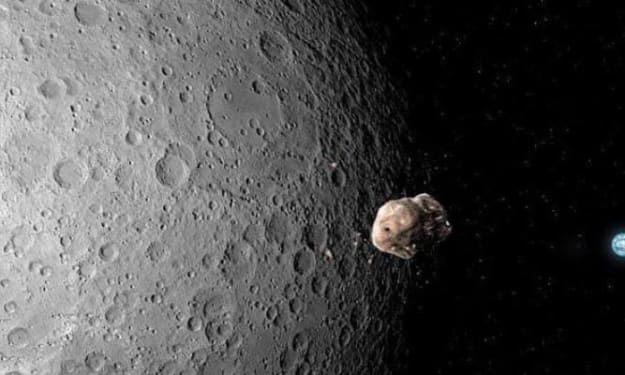
Asteroid 2024 YR4’s Collision With the Moon Could Create a Flash Visible From Earth, Study Finds
A newly published scientific study has sparked excitement across the global astronomy community by suggesting that Asteroid 2024 YR4, if it were to collide with the Moon, could generate a bright flash visible from Earth. While the event poses no threat to our planet, researchers say it could provide a rare natural experiment—offering valuable data about asteroid impacts, lunar geology, and future planetary defense strategies.
By Ayesha Lashariabout 15 hours ago in Earth



Comments
There are no comments for this story
Be the first to respond and start the conversation.