
Pyrolysis as a Regenerative Catalyst in Agricultural Circular System
Towards sustainable agriculture

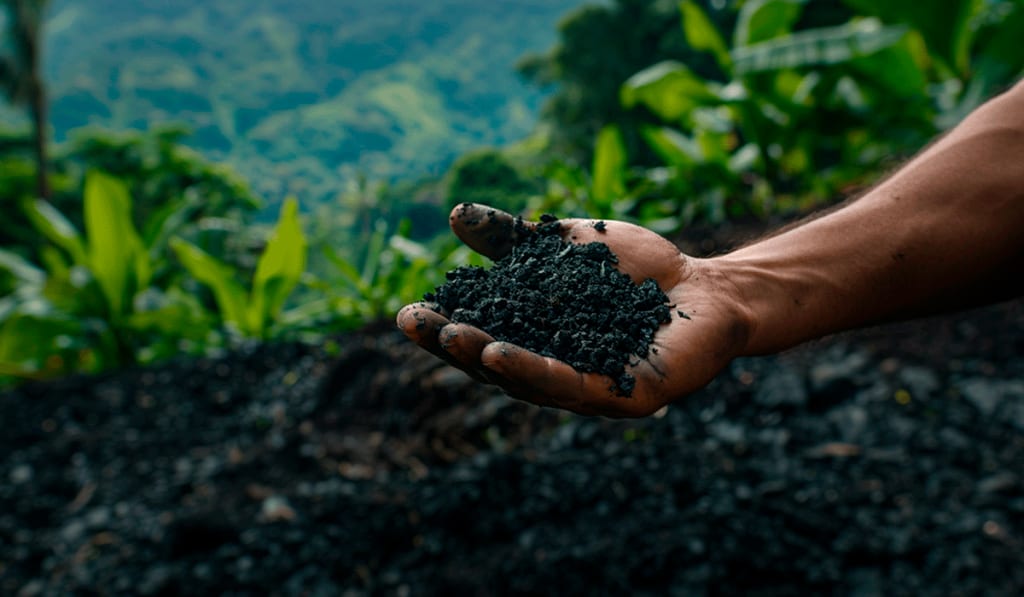
Agricultural systems worldwide are under increasing pressure to address waste, enhance soil productivity, and reduce dependence on fossil-derived inputs. Pyrolysis technology, particularly when deployed through a modern pyrolysis plant, offers a viable pathway toward a closed-loop agricultural economy. By converting organic residues into carbon-rich biochar and energy-dense gases and oils, pyrolysis enables the reintegration of nutrients and carbon back into farmland, while also offsetting emissions.
Converting Waste Streams into Soil Enhancers
Agricultural production inevitably generates biomass residues—rice husk, corn stover, sugarcane bagasse, coconut shell, and manure, among others. These materials, often treated as low-value waste or open-burned, contain embedded energy and mineral nutrients. Pyrolysis plant thermochemically decomposes this biomass under controlled, low-oxygen conditions, transforming it into biochar, syngas, and bio-oil.
Biochar stands out as a stable form of carbon. When applied to soil, it improves cation exchange capacity, water retention, and microbial activity. Its porous structure acts as a scaffold for nutrient retention and gradual release. The long residence time of biochar in soil—hundreds to thousands of years—makes it a potent instrument for both soil restoration and carbon sequestration.
Internalizing Energy and Fertility Loops
A key advantage of integrating pyrolysis into agricultural operations is the internalization of energy and fertility cycles. The non-condensable gas produced during pyrolysis is rich in methane, hydrogen, and light hydrocarbons, which can be redirected to fuel the reactor itself or power nearby equipment. This reduces external energy dependence and establishes on-farm energy sovereignty.
Similarly, nutrient-rich ash from the process contains potassium, calcium, and trace elements. When reintegrated into cropping systems, it serves as a supplementary fertilizer. This closes the nutrient loop and reduces the need for synthetic inputs, which are often imported at high financial and ecological cost.
Enhancing Livestock Waste Management
Animal husbandry contributes significantly to nutrient runoff, methane emissions, and odor problems. When pyrolysis is applied to poultry litter, swine manure, or dairy sludge, the resulting biochar not only stabilizes nitrogen but also eliminates pathogens and antibiotics. This allows for safe land application without risk of groundwater contamination.
Moreover, manure-derived biochar can function as a feed additive to reduce enteric fermentation, further minimizing methane emissions. This adds another layer of circularity, where waste is reintroduced into the system in a value-added form.
Reducing Emissions While Building Soil Capital
The application of biochar from a pyrolysis plant contributes to negative emissions, as the carbon captured by plants during photosynthesis becomes fixed in a stable form. Unlike composting, which releases most of the carbon as CO₂ or CH₄, pyrolysis immobilizes it in solid phase. This has positioned biochar as a recognized methodology under various carbon credit schemes, offering financial incentives to farmers who adopt it.
Simultaneously, improved soil health reduces the frequency of irrigation and fertilizer application. This not only saves inputs but also minimizes nitrous oxide emissions—one of the most potent greenhouse gases in agriculture.
Industrial Symbiosis and Rural Resilience
On a larger scale, pyrolysis facilities can anchor agro-industrial parks. A pyrolysis plant situated near crop processing facilities can intake husks, shells, and stalks, while supplying biochar to surrounding farms and heat to nearby industries. This creates an ecosystem of material exchange, aligning economic resilience with environmental performance.
Rural communities benefit from decentralized infrastructure, value-added product streams, and job creation in biomass logistics, biochar application, and reactor maintenance.
Catalyzing a Low-Waste Future in Farming
By aligning thermal chemistry with ecological principles, pyrolysis functions as a regenerative technology in agriculture. It intercepts biomass before it decomposes into emissions, converts it into multi-functional resources, and reintegrates those resources into farming systems.
As regulatory frameworks and incentive mechanisms increasingly reward carbon-smart practices, pyrolysis will continue to gain traction not only as a waste treatment method, but as a cornerstone of the agricultural circular economy.
About the Creator
Keep reading
More stories from Wayne Shen and writers in Earth and other communities.
Advancing Europe's Climate Agenda
As Europe intensifies its commitment to net-zero targets, biochar has emerged as a pivotal instrument in the region’s carbon removal toolkit. Unlike conventional carbon offset strategies that merely delay emissions, biochar sequesters carbon in a stable, solid form that can persist in soils for centuries. This dual functionality—as a soil amendment and as a climate mitigation technology—positions biochar uniquely in the evolving European decarbonization landscape.
By Wayne Shen7 months ago in Earth
Milano Cortina 2026: When Winter Sports Meet History, Innovation, and the Italian Soul
The 2026 Winter Olympics, officially known as Milano Cortina 2026, are set to redefine what a modern Olympic Games can look like. Scheduled to take place from February 6 to February 22, 2026, these Games will bring the world’s top winter athletes to Italy, blending elite competition with centuries of culture, alpine beauty, and forward-thinking sustainability.
By Story Prism2 days ago in Earth
AFG vs WI, Between Overs and Silence
The first ball hadn’t been bowled yet, and already my chest felt tight. AFG vs WI flickered on the screen, bright jerseys against a washed-out sky. The stadium buzzed softly, like it didn’t want to scare away whatever fragile promise hovered above the pitch. I leaned forward without realizing it. I always do when something still matters.
By Story Prism2 days ago in Earth
Self Help: Grifters' Gospel
On Self-Help, Snake Oil, and the Illusion of Change Psychology professionals and students can be imagined on two opposite sides of a line called self-help books: likely a larger group opposes pop-science and step-by-step manuals filled with talk of success, journaling, and not giving a f**k; others love them, but they aren’t many.
By Avocado Nunzella BSc (Psych) -- M.A.P 4 days ago in BookClub




Comments
There are no comments for this story
Be the first to respond and start the conversation.