
A Voice Measured in Bribes
The cost of speaking out in a corrupt system.

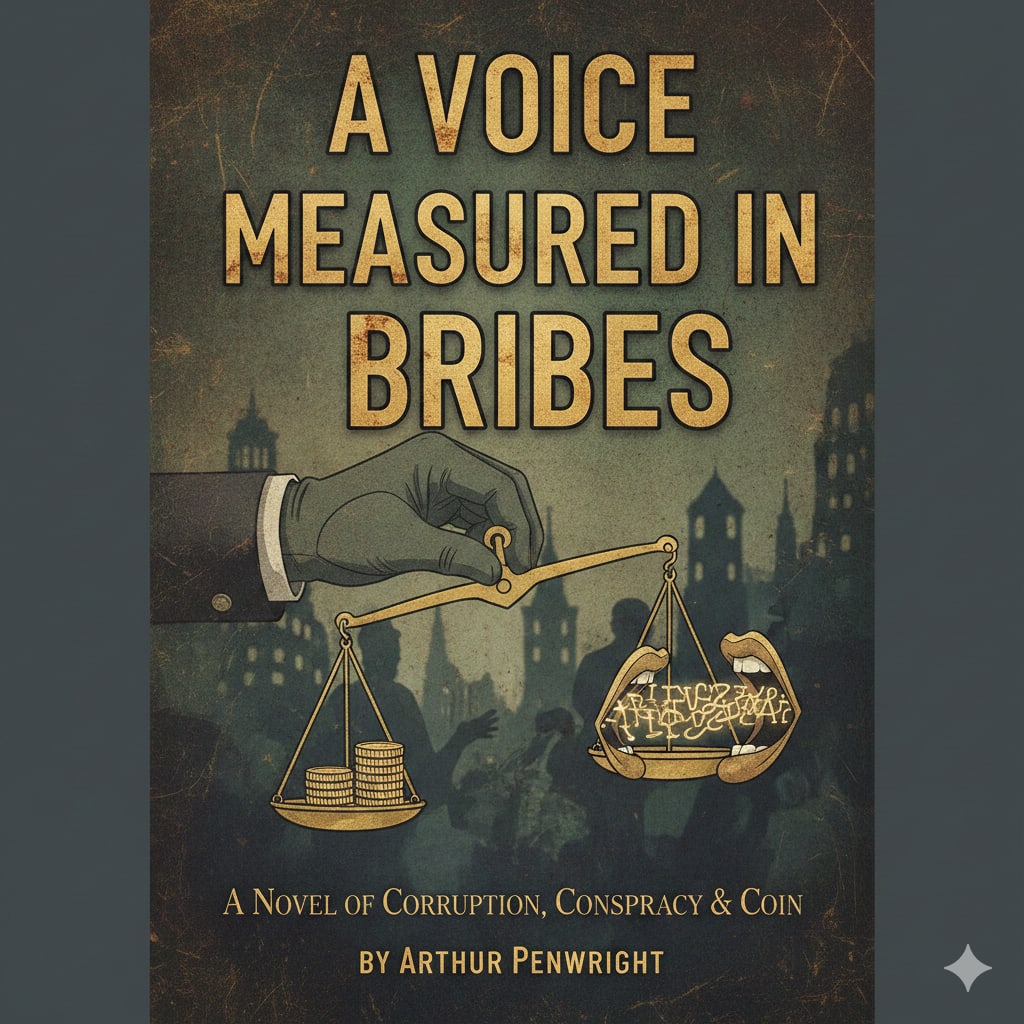
A Voice Measured in Bribes
In the heart of Shahpur, a town where the lanes whispered secrets and the market stalls hummed with life, lived Imran Malik, a man whose words had once carried weight. People would listen when he spoke at the town council meetings, not because he demanded attention, but because he spoke the truth. Yet, in Shahpur, truth had begun to have a price.
Imran’s house, a modest brick structure with peeling white paint, reflected the man himself—unadorned, honest, and worn by time. His father had taught him the value of integrity: “A voice that bends for gold is no longer a voice—it’s just a coin passing hands.” But these words had become relics in a world where bribes were the currency of influence.
It all began when the town council announced plans to build a new water filtration plant. The project was urgent; the town’s water had become increasingly contaminated, causing sickness among children and the elderly. Imran, a civil engineer by training, was the only council member who raised concerns about the contractor chosen for the job. The contractor, a man named Rashid Bhatti, was known to sway decisions with envelopes of cash.
At the next meeting, Imran presented detailed reports, showing the contractor’s history of substandard work in neighboring towns. “If we let him handle this project, we will spend millions only to see it crumble in a year,” he warned, his voice steady but passionate.
The room, however, was silent for the wrong reason. The council members, many of whom had already accepted “encouragement” from Rashid, looked away. One by one, they voted to approve the contractor. Imran’s protest seemed futile, like shouting into a storm.
Weeks later, as the project began, Imran noticed immediate signs of neglect. Workers cut corners, materials were subpar, and timelines were ignored. He visited the site daily, documenting every lapse, trying to convince the council to intervene. But each call, each report, was met with polite dismissals or veiled threats.
One evening, while reviewing his notes at home, Imran received a visitor—Rashid Bhatti himself. The contractor, a man in his fifties with a greasy smile, sat uninvited in Imran’s living room.
“Imran bhai,” he began, leaning back, “why waste your voice? You could earn more from silence than from truth.”
Imran’s hands tightened around his pen. “My voice isn’t for sale,” he said quietly.
Rashid chuckled. “Not yet, perhaps. But tell me, how much would it take for you to ignore a little… wrongdoing?”
Imran felt the weight of the question. He knew the town needed him, yet the council had already muted his influence. He imagined the sick children, their parents desperate for clean water, and realized that sometimes truth alone wasn’t enough.
The next day, Imran decided to act—not through bribes, but through the people. He started small, visiting households, showing photographs of the ongoing shoddy work, explaining how it could fail and endanger their lives. He shared evidence, step by step, until the townspeople began to murmur, first in quiet worry, then in loud outrage.
Rashid noticed the rising dissent and tried to bribe Imran one last time, this time with an envelope fat with notes. Imran refused and instead made a bold choice—he called a town meeting at the central square, where everyone could see the reality with their own eyes.
When the day came, people gathered, their faces etched with concern and anger. Imran presented the documents, photographs, and testimonials from workers. The crowd’s reaction was electric. Parents shouted for justice; elders demanded accountability. The mayor, sensing the tide, had no choice but to halt the project temporarily and launch an investigation.
The investigation revealed what Imran had feared: substandard materials, falsified reports, and multiple instances of bribery among council members. Rashid was removed from the project, and the council members who had accepted bribes faced charges. Slowly, the filtration plant was rebuilt properly, this time under strict supervision.
Imran’s voice, measured not in coins but in courage, had reminded Shahpur of a simple truth: integrity cannot be bought, but it can awaken others. He did not become rich from the ordeal, nor did he receive public accolades—yet when children drank clean water and families thanked him, he felt a wealth no bribe could ever match.
In the end, Shahpur learned a lesson Imran had always known. Bribes may silence many, but a voice that refuses to bend—no matter the temptation—can inspire a community to rise above corruption.
And for Imran, that was worth more than gold.
About the Creator
Samaan Ahmad
I'm Samaan Ahmad born on October 28, 2001, in Rabat, a town in the Dir. He pursued his passion for technology a degree in Computer Science. Beyond his academic achievements dedicating much of his time to crafting stories and novels.
Keep reading
More stories from Samaan Ahmad and writers in Education and other communities.
The Silence That Refused to Be Bought
In Barakpur, silence was not emptiness—it was a transaction. People spoke softly, if at all. Questions were swallowed before reaching the tongue. Everyone understood the unspoken rule: say nothing, lose nothing. Speak up, and pay dearly.
By Samaan Ahmadabout 3 hours ago in Education
Why Are Neutron Stars So Dense?
The Life and Death of Massive Stars The story of neutron star density begins with massive stars. Stars shine by fusing lighter elements into heavier ones in their cores. This nuclear fusion releases energy that pushes outward, balancing the inward pull of gravity. As long as this balance exists, the star remains stable.
By shahkar jalal4 days ago in Education
Cabin Fever Because of Snow, Sleet, and Freezing Rain That Turned to Icy Roads
What Is Cabin Fever? The short answer is that cabin fever is restlessness from being in a confined area. Cabin fever is the distressing irritability or restlessness experienced when a person or group is stuck at an isolated location or in confined quarters for an extended time. Research shows that prolonged cold, gray skies, and being stuck indoors can trigger mood shifts similar to “winter blues.”
By Margaret Minnicks7 days ago in Humans



Comments
There are no comments for this story
Be the first to respond and start the conversation.