
Artificial Intelligence: Unlocking the Future of Human Innovation
How AI is transforming daily life, reshaping industries, and opening doors to a smarter tomorrow.
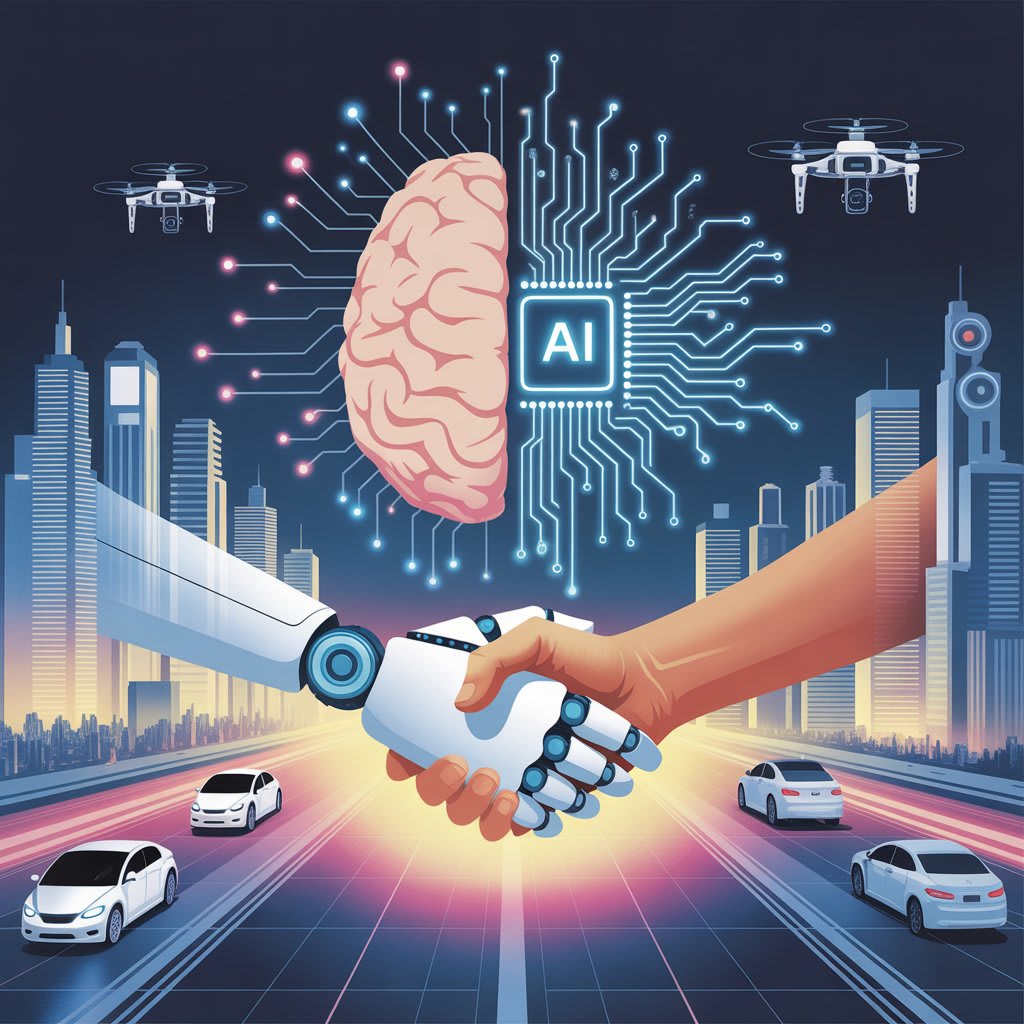
Artificial Intelligence (AI) is one of the most transformative innovations of the modern era. From voice assistants in smartphones to advanced medical systems, AI is rapidly becoming part of our daily lives. But what exactly is AI, and why is it considered such a powerful force in shaping the future? This article explores the concept of AI, its applications, benefits, challenges, and what lies ahead.
What is Artificial Intelligence?
Artificial Intelligence refers to the ability of machines to perform tasks that normally require human intelligence. These tasks include problem-solving, decision-making, understanding language, recognizing patterns, and even learning from experience. Unlike traditional computer programs that follow fixed instructions, AI systems are designed to adapt and improve over time.
There are two main types of AI:
1. Narrow AI – designed for specific tasks, such as search engines, translation tools, or chatbots.
2. General AI – a theoretical form of AI that could perform any intellectual task like a human. This type is still in research and does not exist yet.
How AI Works
AI systems rely on a combination of algorithms, data, and computing power. Machine Learning (ML), a subset of AI, allows machines to learn patterns from large datasets without being explicitly programmed. Deep Learning, which uses artificial neural networks, has made remarkable progress in areas like image recognition and speech processing.
For example, when you type a message on your phone and predictive text suggests the next word, that’s AI at work. Similarly, when streaming platforms recommend movies or shows, they are using AI to analyze your preferences.
Applications of AI
AI is already being used in countless industries:
Healthcare – AI assists in diagnosing diseases, analyzing medical scans, and even predicting patient risks.
Education – Personalized learning platforms help students learn at their own pace.
Business – Companies use AI for customer service chatbots, fraud detection, and data analysis.
Transportation – Self-driving cars are being developed using AI technologies to improve road safety.
Agriculture – AI-driven machines help farmers monitor crops, detect pests, and improve yield.
Daily Life – From smart home devices to digital assistants like Siri or Alexa, AI is everywhere.
Benefits of AI
The benefits of AI are vast and undeniable. It improves efficiency, reduces human error, and saves time. In healthcare, AI can help doctors detect diseases early, potentially saving lives. In business, AI helps organizations make smarter decisions by analyzing huge amounts of data. For individuals, AI makes daily tasks more convenient and accessible.
AI also has the potential to create new job opportunities in fields like data science, AI development, and robotics engineering. Just as previous technologies created new industries, AI is expected to do the same.
Challenges and Concerns
Despite its advantages, AI also presents challenges:
Job Displacement – Some worry that automation could replace human workers in certain industries.
Bias in AI – If AI is trained on biased data, it can produce unfair results.
Privacy Issues – AI systems that process personal data raise concerns about how that information is used.
Dependence on Technology – Relying too much on AI may reduce critical thinking and problem-solving skills in humans.
Addressing these challenges requires careful regulation, ethical guidelines, and transparency in AI development.
The Future of AI
The future of AI is both exciting and uncertain. Researchers are working on making AI systems more reliable, ethical, and beneficial for society. We can expect AI to play a larger role in healthcare, education, business, and even space exploration. While some fear that AI could one day surpass human intelligence, most experts believe that with proper rules and safeguards, AI can be a powerful partner in building a better future.
Conclusion
Artificial Intelligence is more than just a technological trend; it is a revolution shaping how we live, work, and think. While it brings incredible opportunities, it also raises important questions about ethics, privacy, and human responsibility. The key is to use AI wisely—to enhance human potential, not replace it. If developed responsibly, AI has the power to make the world smarter, safer, and more connected.
About the Creator
Javed Khan
Writer of educational articles, world news, and inspiring stories. Dedicated to sharing knowledge that informs, empowers, and encourages positive thinking.
Keep reading
More stories from Javed Khan and writers in Education and other communities.
M2 TikTok: The New Era of Social Media in the U.S.
In the fast-changing world of social media, every innovation can shift the way people connect, share, and express themselves. The upcoming launch of M2 TikTok, scheduled for September 5th, marks one of the most significant changes in the platform’s history — especially for users in the United States. This new app version is not just an upgrade; it is a strategic move designed to address political, security, and cultural concerns while promising a fresh experience for millions of users. 🔵 What is M2 TikTok? M2 is the codename for a brand-new TikTok app built specifically for the U.S. market. Unlike the current global version of TikTok, M2 will operate with U.S.-based servers and its own unique code, potentially featuring a redesigned algorithm. This change comes amid growing pressure from U.S. lawmakers, who have raised concerns about data privacy and national security risks due to TikTok’s Chinese parent company, ByteDance. 🔵 Why is it launching now? The U.S. government has been considering a possible ban on TikTok unless ByteDance divests its U.S. operations. By creating M2, TikTok is offering a solution: a platform built for American users, managed under U.S. laws, and hosted on American servers. This move aims to satisfy national security requirements while preserving the app’s massive American user base. 🔵 Key Features and Potential Benefits M2 TikTok promises several advantages: 1. Improved Data Privacy: Storing user data on U.S.-based servers reduces concerns about foreign access to personal information. 2. Custom Algorithm: A new recommendation system could be designed to better align with American regulations and preferences. 3. Smoother Performance: With local infrastructure, the app may offer faster loading times and improved video quality. 4. Fresh User Experience: M2 could bring new editing tools, trending features, and an interface tailored to the U.S. audience. 🔵 Impact on Content Creators For creators, this transition could be both exciting and challenging. On one hand, M2 might offer better opportunities to reach American audiences and monetize content in new ways. On the other, it could require adjusting strategies to fit any new algorithm or content guidelines introduced in the app. 🔵 Economic and Cultural Significance TikTok is more than just a social media platform; it’s an economic engine for many small businesses, independent artists, and educators. The introduction of M2 could reshape digital marketing strategies in the U.S., giving brands more secure and locally managed advertising tools. Culturally, it will be fascinating to see whether M2 maintains the same global trends that made TikTok popular or evolves into a more uniquely American experience. 🔵 Challenges Ahead While M2’s launch is promising, it also raises questions. Will users need to download a separate app? How will their old TikTok data and followers transfer over? And will M2 actually win the trust of critics who have been calling for a complete ban? The answers will depend on how TikTok manages the transition and communicates its goals clearly to the public. 🔵 A New Chapter in Social Media History The debut of M2 TikTok could mark the start of a new chapter for short-form video in the United States. If successful, it might set a precedent for how global apps adapt to local laws and values. For users, this means more control over their data, potentially more relevant content, and a stronger sense of connection to a platform that truly operates within their own country. In a world where technology evolves faster than ever, M2 represents a careful balance between innovation and responsibility. It is a reminder that even in the age of global connectivity, local trust and ethical practices remain essential for digital success. As September 5th approaches, all eyes will be on TikTok to see if M2 can deliver on its promises and lead the way into a safer, more user-focused future.
By Javed Khan 6 months ago in Education
Youth Volunteering: A Personal Story of Leadership Growth
Volunteering with youth is often seen as an opportunity to give back, but for me, it became a pivotal experience that completely transformed my understanding of leadership. Before I began volunteering, I had a narrow view of what leadership truly entailed. Leadership was about taking charge, making decisions, and guiding others from the front. However, my experience working with young people opened my eyes to a much broader and deeper definition of leadership. This personal story will share how volunteering with youth not only helped me grow as a leader but also reshaped my perspective on the qualities and responsibilities that make a true leader.
By Jett Harris of Arkansasa day ago in Education
Could Dark Matter Interact With Itself?
What Is Dark Matter? Dark matter is a form of matter that does not emit, absorb, or reflect light. Because it is invisible, astronomers cannot observe it directly through telescopes. Its presence is inferred from its gravitational influence on visible matter.
By shahkar jalal8 days ago in Education


Comments
There are no comments for this story
Be the first to respond and start the conversation.