
Best Forex Signal Providers
What Is a Forex Signal Provider?
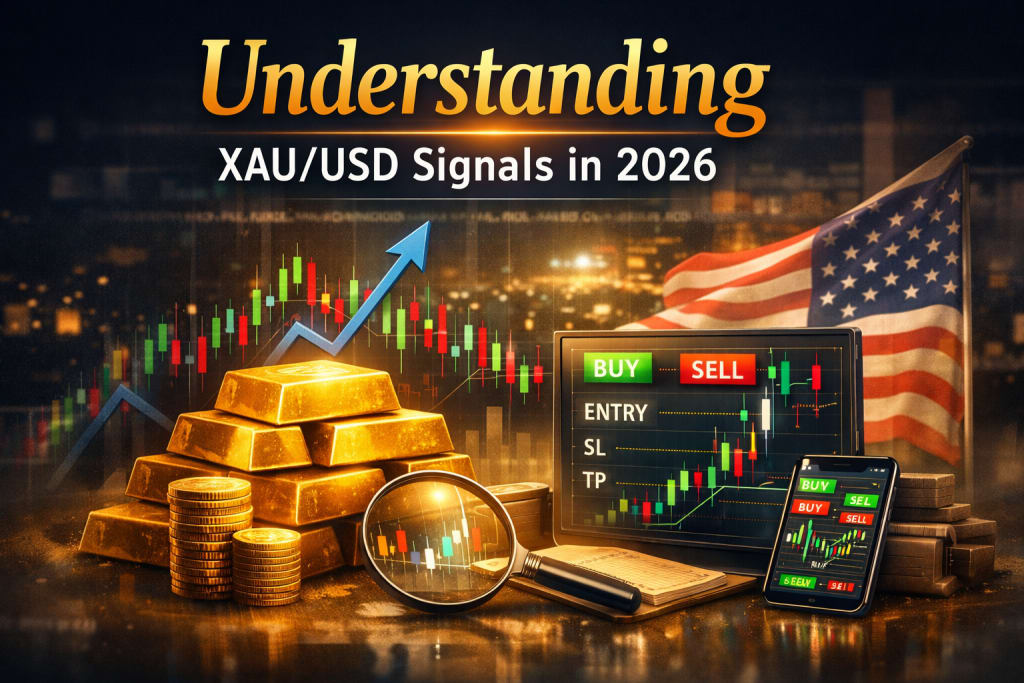
The forex market in 2026 is more competitive and data-driven than ever. With rapid price movements, global economic uncertainty, and algorithmic trading dominating liquidity, many retail traders rely on forex signal providers to help structure their trades.
But one key question remains:
Are forex signal providers actually profitable — or are they just marketing hype?
The answer depends less on the signal itself and more on how it is used.
What Is a Forex Signal Provider?
A forex signal provider delivers structured trade ideas to traders. A typical signal includes:
- Currency pair (e.g., XAUUSD )
- Entry price
- Stop-loss (SL)
- Take-profit (TP)
- Trade direction (Buy or Sell)
Instead of analyzing Chart for hours, traders receive ready-to-execute setups based on professional technical or fundamental analysis.
Signals are usually delivered via Telegram, email, dashboards, or mobile apps.
How Forex Trading Signals Work
- Professional signal providers analyze markets using:
- Technical indicators (RSI, MACD, moving averages)
- Support and resistance zones
- Market structure and liquidity levels
- Economic news releases
- Sentiment data
When market conditions align, a structured trade setup is sent to subscribers.
However, a signal is not a guarantee — it is a probability-based setup.
Free vs Paid Forex Signals
Many beginners start with free forex signals. While they may provide exposure to live trade ideas, they often:
- Lack verified performance records
- Provide inconsistent results
- Offer minimal risk management guidance
- Act as marketing funnels for premium services
Premium signal services, when legitimate, tend to provide:
- Risk-to-reward planning
- Performance transparency
- Structured daily analysis
- Support or community access
- That said, even paid services must be evaluated carefully.
Types of Forex Signals
Forex signals generally fall into four categories:
1. Technical Signals
Generated using chart patterns and indicators.
2. Fundamental Signals
Based on macroeconomic data such as inflation reports, interest rate decisions, or employment numbers.
3. Algorithmic / AI Signals
Produced by automated trading models that scan large data sets.
4. Copy Trading Signals
Allow traders to automatically mirror professional traders’ positions.
Each approach carries different levels of risk and volatility.
Benefits of Using a Forex Signal Provider
When used correctly, structured forex signals can:
- Save time on analysis
- Improve trade discipline
- Reduce emotional decision-making
- Provide structured risk management
- Support learning for beginners
However, signals work best as a supplement to personal strategy — not a replacement.
Risks and Red Flags to Watch For
The forex signal industry is largely unregulated. Traders should be cautious of:
Unrealistic profit claims (e.g., 95%+ accuracy)
No verified performance history
Lack of transparent drawdown reporting
Aggressive marketing tactics
No clear risk management structure
Blindly following signals without position sizing rules can magnify losses.
Can Forex Signals Be Profitable?
Yes — but only under the right conditions.
- Profitability depends on:
- Proper risk management
- Realistic expectations
- Consistent execution
- Choosing a transparent provider
- Avoiding over-leveraging
Signals can enhance structured trading, but they cannot eliminate risk.
The Future of Forex Signals in 2026
- Emerging trends include:
- AI-powered market analytics
- Automated trade validation
- Verified third-party performance tracking
- Integrated risk dashboards
- Increased regulatory scrutiny
As traders become more educated, transparency and verified data will likely become the industry standard.
Final Thoughts
Forex signal providers can be valuable tools in modern trading — but they are not shortcuts to guaranteed income.
Smart traders use signals as confirmation tools within a broader risk-managed trading plan. The key to long-term success remains discipline, capital preservation, and continuous education.
About the Creator
Keep reading
More stories from Elaxi Digital and writers in Education and other communities.
How to Start Forex Trading: A Beginner-Friendly Guide
The forex market is one of the most active financial markets in the world, with trillions of dollars traded every day. Many beginners are drawn to forex because it is accessible, flexible, and open 24 hours a day. But while it offers opportunities, it also carries risks — and understanding those risks is essential before you begin.
By Elaxi Digital3 months ago in Education
Breaking the Emotion Cycle: How Data-Driven Trading Transforms Investor Behavior
Emotional investing has shaped market behavior for generations, often with costly consequences. Fear drives investors to sell during downturns, while excitement pushes them to buy during euphoric rallies. As a result, many portfolios suffer from poor timing and inconsistent strategy. These emotional reactions feel natural, yet they frequently undermine rational analysis and long-term planning.
By Agast Mishra3 days ago in Education
The Hidden Magic of Growing Mushrooms at Home: A Step-by-Step Guide
The first time I tried growing mushrooms at home, I didn’t expect much. I assumed it would be complicated, messy, or one of those hobbies that look fun online but never work in real life. Instead, it turned into one of the most surprisingly calming things I’ve done indoors.
By The Shroom Groove5 days ago in Education



Comments
There are no comments for this story
Be the first to respond and start the conversation.