
Exploring the Moon: Physical Characteristics, History, and Future Exploration
Physical Features, Historical Development, and Future Moon Exploration
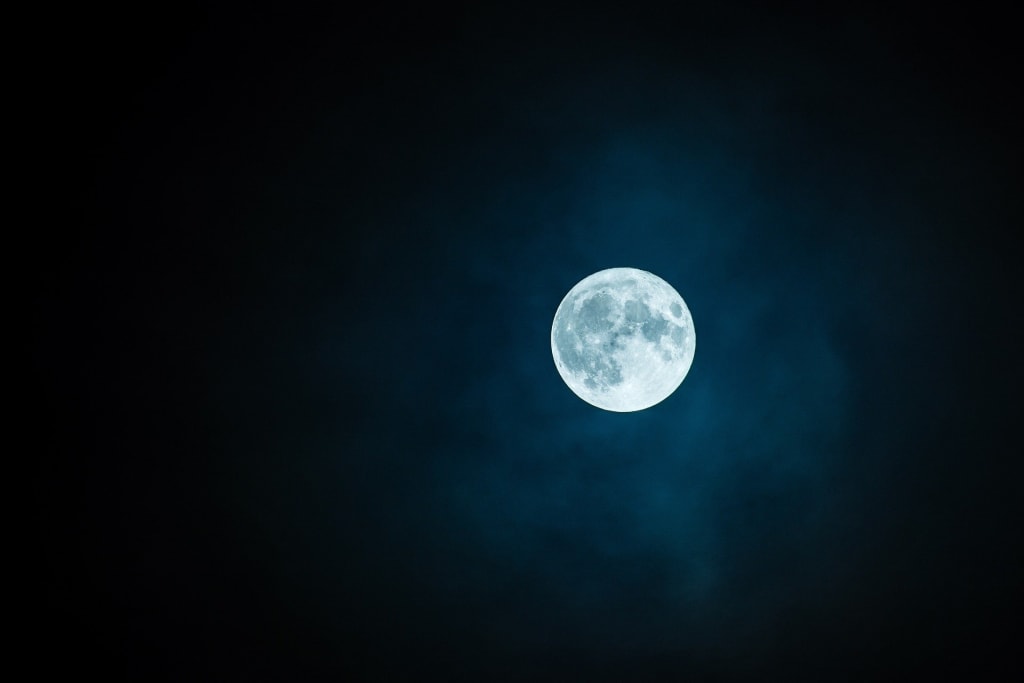
The Moon, the sole natural satellite of Earth, has long captivated humans. It is around one-quarter the size of Earth and the fifth-largest moon in the Solar System. Since the Moon lacks both an atmosphere and water, it possesses neither weather nor life. However, it has had a profound impact on human history, serving as a springboard for space travel as well as a source of creativity for poets and painters.
We shall look at the Moon's physical qualities, its past, and its future in this article.
Characteristics of the body
The Moon has a mass of 7.34 x 10²² kilogrammes and a diameter of 3,474 kilometres. Throughout billions of years, meteoroid impacts have left a layer of fine dust on its surface known as regolith. The highlands and the maria are the two geographical divisions of the Moon's surface. The maria are smoother and appear darker, but the highlands are rough and hilly.
Since the Moon lacks an atmosphere, it is continuously pounded by charged solar particles and cosmic rays. The lunar ionosphere, a thin layer of electrostatically charged particles, is the result of this.
Objects on the Moon weigh less than those on Earth because the Moon's gravitational force is roughly one-sixth that of the Earth's. In addition to causing tides on Earth, the Moon's gravity also affects the waters of the planet due to their gravitational interaction.
History
It is estimated that the Moon formed some 4.5 billion years ago, not long after the Solar System was created. The huge impact hypothesis is the most widely recognised theory of how the Moon was created. According to this idea, a Mars-sized asteroid hit with Earth, and the resulting debris gradually solidified to create the Moon.
The Moon has been important to human history. Poets and artists have found inspiration in it, and time has been measured by the phases it goes through. The Moon has long been the focus of scientific study and has been used by sailors as a navigational aid.
The Soviet Union's Luna 1 mission made history in 1959 by becoming the first artificial object to orbit the Moon. NASA's Apollo 11 mission accomplished the first human landing on the Moon in 1969. Six manned trips to the Moon have been made since then, all of which were carried out by NASA between 1969 and 1972.
Future
There are plans to send humans back to the Moon soon, and the Moon is still being studied scientifically. By 2024, NASA's Artemis programme hopes to launch the first man and the second man to the moon. By 2028, the programme also hopes to create a permanent human presence on the moon.
The enthusiasm among scientists in visiting the Moon again stems from a number of factors. Studying the Moon's geology and discovering more about its creation is one of the key motivations. As a potential source of resources for supporting upcoming human journeys to Mars and beyond, the Moon is also thought to contain resources including water and helium-3.
Conclusion
A remarkable object that has been important to human history is the Moon. Due to its unique physical qualities, such as its absence of atmosphere and low gravity, it has long been the focus of scientific inquiry. People all across the world have been fascinated by learning about the history of the Moon, including its origin and its role in human exploration. The Moon will continue to be a topic of scientific investigation and exploration for many years to come because there are plans to send people back to the Moon in the near future.
keep supporting guys , read fully and please subscribed and hit a like button
About the Creator
MSD
MSD is a writer and researcher with a passion for exploring the intersections of culture, technology, and society.
The Saddest Thing - The Billionaires Who Rule America Aren't Even Enjoying Themselves
This single post says more about our ruling class than a thousand policy papers. The saddest thing about today's system is that the men robbing the rest of us - sabotaging our economic prospects, our pensions, our access to affordable healthcare - are not even happy.
By Scott Christenson🌴6 days ago in The Swamp


Comments
There are no comments for this story
Be the first to respond and start the conversation.