
Holiday Traditions from Romania
The Living Heritage of a People

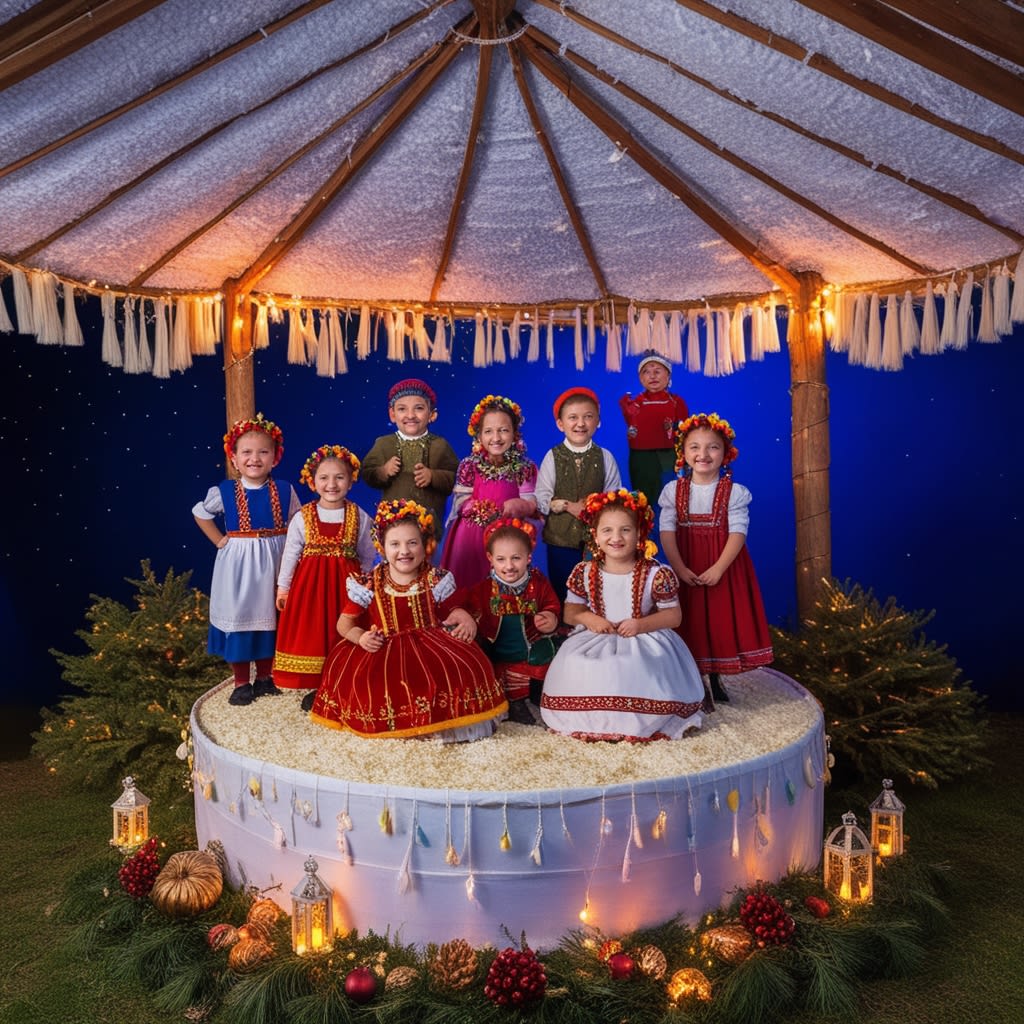
Romania is a country where holidays are not just dates on a calendar, but true rituals that combine faith, history, and village life. Over the centuries, Romanians have preserved unique traditions passed down from generation to generation, which still define the cultural identity of communities today. From winter to summer, each celebration has its own symbols, customs, and deep meanings. Below, we explore ten of the most important holiday traditions in Romania.
1. Christmas Caroling
Christmas caroling is one of the oldest and most widespread Romanian traditions. On Christmas Eve, groups of children, young people, or adults go from house to house, announcing the Birth of Christ through traditional songs. Carols are not simple melodies, but ritual texts meant to bring prosperity, health, and good fortune to the hosts. In return, carolers receive apples, walnuts, traditional bread, or money. In rural areas, caroling still preserves a strong sense of community.
2. Pig Slaughter on Saint Ignatius’ Day
On December 20th, the feast of Saint Ignatius, the traditional pig slaughter takes place, a ritual closely connected to preparations for Christmas. This is a family event accompanied by customs such as the “pig’s feast” and ritual expressions. The act symbolizes sacrifice, abundance, and the continuity of life. Although the tradition has diminished in urban areas, it remains central in many villages.
3. The Star (Steaua)
The Star custom is practiced during the Christmas season, especially by children. They carry a star made of wood and colored paper, decorated with icons and ribbons, and sing about the Nativity of Jesus. The star symbolizes the celestial body that guided the Magi to Bethlehem. This tradition blends Christian faith with artistic and educational elements.
4. The Ploughman’s Carol (Plugusorul)
The Plugusorul is an agrarian custom performed on New Year’s Eve. Groups of boys or children recite rhythmic wishes accompanied by bells and whips, evoking fieldwork and the hope for a rich harvest. The text describes symbolic plowing and the agricultural cycle, reflecting the deep connection between Romanians and the land.
5. Sorcova
Sorcova is a joyful tradition practiced by children on the first day of the New Year. They gently touch the hosts with a decorated stick called a sorcova while reciting wishes for health and long life. The origin of the custom is linked to the cult of vegetation and the renewal of time, symbolizing the beginning of a new life cycle.
6. The Goat Dance (Jocul Caprei)
The Goat Dance is a spectacular custom found especially in Moldavia and Muntenia. The goat, represented by an elaborate mask, dances and symbolically “dies” only to be reborn, signifying fertility and the regeneration of nature. Loud sounds and energetic movements are meant to drive away evil spirits and bring prosperity.
7. Epiphany (Boboteaza)
Epiphany, celebrated on January 6th, marks the Baptism of Jesus Christ. The central tradition is the blessing of the waters, during which the priest throws a cross into a river or lake, and young men dive in to retrieve it. It is believed that the one who finds the cross will have good luck throughout the year. In many regions, people sprinkle their homes with holy water for protection.
About the Creator
Nyku Blondu
📚 I enjoy exploring a wide range of topics – from personal reflections and inspiration to culture, art, and everyday life.
✍️ I believe in the power of words to connect people and awaken emotions.
Keep reading
More stories from Nyku Blondu and writers in Education and other communities.
7 Reasons Restaurant Needs Digital Menu Boards
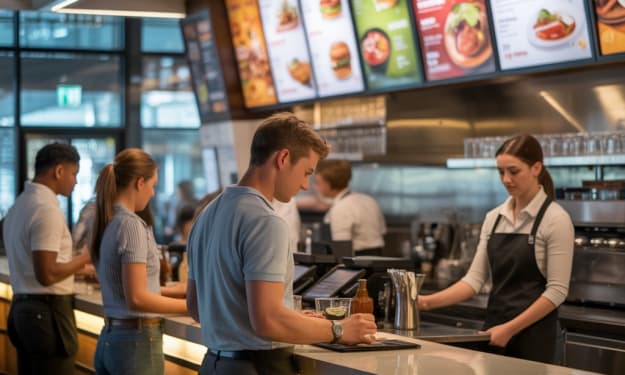
I'll never forget the moment I realized I was completely wrong about digital menus. It was a Tuesday afternoon at my favorite local taco spot—the kind of place where I knew the owner by name and had "the usual" without saying a word. Then one day, I walked in and everything had changed. Gone were the chalkboard menus with their charming but faded writing. In their place? Sleek digital screens cycling through vibrant images of sizzling fajitas and perfectly crafted margaritas.
By Jerry Kane 5 days ago in Education



Comments
There are no comments for this story
Be the first to respond and start the conversation.